Afro Hair Breakage vs Hair Loss: How to Tell the Difference and Restore Strength
10 min read ·
Afro Hair Breakage vs Hair Loss: discover the crucial differences between structural fibre snapping and follicular shedding, and learn how to treat each effectively.
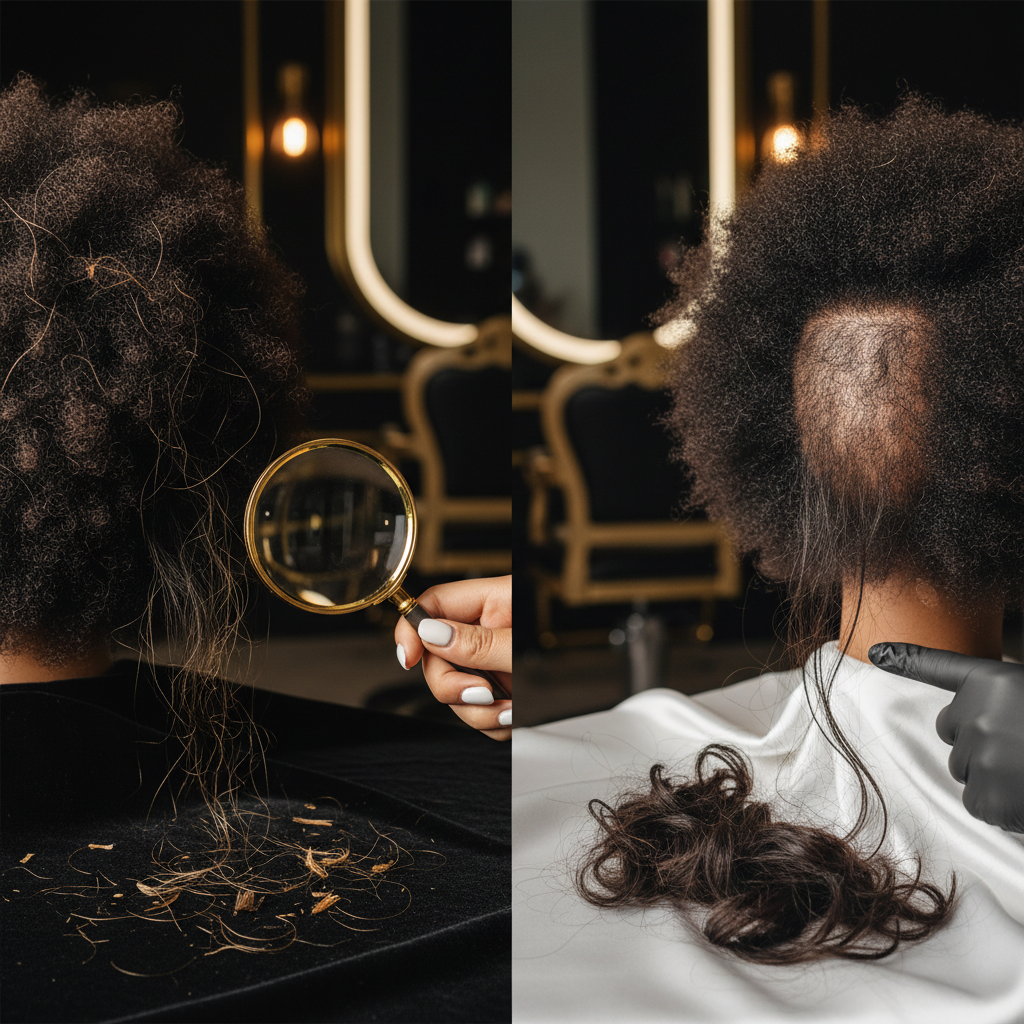
Quick answer: Understanding Afro Hair Breakage vs Hair Loss comes down to where the disruption happens. Hair breakage is structural damage causing the shaft to snap along its length, leaving short fragments without a white bulb. True hair loss, or alopecia, occurs inside the scalp follicle, causing hair to shed completely from the root or stop growing altogether. The main limitation of visual checks is that severe breakage can mimic thinning, so examining shed fibres and scalp health is critical.
Key takeaways
- Afro-textured hair possesses unique elliptical geometry with natural points of curvature that make it mechanically vulnerable to breakage.
- Breakage produces short, uneven hair pieces without a bulb, whereas genuine shedding or loss involves full-length strands ending in a distinct white or translucent root sheath.
- Traction alopecia and central centrifugal cicatricial alopecia (CCCA) are primary medical follicular conditions affecting afro hair, requiring clinical dermatological intervention.
- Mechanical friction, excessive heat, chemical relaxers, and chronic moisture deficits drive the vast majority of breakage cases.
- While targeted haircare routines repair and prevent shaft fractures, cosmetic products cannot cure progressive follicular scarring or genetic alopecia.
Afro Hair Breakage vs Hair Loss: what the evidence shows
Scientific research reveals that afro-textured hair fibres exhibit distinct physiological characteristics that affect tensile strength and resilience. The core difference in Afro Hair Breakage vs Hair Loss lies in whether the hair follicle is healthy or damaged. Breakage is a fibre-level mechanical failure, whereas hair loss reflects a follicle-level biological or inflammatory shutdown.
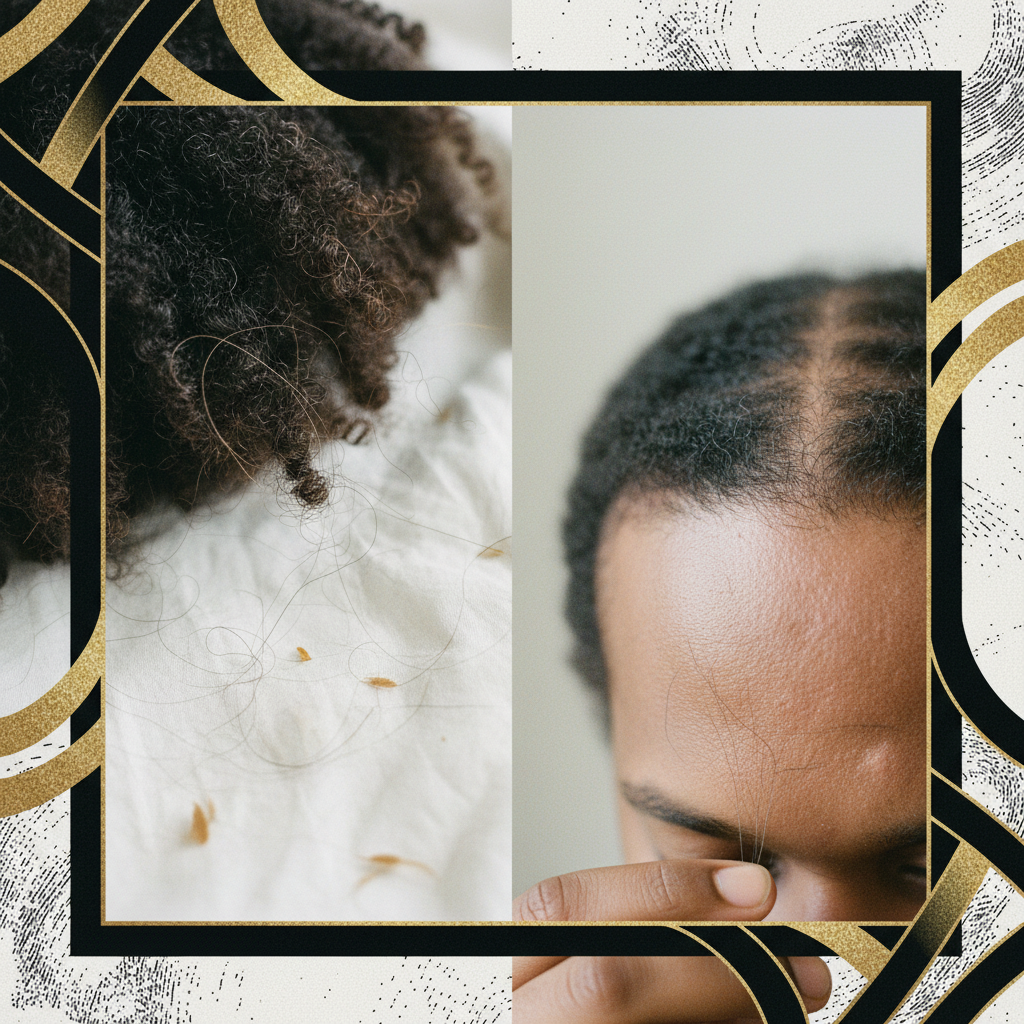
Studies published in the International Journal of Dermatology and the British Journal of Dermatology highlight that afro hair fibres have an elliptical, flattened cross-section and an asymmetrical curl pattern. This coiled architecture creates geometric stress concentration points along the fibre axis. Every twist and bend along the shaft is a natural weak spot where mechanical stress accumulates during combing, detangling, and styling.
Furthermore, afro hair has a lower lipid content and fewer cuticle layers protecting the cortex compared to Asian or Caucasian hair types. The cuticle scales flare more readily, accelerating moisture loss and making the cortex vulnerable to splitting (trichorrhexis nodosa). By contrast, follicular hair loss occurs beneath the surface of the stratum corneum. In conditions such as traction alopecia or androgenetic alopecia, external shaft fragility is not the root cause; rather, cellular miniaturisation or chronic inflammatory fibrosis arrests the hair growth cycle.
Mechanisms: structural breakage versus follicular loss
To understand how each issue develops, you have to look at the different anatomical sites involved.
The mechanism of breakage
Hair fibre consists primarily of alpha-keratin proteins reinforced by disulphide bonds. When afro hair undergoes chemical processing, such as alkaline relaxers (which routinely operate at a high pH of 12 to 14), these disulphide bonds break down to reshape the curl. While this straightens the fibre, it reduces its tensile strength by up to 50 percent.
Thermal tools exceeding 180 degrees Celsius degrade the moisture barrier and denature keratin proteins, causing micro-voids inside the cortex. Daily mechanical manipulation adds friction. Because afro coils interlock tightly, dry combing forces these structural stress points past their elastic limit, resulting in clean transversal fractures or frayed ends.
The mechanism of follicular loss
Follicular loss takes place inside the dermal papilla and hair bulb. In telogen effluvium, physiological stress, hormonal shifts, or nutritional deficits prematurely push an unusually high percentage of active anagen (growth) follicles into the telogen (resting) phase. Around two to three months later, these hairs detach and shed from the root in large numbers.
In scarring conditions like central centrifugal cicatricial alopecia (CCCA), which predominantly affects women of African descent, persistent lymphocytic inflammation targets the infundibulum and follicular stem cells. Over time, the follicle is completely destroyed and replaced by fibrous scar tissue, permanently preventing new fibre production. In non-scarring traction alopecia, continuous prolonged mechanical tension on the root compromises perifollicular microcirculation, gradually miniaturising the follicle over months or years.
| Feature | Hair Breakage | Follicular Hair Loss |
|---|---|---|
| Primary Location | Hair shaft along the fibre length | Hair follicle beneath the scalp surface |
| Fibre Appearance | Short, snapped segments with frayed ends | Full-length strands with a visible bulb |
| Root Present? | No white or translucent bulb attached | Yes, a tiny bulb marks the telogen root |
| Scalp Condition | Scalp usually looks healthy and normal | May show redness, scaling, pustules, or smooth shiny patches |
| Common Drivers | Dryness, heat styling, relaxers, rough detangling | Genetics, tension styles, autoimmune response, nutritional deficiency |
| Reversibility | Highly reversible with gentle habits and conditioning | Highly dependent on early clinical diagnosis; scarring is permanent |
Signs to look for: how to diagnose your hair shed
You can determine whether you are dealing with structural fracturing or true follicular detachment through simple physical checks at home.
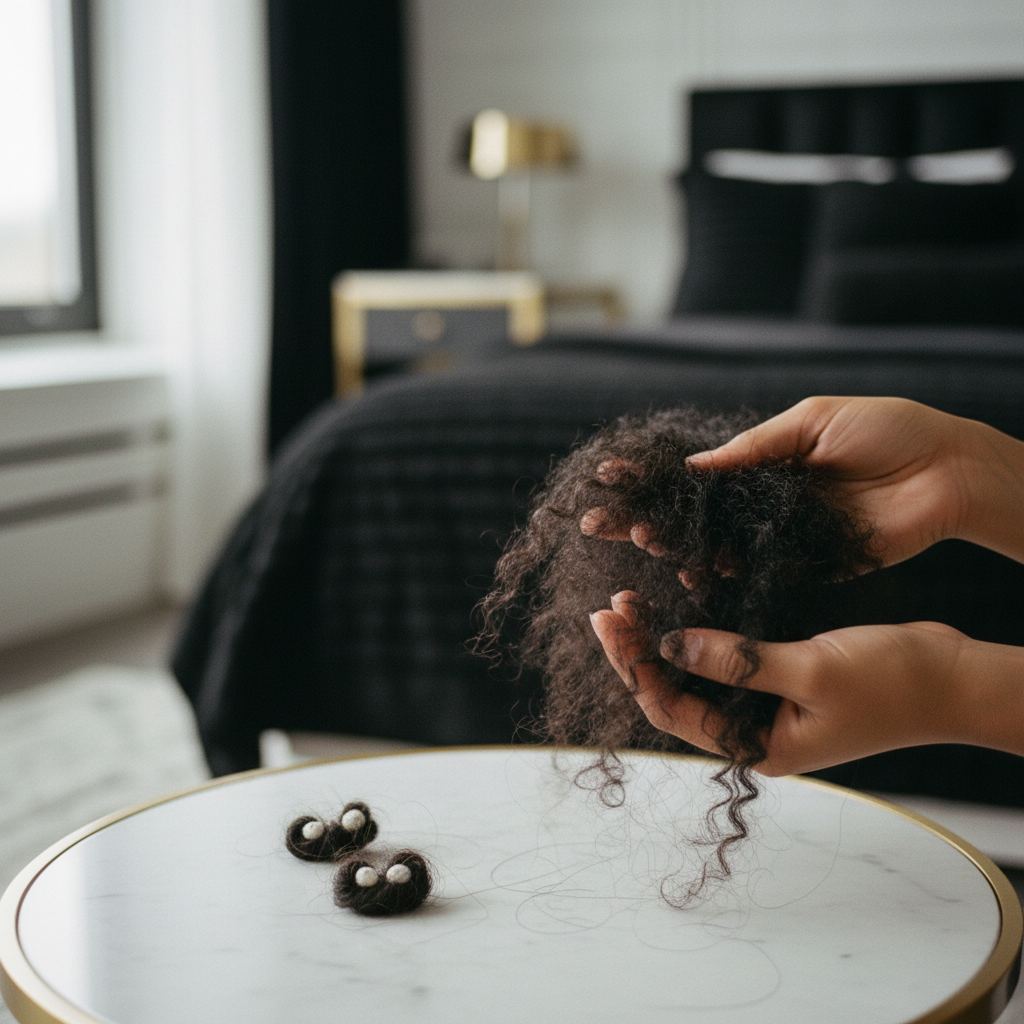
- Inspect the shed ends: Collect strands from your brush, comb, or shower drain. Lay them across a dark, contrasting towel under bright light. If the strands are varied in length and lack a small, soft, bulbous tip at either end, you are looking at breakage. If they match your general hair length and possess a clear or white bulb, they shed from the follicle.
- Perform a gentle pull test: Grasp roughly 40 to 60 strands close to your scalp between your thumb and forefinger. Slide your fingers firmly but gently toward the ends. If more than 5 or 6 full-length hairs pull free with bulbs attached, telogen shedding may be elevated. If you get snapping segments mid-shaft, your fibre elasticity is compromised.
- Assess the scalp landscape: Part your hair to inspect the scalp surface. Breakage typically presents as halo frizz, uneven thinning across the perimeter where styling tools strike, or short bristles sticking up at the crown. Follicular loss often presents as widened part lines, receding frontotemporal margins, or completely smooth, shiny circles where follicular openings (pores) have vanished.
What you can do to stop breakage and protect the follicle
Reversing breakage and protecting vulnerable follicles requires a combined strategy of mechanical care, adequate hydration, and tension management.
Eliminate dry friction and retain moisture
Afro hair requires consistent external hydration because natural scalp sebum struggles to travel down tight coils. Use water-based leave-in conditioners formulated with humectants like glycerin or panthenol, followed by light plant oils to seal the moisture within the cortex. Never detangle afro hair while dry; detangle only when saturated with a high-slip conditioner using a wide-tooth comb or your fingers, working patiently from ends to roots.
Sleeping on cotton pillowcases saps moisture and creates abrasive friction. Switch to a 100 percent silk or satin pillowcase or wear a satin bonnet. This simple change preserves fibre hydration and prevents night-time snapping.
Balance protein and moisture
Chemically treated or high-porosity hair often needs hydrolysed proteins (such as keratin, wheat, or silk proteins) to temporarily patch gaps in the damaged cuticle. However, too much protein makes hair stiff and brittle, exacerbating fractures. Balance every protein treatment with deep moisturising sessions using formulations with an acidic pH (between 4.5 and 5.5) to encourage the cuticle scales to lay flat.
Minimise traction and chemical strain
Limit the duration and tightness of protective styles like box braids, weaves, and cornrows. If a style pulls on your forehead or causes raised bumps along the hairline, it is damaging the follicle. Do not leave styles in for longer than 6 to 8 weeks, and give your hair 2 to 3 weeks of low-manipulation rest between installations. If you use chemical relaxers, stretch touch-ups to at least 10 to 12 weeks, never overlap relaxer onto previously straightened hair, and protect the scalp with a petroleum base.
Support your scalp environment
A clean, balanced scalp environment supports healthy follicular cycling. Cleanse your scalp every 7 to 10 days to remove product build-up, excess sebum, and environmental debris. Watermans offers targeted scalp formulations, including shampoos and botanical hair elixirs enriched with caffeine, biotin, and rosemary, which help support a revitalised, clean scalp environment and leave hair feeling stronger and fuller. In addition, specialised afro hair moisture ranges, such as those from Frojus, provide the intense conditioning and slip needed to combat dryness and reduce mechanical breakage during styling.
What the evidence does not show
There is no scientific evidence that topical shampoos, oils, or cosmetic serums can resurrect a follicle that has suffered complete cicatricial (scarring) destruction. Once fibrotic scar tissue replaces the dermal papilla, hair cannot regrow from that site naturally.
Similarly, cosmetic products cannot alter your innate hair diameter or curl genetics. While humectants, sealants, and conditioners dramatically improve fibre suppleness, reduce snapping, and give the impression of thicker hair, they operate strictly on the existing fibre shaft. They do not increase the number of active follicles on your head.
When the cause may be something else
Thinning is not always a choice between simple mechanical snapping and traction. Diffuse shedding across the entire scalp may point to internal triggers:
- Iron deficiency anaemia: Low ferritin levels reduce oxygen delivery to the hair matrix cells, shortening anagen duration.
- Thyroid dysfunction: Both hypothyroidism and hyperthyroidism disrupt the metabolic activity of follicular cells, causing diffuse telogen effluvium.
- Vitamin D deficiency: The vitamin D receptor plays a well-documented role in initiating anagen cycles. Low serum levels correlate with increased hair shedding.
- Autoimmune disorders: Conditions like lupus erythematosus or alopecia areata cause the body's immune system to attack hair bulbs directly.
When to seek professional advice
Consult a board-certified dermatologist specialising in ethnic skin and hair disorders or an accredited trichologist if you notice any of the following symptoms:
- Persistent pain, itching, burning, or tenderness on your scalp.
- Visible pimples, pustules, or crusting around hair follicles.
- Smooth, shiny patches where follicular pores are no longer visible.
- Rapid, patchy hair loss that does not improve after eliminating tight styles.
- Excessive daily shedding (far exceeding the normal 50 to 100 hairs) for longer than three consecutive months.
Early diagnosis is vital for inflammatory follicular disorders like CCCA. While breakage can be corrected at home with improved habits and conditioning, inflammatory scalp conditions require prescription topicals, intralesional corticosteroids, or oral immunomodulators before permanent scarring occurs.
Frequently asked questions about Afro Hair Breakage vs Hair Loss
Can deep conditioning reverse Afro Hair Breakage vs Hair Loss?
Deep conditioning can dramatically reduce breakage by replenishing moisture, softening the shaft, and improving fibre elasticity. However, conditioning products cannot treat or reverse follicular hair loss. They act solely on the external, non-living fibre and cannot stimulate dead or scarred follicles beneath the scalp.
How much hair shedding is normal for afro hair on wash day?
Losing between 50 and 100 hairs per day is physiologically normal. Because afro hair is often worn in protective styles or tight curls that trap shed fibres, wash day often releases several days' worth of shed strands at once. As long as these fibres have bulbs and total roughly 50 to 100 per unwashed day, it is natural shedding rather than breakage.
Does an itchy scalp mean my hair is breaking or falling out?
An itchy scalp usually points to an underlying scalp issue, such as seborrhoeic dermatitis, product build-up, or contact eczema. While scratching causes friction that leads to mechanical breakage, chronic untreated scalp inflammation can also distress the follicles and prompt hair loss if left unmanaged.
Can tight braids cause both breakage and follicular loss at the same time?
Yes. Excessive tension from tight braiding stresses both the fibre and the root. The mechanical grip can snap hair shafts near the scalp (breakage), while the prolonged pulling force damages the follicle, leading to traction alopecia (hair loss).
How long does it take to see improvements after stopping hair breakage?
Because you are addressing the existing fibre, you can see a noticeable reduction in breakage within 2 to 4 weeks of adopting high-slip detangling, satin protection, and deep conditioning. Improving hair loss takes much longer; anagen follicles typically require 3 to 6 months to produce visible new length.
Protecting your crown: next steps
Resolving the puzzle of Afro Hair Breakage vs Hair Loss comes down to careful observation and targeted action. When you establish whether your strands are snapping along the shaft or shedding from the dermal bulb, you can stop wasting time on the wrong remedies. Protect your hair fibres with low-friction styling, balanced moisture, and structural care, while keeping your scalp clean and free from inflammatory tension. If you suspect an underlying follicular issue or see signs of scalp scarring, seek prompt dermatological guidance to protect your hair for the long term.
Sources and references
- British Journal of Dermatology, "Structural and mechanical properties of human hair fibres across ethnicities," 2007.
- International Journal of Dermatology, "Central centrifugal cicatricial alopecia: A review," 2018.
- Journal of the American Academy of Dermatology, "Traction alopecia: The root of the problem," 2017.
- Clinical and Experimental Dermatology, "Trichorrhexis nodosa and structural hair shaft disorders," 2020.
- NHS, "Hair loss (alopecia)," 2023.
Find these ingredients in Watermans products
- Biotin: you will find this ingredient in our Hair Growth Shampoo.
- Vitamin D: you will find this ingredient in our Hair Vitamins.
- Panthenol (Provitamin B5): you will find this ingredient in our Heat Protection Spray.