Understanding Cuticle Damage: Structure, Causes, and Protection
9 min read ·
Learn the science behind cuticle damage, how mechanical, heat, and chemical stress erode hair's protective layer, and how to prevent shaft breakage.
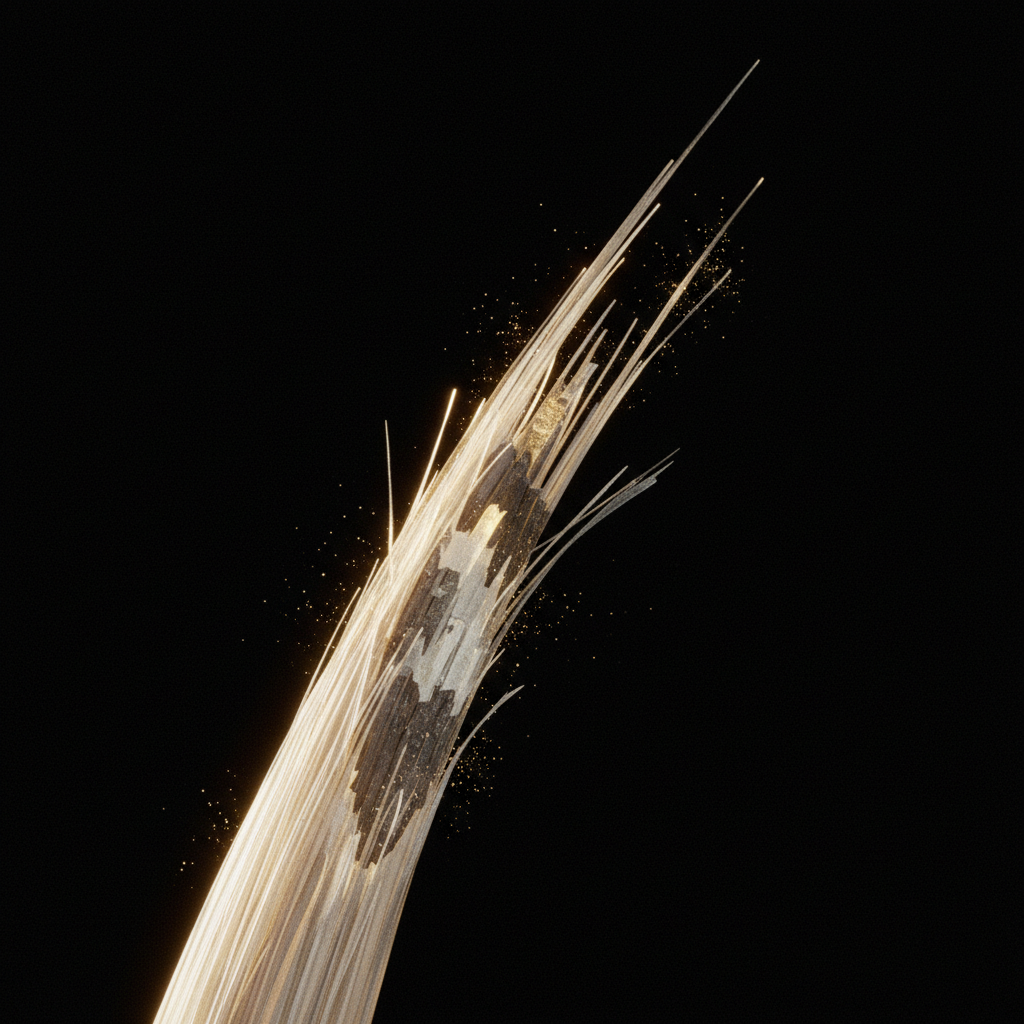
Quick answer: Understanding Cuticle Damage begins with recognising that the hair cuticle is your strand's outermost defensive barrier, formed of overlapping keratin scales. When heat, chemical processing, UV radiation, or harsh friction lift, chip, or strip these scales, the hair fibre loses moisture, snags easily, and breaks. The critical limitation is biological: because hair fibre is non-living tissue, you cannot naturally regenerate lost cuticle scales once they are gone. You can only patch, smooth, and protect what remains.
Key takeaways
- The hair cuticle consists of 5 to 10 overlapping cellular layers sealed by an exterior fatty layer known as 18-methyleicosanoic acid (18-MEA).
- Cuticle damage is cosmetic physical wear along the hair shaft; it is entirely distinct from follicular hair loss or hormonal shedding.
- Alkaline chemical treatments (such as bleaching or relaxers at pH 9.0 to 11.0) and excessive heat (above 180°C) are the primary drivers of cuticle erosion.
- Severely stripped cuticles expose the inner cortex, leading to moisture loss, extreme porosity, split ends, and structural breakage.
- True biological healing of the cuticle is impossible because hair is non-viable tissue, but acidic formulations and conditioning agents can temporarily smooth down lifted scales.
Understanding Cuticle Damage: what the evidence shows
Understanding Cuticle Damage requires examining the microscopic architecture of human hair. The cuticle is the hair shaft's outermost protective shield, comprised of flat, hardened keratinocytes arranged like tiles on a roof. In virgin, undamaged hair, these scales lie flat against the shaft, held together by a rich lipid membrane. The surface is naturally hydrophobic (water-repelling) thanks to a covalently bound layer of 18-methyleicosanoic acid (18-MEA).

Cosmetic science demonstrates that when hair encounters physical, thermal, or chemical stress, this delicate architecture breaks down systematically:
- Lipid erosion: Friction and mild cleansing strip the protective 18-MEA lipid layer first, transforming hair from hydrophobic to hydrophilic (water-absorbing).
- Scale lifting: Alkaline water, bleaching agents, or permanent colour force the edges of the cuticle scales to flare outward.
- Cracking and chipping: Mechanical friction from vigorous brushing, rough towels, or heat styling tools shears off the lifted margins.
- Complete scale detachment: With persistent stress, entire cuticle layers slough off, leaving the delicate inner cortex completely exposed to the environment.
Research published in the International Journal of Cosmetic Science confirms that once the cuticle layer is compromised, internal moisture escapes rapidly, the hair swells unevenly when wet, and inter-fibre friction increases substantially. This friction creates tangles and leads directly to fibre breakage.
What the evidence does not show
Cuticle damage is often misunderstood in popular marketing, leading to unrealistic consumer expectations and misdiagnoses:
- Cosmetics cannot "repair" cuticles permanently: Shampoos, masks, and bonding treatments cannot regrow biological cells. They act as microscopic spackle, coating fractures and temporarily adhering lifted scales to the cortex. Once washed away, the underlying damage remains.
- Cuticle damage does not cause hair loss: Fibre breakage is not alopecia. Cuticle damage occurs purely along the non-living length of the hair strand. It has no direct impact on the hair follicle beneath the scalp, nor does it cause telogen effluvium or pattern thinning.
- Natural oils cannot fully replace 18-MEA: While plant oils provide lubrication and reduce surface friction, they lack the specific covalent bonds required to permanently re-establish the hair's native hydrophobic lipid barrier.
The mechanical and chemical drivers of cuticle erosion
Everyday grooming routines expose the hair cuticle to multiple environmental and physical hazards. Understanding these mechanisms helps prevent unnecessary degradation.
Virgin, Smooth Cuticle (pH 4.5 - 5.5, Intact 18-MEA)
 │
 ▼ [Chemical Lift / High Heat >180°C]
Lifted, Rough Cuticle (Hydrophilic, Increased Porosity)
 │
 ▼ [Friction / Repeated Washing]
Chipped & Stripped Cuticle (Exposed Cortex, Fraying)
 │
 ▼ [Structural Failure]
Fibre Snapping & Split Ends (Irreversible Breakage)
Chemical processing
Chemical lighteners, permanent dyes, perms, and chemical relaxers operate at high pH levels (frequently between pH 9.0 and 11.0). This alkalinity causes the hair shaft to swell dramatically, forcing the cuticle scales open so active chemicals can reach the inner cortex. While necessary for pigment alteration or structural reforming, this process irreversibly dissolves portions of the cell membrane complex and strips 18-MEA.
Thermal breakdown
Styling tools heated beyond 180°C physically degrade the keratin proteins within the cuticle. At temperatures above 200°C, moisture trapped inside the hair shaft can flash-boil into steam, producing microscopic structural blisters within the cuticle known as "bubble hair".
Mechanical stress
Brushing hair while soaking wet is particularly hazardous. Wet hair can stretch up to 30 percent beyond its resting length before breaking, but the delicate cuticle scales do not stretch at the same rate. This differential stress causes the scales to buckle, crack, and tear away from the shaft.
Cuticle integrity: healthy versus damaged
| Diagnostic feature | Intact, healthy cuticle | Damaged cuticle | Severely eroded cuticle |
|---|---|---|---|
| Surface texture | Smooth, glossy, reflective | Rough, raspy, matte finish | Coarse, brittle, catches on fabric |
| Porosity | Low (resists rapid water entry) | Moderate (absorbs water quickly) | High (swells rapidly, dries unevenly) |
| Tangle tendency | Low (fibres glide past each other) | Moderate (occasional snags) | Severe (knots form instantly) |
| Lipid layer (18-MEA) | Present and fully intact | Partially stripped | Completely absent |
| Tensile response | Elastic, snaps back into shape | Prone to stretching and snapping | Snaps under minimal tension |
| Under microscope | Tightly tiled, uniform margins | Jagged, lifted scale borders | Complete scale loss, frayed cortex |
Clinical signs of cuticle damage
Stylists and individuals can identify cuticle erosion through several visible and tactile markers:
- Loss of natural shine: Healthy, aligned cuticles form a flat surface that reflects light uniformly. Lifted or missing cuticles scatter light in all directions, making the hair appear dull and lifeless.
- Persistent tangling and "velcro" ends: When cuticles lift, their jagged microscopic edges act like tiny hooks. Individual hair fibres catch against one another, creating stubborn, persistent knots.
- Rapid wetting and drying cycles: Damaged, porous cuticles allow water to flood into the cortex within seconds under the shower, but they cannot retain hydration once exposed to dry ambient air.
- Frizzing in humid conditions: Ambient atmospheric moisture enters lifted cuticle sites unevenly, swelling localised sections of the cortex and pushing hair fibres out of their aligned pattern.
Practical steps to manage and protect the cuticle
Because the hair shaft cannot regenerate itself, your strategy must focus on mitigation, friction reduction, and surface smoothing.
1. Rebalance pH levels
Hair thrives in an acidic environment between pH 4.5 and 5.5. Washing with high-pH tap water or alkaline cleansers forces scales outward. Use pH-balanced shampoos and follow with mildly acidic conditioning rinses to encourage scales to lie flat against the shaft.
2. Lower styling temperatures
Keep thermal styling tools below 175°C to protect keratin integrity. Always apply a film-forming heat protectant containing silicones, polyquaterniums, or hydrolysed proteins before applying heat. These ingredients distribute thermal energy more evenly and reduce direct contact scorching.
3. Minimize wet friction
Hair is at its weakest when wet. Swap standard terry-cloth bath towels (which possess coarse, looped fibres that pull at cuticles) for smooth microfibre wraps or soft cotton t-shirts. Gently squeeze water out rather than rubbing vigorously. Never brush wet hair with fine-toothed combs; use wide-toothed detangling combs or flexible wet-brushes starting from the ends and working upward.
4. Seal the exterior with cosmetic emollients
Conditioners and leave-in serums deposit positive (cationic) charges that bind to the negatively charged, damaged sites on your hair fibre. This temporarily replaces lost lubricity, smooths down jagged scale margins, and reduces ongoing combing friction by up to 50 percent.
The Watermans approach to hair fibre support
While cuticle damage is a cosmetic concern along the hair shaft rather than a scalp disorder, maintaining a healthy, balanced environment at the root ensures that newly emerging hair fibres possess strong, intact cuticles from the outset.
Watermans focuses on non-invasive hair wellness. Formulations such as Watermans Grow Me Shampoo incorporate hydrolysed lupin protein, biotin, allantoin, and argan oil. These ingredients help cleanse without harsh stripping, providing light conditioning benefits that support moisture retention along the hair shaft while nurturing the scalp environment. Complementing this with a rich conditioner helps smooth the exterior cuticle layer, reducing the day-to-day combing breakage that robs hair of density and length.
When cuticle damage signals a different issue
Sometimes what appears to be simple cosmetic cuticle damage points to broader mechanical or systemic complications:
- Trichorrhexis nodosa: If you observe tiny, bead-like white swelling points along the hair shaft where the hair snaps cleanly, the cuticle may have been completely worn away in isolated spots, exposing microscopic cortex "paintbrushes". This requires immediate cessation of all heat and chemical processing.
- Follicular shedding: If you notice an increased volume of full-length hair strands with small white bulbs at the root accumulating in your brush or shower drain, you are experiencing follicular shedding (such as telogen effluvium), not cuticle-related fibre breakage.
- Nutritional or health imbalances: While cuticle damage on existing hair reflects external wear, hair emerging from the scalp in an unusually weak, fragile state can indicate systemic nutritional deficiencies, thyroid irregularities, or severe illness.
If you experience sudden, unexplained hair breakage despite minimal styling, or if you notice widespread thinning at the scalp, arrange a consultation with a certified trichologist or dermatologist for clinical evaluation.
Frequently asked questions about Understanding Cuticle Damage
Can split ends be glued back together permanently?
No. Once the cuticle wears away at the tip of the hair shaft and the internal cortex frays into a split end, the damage is irreversible. Cosmetic serums and bonding products can temporarily glue the split fibres together until your next wash, but only a trim removes the damaged section entirely.
Does cold water close the hair cuticle?
There is no evidence that a cold water rinse closes hair cuticles. Cuticle scales respond to pH levels and moisture, not water temperature. While cool water will not harm your hair, an acidic conditioning product (pH 4.5 to 5.5) is what actually helps flatten lifted cuticle scales.
How does Understanding Cuticle Damage prevent hair breakage?
Understanding Cuticle Damage helps you recognize that fragile, lifted cuticles create friction and allow the cortex to dry out. By adjusting your habits, such as using heat protectants, detangling gently, and using acidic conditioners, you preserve cuticle integrity, which directly stops fibres from snagging and snapping.
Can hard water damage the hair cuticle?
Yes. Minerals like calcium and magnesium in hard water bind to the keratin structure of the cuticle, forming an insoluble film. This mineral buildup makes the cuticle feel rough, stiff, and brittle, which increases inter-fibre friction and accelerates mechanical wear during styling.
Conclusion
Understanding Cuticle Damage empowers you to make informed, practical decisions about your hair care routine. Because hair fibre is biologically dead tissue, an eroded cuticle cannot grow back or heal itself. Maintaining hair strength relies entirely on preservation: shielding the cuticle against extreme pH levels, limiting thermal and chemical stress, and using restorative cosmetic emollients to smooth down lifted scales. By protecting this outer barrier, you preserve the inner cortex, eliminate preventable breakage, and maintain soft, resilient hair.
Sources and references
- International Journal of Cosmetic Science, "The hair fibre characteristics and the impact of cosmetic treatments", 2018.
- Journal of Cosmetic Dermatology, "Hair shaft damage from heat and chemical processing: an ultrastructural review", 2020.
- Robbins, C. R., Chemical and Physical Behavior of Human Hair, 5th ed., Springer, 2012.
- British Association of Dermatologists, "Hair breakage and cosmetic hair weathering", Clinical Guidance, 2021.
- Journal of Investigative Dermatology, "Structure and function of the 18-methyleicosanoic acid lipid layer on human hair cuticles", 2017.