Trichodynia Explained: Causes, Symptoms, and Scalp Care
8 min read ·
Trichodynia explained: discover the biological causes of scalp tenderness, hair pain, and burning sensations, and learn evidence-based ways to calm the discomfort.
Quick answer: With trichodynia explained, this condition refers to a painful, burning, stinging, or aching sensation of the scalp, often triggered simply by touching the hair. Frequently nicknamed "hair pain", it commonly co-occurs with active hair shedding conditions like telogen effluvium and androgenetic alopecia. However, trichodynia is a symptom rather than an independent diagnosis, and current evidence shows it does not directly cause follicle death or permanent hair loss on its own.
Key takeaways
- Trichodynia describes scalp discomfort, burning, or aching, often felt when brushing, washing, or moving the hair.
- Between 20% and 34% of patients presenting with hair shedding report experiencing trichodynia.
- The sensation is mediated by cutaneous neuro-inflammation, particularly the release of Substance P around hair follicles.
- Psychological factors, including acute stress, health anxiety, and depressive symptoms, frequently amplify or accompany the discomfort.
- Trichodynia is completely distinct from hair breakage; it involves peripheral nerve sensitivity rather than structural shaft failure.
- Calming the condition requires addressing the underlying trigger, which may be inflammatory scalp disorders, traction, nutritional gaps, or telogen effluvium.
Trichodynia Explained: what the evidence shows
Trichodynia explained scientifically is a localised somatosensory symptom where hair follicles and surrounding scalp tissue register ordinary tactile input as pain or tenderness (allodynia). First documented clinically in the mid-twentieth century and expanded in European dermatological literature during the late 1990s, research indicates it affects approximately one-third of individuals dealing with diffuse hair shedding.
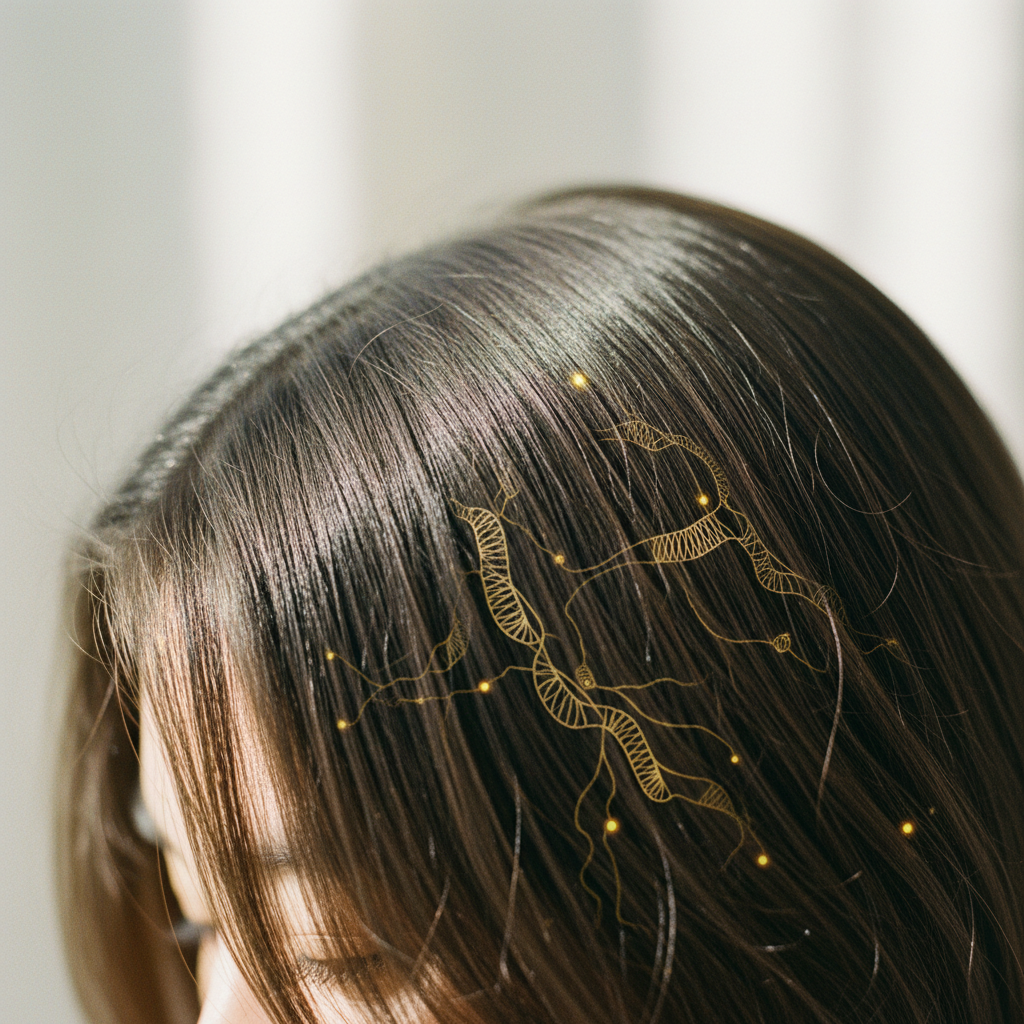
Observational studies published in the International Journal of Trichology and the British Journal of Dermatology highlight that women experience trichodynia more frequently than men, representing up to 80% of reported cases. The discomfort does not follow a uniform pattern. Some individuals feel a constant dull ache across the crown, while others report a sharp, prickling sting only when hair shifts against its natural growth direction.
Dermatologists link the condition closely with telogen effluvium (rapid reactive shedding) and androgenetic alopecia (pattern hair loss). In telogen effluvium, the abrupt transition of an unusually large number of follicles into the resting phase creates micro-mechanical shifts in the follicular unit, which appears to irritate adjacent peripheral nerves.
Biological mechanisms: why does your scalp hurt?
The exact biological cascade of trichodynia involves cutaneous neurobiology, vascular changes, and central nervous system feedback loops.
- Neuropeptide release: Follicles are wrapped in an intricate network of sensory nerve fibres. Under systemic stress or local irritation, these fibres release neuropeptides, most notably Substance P and calcitonin gene-related peptide (CGRP). Substance P triggers mast cell degranulation, producing mild neurogenic inflammation around the upper follicle (the infundibulum).
- Perifollicular inflammation: While trichodynia can occur on a scalp that looks entirely healthy to the naked eye, biopsy samples frequently reveal subtle, low-grade perifollicular lymphocytic infiltrates. This sub-clinical swelling presses against superficial nerve endings.
- The stress-axis loop: Emotional stress prompts the release of corticotropin-releasing hormone (CRH) in both the brain and locally within human hair follicles. CRH amplifies pain sensitivity, creating an exhausting cycle where anxiety over shedding heightens scalp hypersensitivity, and the persistent ache fuels deeper anxiety.
What the evidence does not show
It is critical to separate clinical reality from common online myths. The evidence does not show that trichodynia directly destroys hair follicles. Having an aching scalp does not mean your follicles are scarring shut or that you will go bald.
Furthermore, research has not proven that trichodynia is a purely psychosomatic delusion. In the past, dismissive practitioners labelled scalp tenderness as "scalp dysaesthesia" or hysteria. Modern biopsies and microneurography show real, measurable neurochemical activity.
Finally, controlled studies do not support the idea that heavy oiling or aggressive scalp scrubbing eliminates trichodynia. In fact, saturating an inflamed follicular environment with occlusive oils often feeds commensal Malassezia yeasts, compounding the irritation.
Trichodynia vs other common scalp conditions
Because scalp pain can stem from nerve issues, surface microbes, or mechanical damage, distinguishing trichodynia from other conditions is essential:
| Condition | Primary Sensation | Visible Scalp Signs | Primary Origin |
|---|---|---|---|
| Trichodynia | Aching, burning, allodynia upon moving hair | Often none; normal appearance | Neurogenic inflammation linked to shedding or stress |
| Seborrhoeic Dermatitis | Intense itching (pruritus), occasional soreness | Greasy scales, erythema, visible flaking | Malassezia yeast overgrowth and sebum oxidation |
| Folliculitis | Tenderness, throbbing, sharp pinpoint pain | Pustules, red bumps centred on hair pores | Bacterial or fungal infection of follicular opening |
| Traction Alopecia / Strain | Localised soreness, tight pulling ache | Tent-like skin pulling, broken hairs at perimeter | Mechanical tension from tight hairstyles |
| Scalp Dysaesthesia | Constant chronic burning without hair movement | Normal scalp; common in older adults | Cervical spine irritation or neurological neuropathies |
Common signs and triggers
Recognising trichodynia involves identifying when and how the scalp reacts. Common presentations include:
- Movement pain: Discomfort that spikes when brushing, flipping your hair, or taking down an elastic band.
- Temperature sensitivity: Stinging or throbbing triggered by cold air or hot water in the shower.
- Absence of external rash: The skin typically displays no large plaques, thick crusts, or blistering, baffling sufferers who expect visible redness.
- Simultaneous shedding: Noticing dozens of club hairs shedding out in the shower while the vertex or crown feels bruised.
Common systemic triggers include acute emotional bereavement, sudden weight loss, iron deficiency, post-viral convalescence (such as following influenza or COVID-19), and sudden discontinuations of hormone therapies.
Practical steps to soothe the scalp
Managing trichodynia requires treating both the hair ecosystem and the sensitive nervous system gently.
- Lower physical tension: Avoid tight buns, high ponytails, claw clips, and heavy extensions. Wear hair loose or in very loose low braids to eliminate mechanical traction on hypersensitive follicles.
- Maintain balanced scalp hygiene: Wash the scalp regularly with mild, physiological pH (pH 4.5 to 5.5) cleansers. Allowing sweat, natural sebum, and cellular debris to accumulate exacerbates micro-inflammation.
- Cooling compresses: Applying a cool, damp cotton towel to the vertex for 10 minutes can damp down acute C-fibre nerve firing and temporarily relieve burning sensations.
- Review your blood markers: Request tests for serum ferritin, vitamin D3, vitamin B12, and thyroid function. Correcting low ferritin (aiming for levels above 50 ug/L for optimal follicular function) frequently resolves concurrent telogen shedding.
- Topical anti-inflammatories: In clinical settings, dermatologists may suggest mild topical corticosteroids for a brief 7 to 14 day window, or topical capsaicin to deplete Substance P reserves, though this must be medically supervised to avoid irritation.
Supporting the scalp environment with Watermans
When managing scalp discomfort linked to hair shedding, choosing functional, gentle topicals is critical. The Watermans Grow Me range was developed to revitalise the appearance of thinning hair while respecting the scalp barrier. Featuring biotin, rosemary, caffeine, niacinamide, and argan oil, the formulation cleanses without stripping away essential surface moisture.
For scalps recovering from the distress of telogen effluvium, maintaining clean follicles and balanced surface moisture with a targeted approach like Watermans Grow More Elixir provides an ideal foundation for fuller-looking, stronger-feeling hair as natural growth cycles restabilise.
When to seek medical advice
Scalp pain must not be ignored if it presents alongside structural skin changes. Consult a GP, trichologist, or dermatologist immediately if you notice:
- Smooth, totally bare, coin-sized patches of hair loss (indicative of alopecia areata).
- Permanent loss of follicular openings, scarring, or purple-red violaceous rings around the hairs (signs of cicatricial alopecias like Lichen Planopilaris or Frontal Fibrosing Alopecia).
- Spreading pus, yellow crusting, or oozing.
- Jaw claudication, visual changes, or intense temporal headache (which may signal temporal arteritis, a medical emergency).
Frequently asked questions about Trichodynia Explained
What does trichodynia actually feel like?
Trichodynia feels like a persistent burning, stinging, bruised, or tingling sensation across the scalp. Many people describe it as "hair root pain" or an aching sensation that worsens when they flip their hair, run their fingers through their strands, or wear a hat.
Can having trichodynia cause permanent hair loss?
No, trichodynia explained by clinical dermatologists does not cause permanent hair loss. While it frequently occurs alongside shedding conditions such as telogen effluvium or androgenetic alopecia, the pain itself is a neurological and inflammatory symptom, not an agent that destroys hair follicles.
How long does an episode of trichodynia typically last?
The duration depends on the underlying driver. If linked to an acute bout of telogen effluvium, trichodynia often subsides within two to six months as the high-turnover shedding phase normalises. If driven by persistent psychological stress, it can linger until the stress response is addressed.
Can changing my shampoo cure trichodynia?
A shampoo alone cannot cure trichodynia because the issue stems from perifollicular nerves and neuropeptides. However, switching to a gentle, pH-balanced cleanser helps remove irritating sebum peroxides and maintains barrier function, preventing secondary surface inflammation that makes nerve sensitivity worse.
Does brushing my hair make trichodynia worse?
Yes, aggressive brushing can aggravate allodynia. Pulling a stiff brush against sensitive follicles stimulates mechanoreceptors and nerve endings already flooded with Substance P. Use a wide-tooth comb or soft, flexible-bristle brush, detangling gently starting from the ends up to the roots.
Conclusion
Understanding trichodynia explained through an evidence-based lens removes much of the fear surrounding scalp discomfort. While the sensation of aching, tender roots can be distressing, it is a manageable neuro-inflammatory symptom rather than a sign of irreversible hair loss. By eliminating scalp tension, identifying internal shedding triggers, managing acute stress, and maintaining a healthy follicular barrier, you can successfully soothe irritated nerve pathways and support natural hair vitality.
Sources and references
- British Association of Dermatologists. Alopecia and Scalp Disorders Guidelines. Bad.org.uk
- Kivanç-Altunay, I., et al. (2003). "The presence of trichodynia in patients with telogen effluvium and androgenetic alopecia." International Journal of Dermatology, 42(9), 691-693.
- Durusoy, C., et al. (2009). "Psychological assessment of trichodynia patients." Journal of the European Academy of Dermatology and Venereology, 23(3), 241-247.
- National Institute for Health and Care Excellence (NICE). Alopecia: Clinical Knowledge Summaries. Cks.nice.org.uk
- Rebora, A. (2016). "Trichodynia: a review of the literature." Skin Appendage Disorders, 2(1-2), 1-5.
Find these ingredients in Watermans products
- Vitamin D: you will find this ingredient in our Hair Vitamins.
- Niacinamide: you will find this ingredient in our Hair Mask.