Trichodynia Causes and Relief: Understanding Scalp Pain
8 min read ·
Learn the science behind Trichodynia Causes and Relief. Understand why your scalp hurts, what triggers follicular burning, and practical steps to soothe pain.
Quick answer: Understanding Trichodynia Causes and Relief begins with recognising this distressing sensation of burning, aching, or stinging on the scalp, frequently described as hair pain. Trichodynia most often coincides with active hair shedding conditions such as telogen effluvium or androgenetic alopecia, driven by neurogenic inflammation involving substance P and perifollicular nerves. Effective relief targets underlying shedding triggers, calms cutaneous inflammation, and soothes scalp tension. However, topical therapies cannot cure complex systemic triggers or severe underlying neuropathic disorders without professional clinical assessment.
Key takeaways
- Trichodynia refers to cutaneous discomfort, burning, stinging, or aching across the scalp, often triggered by touching or moving the hair.
- The sensation is strongly correlated with active hair shedding, particularly telogen effluvium and androgenetic alopecia, affecting roughly 20 to 34 percent of patients with hair loss.
- Pathophysiological mechanisms involve perifollicular micro-inflammation, neuropeptide release (especially substance P), and heightened nervous sensitivity.
- Immediate relief strategies focus on reducing mechanical scalp tension, avoiding harsh surfactants, applying soothing anti-inflammatory scalp treatments, and managing stress.
- Trichodynia is distinct from scalp dysaesthesia caused by cervical spine issues, requiring medical differentiation if persistent.
Trichodynia Causes and Relief: what the evidence shows
Research into Trichodynia Causes and Relief reveals a complex interplay between sensory nerves, hair follicle biology, and emotional wellbeing. Clinicians describe trichodynia as a cutaneous dysaesthesia where patients perceive pain, paresthesia, or burning across the scalp without obvious macroscopic primary skin lesions.
Dermatological surveys indicate that trichodynia affects between 20 percent and 34 percent of individuals presenting with diffuse hair loss. It occurs significantly more often in women than in men. A landmark clinical survey published in the International Journal of Dermatology demonstrated that patients experiencing acute shedding, such as telogen effluvium, reported the highest prevalence of scalp pain, followed by individuals managing early-stage androgenetic alopecia.
The sensation rarely exists in a vacuum. Most clinical data show that when the underlying condition causing rapid hair shedding stabilizes, the scalp pain subsides. Relief hinges on addressing both the physical micro-environment around the follicle and the neurosensory pathways firing in the skin.
Biological mechanisms behind scalp pain
The physical sensation of scalp soreness is not imagined. The human scalp possesses a dense network of sensory nerve fibres that intertwine closely with hair follicles.
Each follicle is innervated by sensory nerve endings wrapped around the dermal sheath. When the hair cycle is disrupted, these nerves react:
- Neuropeptide release: Perifollicular inflammation prompts the release of substance P and calcitonin gene-related peptide (CGRP). Substance P lowers the pain threshold of surrounding cutaneous nerves and promotes local mast cell degranulation, producing itching, burning, and hypersensitivity.
- Perifollicular micro-inflammation: In both telogen effluvium and pattern hair loss, immune cells cluster near the upper follicle (the infundibulum). This low-grade inflammation sensitises sensory receptors, turning the light movement of a hair strand into a painful stimulus (allodynia).
- The brain-follicle axis: Mental stress prompts the systemic release of corticotropin-releasing hormone, which directly triggers cutaneous mast cells to release pro-inflammatory mediators around the hair bulb.
Stress / Follicular Insult
 │
 ▼
Substance P & CGRP Release
 │
 ▼
Perifollicular Micro-inflammation
 │
 ▼
Sensitised Scalp C-Fibres (Trichodynia)
Common triggers for trichodynia
Multiple external and internal factors can provoke or worsen trichodynia symptoms.
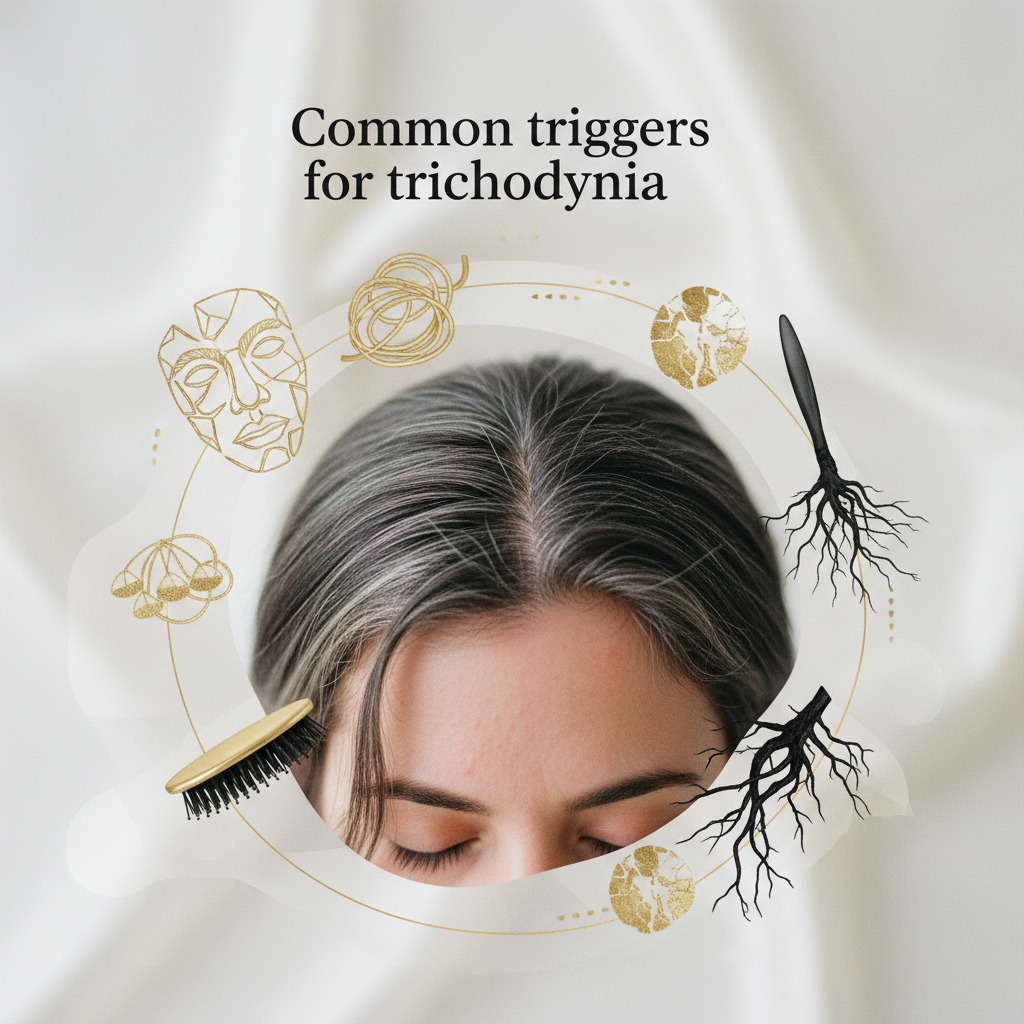
- Acute telogen effluvium: Sudden metabolic insults, nutritional deficits (low ferritin, vitamin D insufficiency), severe illness, or rapid hormonal shifts push hairs into the shedding phase, triggering local neurogenic irritation.
- Traction and styling strain: Wearing tight ponytails, buns, extensions, or heavy braids pulls mechanically on the follicular nerve endings, causing prolonged allodynia.
- Scalp microbiome disruption: Seborrhoeic dermatitis or an overgrowth of Malassezia yeasts generates irritating free fatty acids that amplify cutaneous stinging.
- Nutritional and systemic stress: Deficiencies that undermine follicular cell division often correlate with heightened neurogenic pain signals in the dermis.
- Psychological strain: Anxiety, depression, and obsessive-compulsive traits frequently amplify perceived pain intensity via central nervous system pathways.
Comparing trichodynia with other scalp conditions
Because trichodynia presents without obvious blisters, ulcers, or rashes, it is frequently confused with other scalp complaints.
| Condition | Primary Symptoms | Visible Scalp Signs | Primary Origin |
|---|---|---|---|
| Trichodynia | Burning, tenderness, aching on hair movement | Usually normal; occasional mild perifollicular erythema | Neurogenic inflammation linked to hair shedding or stress |
| Scalp Dysaesthesia | Burning, stinging, phantom crawling | Completely normal scalp appearance | Cervical spine impingement (chronic neck/shoulder strain) |
| Seborrhoeic Dermatitis | Intense itch, burning | Yellow greasy flakes, visible erythema, patches | Malassezia yeast overgrowth and sebum breakdown |
| Traction Tenderness | Localised soreness, aching | Redness around stressed follicles, broken hairs | Sustained mechanical pulling from tight styling |
| Contact Dermatitis | Sharp burning, severe itching | Intense redness, swelling, weeping or dry scaling | Allergic or irritant reaction to hair dyes or products |
What the evidence does not show
There is no scientific proof that trichodynia directly causes permanent follicle death or scarring alopecia. The pain itself does not destroy the hair root. Instead, trichodynia is a symptom of existing follicular disturbance, shedding, or neurological hypersensitivity.
Furthermore, evidence does not show that extreme dietary restrictions or invasive scalp injections cure the condition. Scalp pain cannot simply be "washed away" using aggressive anti-dandruff solutions; in fact, over-cleansing with harsh sulfates often worsens the compromised epidermal barrier and amplifies the burning sensation.
Practical relief: what you can do
Relief requires a gentle, multi-tiered approach that calms cutaneous nerve endings while supporting healthy hair turnover.
1. Minimise mechanical stress
Cease tight hairstyles immediately. Allow your hair to rest loosely. Avoid vigorous scalp scrubbing, hard-bristled brushes, and intense scalp massage tools during flare-ups, as over-stimulating sensitised C-fibres deepens pain perception.
2. Switch to gentle, microbiome-friendly cleansing
Wash the scalp with lukewarm water (around 36 to 38 degrees Celsius) rather than hot water, which triggers vascular dilation and histamine release. Select shampoos with a skin-friendly pH (between 5.0 and 5.5) formulated without harsh sulfates or stripping detergents.
3. Cool and soothe topical inflammation
Topical preparations containing soothing natural botanicals, caffeine, or mild menthol derivatives can help. Topical caffeine has been shown to support local microcirculation, while light cooling agents activate TRPM8 cold-sensing receptors, effectively closing the pain gate to the brain.
4. Manage neurogenic stress
Because the scalp is intimately wired to emotional stress responses, progressive muscle relaxation, mindfulness, and gentle neck stretches frequently alleviate the background tension feeding cutaneous pain.
5. Check systemic health
Work with a medical practitioner to evaluate serum ferritin, zinc, vitamin D, and thyroid panels. Resolving biological deficits curtails telogen effluvium, removing the primary catalyst for trichodynia.
Supporting the scalp environment with Watermans
When managing hair shedding and scalp sensitivity, maintaining a clean, balanced skin barrier is vital. Watermans GrowMe Shampoo provides a revitalising cleanse formulated with biotin, rosemary, caffeine, and niacinamide. This blend supports a clean, refreshed scalp environment without relying on aggressive stripping agents, promoting fuller-looking hair and helping to settle surface discomfort.
Pairing this with a balanced topical routine can help revitalise the appearance of thinning or stressed hair while ensuring the scalp surface remains hydrated and supple.
When the cause may be something else
If scalp discomfort persists without any active hair shedding, or if it presents strictly on one side alongside neck stiffness, the cause may be scalp dysaesthesia originating from cervical spine compression (such as C4-C6 radiculopathy).
Similarly, conditions like temporal arteritis (giant cell arteritis) cause intense unilateral scalp tenderness in adults over 50 and represent a medical emergency requiring immediate attention to protect vision.
When to seek professional advice
Consult a GP, dermatologist, or qualified trichologist if:
- The pain is sudden, unilateral, or accompanied by visual changes or jaw pain.
- You notice patchy, circular hair loss or signs of follicular scarring (loss of visible follicular openings).
- The scalp displays severe weeping, pustules, thick crusting, or spreading redness.
- Scalp tenderness interferes significantly with sleep or quality of life despite gentle care.
Frequently asked questions about Trichodynia Causes and Relief
What is the most effective approach to Trichodynia Causes and Relief?
Effective relief relies on addressing underlying hair shedding triggers, removing mechanical tension, and applying soothing, pH-balanced topicals. Identifying whether the pain stems from telogen effluvium, emotional stress, or cervical issues allows you to eliminate the root cause while calming hyper-reactive scalp nerves.
Can wearing hair in a ponytail cause trichodynia?
Yes. Tight ponytails, buns, or braids exert prolonged mechanical strain on the sensory nerves surrounding hair follicles. This sustained pull provokes neurogenic inflammation and local allodynia, leading to lingering tenderness even after the hairstyle is removed.
Does trichodynia mean I will go completely bald?
No. Trichodynia does not destroy follicles or cause permanent baldness. It is a sensory symptom typically linked to temporary shedding cycles like telogen effluvium or initial pattern hair thinning. Once shedding slows and inflammation calms, hair growth proceeds normally.
Can stress alone cause scalp pain?
Yes. Psychological stress stimulates the release of substance P and neuropeptides around hair roots via the brain-skin axis. This process directly activates pain receptors in the scalp, creating authentic physical sensations of stinging, aching, or burning even without visible skin disease.
How long does trichodynia usually last?
The duration depends on the underlying driver. If linked to acute telogen effluvium, symptoms typically decline within two to six months as shedding stabilizes. If caused by hairstyle tension or product irritation, relief usually occurs within a few days of removing the trigger.
Managing your scalp comfort
Finding lasting answers to Trichodynia Causes and Relief requires viewing the scalp as a living, densely innervated ecosystem. By eliminating mechanical tension, supporting follicular health with gentle cleansing, and addressing internal shedding catalysts, you can resolve neurogenic scalp pain and rebuild comfort from the roots up.
Sources and references
- International Journal of Dermatology: "Trichodynia: a review of the literature and report of 248 cases" (2002).
- British Journal of Dermatology: "The role of substance P and neurogenic inflammation in hair growth and follicle biology" (2003).
- Journal of the American Academy of Dermatology: "Scalp dysesthesia and trichodynia: diagnostic nuances and management" (2013).
- NHS: "Hair loss (alopecia and telogen effluvium)" (Clinical Guidance, 2023).
Find these ingredients in Watermans products
- Zinc: you will find this ingredient in our Hair Vitamins.
- Niacinamide: you will find this ingredient in our Hair Mask.