Understanding Hair Follicle Inflammation: Causes, Signs, and Management
9 min read ·
Understanding Hair Follicle Inflammation: discover causes, biological mechanisms, symptoms, and evidence-based ways to calm irritation and protect your hair.
Quick answer: Understanding Hair Follicle Inflammation means recognising how immune activity, microbial overgrowth, or physical stress irritate the hair root, disrupting healthy hair production. Follicular inflammation ranges from superficial folliculitis to deeper inflammatory conditions like lichen planopilaris or seborrhoeic dermatitis. When left unmanaged, persistent inflammation can weaken the hair anchor, trigger excessive shedding, or permanently destroy stem cells. However, understanding hair follicle inflammation requires knowing that cosmetic scalp care supports comfort and barrier function, but cannot substitute for medical diagnosis or prescribed dermatological treatment.
Key takeaways
- Hair follicle inflammation occurs when white blood cells target the follicle, prompted by bacteria, yeasts, sebum build-up, chemical irritation, or autoimmune responses.
- Superficial inflammation often causes tender red pimples or pustules around hair fibres, while chronic micro-inflammation often goes unnoticed until shedding increases.
- Untreated, prolonged inflammation can progress from reversible shedding (such as telogen effluvium) to permanent, scarring hair loss (cicatricial alopecia).
- Scalp hygiene, gentle surfactants, and balancing the scalp microbiome help control superficial flare-ups, but autoimmune forms require clinical assessment.
- Cosmetic products can calm irritation and promote a healthy growth environment, but they do not cure medical scalp disorders.
Understanding Hair Follicle Inflammation: what the evidence shows
Understanding Hair Follicle Inflammation requires examining the biology of the pilosebaceous unit. Every hair follicle is an active micro-organ surrounded by blood vessels, nerve endings, and sebaceous glands. The follicle maintains a degree of immune privilege, protecting growing hair fibres from autoimmune attack.

When this barrier breaks down, inflammatory mediators flood the tissue. Research published in dermatological literature shows that inflammation around the follicle can be acute or chronic:
- Acute microbial inflammation (folliculitis): Pathogens such as Staphylococcus aureus or Malassezia yeasts penetrate the follicular opening, causing an immediate immune influx resulting in tenderness, redness, and small pustules.
- Perifollicular micro-inflammation: In conditions like androgenetic alopecia, low-grade, sustained inflammation gathers around the upper follicle (the infundibulum). Studies show this sub-clinical inflammation correlates with accelerated follicular miniaturisation.
- Autoimmune and scarring inflammation: In primary cicatricial alopecias, such as frontal fibrosing alopecia and lichen planopilaris, lymphocytes attack the follicular bulge, where stem cells reside. Once these stem cells are destroyed, the follicle becomes fibrous scar tissue and cannot regrow hair.
Evidence demonstrates that reducing follicular irritation preserves follicle density. Maintaining a calm scalp environment protects the structural integrity of the root.
What the evidence does not show
There is no clinical evidence that routine topical shampoos, essential oils, or cosmetic scalp scrubs can resolve deep, scarring alopecias. While marketing claims often promise complete restoration, cosmetic care works strictly on the superficial stratum corneum and outer follicular orifice.
The evidence also does not show that all scalp itching signifies follicle inflammation. Itch (pruritus) can stem from dry skin, neurogenic triggers, contact allergies to hair dye, or product build-up without an active cellular inflammatory cascade inside the follicle. Treating all scalp discomfort with harsh clarifying routines can strip the barrier, making existing inflammation worse.
Biological mechanisms: how inflammation damages the follicle
The human hair follicle cycles through three main phases: anagen (growth), catagen (transition), and telogen (rest). Inflammation disrupts this cycle through specific cellular mechanisms:
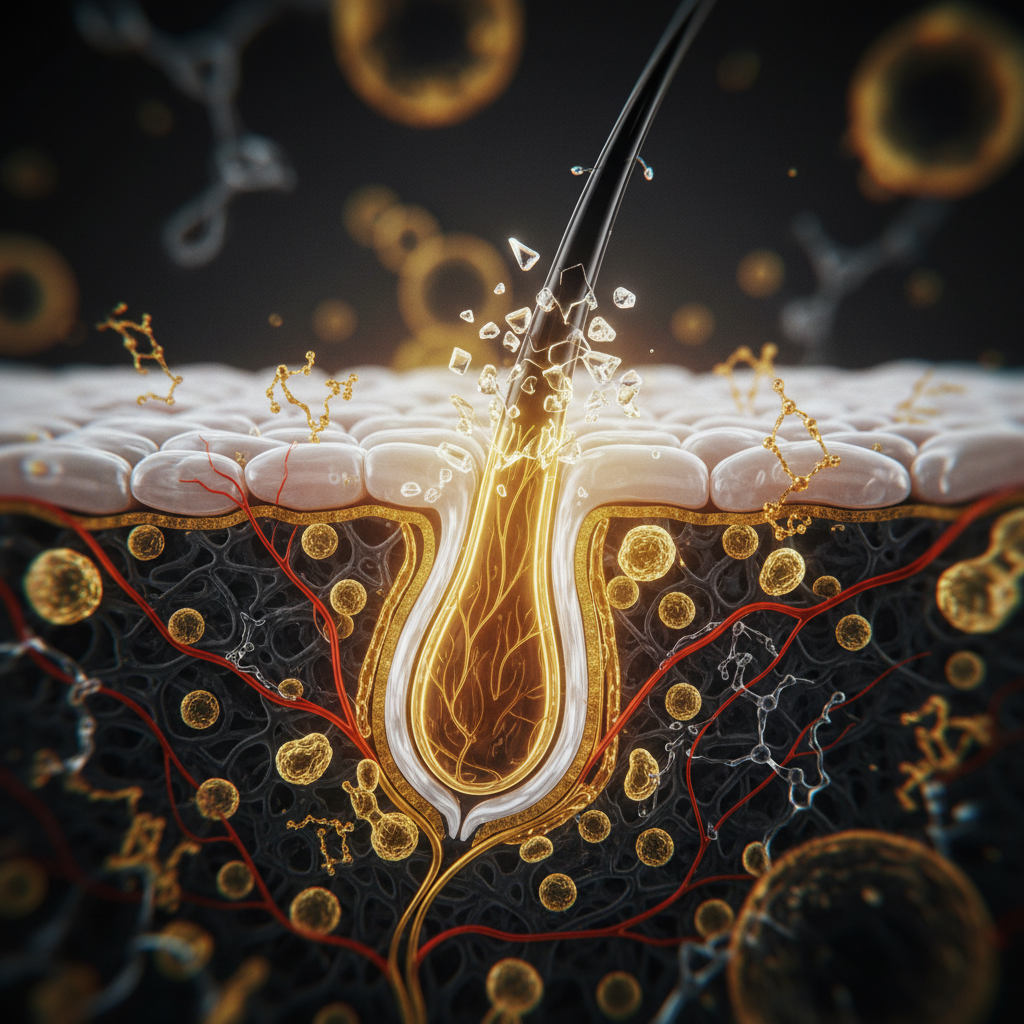
- Cytokine release: When immune cells detect injury or microbial imbalance, they release pro-inflammatory cytokines such as interleukin-1 (IL-1), tumour necrosis factor-alpha (TNF-alpha), and interferon-gamma. These chemical signals damage follicular keratinocytes.
- Premature catagen induction: High levels of inflammatory cytokines signal the hair bulb to shut down early. The follicle cuts off nourishment to the hair shaft, shifting prematurely from an active anagen state to catagen, leading to telogen effluvium weeks later.
- Perifollicular fibrosis: Persistent inflammation triggers fibroblasts to lay down collagen around the follicle neck. This collagen sheath hardens over time, strangling the follicle and restricting capillary microcirculation.
- Stem cell depletion: If inflammation reaches the bulge region (located near the insertion of the arrector pili muscle), CD4+ and CD8+ T cells destroy epithelial stem cells. Because these stem cells are required to generate a new hair fibre during the next cycle, their destruction causes permanent hair loss.
Common types of follicular inflammation compared
Understanding the specific nature of follicular irritation determines whether cosmetic intervention or clinical care is needed.
| Condition | Primary Cause | Typical Symptoms | Impact on Hair Fibre |
|---|---|---|---|
| Bacterial Folliculitis | Staphylococcus aureus overgrowth | Red papules, pustules, localised tenderness | Temporary shedding around active pustules |
| Malassezia Folliculitis | Yeast overgrowth in sebum | Itchy, uniform small bumps, greasy scale | Mild diffuse shedding if unmanaged |
| Seborrhoeic Dermatitis | Yeast reaction, sebum oxidation | Flaking, redness, yellowish crusts, intense itch | Telogen effluvium triggered by vigorous scratching |
| Traction Folliculitis | Mechanical tension on roots | Tenderness, bumps along hairline or parting | Can cause permanent traction alopecia over time |
| Lichen Planopilaris | Autoimmune lymphocyte attack | Perifollicular erythema, scaling collars, burning | Permanent follicular destruction and scarring |
Key signs to look for
Identifying follicle inflammation early helps prevent long-term follicular decline. Stylists and individuals should watch for distinct physical signs:
- Erythema (redness) around the hair base: Small pink or red rings circling individual hair fibres rather than general redness across the entire scalp.
- Follicular pustules: Pinhead-sized, white or yellowish spots pierced by a hair strand.
- Follicular casts or collarettes: Keratin scaling that wraps tightly around the base of the hair shaft like a tiny collar.
- Sensory symptoms: Persistent scalp tenderness, tingling (trichodynia), or a burning sensation when moving the hair.
- Cluster shedding: Hairs coming away in groups with small, soft white bulbs attached, often accompanied by root soreness.
Practical steps to soothe and manage inflammation
Managing the scalp environment requires balancing hygiene, barrier support, and physical gentleness:
1. Maintain scalp hygiene
Wash your hair regularly enough to prevent sebum oxidation. Oxidised squalene and free fatty acids irritate the follicular lining. For an oily scalp prone to bumps, washing every 1 to 2 days with a balanced shampoo (pH 4.5 to 5.5) reduces microbial load without stripping moisture.
2. Avoid aggressive mechanical friction
Scratching the scalp introduces bacteria from the fingernails into micro-tears in the skin, turning mild irritation into infected folliculitis. Use soft silicone scalp brushes or fingertips when cleansing, avoiding hard, pointed bristles.
3. Eliminate physical tension
Tight ponytails, braids, extensions, and heavy headwear pull on the follicular sheath. This mechanical stress causes traction-induced inflammation. Rotate your hairstyles and keep tension minimal.
4. Support the scalp skin barrier
Look for ingredients that soothe redness and strengthen the epidermal barrier, such as niacinamide, panthenol (pro-vitamin B5), allantoin, and caffeine. These help support cellular resilience and calm superficial irritation.
Supporting scalp balance with Watermans
When addressing general, non-medical scalp irritation, cosmetic support focuses on creating an optimal growth environment. Watermans GrowMe Shampoo delivers a gentle, sulfate-free cleanse designed to sweep away excess sebum and environmental debris without disturbing the scalp acid mantle. Formulated with revitalising ingredients like biotin, rosemary, caffeine, and niacinamide, it helps keep the scalp fresh, hydrated, and calm.
For targeted nourishment, Watermans Grow More Scalp Elixir applies concentrated, leave-in botanical care directly to the roots. Its lightweight, non-greasy texture provides soothing moisture to the epidermal barrier, helping maintain healthy follicle function between washes. These cosmetic products help maintain a clean, resilient foundation for fuller-looking, stronger-feeling hair, though they are not medical remedies for infectious or autoimmune scalp conditions.
When the cause may be something else
Scalp symptoms often mimic follicular inflammation while stemming from different underlying issues.
- Contact dermatitis: An allergic reaction to paraphenylenediamine (PPD) in hair dyes or fragrances can cause widespread redness and swelling that affects the entire scalp surface, not just the follicles.
- Psoriasis: This condition causes thick, silvery, well-demarcated plaques driven by rapid epidermal turnover, rather than isolated follicular papules.
- Diffuse telogen effluvium: Sudden, heavy shedding across the whole scalp following illness, stress, or nutritional deficiencies typically occurs with no visible follicular inflammation, redness, or pain.
- Nerve sensitivity: Conditions such as scalp dysaesthesia cause severe burning or tingling sensations without any observable inflammation or physical changes around the follicles.
When to seek medical advice
You should see a GP or a qualified trichologist or dermatologist if you notice any of the following:
- Scalp pain, burning, or visible pustules that do not resolve after 7 to 10 days of gentle care.
- Patches of hair loss where the scalp skin appears shiny, smooth, or lacks visible follicular openings (suggesting scarring alopecia).
- Crusts, weeping fluid, or rapidly spreading redness.
- Hair shedding accompanied by unexplained weight changes, joint pain, or intense fatigue.
A specialist can carry out dermoscopy (trichoscopy), swabs for bacterial or fungal culture, or a punch biopsy to determine the exact cellular cause and prescribe targeted antimicrobial or anti-inflammatory medications.
Frequently asked questions about Understanding Hair Follicle Inflammation
Can hair follicle inflammation cause permanent hair loss?
Yes, but only if the inflammation is severe, chronic, or autoimmune. In conditions like lichen planopilaris, inflammation attacks the stem cells in the follicular bulge, turning the follicle into scar tissue. However, standard superficial folliculitis or mild seborrhoeic irritation typically only causes temporary shedding, and normal hair production resumes once the irritation is controlled.
How does understanding hair follicle inflammation help in choosing hair products?
Understanding hair follicle inflammation helps you choose non-comedogenic, pH-balanced formulas that clean without disrupting the barrier. When you recognise that sebum build-up and harsh detergents both provoke inflammation, you can avoid pore-clogging heavy waxes and aggressive sulfates, selecting soothing ingredients like niacinamide, panthenol, and mild surfactants instead.
How long does it take for follicular inflammation to heal?
Mild bacterial or fungal folliculitis usually begins clearing within 7 to 14 days with proper hygiene or prescribed topical treatments. Chronic conditions like seborrhoeic dermatitis require ongoing maintenance to prevent recurring flare-ups. If hair shedding occurred due to the inflammation, it typically takes 3 to 6 months for the new hair fibres to grow back visibly.
Can an oily scalp directly trigger hair follicle inflammation?
Yes. Excess sebum provides an abundant food source for naturally occurring scalp microbes like Malassezia yeasts. As these yeasts digest sebum, they release irritating free fatty acids that penetrate the skin barrier. This process triggers an immune cascade, causing redness, flaking, and follicular micro-inflammation.
Is scratching an itchy scalp dangerous for the follicles?
Scratching damages the epidermal barrier, creating micro-abrasions that allow bacteria to enter the follicle. It can also cause mechanical damage to the hair bulb, detaching fragile hairs prematurely and introducing secondary bacterial infections that prolong inflammation.
Maintaining follicular health
Understanding Hair Follicle Inflammation empowers you to distinguish between superficial scalp irritation and deeper, clinically significant conditions. By prioritising clean scalp hygiene, avoiding unnecessary physical tension, and supporting the epidermal barrier with gentle formulas, you can protect the root environment. When inflammation persists, seeking timely medical advice ensures the underlying cause is addressed before follicles sustain lasting structural damage.
Sources and references
- British Association of Dermatologists. Folliculitis: Patient Information Leaflet. 2022.
- Harries, M. J., et al. "Management of primary cicatricial alopecias: options for treatment." British Journal of Dermatology, 2008.
- Trüeb, R. M. "Oxidative stress in ageing of hair." International Journal of Trichology, 2009.
- National Institute for Health and Care Excellence (NICE). "Alopecia: Clinical Knowledge Summaries." 2021.
- Sadick, N. S., et al. "The role of inflammation in androgenetic alopecia: A review." Journal of Cosmetic and Laser Therapy, 2014.
Find these ingredients in Watermans products
- Niacinamide: you will find this ingredient in our Hair Mask.
- Panthenol (Provitamin B5): you will find this ingredient in our Heat Protection Spray.