Traction Alopecia Stages and Recovery: A Clinical Reference Guide
8 min read ·
Understand traction alopecia stages and recovery timelines. Learn the clinical signs of mechanical hair loss, how to prevent permanent scarring, and when hair can regrow.

Quick answer: Understanding Traction Alopecia Stages and Recovery is essential for catching mechanical hair loss before it becomes permanent. Traction alopecia occurs when chronic, prolonged physical tension pulls on the hair follicle, triggering inflammation and gradual thinning. In the early stages, follicles remain viable and hair regrows fully once tension ceases. However, the main limitation is time: if severe pulling continues into late fibrotic stages, the follicle scars and permanent baldness occurs. Prompt intervention and tension-free styling are crucial.
Key takeaways
- Traction alopecia is a preventable mechanical hair loss caused by repetitive, continuous pulling forces from hairstyles, extensions, or heavy headwear.
- Dermatologists classify the condition into distinct phases: early (perifollicular inflammation), intermediate (vellus miniaturisation and thinning), and late (cicatricial or scarring alopecia).
- Early and intermediate stages are reversible when mechanical tension is removed immediately.
- The late stage involves follicular scarring and permanent destruction, meaning medical treatments cannot restore natural follicle density.
- Early clinical warning signs include tenderness, pimple-like bumps (folliculitis), redness, and the "fringe sign" along the frontal hairline.
- Recovery typically requires 3 to 12 months of zero tension, accompanied by dermatologist-guided scalp care to reduce inflammation.
Traction Alopecia Stages and Recovery: what the evidence shows
Research published in dermatological literature demonstrates that Traction Alopecia Stages and Recovery follow a predictable pathophysiological sequence. The disorder was first formally described in Greenland in the early 20th century among women wearing tight topknots, but it affects individuals of any gender, age, or ethnicity who wear high-tension styles.
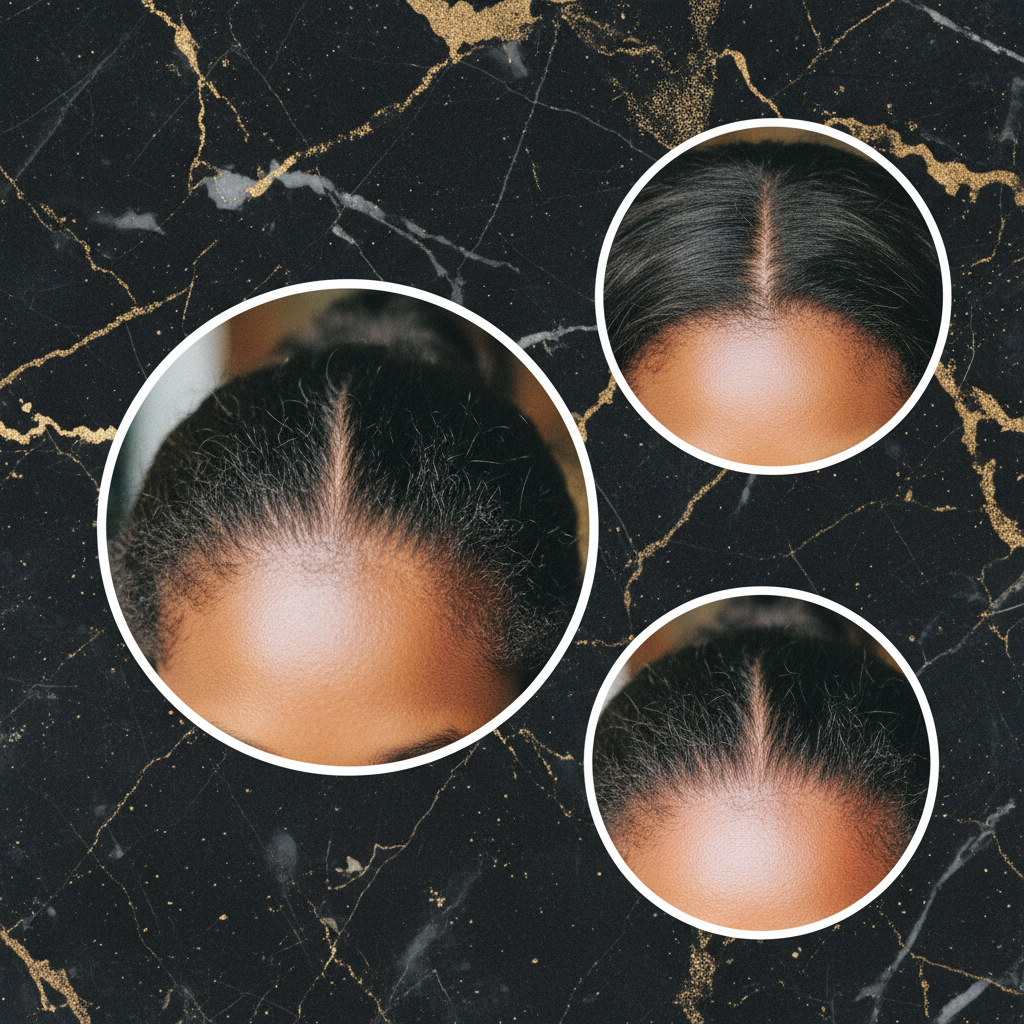
Clinical evidence divides the condition into three core phases:
1. The Early Stage (Mechanical Perifolliculitis)
In this initial phase, continuous tension produces micro-trauma at the follicular base. The outer root sheath separates slightly from the surrounding tissue, inciting an inflammatory response known as perifolliculitis.
Patients often experience scalp tenderness, local erythema (redness), and small follicular papules or pustules (resembling tiny pimples) around the pulled hairs. Hair fibres remain present, though some may enter premature catagen or telogen phases. Recovery in this stage is virtually 100 percent when tension is stopped, typically resolving within 3 to 6 months.
2. The Intermediate Stage (Follicular Miniaturisation and Hair Loosening)
When sustained tension continues over months or years, chronic low-grade inflammation alters the follicle's structural environment. The dermal papilla shrinks, and healthy terminal hairs gradually convert into miniaturised vellus hairs (fine, peach-fuzz strands).
Visibly, hair margins recede or display marked sparsity. A classic indicator is the "fringe sign", frequently observed along the temporal and frontal margins: a thin row of preserved, shorter hairs survives right along the peripheral edge, while the hair directly behind it thins out. Recovery in the intermediate stage is possible, but regrowth often takes 6 to 12 months, and follicle diameter may take longer to recover.
3. The Late Stage (Permanent Cicatricial Alopecia)
In the late stage, prolonged physical trauma completely destroys the follicular stem cell niche located in the follicular bulge. Connective tissue and fibrous tracts replace the active pilosebaceous unit.
The scalp skin in the affected zone becomes smooth, pale, and shiny, with an absence of visible follicular openings (ostia). At this point, the condition has transitioned into true scarring alopecia. Hair recovery via natural regrowth or topical therapies is no longer biologically possible in scarred areas.
| Stage | Clinical Signs | Follicle Status | Potential for Full Recovery |
|---|---|---|---|
| Early | Tenderness, erythema, tiny papules or pustules, mild shedding | Intact, inflamed outer root sheath | Complete recovery within 3 to 6 months |
| Intermediate | Marked thinning, widening partings, vellus miniaturisation, fringe sign | Miniaturised, weakened, reduced diameter | Partial to high recovery over 6 to 12 months |
| Late | Shiny, pale, smooth skin; absent follicular ostia; total patchy loss | Scarred, replaced by fibrous tissue | Irreversible naturally; requires surgical consideration |
The biomechanical mechanism: how tension damages follicles
Hair follicles can withstand transient pulling, such as brushing or normal movement. However, sustained, unyielding tension triggers mechanotransduction pathways that signal cellular distress.
When hair is pulled taut into styles like high ponytails, tight braids, locs, weaves, or cornrows, constant traction is placed on the follicle's attachment points. This ongoing mechanical strain compromises microcirculation around the dermal papilla.
Deprived of optimal perfusion and subjected to micro-tearing, the tissue releases inflammatory cytokines. Over time, persistent micro-inflammation creates perifollicular fibrosis. The connective tissue sheath thickens, eventually strangling the follicle and leading to apoptotic death of the epithelial cells.
Signs to look for: how to recognise traction alopecia early
Spotting traction alopecia before it transitions to irreversible scarring is the most reliable way to preserve your hair. Look out for these clinical signs:
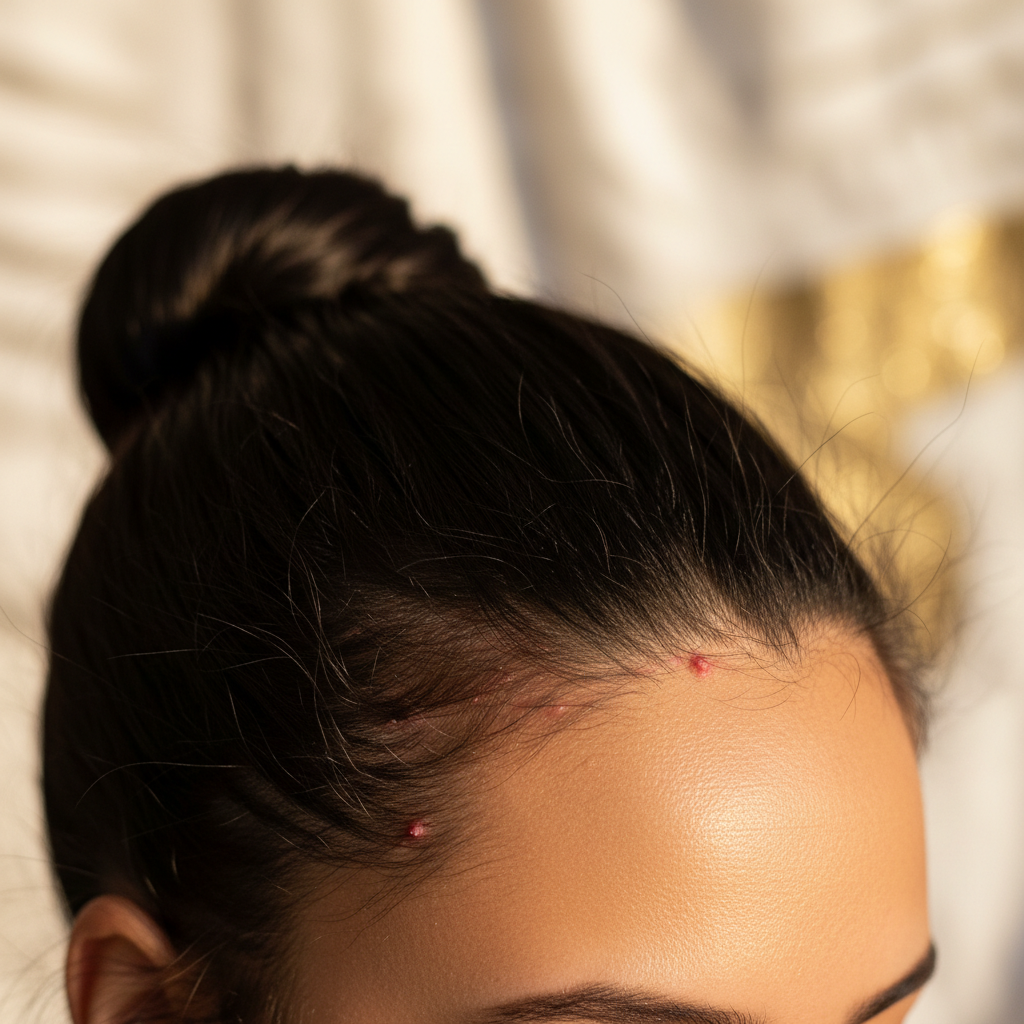
- Scalp soreness and headaches: A feeling of tight, stinging discomfort or localized headache immediately after styling.
- Follicular bumps: Tiny red bumps or yellow-topped pustules at the base of hair shafts along the hairline or where hair is pulled most severely.
- Follicular casts: Small, white, cylindrical keratin rings that slip up the hair shaft, caused by the detachment of the root sheath due to traction.
- Receding hairline or widening margins: Gradual backward movement of the temporal and frontal hairlines, or expanding gaps between braided sections.
- The fringe sign: Retained, fine hairs along the absolute front edge of the hairline with an empty, thinned patch directly behind them.
What you can do: steps to support recovery
If you are experiencing early to intermediate thinning, practical intervention can stop disease progression and encourage recovery.
1. Remove mechanical tension immediately
The fundamental rule of recovery is eliminating tension. Transition to loose, protective, low-manipulation styles. Avoid tight ponytails, buns, cornrows, micro-braids, heavy loc extensions, and clip-in hairpieces. Let your hair rest in its natural falling state whenever possible.
2. Avoid compounding chemical or heat stressors
Do not apply chemical relaxers, perms, or intensive bleaching agents to an inflamed scalp. Combining chemical processing with physical traction increases follicle vulnerability dramatically. Similarly, minimise high-heat blow-drying or flat-ironing directly at the roots.
3. Maintain scalp hygiene
Wash the scalp regularly with a gentle, non-stripping cleanser. Keeping the scalp clean reduces the risk of secondary bacterial folliculitis, which can accelerate tissue inflammation around stressed follicles.
4. Support follicular vitality topically
While cosmetic topicals do not reverse scarring, maintaining an optimal scalp environment supports surviving, miniaturised follicles. Watermans offers products designed to foster a balanced, nourished scalp environment. Products formulated with caffeine, biotin, rosemary, and niacinamide help condition the surface of the scalp, strengthen fragile existing strands against mechanical snapping, and keep emerging fibres supple.
When the cause may be something else
Not all hairline thinning stems from mechanical pulling. It is important to differentiate traction alopecia from other scalp disorders:
- Frontal Fibrosing Alopecia (FFA): A form of lichen planopilaris that typically affects post-menopausal women. It causes a symmetric, band-like recession of the frontal and temporal hairline, frequently accompanied by eyebrow loss. FFA lacks the "fringe sign" seen in traction alopecia.
- Female or Male Pattern Hair Loss (Androgenetic Alopecia): Driven by genetic sensitivity to dihydrotestosterone (DHT). It causes widespread crown or midline thinning without the focal pustules or inflammation characteristic of early traction.
- Alopecia Areata: An autoimmune disorder creating distinct, smooth, circular patches of sudden hair loss anywhere on the scalp, rather than following styling tension lines.
- Trichotillomania: A behavioural condition involving compulsive hair pulling. This generates irregular patches with broken hairs of uneven lengths, often on the non-dominant side of the hand.
When to seek professional advice
Consult a board-certified dermatologist or qualified trichologist as soon as you notice persistent bumps, ongoing soreness, or visible recession.
A clinician will perform dermoscopy (trichoscopy) to inspect follicular openings. If dermoscopy reveals absent white dots or loss of follicular ostia, it indicates late-stage scarring. If active pustules or inflammation are detected, a specialist may prescribe short-term topical corticosteroids or topical anti-inflammatories to quell the reaction before permanent damage sets in.
Frequently asked questions about Traction Alopecia Stages and Recovery
How long does recovery take in the early stage?
When tension is eliminated during the early inflammatory stage, noticeable hair regrowth generally begins within 3 months. Full restoration of hair density and strand thickness typically takes between 6 and 12 months, mirroring the normal biological duration of human hair growth cycles.
Can late-stage traction alopecia ever be reversed?
No, late-stage traction alopecia cannot be reversed naturally or with topical treatments. Once chronic inflammation has destroyed the follicular stem cells and replaced the hair canal with fibrous scar tissue, the follicle is gone. In these instances, surgical hair transplantation is the primary medical route to restore hair to the affected area.
What is the most critical factor in Traction Alopecia Stages and Recovery?
The single most critical factor in Traction Alopecia Stages and Recovery is timing. Halting the physical pulling force before irreversible fibrotic scarring takes place determines whether hair regrows or is lost forever. Early recognition of tenderness and small bumps allows you to intervene while follicles remain viable.
Does hair breakage count as traction alopecia?
No. Hair breakage refers to mechanical fractures along the exposed hair shaft due to friction, brittleness, or dryness. Traction alopecia is a follicular condition where the physical root inside the scalp is subjected to pulling forces that disrupt its growth cycle and cause loss at the follicle level.
Can wearing wigs or tight hats cause traction alopecia?
Yes. If wigs, hats, or headbands fit tightly and continuously drag, grip, or compress specific sections of hair along the hairline, the chronic friction and pulling can induce traction alopecia over months or years of habitual wear.
Safeguarding your hairline
Navigating Traction Alopecia Stages and Recovery requires listening to your scalp's earliest signals. Tension should never be accepted as the price of a neat hairstyle; persistent pain, tightness, and small bumps are clear biological warnings that your follicles are undergoing mechanical strain. By removing high-tension practices early, adopting gentle care routines, and seeking specialist trichological advice at the first sign of thinning, you can protect your follicles and secure lasting recovery.
Sources and references
- British Association of Dermatologists. Guidelines for the management of alopecia. 2021.
- Billero, V. And Miteva, M. Traction alopecia: the root of the problem. Clinical, Cosmetic and Investigational Dermatology, 2018. DOI: 10.2147/CCID.S137296.
- Samrao, A., Price, V. H., et al. Traction alopecia: a review of presentation, diagnosis, and management. Journal of the American Academy of Dermatology, 2011.
- National Health Service (NHS). Hair loss: causes and diagnosis. 2023.
Find these ingredients in Watermans products
- Biotin: you will find this ingredient in our Hair Growth Shampoo.
- Niacinamide: you will find this ingredient in our Hair Mask.