Thermal Damage and Bubble Hair: The Science of Heat-Induced Shaft Deformity
9 min read ·
Discover what causes Thermal Damage and Bubble Hair, how steam vacuolisation destroys hair shafts, and practical steps to prevent severe heat breakage.
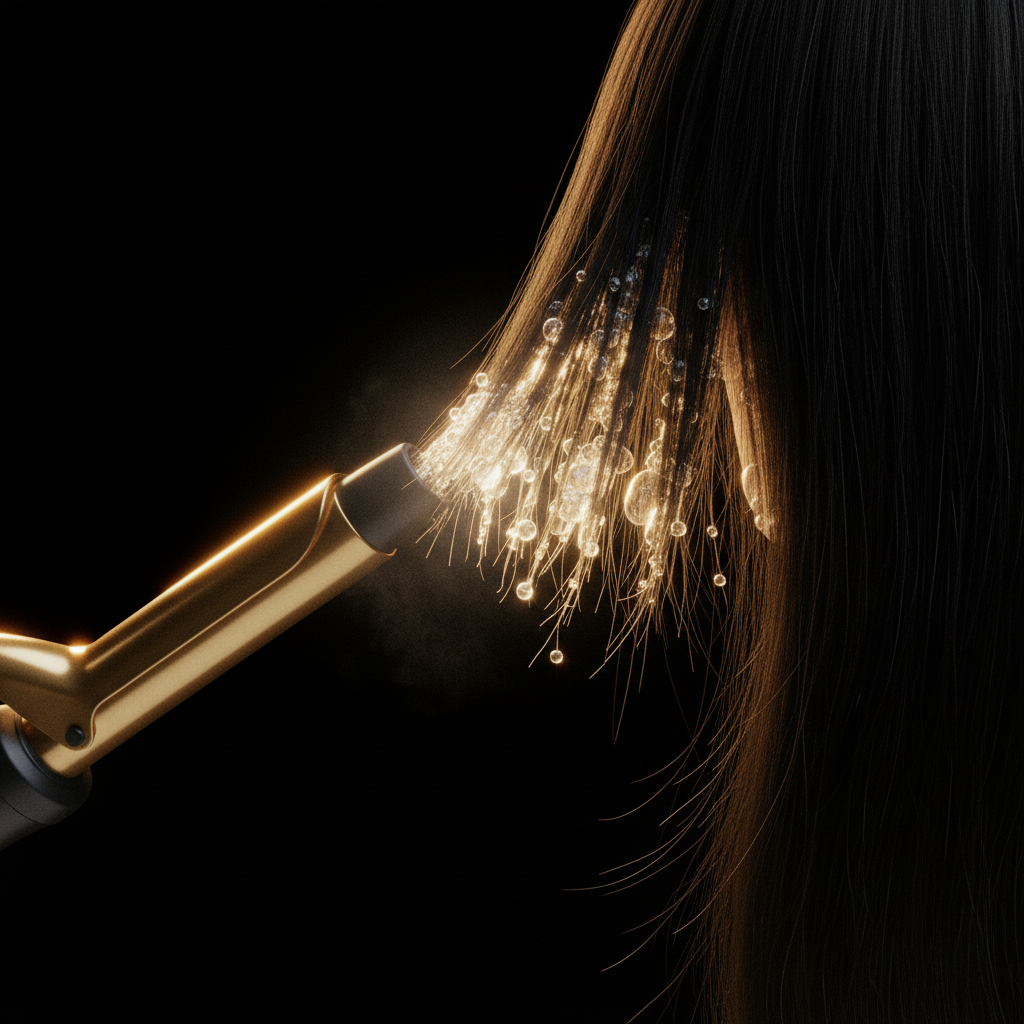
Quick answer: Thermal Damage and Bubble Hair describes a severe, irreversible form of heat-induced hair shaft deformation where trapped moisture inside the hair fibre vaporises rapidly during hot tool use, expanding into microscopic gas cavities. The exact phenomenon of Thermal Damage and Bubble Hair leaves the hair dry, brittle, and prone to breaking off along the shaft. The main limitation is that cosmetic products cannot reverse the internal cavities; once these structural voids develop, the only permanent remedy is trimming off the affected lengths.
Key takeaways
- Bubble hair deformity is caused by rapid heating of damp or wet hair, usually by hairdryers, curling tongs, or straightening irons operating above 125°C.
- Trapped water inside the cortex rapidly turns into steam, expanding and creating permanent air-filled cavities (vacuoles) along the fibre.
- The condition represents severe hair breakage rather than follicular hair loss; the follicle itself remains healthy and unaffected.
- Cuticle scales overlying the internal bubbles fracture and lift, leading to severe frizz, tangling, and brittle snapping.
- Prevention requires drying hair thoroughly before using heated styling tools, reducing tool temperatures below 175°C, and using protective heat barrier formulations.
Thermal Damage and Bubble Hair: what the evidence shows
Research into Thermal Damage and Bubble Hair demonstrates that this condition is an acquired structural defect of the hair shaft rather than a genetic disorder or a disease of the hair follicle. First formally described in dermatological literature in the early 1990s, bubble hair deformity occurs when intense, direct heat is applied to hair that retains internal moisture.
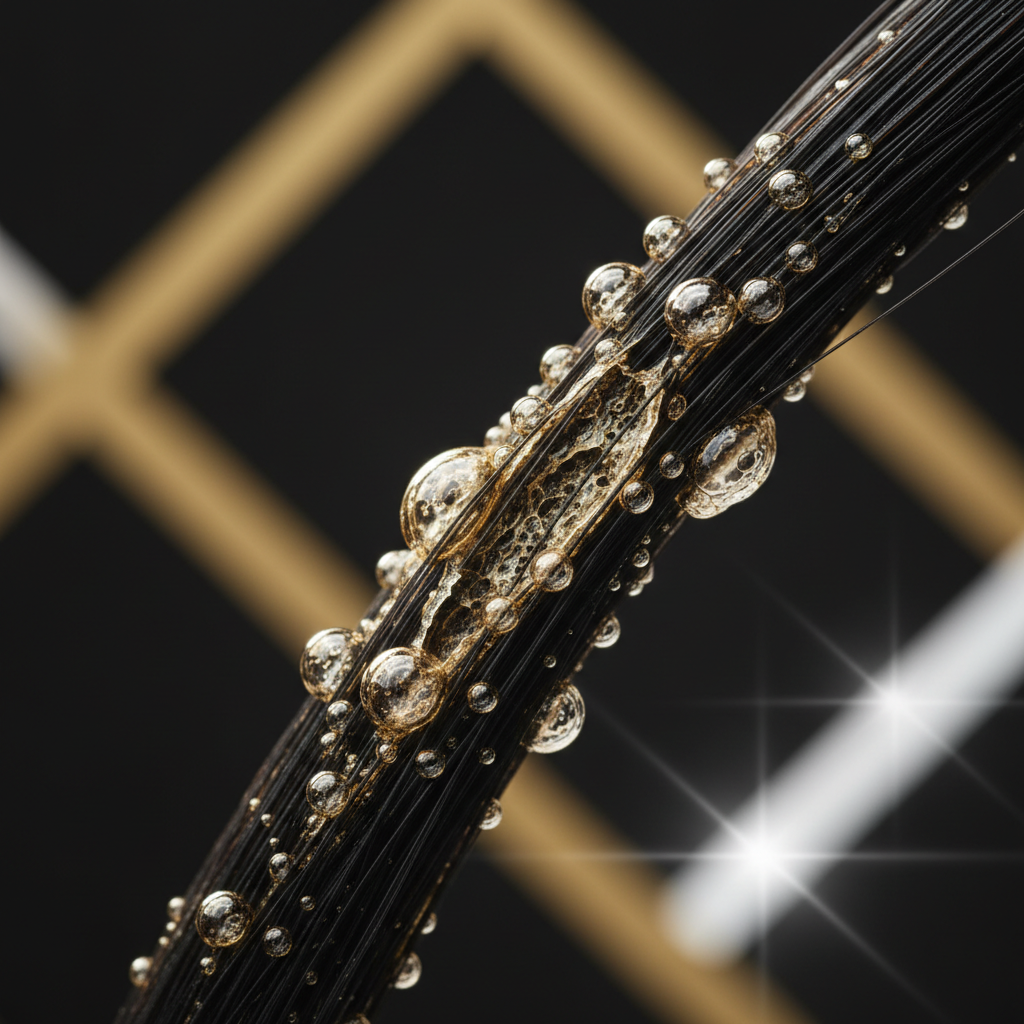
Under scanning electron microscopy, hair shafts affected by this process display distinct, evenly or unevenly spaced Swiss-cheese-like cavities within the cortex. When thermal appliances contact damp fibres, water trapped within the porous cortex reaches boiling point almost instantaneously. As the liquid converts to steam, it expands violently. Because the surrounding keratin matrix cannot stretch quickly enough to accommodate the gas volume, the expanding vapour punches hollow cavities into the cortex.
These internal bubbles force the overlying cuticle to balloon outwards, thinning the outer protective layer. The hair loses its structural integrity, tensile strength drops sharply, and the fibre snaps under normal grooming tensions such as brushing or washing.
The mechanism: heat, water, and keratin degradation
To understand how bubble hair develops, it helps to examine the physical chemistry of the hair shaft under thermal stress:
- Free and bound water dynamics: Normal hair contains between 10% and 15% water weight under standard atmospheric humidity, rising up to 30% when thoroughly wet. Some of this moisture is bound chemically to keratin, while free water sits within capillary spaces in the cortex.
- Phase transition to steam: When a heated plate or concentrated hairdryer airflow exceeding 100°C touches the shaft, free water boils. If the heating occurs slowly, moisture evaporates through the cuticle pores. If heated rapidly, particularly with clamping irons operating between 160°C and 230°C, the water turns to steam faster than it can escape through diffusion.
- Cavity formation (vacuolisation): The internal pressure of the expanding steam blows apart the cohesive protein network of the cortex, creating gaseous voids.
- Thermal denaturation of keratin: Keratin alpha-helices begin to denature and unfold between 140°C and 160°C, with significant decomposition occurring above 200°C. High heat combined with pressure permanently weakens the protein backbone around the newly formed bubbles.
- Cuticle shearing: As the bubbles push outward, the cuticle tiles crack, lift, and chip off, leaving the delicate cortex exposed to environmental friction and chemical aggressors.
| Metric / Characteristic | Healthy Hair Shaft | Standard Thermal Weathering | Bubble Hair Deformity |
|---|---|---|---|
| Cortex Integrity | Continuous, solid keratin matrix | Mild protein matrix fatigue | Multiple hollow gas-filled vacuoles |
| Cuticle Condition | Flat, overlapping, intact F-layer | Lifted edges, surface erosion | Fractured, thinned, ballooned plates |
| Moisture State at Heat Contact | Dry (below 10% moisture) | Dry to semi-dry | Wet or noticeably damp |
| Reversibility | N/A | Partially masked by conditioners | Irreversible; must be cut out |
| Primary Failure Mode | High tensile resistance | Gradual split ends (trichoptilosis) | Immediate snapping (trichorrhexis nodosa variant) |
What the evidence does not show
It is critical to distinguish laboratory facts from common haircare myths regarding heat styling:
- Heat does not cause permanent root damage unless burning the scalp: Thermal styling tools do not induce androgenetic alopecia, alopecia areata, or scarring alopecias unless physical heat burns scar the scalp skin directly. Bubble hair is strictly a shaft defect.
- Thermal protectants do not offer 100% heat immunity: Heat defence sprays formulated with polymers like PVP/DMAPA acrylates copolymer reduce heat transfer rates and surface friction, but they cannot prevent internal water vaporisation if wet hair is clamped inside a 200°C flat iron.
- Conditioning masks cannot "heal" the bubbles: Keratin treatments, conditioning masques, and bonding products can coat the exterior and temporarily fill micro-fissures, but they cannot refill the internal gas hollows or rejoin severed cortical filaments.
Signs and symptoms to look for
Thermal damage of this severity produces clear visual and tactile warning signs:
- Sudden localised brittleness: Hair feels straw-like, stiff, and distinctly gritty between your fingertips along specific sections, usually where flat irons clamp down first.
- Kinking and irregular curling: The shaft bends at unnatural, sharp angles where an internal bubble has thinned the outer wall.
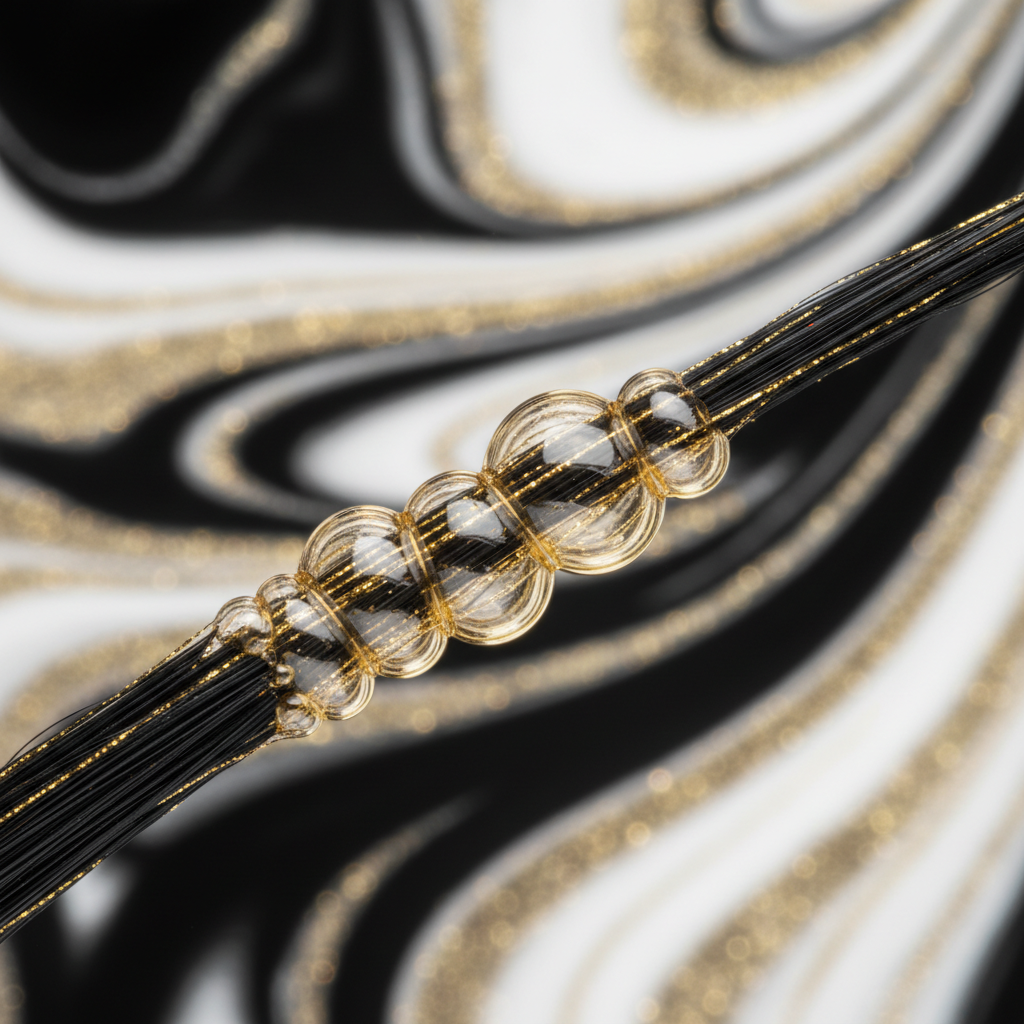
- Visual bead-like swellings: Under a magnifying glass, dermatoscope, or bright light, you may see tiny, pale, bead-like nodules along the hair strand.
- Accelerated mid-shaft breakage: Snapping occurs midway down the strand rather than at the root or tips. The broken ends look crushed or frayed rather than cleanly cut.
- Colour loss or brassiness: Severe thermal degradation oxidises hair pigments, causing bleached or artificially coloured hair to turn yellow, brassy, or muddy.
When the cause may be something else
Not every bump or break on a hair strand is caused by bubble hair. Several other hair shaft anomalies share similar symptoms:
- Monilethrix: A rare genetic condition where the hair shaft naturally develops regular bead-like nodes and constricted internodes, leading to fragility from early childhood.
- Trichorrhexis nodosa: The most common form of hair breakage, where the cortex frays outwards into tiny paintbrush-like swellings. This is caused by mechanical abuse, chemical processing, or mild chronic heat, but lacks the hollow gas vacuoles of true bubble hair.
- Trichorrhexis invaginata (bamboo hair): A shaft defect seen in Netherton syndrome where one part of the hair shaft telescopes into another, creating weak nodular swellings.
- White piedra or head lice nits: Fungal concretions (white piedra) or parasite egg casings (nits) adhere to the outside of the shaft and can feel like tiny nodules, but they sit on top of an intact cuticle rather than swelling from within.
What you can do: prevention and management
Because the internal voids cannot be filled once formed, management focuses on preventing new damage and preserving the remaining fibre:
Immediate damage mitigation
- Cut away the affected sections: A hairdresser should trim above the highest bubble clusters to prevent fractures from splitting further up the shaft.
- Stop high-temperature heat styling: Cease all direct-contact heated tools (straighteners and curling wands) until healthy growth has replaced the compromised lengths.
- Minimise mechanical stress: Detangle gently using wide-tooth combs on hair coated with slippery leave-in conditioners. Never yank or rip through knots.
Best practices for heat application
- Dry hair completely before iron styling: Hair must be 100% dry to the touch before any flat iron or curling tong touches it. Never apply direct iron plates to sizzling or steaming hair.
- Keep appliance temperatures sensible: For fine or chemically treated hair, keep tools below 150°C. For medium to coarse hair, aim between 160°C and 175°C. Temperatures above 185°C cause significant structural breakdown across all hair types.
- Maintain distance with hair dryers: Keep blow dryer nozzles at least 15 cm away from the hair surface and keep the airflow moving continuously across the head.
- Apply film-forming protectors: Use formulations containing silicones (such as dimethicone or amodimethicone) or heat-protective quaternised polymers, which distribute thermal energy more evenly across the fibre surface.
When to get professional advice
If you notice widespread snapping, dramatic thinning of your ends, or patches of severe breakage that do not respond to gentle handling, consult a qualified trichologist or dermatologist. A professional can examine your strands using light microscopy or trichoscopy. Within seconds, microscopy can differentiate between true bubble hair vacuoles, genetic shaft disorders, and fungal concretions, ensuring you do not waste time or money on unsuitable remedies.
Supporting compromised hair with Watermans
When managing hair that has suffered from thermal breakage, your primary cosmetic goal is maintaining a healthy scalp environment while protecting new growth from further stress.
Watermans Grow More Shampoo and Condition Me Conditioner are formulated to support the feel, body, and cosmetic resilience of vulnerable hair. While no topical formulation can repair the hollow voids of bubble hair, gentle, nutrient-rich cleansing helps prevent undue friction on damaged strands. Incorporating hydrolysed lupin protein, biotin, and rosemary extract, these formulations help keep the scalp clean and balanced while softening brittle fibres to reduce daily combing breakage as your hair grows out.
Frequently asked questions about Thermal Damage and Bubble Hair
Can conditioning treatments cure Thermal Damage and Bubble Hair?
No, cosmetic conditioning treatments cannot cure or reverse Thermal Damage and Bubble Hair. Deep conditioning masques, proteins, and bonding serums can lubricate the outer cuticle and reduce surface tangling, but they cannot penetrate and refill the microscopic, gas-filled hollows within the cortex. The only permanent resolution for hair containing bubble deformities is cutting the affected sections off.
Does bubble hair cause baldness or stop new hair from growing?
Bubble hair deformity does not cause baldness and does not interfere with future hair growth from the follicle. The condition is strictly a physical and thermal defect of the external hair shaft. Because the follicle beneath the scalp remains completely undamaged, new hair will continue to emerge at its normal biological rate.
At what temperature does bubble hair develop?
Bubble hair typically develops when styling tools exceeding 125°C to 140°C are applied directly to hair that is wet or damp. Rapid heating can trigger the deformity in seconds. Modern curling wands and straighteners operating between 180°C and 230°C cause almost instantaneous vacuole formation if the hair shaft retains unbound water.
How can I tell if my hair has bubble hair or ordinary split ends?
Ordinary split ends occur when the tips of the shaft separate longitudinally into two or more strands due to wear and tear. Bubble hair presents as distinct, tiny, swollen nodules along the length of the shaft that feel rough or gritty, with hair snapping cleanly or fraying in the middle of the strand. A trichologist can confirm the presence of bubbles under a standard microscope.
Practical steps for healthy styling
Understanding the mechanisms behind Thermal Damage and Bubble Hair highlights the importance of mindful styling habits. While modern heated styling tools deliver fast results, applying high temperatures to damp fibres creates rapid steam expansion that permanently hollows out the cortex. By letting your hair dry fully before heat contact, lowering your tool temperatures, using thermal shielding products, and trimming off compromised ends, you can safeguard your hair's structural integrity and maintain strong, resilient lengths.
Sources and references
- Brown, V. M., Crounse, R. G., & Abele, D. C. (1992). An unusual new hair defect: bubble hair. Journal of the American Academy of Dermatology, 26(1), 166-169.
- Detwiler, S. P., Carson, J. L., & Woosley, J. T. (1994). Bubble hair: case report with scanning electron microscopy and high-resolution transmission electron microscopy findings. Journal of the American Academy of Dermatology, 30(1), 54-60.
- Gummer, C. L. (2001). Bubble hair: a cosmetic abnormality caused by heat and water. International Journal of Cosmetic Science, 23(2), 79-84.
- Robbins, C. R. (2012). Chemical and Physical Behavior of Human Hair (5th ed.). Springer-Verlag.
- McMullen, R., & Jachowicz, J. (1998). Thermal degradation of hair. II. Effect of heat on tensile properties and colour. Journal of Cosmetic Science, 49(4), 245-256.