Telogen Effluvium vs Alopecia Areata: Causes, Symptoms, and Treatments
10 min read ·
Learn the key differences in Telogen Effluvium vs Alopecia Areata, from root causes and scalp patterns to clinical treatments and expected recovery timelines.

Quick answer: The core distinction in Telogen Effluvium vs Alopecia Areata lies in the mechanism, pattern, and biology of the hair loss. Telogen effluvium is temporary, diffuse shedding across the entire scalp triggered by physiological stress, illness, or hormonal shifts. Alopecia areata is an autoimmune condition causing distinct, round, smooth bald patches due to immune cells attacking the hair follicle. While telogen effluvium typically resolves on its own within six months, alopecia areata has an unpredictable clinical course and requires medical evaluation.
Key takeaways
- Pattern differs fundamentally: Telogen effluvium produces generalised, diffuse hair thinning across the entire scalp, whereas alopecia areata creates discrete, coin-shaped bare patches.
- Root causes are distinct: Telogen effluvium is a temporary disruption of the natural hair growth cycle. Alopecia areata is a cell-mediated autoimmune condition targeting hair follicles.
- Dermoscopy reveals unique markers: Alopecia areata typically displays "exclamation mark hairs" and yellow dots under magnification, which are absent in telogen effluvium.
- Shedding versus true loss: Telogen effluvium represents premature shedding of normal club hairs, while alopecia areata halts hair production altogether.
- Prognosis and treatment diverge: Most cases of acute telogen effluvium resolve spontaneously once the underlying trigger is addressed. Alopecia areata often requires targeted medical therapies such as topical or intralesional corticosteroids.
Telogen Effluvium vs Alopecia Areata: what the evidence shows
Understanding Telogen Effluvium vs Alopecia Areata requires examining how each condition interacts with the follicular life cycle. Human hair growth operates in three primary phases: anagen (active growth, lasting 2 to 7 years), catagen (transition, lasting 2 to 3 weeks), and telogen (resting, lasting 2 to 4 months). At any given time, roughly 85 to 90 percent of scalp follicles are in anagen, with only 10 to 15 percent resting in telogen.
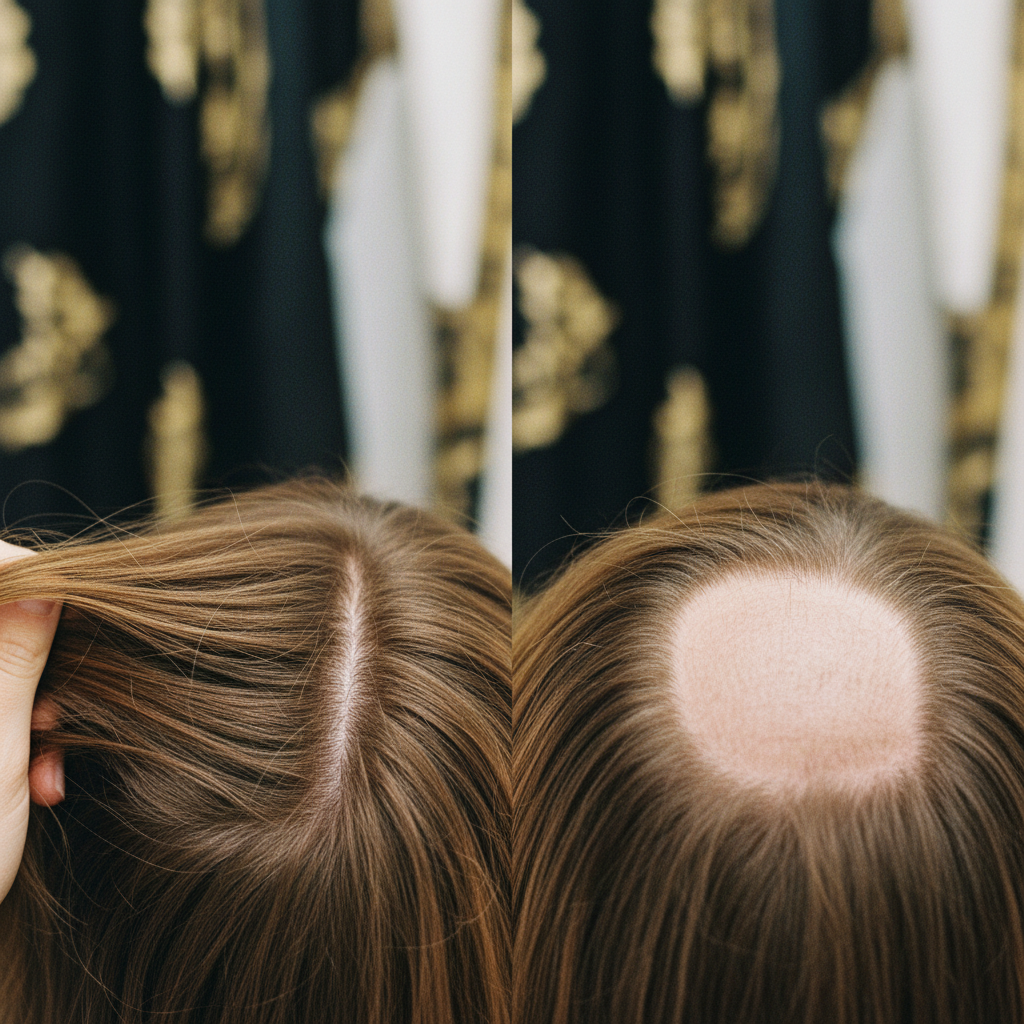
In telogen effluvium, a systemic shock abruptly pushes a substantial portion of anagen follicles into the telogen phase. Roughly 2 to 4 months after the triggering event, these hairs shed simultaneously. Daily hair shedding can jump from the normal 50 to 100 hairs per day up to 300 to 500 hairs. However, the follicle itself remains healthy and undamaged.
Alopecia areata operates through a completely different biological pathway. The hair follicle normally enjoys "immune privilege," meaning it suppresses local immune responses to protect growing tissue. In alopecia areata, this immune privilege breaks down. Cytotoxic T lymphocytes gather around the hair bulb in a classic "swarm of bees" pattern seen on biopsy. The immune attack forces the follicle into premature catagen and telogen, arresting hair fibre production. Because the attack is focal, the resulting hair loss appears in well-demarcated circular or oval patches.
| Diagnostic Feature | Telogen Effluvium | Alopecia Areata |
|---|---|---|
| Primary Mechanism | Premature transition into resting (telogen) phase | Autoimmune lymphocytic attack on anagen hair bulbs |
| Visual Pattern | Diffuse thinning across the entire scalp; bitemporal recession | Distinct, well-demarcated round or oval smooth bald patches |
| Onset Timing | 2 to 4 months after a physiological or psychological stressor | Sudden appearance, often developing over days or weeks |
| Daily Shedding Rate | High (often 300 to 500+ hairs per day) | Variable; high around active patch borders |
| Dermoscopic Signs | Empty follicles, short upright regrowing hairs | Exclamation mark hairs, yellow dots, black dots, broken hairs |
| Scalp Sensation | Trichodynia (scalp tenderness or burning) in some cases | Usually asymptomatic; occasional mild itching or tingling |
| Body Hair Involvement | Rarely affected (occasionally mild diffuse body shedding) | Can affect beard, eyebrows, eyelashes, or entire body |
| Nail Changes | Beau's lines (transverse grooves reflecting past stress) | Geometric pitting, trachyonychia (rough sandpaper nails) |
| Typical Recovery | Spontaneous regrowth within 6 to 9 months once trigger resolves | Unpredictable; spontaneous regrowth common, but relapses occur |
The physical signs to look for
Telling these conditions apart begins with visual and physical examination. Because their visual presentations differ significantly, misdiagnosis between the two is uncommon when classical presentations appear.
Identifying telogen effluvium
With telogen effluvium, you will notice:
- Widened parting without bare skin: The scalp looks more visible through the hair, particularly along the central part and crown, but you cannot find completely naked, hairless circles.
- Excessive loose hairs: Hairs come away easily during washing, brushing, or light tugging. A clinical hair pull test typically yields more than 4 to 6 hairs per pull across multiple scalp zones.
- Intact hair bulbs: The shed strands show a tiny, white, keratinised bulb at the proximal end, confirming they are resting telogen club hairs rather than broken strands.
- Uniform hair calibre: Hair shafts generally maintain their standard thickness along their entire length.
Identifying alopecia areata
With alopecia areata, key indicators include:
- Smooth, circular bare patches: Areas of hair loss are completely bare, often resembling the surface of an apple peel. The surrounding scalp usually retains normal density.
- Exclamation mark hairs: At the expanding margins of a patch, short broken hairs taper toward the scalp surface, resembling a printed exclamation mark (!). These measure roughly 2 to 4 millimetres in length.
- Perimeter pull sensitivity: Hairs around the active edge of a patch pull out easily and painlessly, indicating active autoimmune inflammation at those borders.
- Regrowth characteristics: When hair regrows in alopecia areata, it frequently emerges as fine, unpigmented, white or pale fuzz before gradually regaining its original colour and calibre.
What the evidence does not show
There are persistent misconceptions surrounding both conditions that complicate early management.
Clinical research does not show that routine emotional worry causes sudden bald spots overnight. While severe, sustained psychological trauma can act as a trigger, alopecia areata requires an underlying genetic susceptibility to autoimmune disorders. You cannot trigger it simply by having a bad week at work.
Similarly, evidence shows that telogen effluvium does not lead to permanent follicle death or permanent scarring. Follicular units remain entirely intact and functional. Washing, conditioning, or brushing your hair does not cause telogen effluvium, nor will skipping shampoo prevent the hair from falling out. The hairs shedding in the shower detached from their dermal papillae months earlier; mechanical washing merely dislodges strands that were already loose.
Finally, cosmetic shampoos, scalp oils, and topical vitamins cannot suppress the autoimmune response responsible for alopecia areata. Relying on over-the-counter cosmetic products to cure an active autoimmune flare delays evidence-based medical treatment.
Triggers and underlying causes
Because the biological origins diverge, their precipitating causes are fundamentally distinct.
Triggers for telogen effluvium
Acute telogen effluvium is usually traced back to an event that occurred 8 to 16 weeks prior to the onset of shedding:
- High fever, severe viral or bacterial infection (such as COVID-19, influenza, or pneumonia).
- Major surgical procedures under general anaesthesia.
- Rapid, severe weight loss, crash dieting, or severe caloric restriction.
- Acute nutritional deficits, notably low serum ferritin (iron stores below 30 to 50 mcg/L) or vitamin D deficiency.
- Hormonal disruptions, such as the dramatic drop in oestrogen following childbirth (telogen gravidarum) or discontinuing oral contraceptives.
- Starting or stopping certain medications, including beta-blockers, retinoids, or anticoagulants.
Causes of alopecia areata
Alopecia areata is an organ-specific autoimmune disease influenced by polygenic inheritance and environmental triggers:
- Genetic factors involving human leukocyte antigen (HLA) genes, particularly HLA-DQB1 and HLA-DRB1.
- Personal or family history of other autoimmune conditions, such as Hashimoto thyroiditis, vitiligo, type 1 diabetes, or coeliac disease.
- Immune system dysregulation triggered by viral exposures, micro-trauma, or neurogenic inflammation.
When the cause may be something else
Not all diffuse thinning is telogen effluvium, and not all patchy loss is alopecia areata. Several other conditions can mimic these presentations.
Androgenetic alopecia (male or female pattern hair loss) also causes thinning across the crown and parting. Unlike telogen effluvium, androgenetic alopecia involves progressive follicle miniaturisation over years rather than sudden daily shedding. However, chronic telogen effluvium (shedding lasting longer than six months) and female pattern hair loss frequently overlap.
Patchy hair loss can also arise from tinea capitis, a fungal infection that presents with scaly skin, broken hairs, and inflamed black dots, especially in children. Trichotillomania (compulsive hair pulling) creates irregular, non-circular patches containing broken hairs of varying lengths. Finally, primary cicatricial (scarring) alopecias, such as lichen planopilaris or frontal fibrosing alopecia, destroy the follicular openings entirely, leaving shiny, scarred skin that requires urgent biopsy to prevent permanent loss.
What you can do: evidence-based steps
Managing both conditions requires a targeted approach based on an accurate diagnosis.
For telogen effluvium
- Identify and correct nutritional shortfalls: Request blood panels measuring serum ferritin, complete blood count, thyroid stimulating hormone (TSH), zinc, and 25-hydroxyvitamin D. Ferritin levels below 50 mcg/L often warrant iron supplementation under medical supervision.
- Review medications: Work with your doctor to assess any pharmaceuticals started shortly before the shedding began.
- Practice gentle hair care: Avoid high-tension hairstyles (tight ponytails, braids), harsh chemical straightening, and excessive heat styling. This prevents mechanical breakage from exacerbating the diffuse shedding.
- Allow for time: Because the hair cycle takes months to reset, visible regrowth (short, upright strands emerging from the scalp) typically takes 3 to 6 months after correcting the primary trigger.
For alopecia areata
- Seek medical dermatology care: Early intervention limits patch expansion. First-line treatments include high-potency topical corticosteroids (such as clobetasol propionate) or intralesional triamcinolone acetonide injections administered directly into the bald patch every 4 to 6 weeks.
- Explore advanced therapies for extensive cases: When patches merge (alopecia totalis or universalis), dermatologists may consider oral JAK inhibitors (such as baricitinib or ritlecitinib), contact immunotherapy, or systemic treatments.
- Protect bare scalp skin: Apply broad-spectrum sunscreen (SPF 30 or higher) or wear protective headwear to shield exposed scalp tissue from ultraviolet radiation.
Supporting the scalp environment: the role of cosmetic care
While medical conditions require medical diagnosis, your daily hair routine influences how the hair fibre behaves. Watermans manufactures hair care products designed to support a clean, healthy scalp and strengthen existing hair strands. Formulations containing biotin, rosemary, caffeine, and niacinamide help cleanse the follicular environment and reduce hair breakage along the shaft.
Cosmetic products cannot alter an autoimmune response or reverse alopecia areata. However, maintaining an optimal scalp environment and reducing mechanical fibre breakage helps keep existing hair looking full and resilient while underlying conditions are managed medically.
Frequently asked questions about Telogen Effluvium vs Alopecia Areata
Can telogen effluvium turn into alopecia areata?
No. Telogen effluvium cannot transform into alopecia areata because their biological mechanisms are completely different. Telogen effluvium is a hair cycle shift, whereas alopecia areata is an autoimmune disease. It is possible, though uncommon, for an individual with an autoimmune predisposition to experience both conditions at the same time following a major physiological stressor.
How do dermatologists diagnose Telogen Effluvium vs Alopecia Areata?
Dermatologists distinguish between them using clinical history, a gentle hair pull test, and dermoscopy (trichoscopy). Dermoscopy instantly reveals distinct patterns: exclamation mark hairs and yellow dots point to alopecia areata, while telogen effluvium shows empty follicular ostia and short, uniform upright regrowing hairs without inflammatory markers. In complex cases, a 4-millimetre scalp punch biopsy provides definitive confirmation.
Will hair from both conditions grow back naturally?
Acute telogen effluvium has an excellent prognosis, with spontaneous regrowth occurring in almost all cases once the underlying trigger is addressed. In mild alopecia areata (a single, small patch), roughly 50 to 80 percent of patients experience spontaneous regrowth within one year. However, alopecia areata is unpredictable, and recurrent episodes or wider patch expansion can occur without medical intervention.
Does scalp pain or itching indicate one condition over the other?
Scalp discomfort can occur in both, but its nature differs. Up to a third of individuals with telogen effluvium report trichodynia, a sensation of tenderness, burning, or aching across the scalp, often exacerbated by moving the hair. Alopecia areata is usually painless, though some people report mild tingling or itching at the perimeter of a patch immediately before new hair shedding begins.
Conclusion
Distinguishing between Telogen Effluvium vs Alopecia Areata is essential for choosing the right path forward. Telogen effluvium reflects a temporary disruption in the natural shedding cycle, causing widespread thinning that generally corrects itself once the body regains balance. Alopecia areata represents an autoimmune response that targets individual follicles, creating distinct bare patches that benefit from clinical dermatological care. If you notice sudden round patches, severe ongoing shedding, or scalp inflammation, schedule an appointment with a doctor or dermatologist for a precise diagnosis.
Sources and references
- British Association of Dermatologists. Clinical Guidelines for the Management of Alopecia Areata. 2020.
- National Institute for Health and Care Excellence (NICE). Alopecia: Clinical Knowledge Summaries. 2021.
- Messenger, A. G., et al. British Association of Dermatologists' guidelines for the management of alopecia areata 2012. British Journal of Dermatology, 2012.
- Malkud, S. Telogen Effluvium: A Review. Journal of Clinical and Diagnostic Research, 2015.
- Pratt, C. H., et al. Alopecia areata. Nature Reviews Disease Primers, 2017.
- Asghar, F., et al. Telogen Effluvium: A Review of the Etiology, Diagnosis, and Treatment. Cureus, 2020.
Find these ingredients in Watermans products
- Zinc: you will find this ingredient in our Hair Vitamins.
- Niacinamide: you will find this ingredient in our Hair Mask.