Surfactants in Haircare: The Science of Cleansing and Conditioning
10 min read ·
Learn how surfactants in haircare work, from cleansing mechanics to conditioning charges, and how to choose the right balance for scalp health.
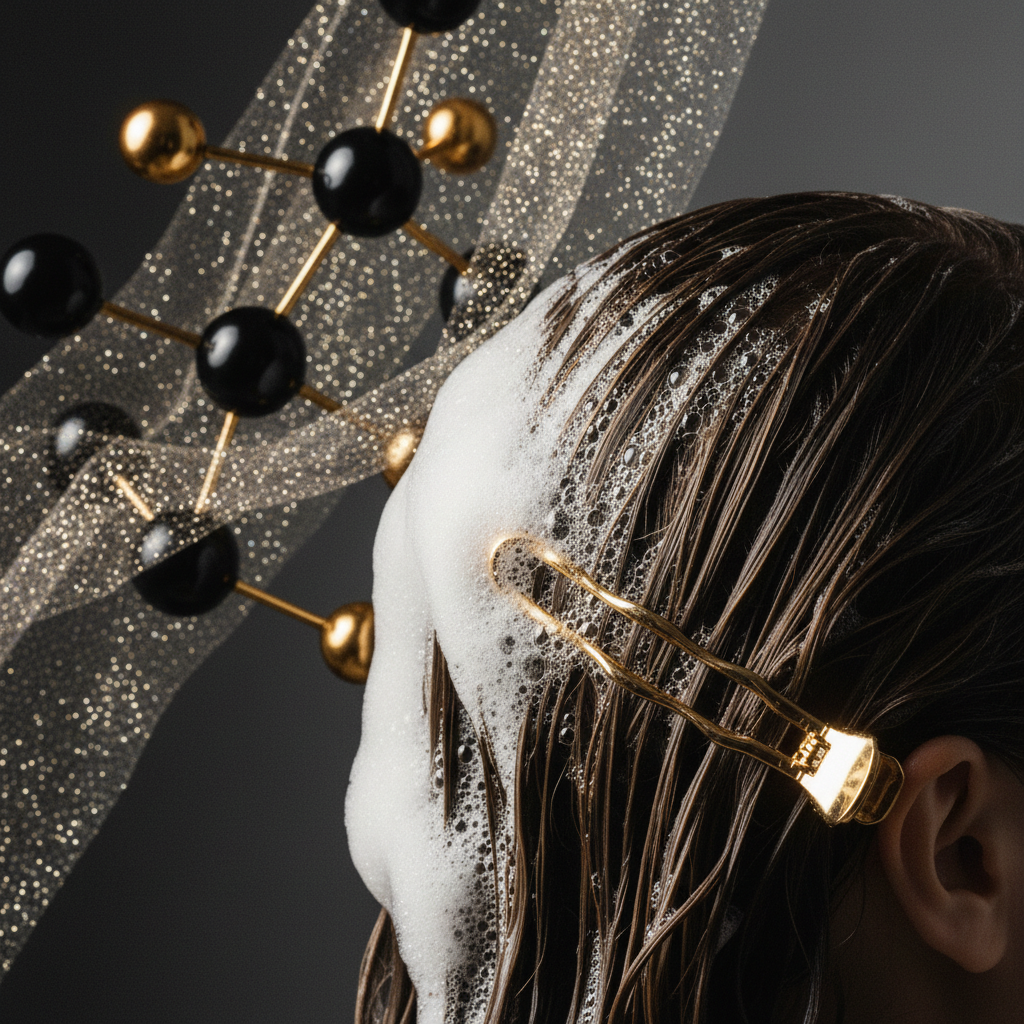
Quick answer: Surfactants in Haircare are surface-active cleansing and conditioning agents that lift sebum, sweat, styling residues, and environmental dirt from the hair fibre and scalp. They work by reducing the surface tension of water, allowing oils to disperse into microscopic droplets that rinse away. However, their primary limitation is non-selectivity: overly aggressive surfactant systems can strip the hair shaft of protective structural lipids (such as 18-methyleicosanoic acid) and irritate the scalp barrier, leading to cuticle chipping, dryness, and increased breakage.
Key takeaways
- Surfactants (surface-active agents) are amphiphilic molecules, meaning they possess both a water-attracting (hydrophilic) head and an oil-attracting (hydrophobic) tail.
- Anionic surfactants provide the strongest detergency and foam, while amphoteric and non-ionic surfactants temper irritation and boost foam stability.
- Cationic surfactants carry a positive charge that binds to damaged, negatively charged hair cuticles to provide antistatic smoothing and detangling.
- Cleansing surfactants cannot tell the difference between unwanted sebum and the vital structural lipids that keep the hair cuticle sealed.
- Modern cosmetic chemistry prioritises mixed-micelle systems, blending primary and secondary surfactants to cleanse thoroughly while preserving scalp barrier integrity.
Surfactants in Haircare: what the evidence shows
Surfactants in Haircare represent the chemical engine of every shampoo, co-wash, and rinse-off conditioner on the market. Understanding their role requires examining how they interact with the hair shaft and the living scalp tissue.
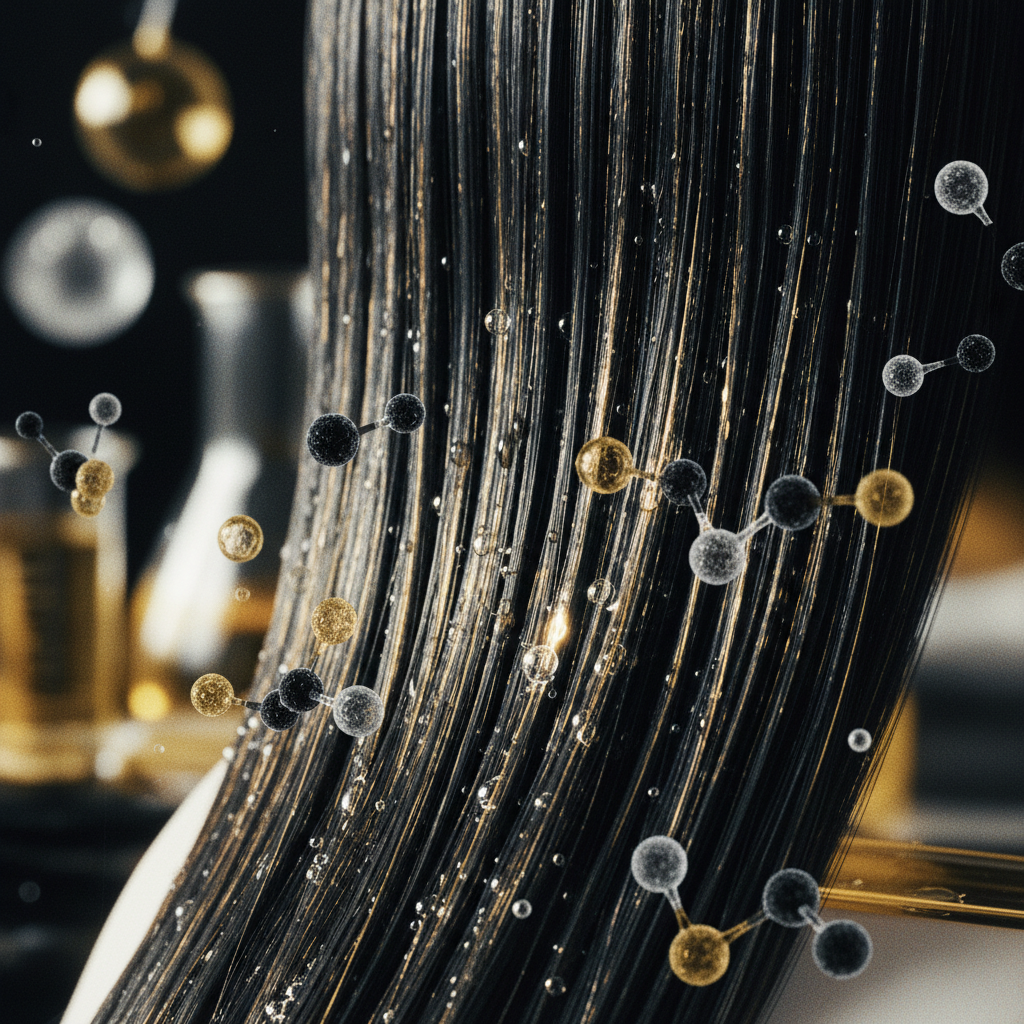
Cosmetic science classifies surfactants into four distinct chemical groups based on the electrical charge of their polar head group in aqueous solution:
- Anionic surfactants: These carry a negative charge. They are the most effective detergents and foaming agents. Common examples include sodium laureth sulphate (SLES), sodium lauryl sulphate (SLS), sodium cocoyl isethionate (SCI), and ammonium laureth sulphate (ALES).
- Amphoteric (zwitterionic) surfactants: These carry either a positive or negative charge depending on the formulation's pH. Common examples include cocamidopropyl betaine (CAPB) and sodium cocoamphoacetate. They are exceptionally mild, reduce the irritation potential of anionic surfactants, and stabilise lather.
- Non-ionic surfactants: These carry no electrical charge. Examples include decyl glucoside, lauryl glucoside, and polysorbates. They are gentle on the skin, exhibit low detergency on their own, and are frequently used to thicken formulas or calm primary cleansers.
- Cationic surfactants: These carry a positive charge. Common examples include cetrimonium chloride, behentrimonium methosulfate, and behentrimonium chloride. Because wet, damaged hair possesses a negative electrostatic charge, cationic surfactants electrostatically bind to the fibre, smoothing raised cuticles, neutralising static flyaways, and reducing wet-combing friction.
Peer-reviewed studies published in the International Journal of Cosmetic Science show that the cleansing action of shampoos is governed by critical micelle concentration (CMC). Once the surfactant concentration reaches this threshold, the hydrophobic tails cluster inward to trap oily soils, while the hydrophilic heads point outward into the water. Rinsing lifts these soil-filled micelles away from the scalp.
Surfactant categories and formulation properties
| Surfactant category | Electrical charge | Common examples | Primary function | Cleansing intensity |
|---|---|---|---|---|
| Anionic | Negative (-) | Sodium laureth sulphate, Sodium cocoyl isethionate | Deep cleansing, foam generation | High to very high |
| Amphoteric | Mixed (+ / -) | Cocamidopropyl betaine, Coco-betaine | Foam boosting, reducing irritation | Moderate to mild |
| Non-ionic | Neutral (0) | Decyl glucoside, Lauryl glucoside | Gentle cleansing, emulsification | Mild |
| Cationic | Positive (+) | Behentrimonium chloride, Cetrimonium chloride | Conditioning, detangling, anti-static | Negligible (conditioning) |
What the evidence does not show: myths and misconceptions
Widespread online claims suggest that sulphate-based surfactants penetrate the follicle to cause permanent hair loss, thin the hair density, or stunt the biological growth cycle. Controlled dermatological research does not support these claims.
Hair shedding (telogen effluvium) and hair loss disorders (such as androgenetic alopecia) originate deep within the dermal papilla, supplied by systemic blood flow and governed by genetics, hormones, and cellular signalling. Rinse-off cosmetic surfactants do not reach or alter these biological pathways.
What aggressive surfactants can cause is severe fibre dehydration and outer cuticle degradation. When the hair fibre loses its outer protective layer, it snaps during brushing, styling, and heat exposure. This breakage produces short, uneven fragments that mimic thinning hair, but it is purely structural snapping, not follicular hair loss.
Similarly, while the European Commission and the Scientific Committee on Consumer Safety (SCCS) continuously evaluate surfactant purity, properly formulated cosmetic surfactants do not accumulate in internal organs or cause systemic toxicity when used as directed in rinse-off products.
The mechanism: how surfactants interact with the hair fibre
The outermost layer of a healthy hair fibre is coated with an ultra-thin layer of fatty acids known as the F-layer, consisting primarily of 18-methyleicosanoic acid (18-MEA). This covalent lipid layer gives virgin hair its natural hydrophobicity, causing water to bead and cuticles to lie flat.
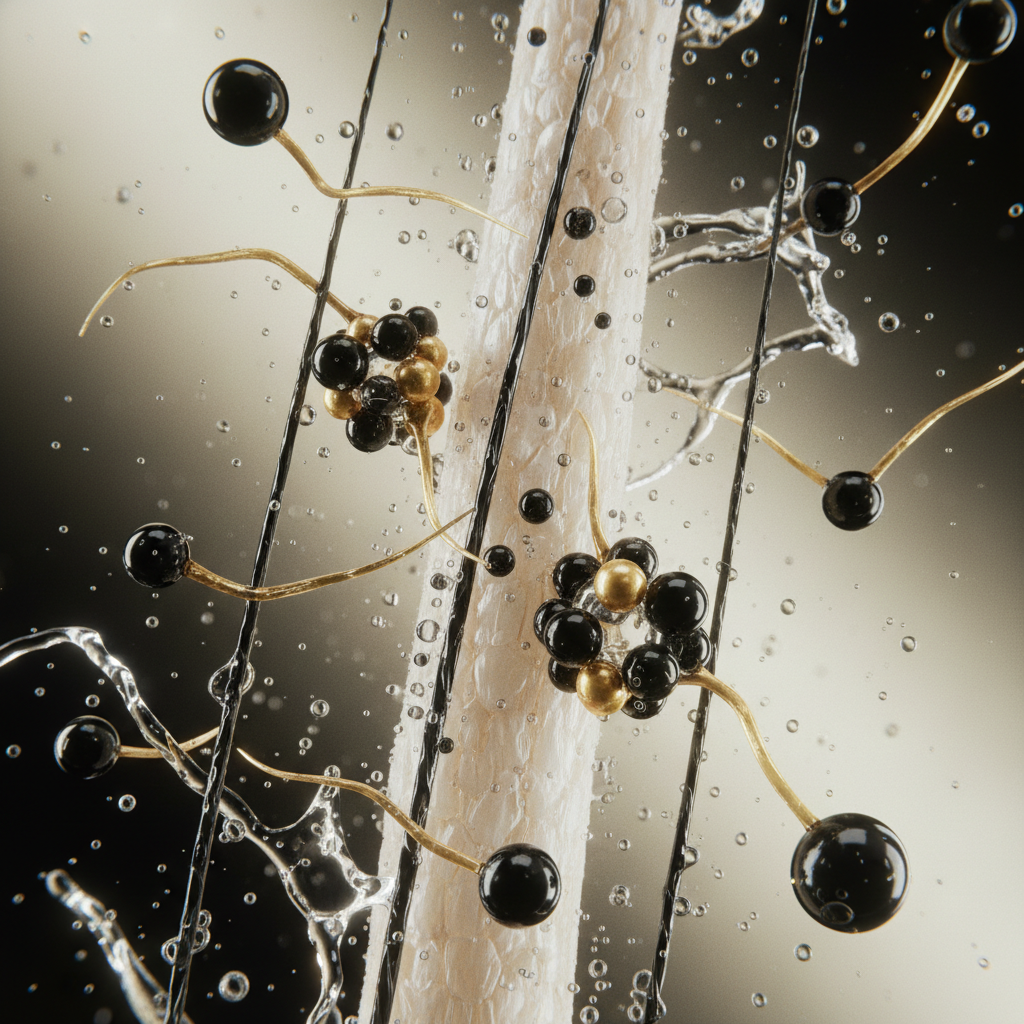
When an anionic surfactant encounters the hair fibre, several physical processes occur:
- Lipid removal: The surfactant emulsifies free sebum along the shaft. However, repeated use of harsh anionic surfactants can gradually deplete 18-MEA and extract internal cell membrane complex (CMC) lipids, leaving the fibre porous and hydrophilic.
- Cuticle swelling: Most surfactant-rich cleansers operate between pH 5.0 and pH 7.0. At higher pH ranges, water enters the endocuticle and cortex more readily, swelling the fibre and raising the outer cuticle scales like shingles on a roof.
- Friction and combing forces: When cuticles are raised and stripped of their lubricating lipids, inter-fibre friction spikes. Studies show that wet combing forces can increase significantly following harsh degreasing, directly driving mechanical cuticle breakage.
To counter these effects, formulators construct mixed-micelle systems. By pairing a high-cleansing anionic surfactant (such as SLES or SCI) with an amphoteric co-surfactant (such as cocamidopropyl betaine), the size and geometry of the micelles change. The resulting larger, mixed micelles are physically less capable of penetrating the stratum corneum of the scalp or stripping deep internal hair lipids, delivering effective cleansing with dramatically lower irritation.
Signs of surfactant mismatch on your hair and scalp
Selecting a surfactant system that does not match your scalp sebum production and hair fibre porosity leads to noticeable physical signs:
- Over-cleansed hair and scalp: Tight, itchy, or stinging scalp immediately after washing; dry, dull strands that tangle instantly; rough cuticle texture; increased snapping and split ends during routine styling.
- Under-cleansed hair and scalp: Persistent greasy roots within a few hours of washing; flat, limp volume; waxy coating on strands; white, flaky, or yellowish build-up on the scalp; worsening scalp odour.
- Contact sensitivity: Localised redness, burning sensations, or periorbital swelling, which occasionally occurs if an individual develops an allergy to specific secondary surfactants or preservatives in a formula.
What you can do: balancing cleansing with hair health
You can preserve your hair fibre integrity and support a comfortable scalp environment by adjusting how you use surfactant formulas:
- Match detergency to scalp activity: If you produce high sebum, exercise heavily, or use heavy silicones and waxes, a formula containing strong anionic or mild-anionic surfactants (such as sodium C14-16 olefin sulfonate or SLES) ensures thorough removal. If your scalp is naturally dry or your hair is bleached, seek out gentler non-ionic or amphoteric-heavy systems.
- Focus application on the scalp: Apply concentrated cleansing lather directly to the scalp and roots, where sebum collects. Allow the diluted run-off to cleanse the lengths and ends as you rinse. Avoid bunching lengths of hair on top of your head to scrub them, which causes heavy mechanical abrasion.
- Counteract negative charge with cationic conditioning: Always follow cleansing surfactants with a conditioner containing cationic surfactants (such as behentrimonium chloride) and fatty alcohols (such as cetyl or stearyl alcohol). This restores lubricity, flattens the cuticle, and lowers wet-combing forces.
- Consider wash frequency: Daily shampooing with strong detergents is rarely necessary for dry or chemically processed hair types. Conversely, washing too infrequently can allow sebum and Malassezia yeasts to proliferate, triggering inflammatory dandruff.
Supporting the scalp barrier: the Watermans approach
For individuals seeking a balanced cleansing experience, Watermans formulations are engineered around the principle of scalp-first care. Rather than relying on simple, aggressive degreasers, Watermans shampoos utilise mixed-surfactant platforms that lift accumulated sebum and styling debris without stripping the scalp's delicate barrier. Combined with functional botanicals, hydrolysed proteins, and conditioning agents, this balanced surfactant delivery supports a calm scalp environment and helps hair feel fuller, stronger, and more resilient against daily breakage.
When the cause is something else
If you are experiencing noticeable thinning, widening part lines, or sudden clumps of hair shedding in the shower, surfactants are unlikely to be the root cause. True shedding patterns typically stem from other factors:
- Telogen effluvium: Triggered by high physiological stress, sudden weight loss, high fever, post-pregnancy hormonal shifts, or nutritional deficiencies (such as low ferritin or vitamin D).
- Androgenetic alopecia: Pattern hair loss driven by genetic sensitivity to dihydrotestosterone (DHT), resulting in progressive follicular miniaturisation.
- Scalp dermatitis: Persistent greasy scaling accompanied by redness may be seborrhoeic dermatitis, an inflammatory condition tied to fungal proliferation rather than simple shampoo selection.
When to get professional advice
Consult a GP, dermatologist, or qualified trichologist if you notice:
- Sudden, patchy, or circular hair loss patches on the scalp (suggesting alopecia areata).
- Severe burning, persistent weeping, or bleeding on the scalp.
- Diffuse shedding exceeding 100 to 150 hairs daily for more than six to eight weeks.
- Significant scalp flaking and inflammation that fails to respond to standard clarifying or anti-dandruff formulations.
Frequently asked questions about Surfactants in Haircare
Are sulphate-free Surfactants in Haircare always gentler?
Not automatically. While sulphates like sodium lauryl sulphate (SLS) are potent detergents, a "sulphate-free" shampoo containing high concentrations of sodium C14-16 olefin sulfonate can cleanse just as aggressively. Mildness depends on the overall surfactant balance, the concentration of amphoteric co-surfactants, and the final pH of the formula, rather than the absence of a single ingredient class.
Do surfactants strip hair colour faster?
Water exposure itself causes hair swelling and pigment leaching, but strong anionic surfactants speed up colour fading. They strip the protective outer lipid barrier and raise the cuticle, allowing artificial colour pigments inside the cortex to wash out more easily. Colour-treated hair benefits from mild, amphoteric, or non-ionic surfactant blends combined with acidic conditioning rinses.
Can surfactants cause permanent follicle damage?
No. Standard cosmetic surfactants act on the surface of the hair shaft and the superficial stratum corneum of the scalp. They do not penetrate deeply enough to alter follicular stem cells or permanently damage the dermal papilla. Any hair loss linked to shampooing is almost always mechanical fibre breakage caused by lipid stripping and friction.
Why do some surfactants produce more foam than others?
Foam volume depends on the surfactant's molecular structure and its ability to rapidly lower surface tension at the air-water boundary. Anionic surfactants like SLES create dense, resilient lather because their molecular shape packs tightly at the air-water interface. Non-ionic surfactants pack less tightly and generally produce looser, lower-volume foam, though their cleansing power remains effective.
What is the role of cationic Surfactants in Haircare?
Cationic surfactants are the active conditioning agents in rinse-off conditioners and hair masks. Because they carry a positive electrical charge, they electrostatically latch onto the negatively charged, damaged spots along the hair cuticle. This interaction smooths the hair shaft, minimises static, eases detangling, and protects against combing breakage.
Summary
Surfactants in Haircare are essential tools that preserve scalp hygiene and manage hair manageability. When selected thoughtfully, they remove oils, residues, and airborne pollutants without undermining the physical architecture of the hair shaft. Understanding that harsh detergents cause cuticle breakage rather than true hair shedding enables stylists and consumers to choose surfactant systems that maintain long-term fibre strength and scalp comfort.
Sources and references
- International Journal of Cosmetic Science, "Shampoo and condition: the science behind hair cleansing", 2015.
- Scientific Committee on Consumer Safety (SCCS), "Opinion on the safety of Sodium Lauryl Sulfate and Sodium Laureth Sulfate in cosmetic products", European Commission.
- Journal of the American Academy of Dermatology, "Hair cosmetics: An overview", 2015.
- Robbins, C. R., Chemical and Physical Behavior of Human Hair, 5th edition, Springer, 2012.
- Dermatology and Therapy, "A Review of Scalp Cleansing and Surfactant Mechanisms in Hair Health", 2019.
Find these ingredients in Watermans products
- Vitamin D: you will find this ingredient in our Hair Vitamins.