Stages of Hair Growth Cycle: A Comprehensive Guide to Follicle Biology
9 min read ·
Explore the biological Stages of Hair Growth Cycle: anagen, catagen, telogen, and exogen. Learn how follicles regenerate and why daily shedding happens.
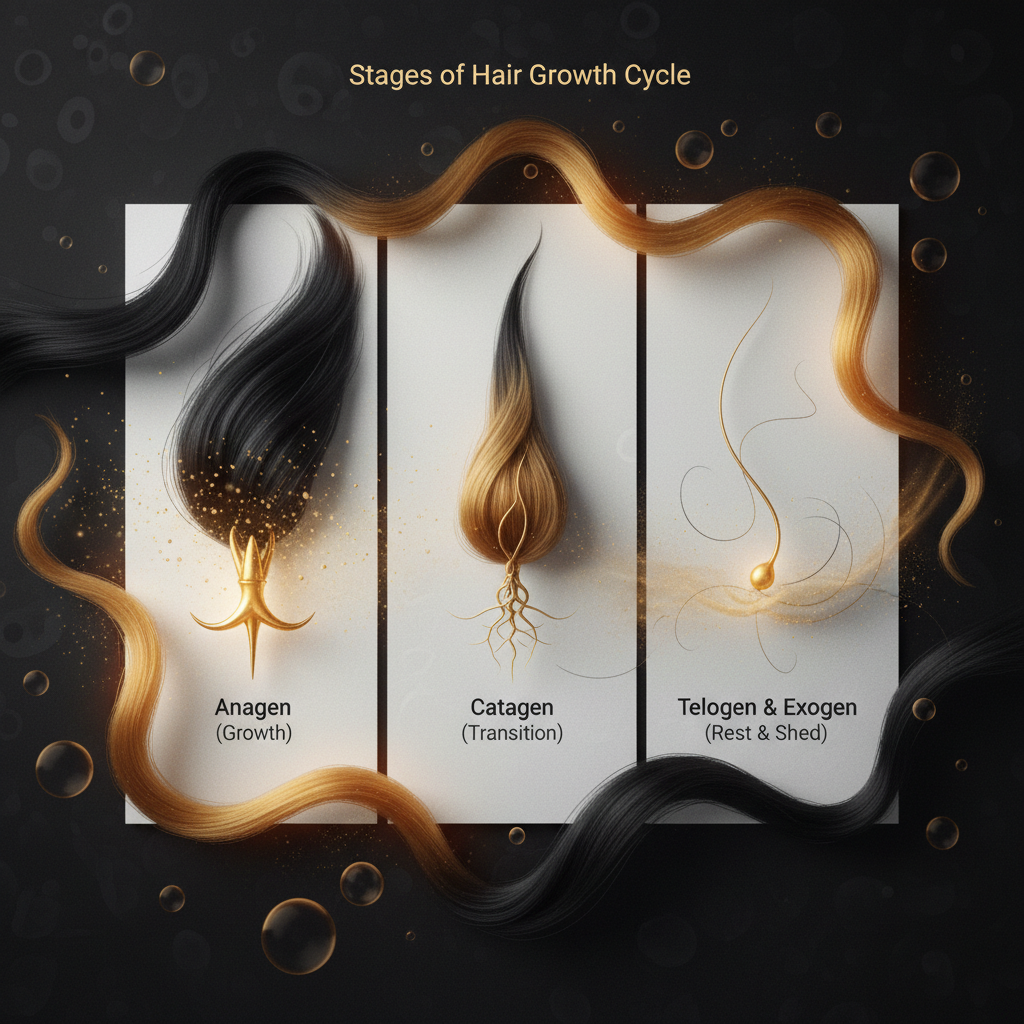
Quick answer: The human hair follicle operates on a continuous, repeating biological rhythm consisting of four distinct phases: anagen (growth), catagen (transition), telogen (resting), and exogen (shedding). Understanding the Stages of Hair Growth Cycle explains why humans shed roughly 50 to 100 hairs daily without going bald, as each follicle cycles asynchronously. The main limitation is that topical products cannot alter your genetically determined maximum anagen duration, though chronic stress, nutritional deficits, and hormonal shifts can prematurely truncate active growth.
Key takeaways
- Human scalp follicles do not cycle in unison; each of your roughly 100,000 follicles operates on its own independent timetable.
- The anagen phase governs maximum hair length and lasts anywhere between 2 to 7 years depending largely on genetics.
- Catagen is a rapid transition lasting 2 to 3 weeks where the lower follicle regresses and detaches from its blood supply.
- Telogen is a resting period of roughly 2 to 4 months before the hair fibre is actively shed during exogen.
- Hair shedding (a natural biological step) is fundamentally distinct from follicular miniaturisation (pattern hair loss) and mechanical breakage (fibre snapping).
Stages of Hair Growth Cycle: what the evidence shows
Every hair on your scalp originates within an individual hair follicle, a complex mini-organ embedded in the dermis. The Stages of Hair Growth Cycle describe how these follicles produce, maintain, regress, and replace hair fibres across a lifetime.
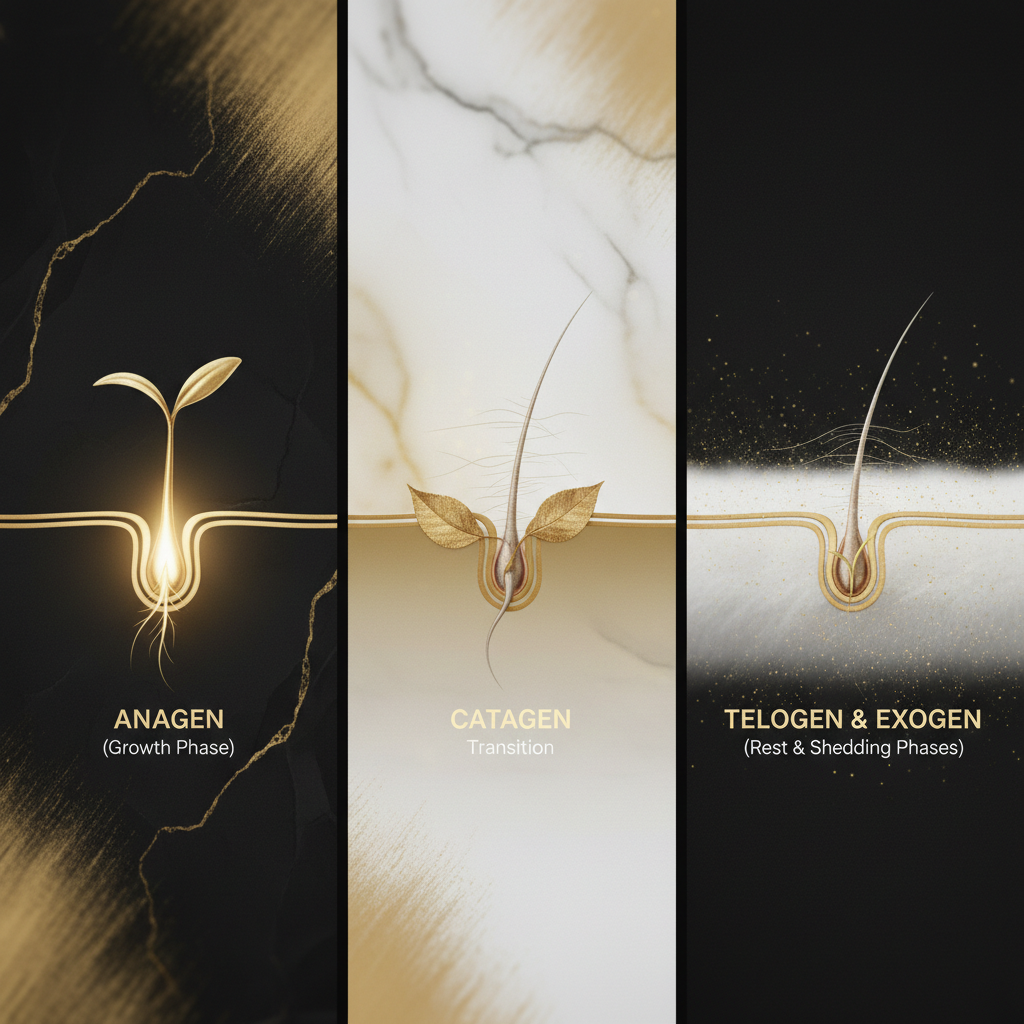
Unlike mammals that moult seasonally, humans possess an asynchronous mosaic cycle. At any given moment on a healthy scalp, roughly 85% to 90% of hairs reside in the active growth phase, while approximately 10% to 15% occupy the resting and shedding phases.
 [ Anagen: Active Growth ] (2 to 7 years)
 │
 ▼
 [ Catagen: Regression ] (2 to 3 weeks)
 │
 ▼
 [ Telogen: Quiescence ] (2 to 4 months)
 │
 ▼
 [ Exogen: Active Shedding ] (Fibre release)
 │
 ▼
 [ Return to Early Anagen ]
1. The Anagen Phase (Active Growth)
Anagen is the proliferative stage where matrix cells in the hair bulb divide rapidly every 18 to 24 hours, building the keratinised hair shaft. Scalp hair grows at an average rate of 1 centimetre to 1.25 centimetres per month (approximately 0.3 to 0.4 millimetres per day).
This active window lasts between 2 and 7 years on the scalp, which determines the maximum biological length your hair can achieve. Eyebrows and body hairs have an anagen phase of only 30 to 45 days, which is why they remain short. Vascular endothelial growth factors sustain the follicular dermal papilla during this time, ensuring an uninterrupted supply of oxygen and micronutrients.
2. The Catagen Phase (Regression and Involuting)
Catagen represents a highly regulated apoptotic process lasting roughly 2 to 3 weeks. Less than 1% to 2% of scalp hairs are in catagen at any time.
Cellular division halts abruptly. The lower third of the follicle collapses, the outer root sheath shrinks, and the hair bulb detaches from the dermal papilla. The base of the hair shaft condenses into a hard, white, club-shaped keratin structure, forming what dermatologists identify as a "club hair". The dermal papilla condenses and migrates upwards toward the follicular bulge, where stem cells lie in wait for the next cycle.
3. The Telogen Phase (Resting and Quiescence)
Lasting roughly 2 to 4 months (90 to 100 days), telogen accounts for about 10% to 15% of hairs on a balanced scalp.
During telogen, the follicle is metabolically quiescent, but it is not dead. The club hair remains firmly anchored in the shortened follicle while the dermal papilla rests below. Crucial chemical signalling takes place between the dermal papilla and epithelial stem cells in the bulge, preparing the biological machinery to ignite a new anagen phase.
4. The Exogen Phase (Active Release)
Historically grouped with telogen, exogen is now recognised by trichologists as an active, independent phase. During exogen, proteolytic enzymes dissolve the desmosomal junctions anchoring the club hair base within the follicular canal.
The old hair sheds, often dislodged by washing, brushing, or the upward emergence of a new anagen hair shaft beneath it. A typical human loses between 50 and 100 exogen hairs every 24 hours. This is normal biological turnover, not hair loss.
| Phase | Primary Biological Activity | Average Duration | Scalp Proportion |
|---|---|---|---|
| Anagen | Rapid cellular division, shaft synthesis, active pigmentation | 2 to 7 years | 85% to 90% |
| Catagen | Apoptosis, follicular shrinkage, formation of club hair | 2 to 3 weeks | 1% to 2% |
| Telogen | Follicular rest, dermal papilla signalling, stem cell preparation | 2 to 4 months | 10% to 15% |
| Exogen | Enzymatic cleavage of anchor cells, hair shaft release | Variable (days to weeks) | Overlaps with late telogen |
The biological mechanisms behind cycling
The transitions between follicular stages are orchestrated by intricate molecular switches. Fibroblast growth factors (such as FGF-7), the Wnt/beta-catenin signalling pathway, and bone morphogenetic proteins (BMPs) dictate when a follicle awakens or rests.
When Wnt signalling dominates and BMP signalling is suppressed, follicle stem cells proliferate, initiating anagen. Conversely, when local growth factors drop and neurotrophins or transforming growth factor-beta (TGF-beta) surge, the follicle enters catagen.
Systemic hormones exert strong effects here. Androgens like dihydrotestosterone (DHT) bind to androgen receptors in genetically susceptible follicles. Rather than stopping growth immediately, DHT gradually shortens the anagen phase over successive cycles while prolonging the latency period (kenogen) between telogen and the next anagen. Over time, the hair becomes progressively finer, shorter, and less pigmented, a process termed follicular miniaturisation.
What the evidence does not show
- Topical cosmetics cannot magically create new follicles: Humans are born with approximately 5 million hair follicles across the body, with about 100,000 on the scalp. No shampoo, oil, or supplement can generate brand new follicles where none exist.
- Cutting hair does not alter the growth cycle: Trimming the ends does not speed up anagen growth or thicken the shaft. Hair fibres are dead, non-vascular keratin structures. Follicular cellular division occurs several millimetres beneath the skin surface, completely unaware of what happens at the ends.
- Breakage is not shedding: Snapping along the hair shaft due to heat, bleach, or mechanical friction is fibre damage. It does not mean the follicle has transitioned into telogen or exogen.

When the cycle is disrupted: signs to look for
When external or internal stressors interfere with the follicular rhythm, distinct shedding patterns emerge:
- Telogen Effluvium: A sudden physical or metabolic shock (high fever, severe infection, major surgery, sudden restrictive dieting, or childbirth) causes a massive cohort of anagen hairs to shift prematurely into catagen and telogen. Because telogen lasts roughly 2 to 3 months, diffuse, heavy shedding typically peaks 8 to 12 weeks after the triggering event.
- Anagen Effluvium: Severe toxic insults, most notably systemic chemotherapy, abruptly halt cellular division in the anagen matrix. Because the hair is actively growing, the shaft weakens at its base and breaks or falls out within days to weeks of the insult.
- Increased Kenogen: In androgenetic alopecia, the gap between the shedding of a telogen hair and the emergence of a new anagen hair widens. The follicle sits empty for longer periods, leading to visible scalp skin.
Everyday habits that support healthy cycling
While your maximum anagen span is largely hard-coded by your DNA, maintaining the optimal physiological environment prevents premature transitions into telogen:
- Ensure adequate nutritional intake: Keratin synthesis requires adequate protein, ferritin (stored iron), zinc, and B vitamins. Inadequate calorie or iron levels prompt the body to shift energy away from non-vital functions like hair growth.
- Maintain scalp hygiene: Excess sebum and microbial overgrowth (such as Malassezia yeasts) can trigger scalp inflammation. Keeping the scalp clean with a balanced shampoo (pH 4.5 to 5.5) supports an undisturbed follicular environment.
- Protect mechanical integrity: While brushing cannot prevent natural exogen shedding, aggressive detangling pulls hairs out before their time and damages the cuticle of growing hairs.
Supporting the scalp environment: the Watermans approach
Topical haircare cannot rewrite your genetic code or cure clinical hormonal conditions, but delivering targeted nutrients directly to the scalp creates an ideal foundation for healthy growth. Watermans Grow Me Shampoo and Condition Me Conditioner are formulated to invigorate the scalp surface. Featuring premium cosmetic ingredients such as caffeine, biotin, rosemary, and hydrolysed lupin protein, these formulations help refresh the follicular opening, wash away buildup, and support stronger-feeling, fuller-looking hair as it moves through its natural rhythm.
When to seek professional clinical advice
Occasional fluctuations in daily shedding are entirely normal. However, you should consult a GP, dermatologist, or qualified trichologist if you notice:
- Sudden, patchy round areas of hair loss (which may suggest alopecia areata).
- Diffuse shedding exceeding 150 to 200 hairs daily that persists for more than 4 months.
- Scalp symptoms including burning, pain, scaling, pustules, or redness (which could indicate a scarring alopecia).
- Gradual widening of your natural parting accompanied by visible thinning at the crown or temples.
A healthcare professional can run blood tests to evaluate serum ferritin, thyroid hormones (TSH), vitamin D, and full blood counts to rule out underlying systemic causes.
Frequently asked questions about Stages of Hair Growth Cycle
How many hairs do you normally shed each day?
A healthy adult naturally sheds roughly 50 to 100 hairs each day. This shedding represents hairs completing the exogen stage. Because you have approximately 100,000 follicles cycling asynchronously, this normal daily turnover does not cause noticeable thinning.
Can you extend the anagen phase using hair products?
No cosmetic product can permanently extend your genetically programmed maximum anagen phase. However, addressing scalp inflammation, correcting nutritional deficiencies, and maintaining follicular health helps prevent your body from cutting the anagen phase short prematurely.
What is the difference between hair breakage and the Stages of Hair Growth Cycle?
Hair breakage happens when the hair fibre snaps along its length due to chemical, thermal, or mechanical damage, leaving a fractured shaft without a root bulb. In contrast, shedding within the Stages of Hair Growth Cycle involves the entire intact fibre falling from the follicle, complete with a tiny white keratin bulb at its base.
Why does hair shedding peak months after a stressful event?
This delay occurs because hairs shifted out of growth by physical stress must pass through the telogen phase, which naturally takes 2 to 4 months. Once telogen concludes, those hairs enter exogen and shed simultaneously, creating a noticeable shedding spike weeks after the original trigger has resolved.
Does washing your hair more often accelerate the growth cycle?
Washing does not speed up or alter the cycle. Water and gentle friction merely release exogen hairs that have already detached from the follicular base and were resting loosely inside the follicular canal.
Understanding your hair cycle
The human scalp relies on an intricate, continuous cycle of renewal. Understanding the Stages of Hair Growth Cycle helps distinguish normal biological shedding from genuine follicular disruption or mechanical shaft damage. By respecting your hair's internal timetable, maintaining balanced nutrition, and supporting scalp health, you provide your follicles with the best possible conditions to complete their cycles and produce resilient, healthy-looking hair.
Sources and references
- British Association of Dermatologists. Telogen Effluvium Guidelines and Patient Information.
- National Institute for Health and Care Excellence (NICE). Alopecia: Clinical Knowledge Summaries.
- Paus, R., & Cotsarelis, G. (1999). The Biology of Hair Follicles. New England Journal of Medicine, 341(7), 491-497.
- Schneider, M. R., Schmidt-Ullrich, R., & Paus, R. (2009). The Hair Follicle as a Dynamic Miniorgan. Current Biology, 19(3), R132-R142.
- Stenn, K. S., & Paus, R. (2001). Controls of Hair Follicle Cycling. Physiological Reviews, 81(1), 449-494.
Find these ingredients in Watermans products
- Zinc: you will find this ingredient in our Hair Vitamins.