Signs of Damaged Hair Cuticle: Diagnostic Signs and Solutions
9 min read ·
Discover the primary signs of damaged hair cuticle, from rough texture to severe breakage, and learn the evidence-based strategies to protect and smooth your hair.
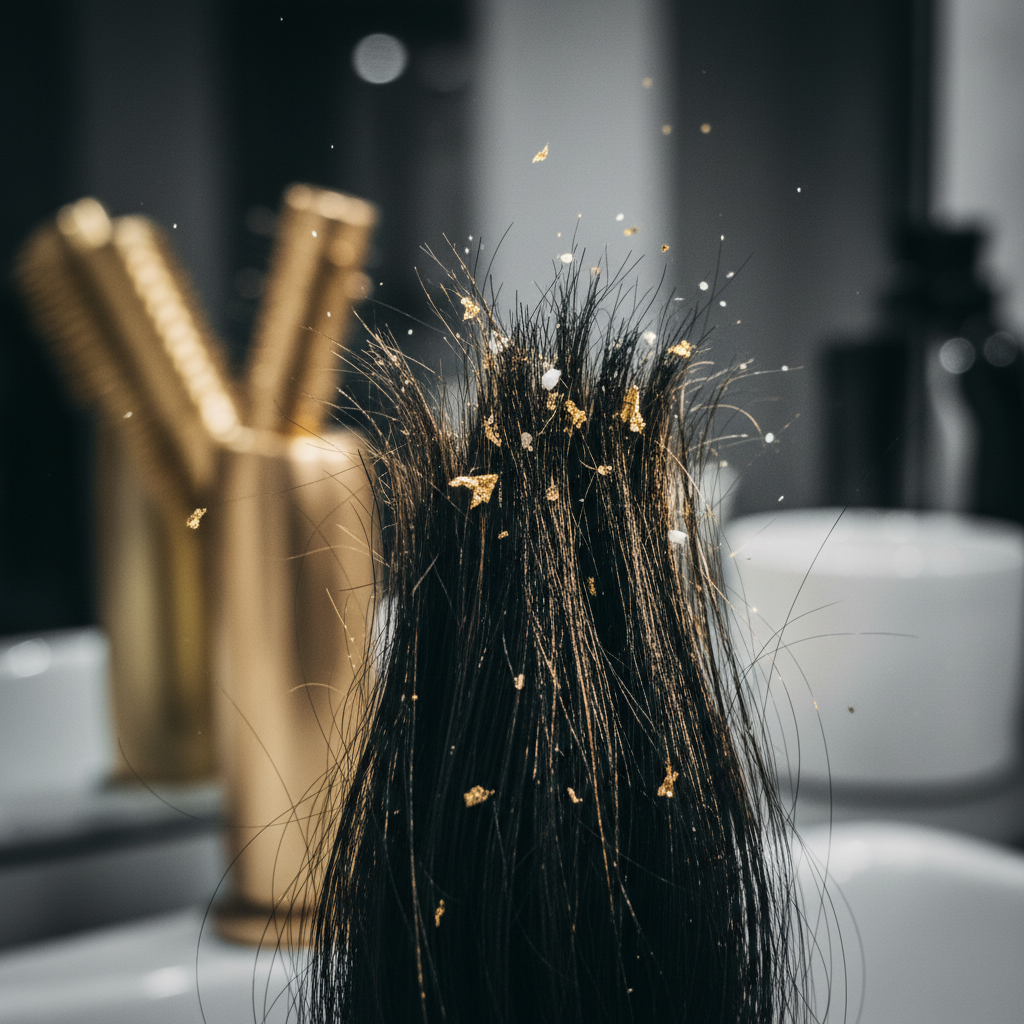
Quick answer: Identifying the Signs of Damaged Hair Cuticle involves checking for rough texture, chronic tangling, dullness, extreme porosity, and fibre breakage. The cuticle consists of 5 to 10 overlapping cellular scales that shield the inner cortex. When mechanical friction, heat tools, or chemical treatments strip the protective lipid layer and lift these shingles, the hair loses moisture and strength. However, cosmetic products cannot permanently fuse dead cuticle cells back together; they can only temporarily coat, lubricate, and protect the fibre until damaged sections are trimmed away.
Key takeaways
- The hair cuticle is an outer protective barrier made of 5 to 10 layers of dead, overlapping keratinocytes cemented by lipids.
- Primary signs include persistent dullness, coarse texture, severe wet tangling, fast water absorption, and mid-shaft snapping.
- Cuticle degradation exposes the inner cortex, drastically increasing mechanical breakage and split ends.
- Hair fibre has no living biological cells and cannot heal; cosmetic treatments deposit conditioning agents that smooth scales temporarily.
- Differentiating between cuticle erosion, natural texture, and internal health issues prevents unnecessary product overload.
Signs of Damaged Hair Cuticle: what the evidence shows
The outer layer of human hair consists of an intricate shingles-like structure called the cuticle. In virgin, undamaged hair, these scales lie flat, glued together by the cell membrane complex (CMC) and capped by the 18-methyleicosanoic acid (18-MEA) lipid layer. This greasy, hydrophobic sheath repels environmental moisture and lets individual strands glide past one another with minimal friction.
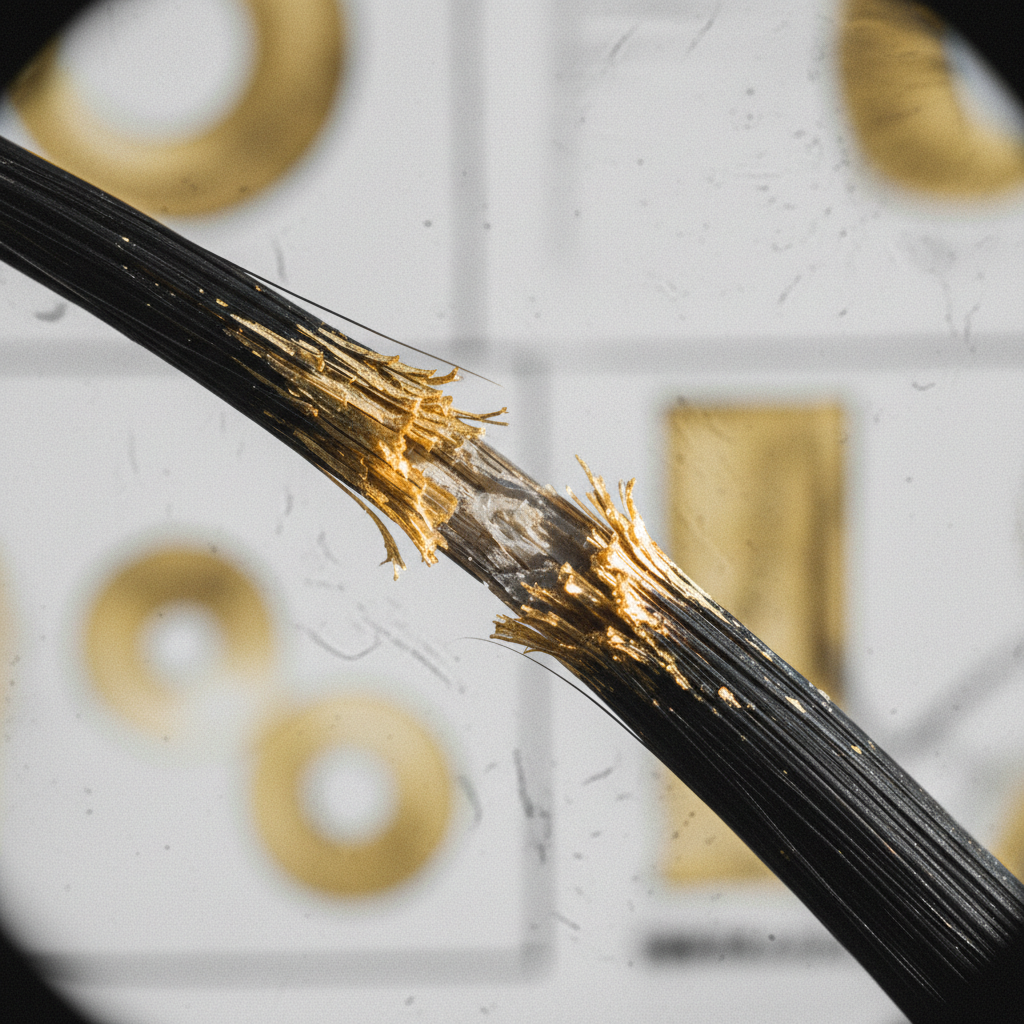
When physical, thermal, or chemical trauma disrupts this architecture, distinct physical alterations appear. Documented clinical Signs of Damaged Hair Cuticle manifest across several diagnostic markers:
- Loss of Surface Shine and Vibrancy: Healthy cuticles create a smooth, continuous optical plane that reflects specular light. Damaged cuticles lift, chip, and crack, scattering light irregularly. The visual outcome is a matte, chalky, or lifeless appearance.
- Rough, Raspy Tactile Texture: Gliding fingers down a healthy hair shaft (from root to tip) feels smooth. With cuticle degradation, running fingers upwards or downwards reveals coarse, jagged friction because the scale margins have turned upwards.
- Severe Wet and Dry Tangling: Intact cuticles maintain low surface friction. Once the 18-MEA layer is stripped and scale edges are jagged, strands physically snag on neighbouring fibres. This creates stubborn, mat-like knots, particularly when the hair is wet.
- Hyper-Porosity and Fast Drying Time: A damaged cuticle cannot regulate water movement. Hair absorbs ambient moisture instantly (swelling into frizz) and saturates rapidly under a shower, yet dries abnormally fast because the fractured cuticle fails to seal water inside the cortex.
- Increased Breakage and Trichoptilosis (Split Ends): The cuticle contributes roughly 15 to 20 percent of a hair fibre's mechanical resilience. Once scales peel away, the soft structural keratin of the cortex is exposed to friction and environmental UV. Without protection, cortical macrofibrils unravel, causing horizontal snaps and longitudinal splits.
| Feature | Intact Cuticle | Damaged Cuticle |
|---|---|---|
| Surface Chemistry | Hydrophobic (repels water via 18-MEA) | Hydrophilic (readily absorbs water) |
| Microscopic Structure | 5 to 10 flat, tightly tiled overlapping scales | Lifted, serrated, curled, or missing scales |
| Light Reflection | High specular reflection (glossy shine) | Diffuse light scattering (matte, dull) |
| Frictional Resistance | Low friction coefficient; smooth detangling | High friction; rapid matting and snagging |
| Cortex Integrity | Fully shielded against UV and friction | Exposed; prone to fraying and breakage |
| Primary Remediation | Routine gentle cleansing and conditioning | Film-forming proteins, silicones, lipid replenishment |
What the evidence does not show
There is no evidence that cosmetic products, botanical oils, or bond-building salon treatments can biologically regenerate or permanently seal a damaged hair cuticle. Hair shafts are non-living biological structures. Once an individual scale is broken, cracked, or completely eroded, the hair cannot produce new cells to replace it.
Marketing claims stating that a serum can "cure split ends" or "permanently heal damaged cuticles" are misleading. Cosmetic chemistries function as temporary adhesives and lubricants. They fill microscopic voids, smooth lifted edges, and reduce surface friction until your next wash removes them. Long-term structural restoration of severely eroded cuticle layers is biologically impossible; only regular trims eliminate completely stripped fibres.
The mechanism: how cuticles break down
Cuticle degradation is a cumulative, progressive process driven by three primary stressors:
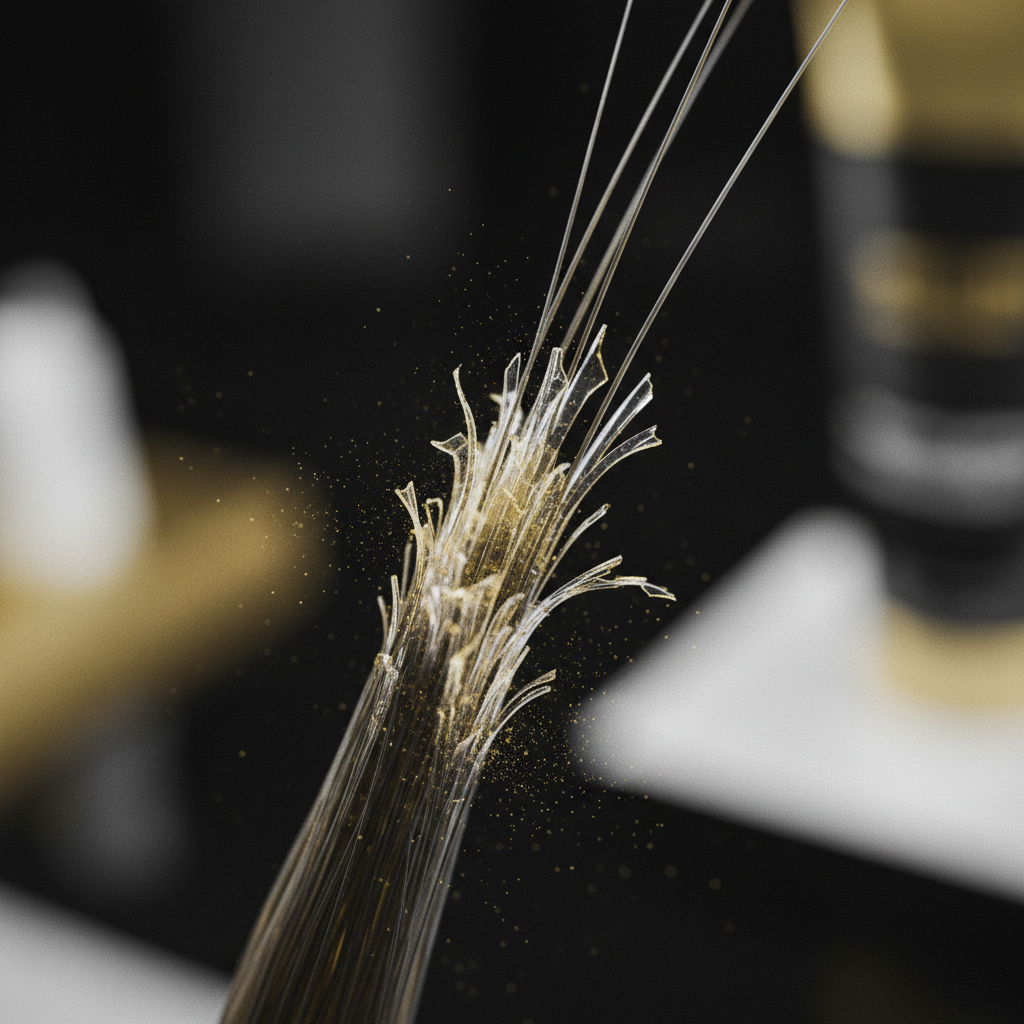
Chemical processing
Bleaching agents, alkaline permanent dyes, and chemical relaxers operate by swelling the hair fibre. They use alkaline compounds (such as ammonium hydroxide or ethanolamine) to elevate the hair's natural pH (which sits between 4.5 and 5.5) up to 9.0 or even 12.0. This dramatic shift forces the cuticle scales wide open so chemical agents can penetrate the cortex to strip melanin or break disulphide bonds. This process completely strips the outer 18-MEA lipid layer, leaving cuticles permanently unable to close fully.
Thermal exposure
Styling tools heated beyond 180 degrees Celsius convert the natural moisture inside the hair fibre into steam. When water vaporises rapidly inside the cortex, it can produce structural voids and blisters known as bubble hair. Simultaneously, the heat melts the natural lipid layer of the cuticle, causing individual scale margins to buckle, blister, and break off.
Mechanical friction
Vigorous towel drying, aggressive backcombing, and detangling without slip apply shear stress across cuticle edges. Over time, these actions physically shear away scale margins, particularly on fibres already weakened by environmental UV radiation or chemical processing.
What you can do to manage and protect the cuticle
Because cuticle cells cannot biologically self-repair, intervention relies on protective handling, acid-balanced products, and surface coatings that mimic natural hair lipids.
- Restore Surface Lipids: Use leave-in conditioners and cosmetic serums containing cationic surfactants (such as behentrimonium chloride) and fatty alcohols. These positively charged compounds adhere to the negatively charged, damaged spots on the hair shaft, restoring hydrophobicity and reducing friction.
- Maintain Acid-Balanced Formulations: Always use hair care products with a pH of 4.5 to 5.5. Low-pH products help contract the cuticle layer, keeping the scales resting as flat as structurally possible.
- Minimise Mechanical Friction: Switch to microfibre towels or cotton shirts for water removal, detangle hair gently from ends upward using wide-tooth combs with ample slip, and sleep on silk or satin pillowcases to prevent overnight fibre abrasion.
- Control Styling Heat: Keep blow dryers and flat irons below 175 degrees Celsius, and always coat damp hair with thermal protectors containing polymers that distribute heat evenly along the shaft.
- Snip Away Weathered Ends: Because damaged cuticles expose the cortex, split ends eventually travel up the fibre shaft. Routine micro-trims every 8 to 12 weeks prevent longitudinal fraying from compromising healthier hair higher up the shaft.
The Watermans approach to hair maintenance
When managing fragile hair exhibiting signs of cuticle erosion, maintaining a healthy scalp environment and reinforcing the mechanical strength of the fibre is vital. Watermans Haircare focuses on non-invasive, nutrient-rich formulations created to clean gently without excessively stripping natural oils.
Watermans GrowMe Shampoo and ConditionMe Conditioner deliver carefully balanced cosmetic support, combining ingredients like biotin, rosemary, caffeine, and hydrolysed lupin protein. For hair showing cuticle wear, ConditionMe provides targeted lubrication, smoothing ruffled scale edges, enhancing surface slip, and minimising mid-shaft breakage during styling without weighing down fine strands.
When the cause may be something else
Not all rough, unmanageable hair stems from cuticle damage. It is essential to distinguish between physical cuticle weathering and other structural factors:
- Natural Coarse or Coily Texture: Naturally curly, coily, or coarse hair fibres have natural twists, elliptical cross-sections, and raised cuticle edges along their bends. This is a normal structural variation, not acquired damage.
- Hard Water Mineral Build-up: Areas with high levels of dissolved calcium and magnesium (exceeding 180 mg/L) can leave mineral precipitates on the hair shaft. This mineral coating produces a stiff, raspy, dull texture that mimics cuticle stripping, yet the underlying scales may remain intact beneath the crust.
- Follicular or Systemic Issues: Breakage resulting from cuticle damage must not be confused with hair shedding or follicular hair loss. If you notice an increased quantity of hair bulbs dropping from the scalp (telogen effluvium) or progressive thinning at the temples and crown (androgenetic alopecia), the issue originates inside the hair follicle, not the cuticle layer.
When to get professional advice
If your hair snaps under minimal tension despite eliminating heat and chemical processes, consult a certified trichologist or an experienced stylist. A professional can use polarised light microscopy or trichoscopy to inspect the hair shaft directly, diagnosing structural conditions like trichorrhexis nodosa (node-like weak points) or monilethrix (beaded hair). If sudden hair shedding, scalp inflammation, or patchy bald spots occur alongside fibre fragility, visit your GP or a dermatologist to evaluate possible hormonal, nutritional, or autoimmune conditions.
Frequently asked questions about Signs of Damaged Hair Cuticle
How can you tell the difference between cuticle damage and hair shedding?
Cuticle damage causes hair breakage, where short, fragmented hair fibres snap along the shaft without a white bulb at the root. Hair shedding involves entire hairs dropping directly from the scalp follicle, characterised by an intact, visible white bulb (the telogen bulb) at the end of the strand.
Can coconut oil or argan oil heal damaged cuticles?
No oil can physically heal or reattach damaged cuticles. Vegetable and nut oils provide cosmetic lubrication, temporarily filling gaps between lifted scales and reducing mechanical friction during styling. While coconut oil can penetrate into the cortex to reduce protein loss, it cannot rebuild missing cuticle cells.
Can you wash hair with cold water to close the cuticle?
Cold water does not physically force hair cuticles to snap shut. Cuticle scales respond primarily to chemical pH and moisture rather than water temperature. An acidic pH closes and flattens cuticle scales, whereas alkaline solutions swell and lift them. Cold water only feels less stripping because it dissolves natural scalp lipids less aggressively than hot water.
What is the most obvious of all Signs of Damaged Hair Cuticle?
The most rapid, obvious manifestation among all Signs of Damaged Hair Cuticle is persistent, severe tangling combined with a rough, raspy texture. When the protective outer scales peel and lift, individual strands act like microscopic velcro, catching on each other and snapping during light combing.
Does a damaged cuticle affect hair growth at the root?
No. Cuticle weathering is an external cosmetic issue affecting the non-living shaft above the scalp. It has no biological connection to the follicle's hair production cycle. However, severe cuticle loss can cause hair to snap at the same rate it emerges from the scalp, creating the illusion that your hair has stopped growing.
Caring for vulnerable hair cuticles
Recognising the Signs of Damaged Hair Cuticle early gives you the chance to adjust your routine before mechanical breakage takes a toll on your hair length and density. While dead keratin scales cannot biologically regenerate, thoughtful daily habits make a significant difference to how your hair behaves. Minimising high-heat styling, applying protective acid-balanced formulas, detangling gently, and booking routine trims will shield the fragile inner cortex, leaving your hair looking smooth, resilient, and visibly vibrant.
Sources and references
- Robbins, C. R. (2012). Chemical and Physical Behavior of Human Hair (5th ed.). Springer-Verlag.
- Swift, J. A. (1999). The mechanics of human hair: an overview of the role of the cuticle and cortex. International Journal of Cosmetic Science, 21(6), 227-239.
- D'Souza, P., & Rathi, S. K. (2015). Shampoo and Conditioners: What a Dermatologist Should Know? Indian Journal of Dermatology, 60(3), 248-254.
- Sinclair, R. D. (2007). Healthy hair: what is it? Journal of Investigative Dermatology Symposium Proceedings, 12(2), 2-5.
- National Health Service (NHS). (2023). Hair loss (Alopecia). NHS.uk.
- Gavazzoni Dias, M. F. (2015). Hair cosmetics: An overview. International Journal of Trichology, 7(1), 2-15.
Find these ingredients in Watermans products
- Biotin: you will find this ingredient in our Hair Growth Shampoo.