Shampoo Surfactants Explained: The Definitive Science Guide
8 min read ·
Explore our complete guide to Shampoo Surfactants Explained: uncover how cleansing agents work, their safety profiles, and how to choose the right balance for healthy hair.
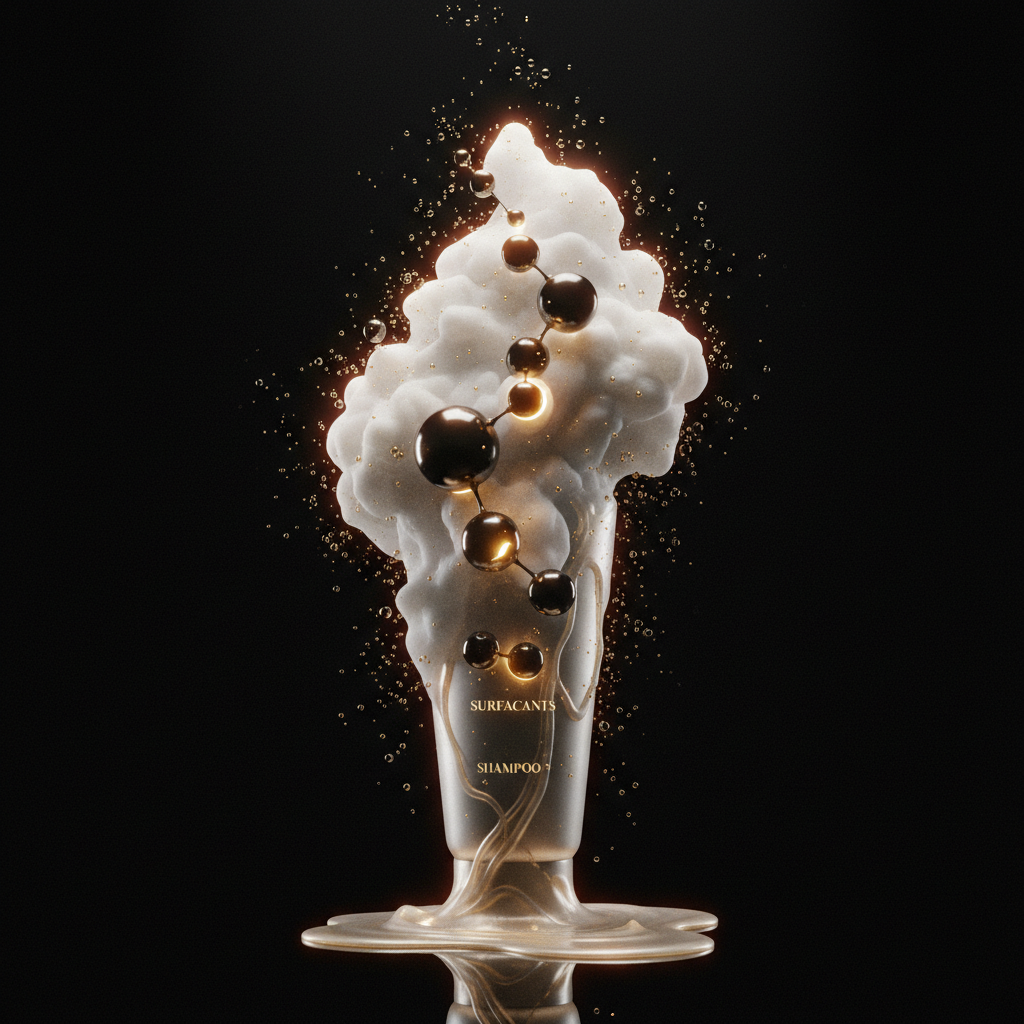
Quick answer: With Shampoo Surfactants Explained, these cleansing agents are surface-active molecules that bind sebum, styling residue and grime to water so they rinse away easily. Found in virtually every liquid shampoo, surfactants determine how effectively a formula cleanses, foams, and interacts with the scalp barrier. However, surfactants alone cannot alter your genetic hair growth cycle or treat medical hair loss. Their primary limitation is purely cosmetic: they clean and condition the surface, but cannot repair deep internal fibre fractures.
Key takeaways
- Surfactants possess a hybrid chemical structure with water-loving (hydrophilic) heads and oil-loving (lipophilic) tails that lift away sebum.
- Primary surfactants, such as anionic sulfates and sulfonates, provide strong detergency and rich foam.
- Secondary surfactants, including amphoteric betaines and non-ionic glucosides, are blended in to temper irritation and stabilise lather.
- Stripping the scalp with excessively aggressive cleansers can disrupt the stratum corneum barrier, leading to dryness and breakage.
- Formulations balanced between pH 4.5 and 5.5 help keep the hair cuticle smooth and reduce friction during washing.
Shampoo Surfactants Explained: what the evidence shows
When cosmetic chemists review Shampoo Surfactants Explained, they divide these cleansing compounds into four distinct electrochemical classes based on the ionic charge of their hydrophilic head: anionic, amphoteric, non-ionic, and cationic.
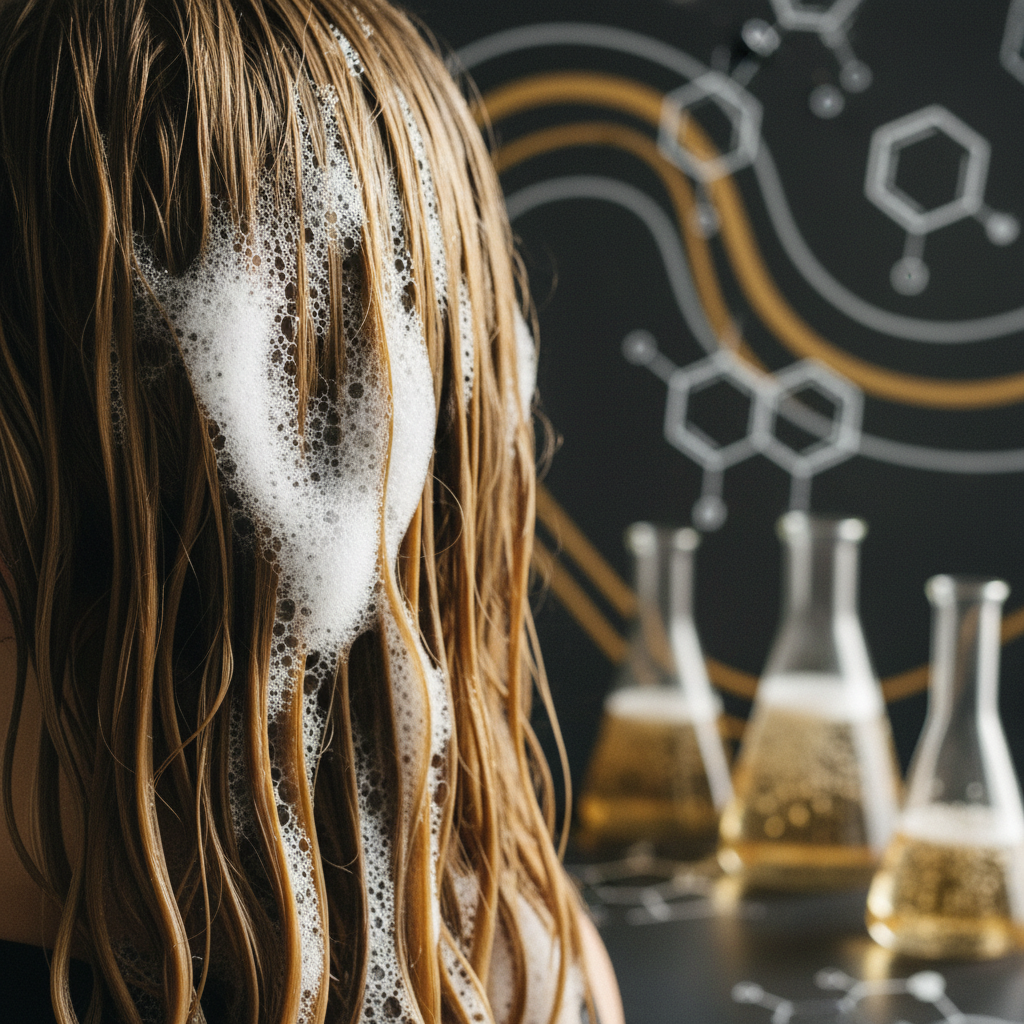
Anionic surfactants carry a negative charge. They are the workhorses of the cleansing world. Compounds such as Sodium Laureth Sulfate (SLES), Ammonium Laureth Sulfate (ALES), and Sodium C14-16 Olefin Sulfonate exhibit high detergency, effectively solubilising stubborn fats, sebum, and environmental particulates. Because human hair carries a net negative charge (known as the isoelectric point, roughly pH 3.67), anionic surfactants create electrostatic repulsion between hair fibres. This lifts dirt easily, but it can also cause mild cuticle swelling if the formula is too alkaline.
Amphoteric surfactants carry both positive and negative charges depending on the formulation's pH. Ingredients like Cocamidopropyl Betaine and Sodium Cocoamphoacetate act as secondary surfactants. Dermatological studies show that blending amphoteric surfactants with anionic agents reduces overall skin irritation by forming larger, mixed micelles that cannot penetrate the scalp's protective stratum corneum layer.
Non-ionic surfactants have no electrical charge. Examples include Decyl Glucoside, Lauryl Glucoside, and PEG-100 Stearate. They are exceptionally mild, produce moderate lather, and rinse cleanly. Formulators frequently rely on them for sensitive skin products, though on their own they may struggle to remove heavy silicone deposits.
Cationic surfactants bear a positive charge. Ingredients like Behentrimonium Chloride or Cetrimonium Chloride are rarely used as primary cleansers because they do not lather well. Instead, their positive charge binds strongly to the negatively charged, damaged sites of hair cuticles, neutralising static, softening the fibre, and functioning as conditioning agents.
| Surfactant Class | Charge | Common Examples | Primary Role | Irritation Potential |
|---|---|---|---|---|
| Anionic | Negative (-) | Sodium Laureth Sulfate, Sodium Cocoyl Isethionate | Deep cleansing, rich foam | Moderate to High (formula dependent) |
| Amphoteric | Dual (+ / -) | Cocamidopropyl Betaine, Disodium Cocoamphodiacetate | Foam boosting, mildness booster | Low |
| Non-ionic | Neutral (0) | Decyl Glucoside, Coco-Glucoside | Gentle cleansing, emulsification | Very Low |
| Cationic | Positive (+) | Cetrimonium Chloride, Behentrimonium Methosulfate | Conditioning, detangling, anti-static | Low to Moderate |
How surfactants work on the hair and scalp
The cleansing mechanism operates through a thermodynamic process known as micelle formation. A surfactant molecule has two distinct ends: a hydrophilic (water-attracting) polar head and a lipophilic (oil-attracting) non-polar hydrocarbon tail.
Water alone cannot dissolve the natural sebum, sweat, and styling products sitting on the scalp because oil and water do not mix. When you apply shampoo to wet hair, the lipophilic tails turn inward, latching onto sebum, mineral deposits, and dirt. Meanwhile, the hydrophilic heads face outward towards the water.
Once the surfactant concentration passes a specific threshold known as the Critical Micelle Concentration (CMC), these molecules organise themselves into tiny spherical clusters called micelles. The grime is trapped inside the core of the micelle. When you rinse your hair with water, the outward-facing hydrophilic heads follow the stream down the drain, carrying the trapped oils away without leaving an oily residue.
What the evidence does not show
There are persistent myths regarding shampoo detergency that clinical evidence simply does not support.
First, cosmetic literature does not support the idea that sulfates cause systemic toxicity or cancer. Regulatory authorities, including the Cosmetic Ingredient Review (CIR) expert panel and the Scientific Committee on Consumer Safety (SCCS), have repeatedly reviewed Sodium Lauryl Sulfate (SLS) and Sodium Laureth Sulfate (SLES) and confirmed they are safe when formulated for rinse-off use.
Second, surfactants do not cause androgenetic alopecia or autoimmune hair loss. When people report "hair loss from shampoo", they are almost always experiencing one of two unrelated issues: natural shedding (telogen effluvium) that becomes noticeable as loose hairs slide out during lathering, or mechanical breakage along the shaft due to rough handling of dry, brittle fibres. A shampoo surfactant cannot shut down an active dermal papilla deep within the follicle.
Signs your shampoo surfactant blend is too harsh
While surfactants do not cause follicular hair loss, an overly aggressive surfactant system can compromise your scalp barrier and fibre integrity. Watch out for these clear signs:
- Post-wash tightness: If your scalp feels tight, itchy, or stinging within an hour of washing, the lipid matrix between your skin cells has been depleted.
- Reactive oiliness: Washing with a strong degreaser daily can trigger the scalp to produce sebum rapidly to compensate for moisture loss.
- Mid-shaft snapping: Stripping the hair cuticle of its protective 18-methyleicosanoic acid (18-MEA) layer leaves the cortex unprotected, leading to mechanical breakage when brushing.
- Dull, tangled texture: Swollen, lifted cuticles snag against one another, creating friction, knots, and a rough feel.
What you can do: balancing cleansing and care
Choosing the right cleansing system depends entirely on your sebum production, lifestyle, and hair structure.
If you have fine hair or an oily scalp, mild anionic cleansers like Sodium Cocoyl Isethionate (often called "baby foam") or Sodium Methyl Cocoyl Taurate offer thorough cleansing without excessive stripping. You can wash frequently without stripping your scalp bare.
If you have coarse, bleached, or afro-textured hair, your strands are naturally more porous and prone to moisture loss. Look for shampoos where amphoteric surfactants (like betaines) or non-ionic glucosides are listed near the top of the ingredients list, supported by conditioning agents like polyquaterniums.
For routine maintenance, consider water temperature. Hot water increases the solubilising power of surfactants, making them strip away more natural lipids than intended. Wash with lukewarm water (around 37 to 38 degrees Celsius) to keep your hair shaft smooth.
When the cause may be something else
If your scalp remains inflamed, flaky, or sore despite switching to ultra-gentle, sulfate-free cleansers, the surfactant is rarely the culprit.
Seborrhoeic dermatitis, for instance, is driven by an overgrowth of Malassezia yeast that feeds on scalp sebum. Switching to an overly weak cleanser can actually make the condition worse by leaving excess sebum on the skin. In this scenario, medical-grade active ingredients like Ketoconazole, Zinc Pyrithione, or Selenium Sulfide are required, and they often need an effective surfactant system to carry them to the scalp.
Similarly, sudden diffuse hair thinning across the crown is generally linked to systemic factors, such as iron deficiency, thyroid dysfunction, or hormonal shifts, rather than your choice of shampoo.
The Watermans perspective
Cleansing should never come at the expense of your scalp environment. Watermans approaches formulation by pairing thoroughly balanced cleansing systems with targeted botanical and peptide support.
Watermans GrowMe Shampoo avoids aggressive detergents that leave hair brittle. Instead, it combines mild, effective cleansing agents that remove surface sebum and product buildup while maintaining an optimal scalp pH. This allows bioactive ingredients, such as rosemary extract, caffeine, biotin, and lupin protein, to interact cleanly with the scalp surface, fostering an ideal foundation for thicker, stronger-looking hair.
Frequently asked questions about Shampoo Surfactants Explained
Are sulfate-free shampoos always gentler?
Not necessarily. While sulfates like SLS can be drying, "sulfate-free" simply means the formula avoids specific sulfur-based anionic compounds. Some sulfate-free alternatives, such as Sodium C14-16 Olefin Sulfonate, can be just as strong as standard sulfates if not balanced with secondary surfactants. True mildness depends on the overall formula, its pH, and the ratio of primary to secondary surfactants.
How do I identify surfactants on an ingredient label?
Surfactants are typically listed within the first four to five ingredients following water (Aqua). Look for words containing "sulfate", "sulfonate", "isethionate", "betaine", "glucoside", or "taurate". In our guide to Shampoo Surfactants Explained, you will see that milder formulations frequently pair an isethionate or taurate with a betaine or glucoside.
Can surfactants cause permanent hair loss?
No. Surfactants act only on the surface of the scalp and the outer layers of the hair fibre. They do not penetrate deeply enough to alter the hair follicle or interrupt the biological growth cycle. Any hair noticed during washing is usually natural shedding of resting hairs or breakage of compromised fibres.
Does a shampoo need high foam to clean properly?
No. Foaming and cleansing are technically separate processes. While consumers often equate dense foam with cleaning power, non-ionic surfactants like Decyl Glucoside clean thoroughly while producing modest lather. Foam helps spread the formula evenly across the scalp, but it is not the primary driver of oil removal.
Summary
Understanding how modern cleansers are formulated removes the mystery from product labels. When evaluating Shampoo Surfactants Explained, it is clear that these ingredients are essential tools designed to emulsify dirt, lift styling residue, and keep the scalp microbiome balanced. Rather than fearing specific ingredient families, look for balanced formulations that respect the scalp's natural pH and lipid barrier, leaving your hair clean, resilient, and manageable.
Sources and references
- Cosmetic Ingredient Review (CIR) Expert Panel. "Safety Assessment of Alkyl Sulfates as Used in Cosmetics." International Journal of Toxicology, 2010.
- D'Souza, P., and Rathi, S. K. "Shampoo and Conditioners: What a Dermatologist Should Know?" Indian Journal of Dermatology, 2015.
- Gavazzoni Dias, M. F. "Hair Cosmetics: An Overview." International Journal of Trichology, 2015.
- Scientific Committee on Consumer Safety (SCCS). "Opinion on Sodium Lauryl Sulfate." European Commission, 2010.
Find these ingredients in Watermans products
- Zinc: you will find this ingredient in our Hair Vitamins.