Understanding The Science of Hair Colouring
9 min read ·
Explore The Science of Hair Colouring, from natural pigments to chemical processes, and how it impacts hair structure.
Quick answer: The Science of Hair Colouring involves complex chemical reactions that alter the natural melanin in your hair or deposit new pigments onto it. It encompasses various methods, including permanent, semi-permanent, and temporary dyes, each working differently to achieve a desired shade. Understanding these processes is key to maintaining hair health and achieving optimal results, although the specific impact can vary greatly depending on hair type and product formulation.
Key takeaways
- Hair colour comes from melanin pigments, primarily eumelanin (brown/black) and pheomelanin (red/yellow).
- Permanent hair dyes use an alkaline agent to open the hair's cuticle, an oxidant (usually hydrogen peroxide) to lighten natural pigment, and couplers to form new, larger colour molecules inside the hair shaft.
- Semi-permanent dyes deposit pre-formed colour molecules onto or just beneath the cuticle, fading over several washes without significantly altering natural pigment.
- Temporary colours simply coat the hair surface and wash out quickly.
- Hair colouring, especially permanent processes, can temporarily alter the hair's protein structure, making it more porous and potentially prone to breakage if not cared for properly.
The Science of Hair Colouring: what the evidence shows
The ability to change hair colour has fascinated humanity for centuries. At its core, The Science of Hair Colouring is about manipulating the natural pigments found within the hair shaft. Hair gets its natural colour from melanin, a complex polymer produced by melanocytes in the hair follicle. There are two primary types of melanin: eumelanin, which gives hair brown and black tones, and pheomelanin, responsible for red and yellow hues. The precise ratio and distribution of these two pigments determine your unique natural hair colour.
When we colour hair, we are essentially either adding new pigment, removing existing pigment, or a combination of both. The method chosen dictates the chemical process and the longevity of the new colour. Modern hair dyes rely on carefully formulated chemical reactions to achieve these changes, ensuring a balance between effective colour deposition and maintaining hair integrity. However, these processes aren't without their impact on the hair fibre.
How permanent hair colour works
Permanent hair dyes are the most common type for significant, long-lasting colour changes. They work via a three-step chemical reaction within the hair shaft:
- Opening the cuticle: An alkaline agent, typically ammonia or a derivative, is used to swell the hair shaft and lift the protective outer layer, the cuticle. This allows the other chemicals to penetrate the hair's cortex, where melanin is stored.
- Lightening natural pigment: An oxidising agent, almost always hydrogen peroxide, enters the cortex. It reacts with the natural melanin, breaking it down into smaller, colourless molecules. This process is often called "bleaching" or "lightening" and is crucial for creating a base for the new colour, especially for lighter shades.
- Forming new colour: Dye intermediates, known as "precursors" and "couplers", also penetrate the cortex. Once inside, they react with the hydrogen peroxide to form larger, new colour molecules. These molecules are too large to escape through the re-sealed cuticle, making the colour permanent. The specific combination of precursors and couplers determines the final shade.
This process permanently alters the hair's natural pigment and replaces it with synthetic dyes. Over time, the synthetic pigments can fade due to washing, sun exposure, and environmental factors, requiring re-colouring.
How semi-permanent and temporary colours differ
Semi-permanent and temporary hair colours work differently, offering less commitment and often less impact on hair structure:
- Semi-permanent colours: These dyes contain pre-formed colour molecules that are small enough to penetrate slightly beneath the cuticle or deposit onto the cuticle surface without requiring an oxidising agent or ammonia. They don't alter the natural melanin significantly. As they are not permanently integrated into the hair structure, they gradually wash out over approximately 4 to 12 shampoos. They can enhance natural colour, add tone, or cover early grey hairs without a strong chemical commitment.
- Temporary colours: These are the simplest form of hair colouring. They consist of large colour molecules that coat the outside of the hair shaft. They do not penetrate the cuticle at all. Temporary colours are typically found in sprays, mousses, or coloured conditioners and wash out with a single shampoo. They are ideal for novelty colours, special events, or experimenting with a new shade without any lasting effect.
The impact on hair structure
While achieving a desired colour, the chemical processes involved in permanent dyeing can impact hair health. The alkaline environment and oxidising agents can temporarily swell the hair shaft and affect the disulphide bonds within the keratin structure. This can lead to increased porosity, making the hair more susceptible to moisture loss and potentially increasing the risk of breakage if not managed with appropriate care. Hair coloured with permanent dyes may feel drier or appear less shiny if cuticle damage occurs and cannot lay flat.
Evidence shows that the degree of damage is directly related to the strength of the chemicals used, the processing time, and the initial condition of the hair. Repeated colouring, especially lightening, can compound these effects. However, advancements in hair colour formulations include conditioning agents and protective technologies designed to minimise damage and maintain hair's condition during the process.
Understanding different hair colouring methods
To further illustrate The Science of Hair Colouring, here's a comparison of common colouring methods.
| Feature | Permanent Colour | Semi-Permanent Colour | Temporary Colour |
|---|---|---|---|
| Mechanism | Opens cuticle, alters natural melanin, deposits new pigment inside cortex. | Deposits pigment on or just beneath cuticle. | Coats hair surface. |
| Chemicals | Ammonia (or derivatives), hydrogen peroxide, dye precursors/couplers. | Pre-formed dyes, no ammonia or peroxide. | Large pigment molecules. |
| Longevity | Lasts until hair grows out or is re-coloured; fades over time. | Fades over 4 to 12 washes. | Washes out in 1 shampoo. |
| Effect on Hair | Can increase porosity, potentially weaken protein structure. | Minimal to no impact on hair structure. | No impact on hair structure. |
| Grey Coverage | Excellent. | Partial, can blend. | None to minimal. |
| Colour Change | Significant lightening and darkening possible. | Tone enhancement, darker shades, no significant lightening. | Adds surface colour, no natural pigment change. |
When to get professional advice
While home colouring kits are widely available, for significant colour changes, complex techniques like highlights or balayage, or if you have pre-existing hair damage or scalp sensitivities, seeking professional advice is recommended. Professional stylists have extensive training in The Science of Hair Colouring, including:
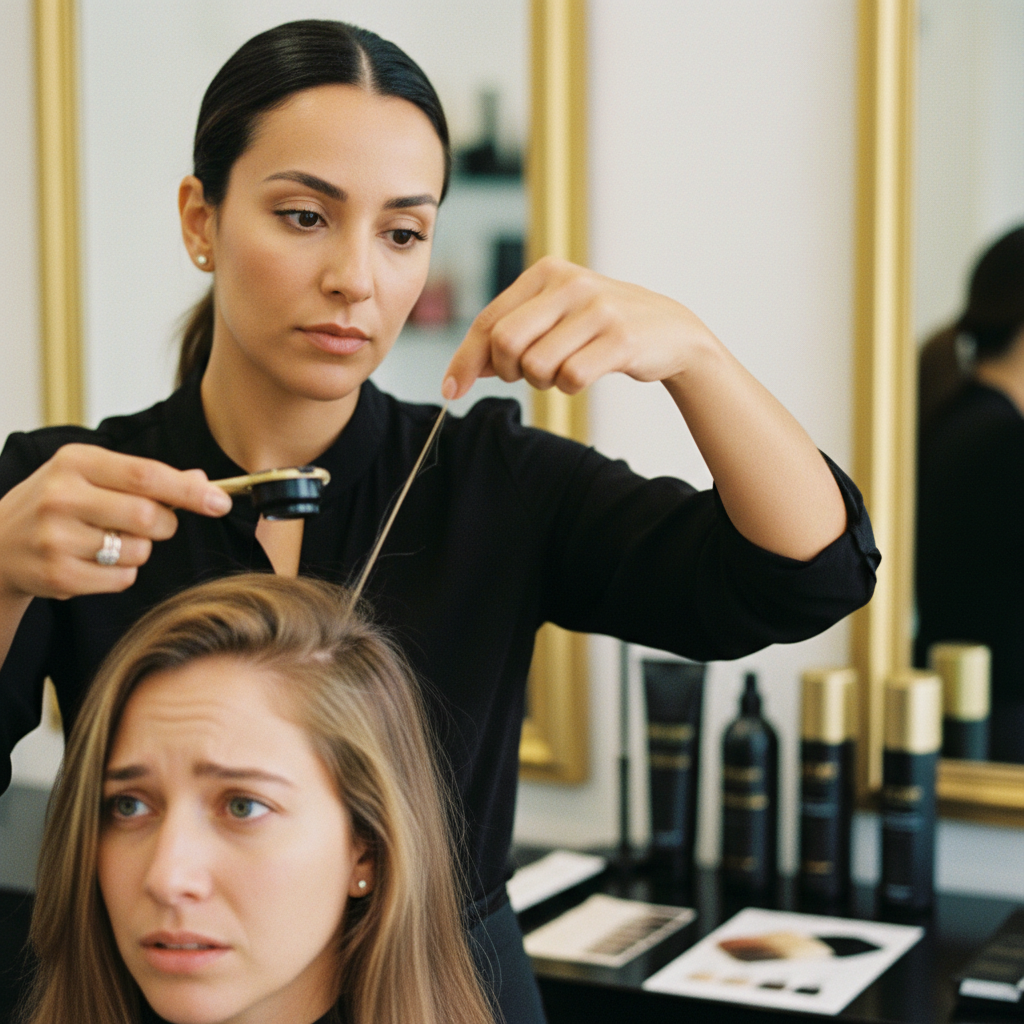
- Hair analysis: They can assess your hair's porosity, elasticity, and condition to choose the most appropriate products and techniques.
- Formulation expertise: They understand how different dyes react with various hair types and natural pigments, ensuring predictable and desired results.
- Damage prevention: Professionals can use protective treatments and tailored application methods to minimise potential damage during the colouring process.
- Allergy testing: They can perform patch tests to identify potential sensitivities to dye ingredients, a crucial safety step.
If you experience unexpected hair breakage, severe scalp irritation, or an allergic reaction after colouring, consult a dermatologist or healthcare professional immediately.
Frequently asked questions about The Science of Hair Colouring
Does hair dye cause hair loss?
No, hair dye does not typically cause hair loss from the follicle. Hair loss is a condition where the hair follicle stops producing hair or the hair sheds prematurely (e.g., telogen effluvium). Hair dye acts on the hair fibre itself. While aggressive colouring or bleaching can cause hair breakage (the fibre snapping along the shaft), this is distinct from true hair loss, which involves the root.
How often can I safely colour my hair?
The safe frequency for colouring your hair depends on the type of colour and your hair's condition. For permanent colour, most professionals recommend waiting 4 to 8 weeks between applications to allow for root growth and minimise repeated processing of already coloured hair. Semi-permanent colours can be used more frequently, typically every 2 to 4 weeks, as they are less damaging. Always assess your hair's health and consult with a stylist if you're unsure.
What is the pH of hair dye, and why does it matter?
Most permanent hair dyes are alkaline, with a pH typically ranging from 9 to 11. This high pH is essential to swell and open the hair's cuticle, allowing the dye molecules to penetrate the cortex. While necessary for effective colouring, high alkalinity can temporarily disrupt the hair's natural pH (which is mildly acidic, around 4.5 to 5.5), making it more vulnerable to damage. Conditioners formulated for coloured hair help to restore the hair's natural pH.
Can I colour my hair if it's already damaged?
Colouring already damaged hair, especially with permanent dyes or bleach, is generally not recommended as it can exacerbate the damage, leading to increased breakage. If your hair is brittle, overly porous, or has significant split ends, it's best to focus on restorative treatments first. A professional stylist can assess your hair's condition and advise on the safest approach, potentially suggesting semi-permanent options or waiting until your hair health improves.
How does hair grow grey, and can colouring reverse it?
Hair turns grey when the melanocytes, the cells responsible for producing melanin pigment, gradually stop functioning over time. This reduces or halts melanin production, leaving the hair shaft without pigment, which then appears white. When mixed with naturally pigmented hair, it creates the appearance of grey. The Science of Hair Colouring can cover grey hair by depositing artificial pigment, but it does not reverse the biological process of melanocyte decline. It's a cosmetic change only.
What are PPDs in hair dye?
PPD stands for p-phenylenediamine, a common ingredient in permanent hair dyes. It is an effective dye precursor that helps create a wide range of long-lasting colours. However, PPD can be a contact allergen for some individuals, leading to skin irritation or allergic reactions. Many hair dye products offer PPD-free alternatives, though these may contain other dye chemicals that can also cause sensitivities. Always perform a patch test 48 hours before using any hair dye, even if you've used it before.
Watermans and coloured hair
For hair that has undergone colouring, especially permanent processes, maintaining its condition and vibrancy is crucial. Watermans products are formulated with ingredients designed to support hair health. For instance, Watermans Grow Me Shampoo and Conditioner contain hydrolysed lupin protein, which can help strengthen the hair fibre, and biotin, often associated with maintaining hair's condition. By using products that nourish the scalp and hair, you can help support the appearance of stronger, healthier-looking hair, which can be particularly beneficial for coloured hair that may be more prone to dryness or breakage.
Sources and references
- British Association of Dermatologists, Hair Dyes: Allergic Contact Dermatitis, updated 2023.
- Journal of Cosmetic Science, various articles on hair structure and dyeing chemistry.
- PubMed, National Library of Medicine, research articles on hair biology and cosmetic science.
- Society of Cosmetic Chemists, educational resources on hair care ingredients and formulations.
- The Cosmetic, Toiletry and Perfumery Association (CTPA), public information on cosmetic product safety.
- National Health Service (NHS), general health information, including allergies and skin conditions.