The Science of Cuticle Health: Structure, Function, and Care
8 min read ·
Explore The Science of Cuticle Health, including the 18-MEA lipid layer, cuticle cell structure, causes of fibre damage, and evidence-based ways to reduce breakage.
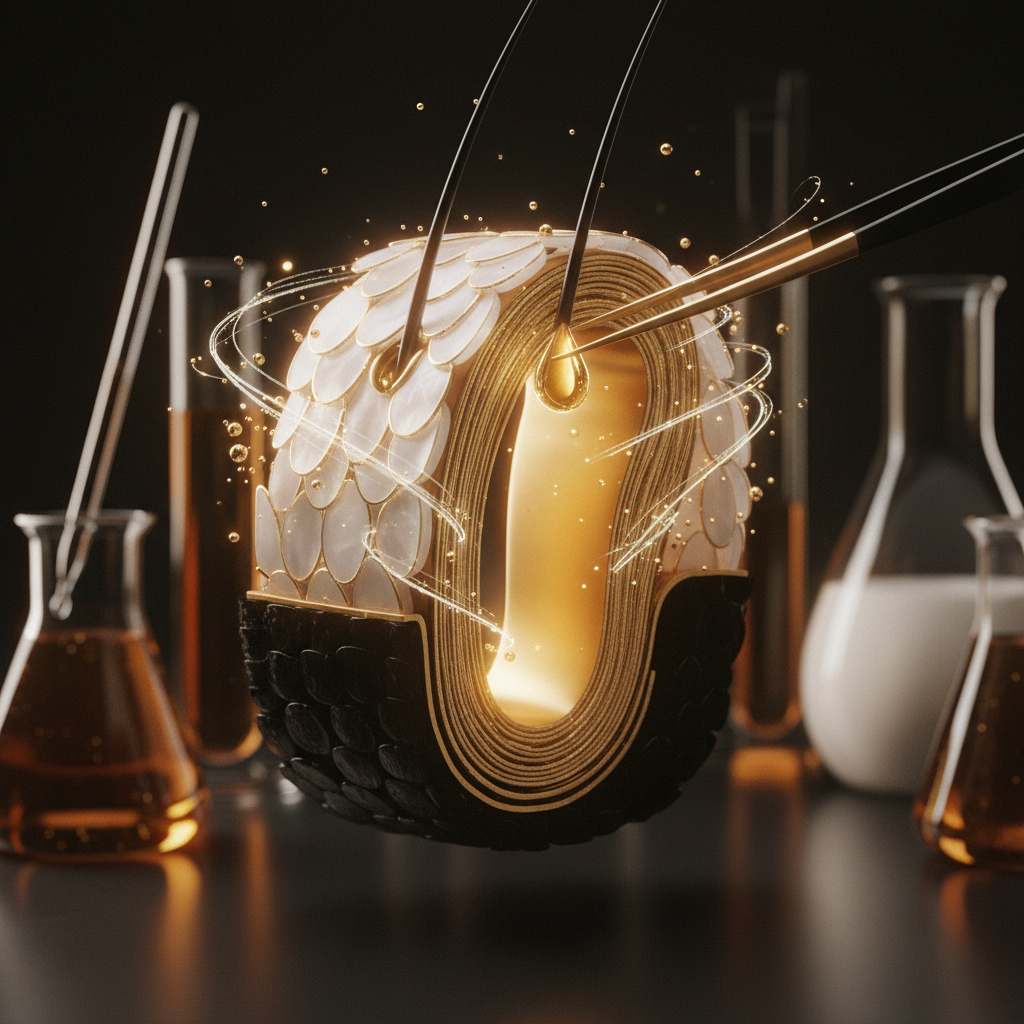
Quick answer: The Science of Cuticle Health centres on the hair fibre's outermost protective barrier, composed of 5 to 10 overlapping layers of dead, keratinised cells sealed with a lipid layer known as 18-methyleicosanoic acid (18-MEA). When these scales lie flat and intact, they protect the inner cortex, retain moisture, and reflect light. The main limitation is that the cuticle cannot biological regenerate once broken. Cosmetic care can smooth, coat, and protect the cuticle, but permanent structural damage can only be grown out and trimmed.
Key takeaways
- The cuticle consists of 5 to 10 overlapping cellular scales pointing towards the tip of the hair, cemented by cell membrane complex lipids.
- A critical lipid monolayer, 18-methyleicosanoic acid (18-MEA), renders healthy virgin hair naturally hydrophobic (water-repelling).
- Alkaline chemical treatments (such as bleaching or relaxers at pH 9.0 to 11.0) lift the cuticle scales and permanently strip this protective 18-MEA layer.
- Cuticle degradation leads directly to increased friction, mechanical tangling, moisture loss, and hair shaft breakage, which is entirely distinct from follicular hair shedding.
- Damaged cuticles cannot biologically heal; cosmetic formulations can only patch, lubricate, and temporarily seal lifted scales until new hair grows.
The Science of Cuticle Health: what the evidence shows
The Science of Cuticle Health is rooted in the biophysics of keratin and surface chemistry. The hair cuticle is not a living tissue. It is a multi-layered shield composed of flat, hardened cells that resemble roof tiles or shingles. Each individual scale is roughly 0.3 to 0.5 micrometres thick and approximately 45 to 60 micrometres long, pointing from the root down toward the tip.
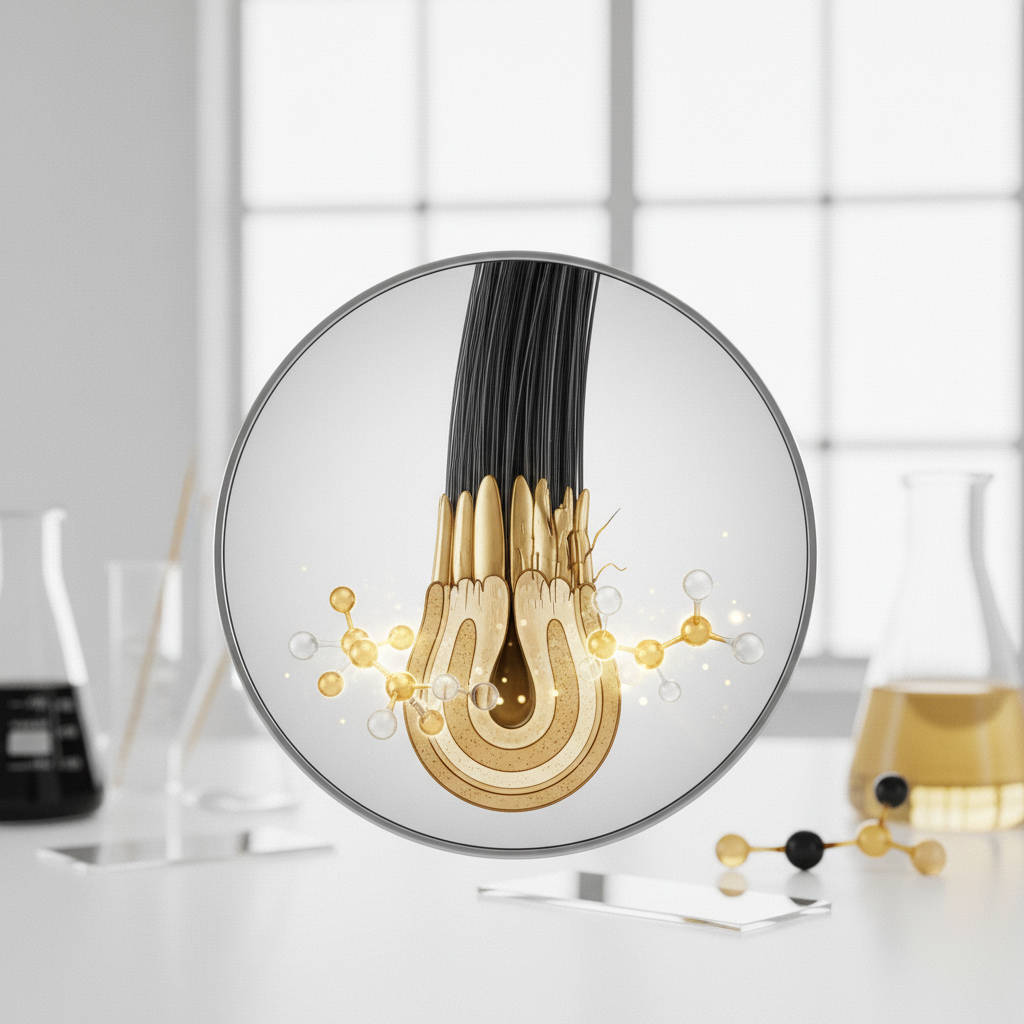
Under an electron microscope, a healthy cuticle shows smooth, tightly overlapping margins. The outermost surface is covered by the epicuticle, a delicate membrane bound to an essential surface lipid called 18-methyleicosanoic acid (18-MEA). This single layer of fatty acid molecules is covalently bonded to the underlying protein matrix through thioester linkages. Because of 18-MEA, undamaged hair is strongly hydrophobic. It actively repels environmental moisture, prevents excessive water absorption, and allows individual strands to slide past one another without creating friction.
Beneath the epicuticle lie three distinct layers within each cuticle cell:
- The A-layer: A cross-linked, rigid barrier rich in the amino acid cystine (roughly 30% or more), which provides physical toughness and high chemical resistance.
- The exocuticle: Another cystine-dense layer (roughly 15% cystine) that supports structural rigidity.
- The endocuticle: A soft, swelling-prone layer with a low cystine content (around 3%). This layer absorbs water readily and swells when the cuticle is exposed to elevated pH or prolonged wetting.
Between adjacent cuticle cells sits the cell membrane complex (CMC), a lipid and protein adhesive containing ceramides, cholesterol, and free fatty acids. Together, this architecture dictates whether your hair feels like smooth silk or rough straw.
What happens when the cuticle is damaged
When external stressors disrupt the cuticle, the consequences follow a predictable physical pathway. Damage generally falls into three categories:
1. Chemical stripping and lipid loss
Bleaches, permanent hair dyes, and chemical straighteners operate at an alkaline pH, typically between 8.5 and 11.0. This alkalinity forces the cuticle scales to swell and lift, permitting active chemicals to penetrate into the cortex to alter melanin or modify disulphide bonds.
In doing so, these alkaline processes cleave the covalent bonds anchoring 18-MEA. Once this lipid layer is removed, the hair surface shifts from hydrophobic (water-repelling) to hydrophilic (water-attracting). Hydrophilic hair absorbs atmospheric humidity unevenly, swells excessively when wet, loses tensile strength, and suffers from chronic frizz.
2. Thermal blistering and scale cracking
Styling tools operating above 180 degrees Celsius pose a severe risk to cuticle integrity. High heat boils residual water trapped within the endocuticle and cortex, creating microscopic steam pockets that rupture through the cuticle scales. This process, often called thermal blistering or bubble hair, cracks the protective shingles, leaving the internal cortex exposed to environmental degradation.
3. Mechanical abrasion and chipping
Brushing wet hair, aggressive towel-drying, and constant friction against rough fabrics physically chip the fragile edges of lifted cuticle scales. Because wet hair swells by up to 16% in diameter and expands along its length, the overlapping scales lift naturally when damp. Vigorous mechanical stress snaps off these raised margins, leading to jagged edges, split ends, and eventual fibre breakage.
Healthy, Closed Cuticle (Virgin Hair)
[=== Root ===]
 \========\ <-- Intact 18-MEA lipid layer (hydrophobic)
 \========\ <-- Cuticle scales flat, low friction (0.1 to 0.2 coefficient)
 \========\ <-- Cortex protected, moisture regulated
 [=== Tip ===]

Damaged, Lifted Cuticle (Chemical or Heat Altered)
[=== Root ===]
 / / <-- 18-MEA stripped (hydrophilic surface)
 / [Gap] / <-- Chipped, lifted scales; water enters and leaves freely
 / / <-- Cortex exposed to UV and mechanical snapping (breakage)
 [=== Tip ===]
Signs of cuticle damage versus healthy cuticle
Identifying the state of your hair cuticle helps you choose the right cosmetic strategy before breakage occurs.
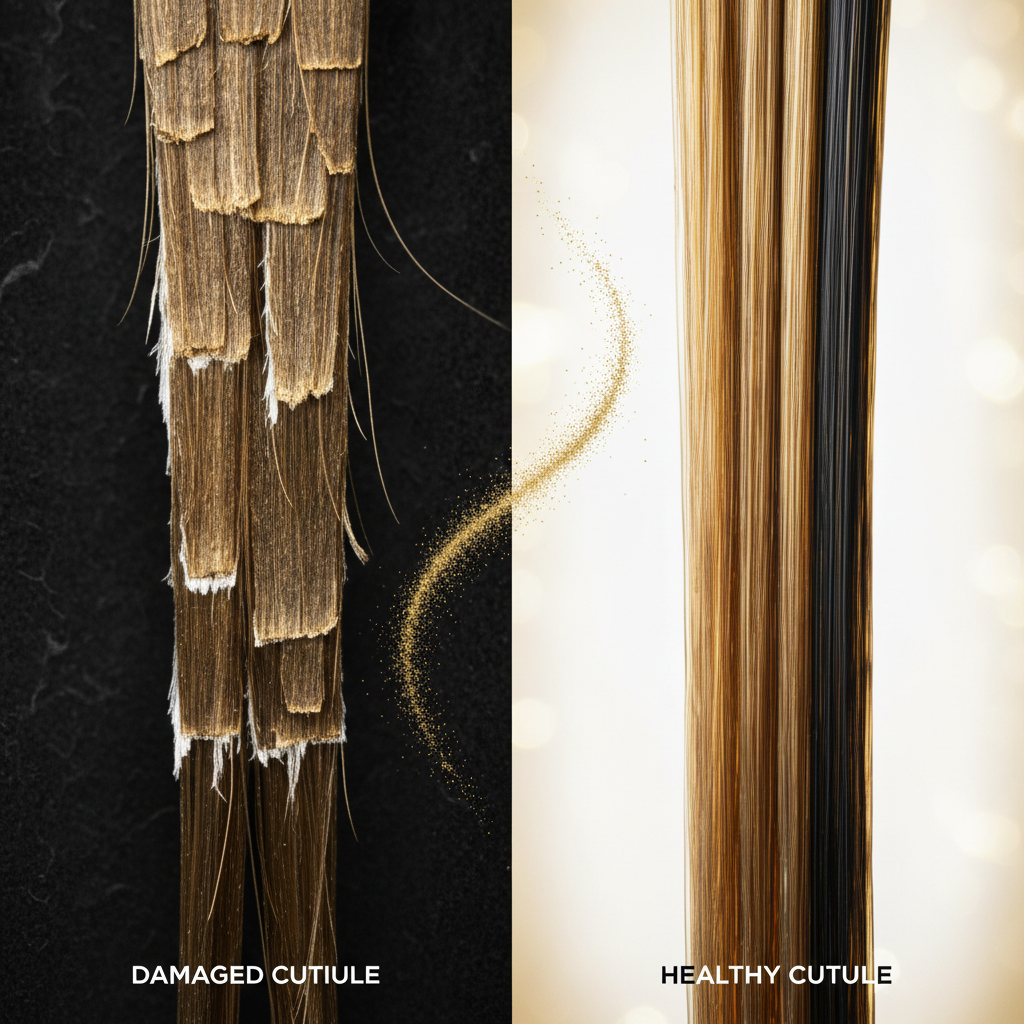
| Characteristic | Healthy, Intact Cuticle | Compromised, Damaged Cuticle |
|---|---|---|
| Surface charge | Low negative charge | High negative charge (prone to static) |
| Water behaviour | Hydrophobic (water beads or rolls off) | Hydrophilic (rapidly absorbs water and swells) |
| Porosity | Low to medium; slow drying time | High; absorbs water instantly, dries unevenly |
| Light reflection | High gloss and natural shine | Dull, matte, scattered light reflection |
| Tactile feel | Smooth sliding root-to-tip and tip-to-root | Gritty or rough when sliding fingers upward |
| Friction coefficient | Low (hair slides smoothly without tangles) | High (frequent knotting and snagging) |
| Breakage risk | Low; inner cortex remains shielded | High; cortex snaps easily under tension |
What the evidence does not show
There is no scientific evidence that a biologically fractured or chipped hair cuticle can regenerate itself. Hair strands are dead biological filaments; once they emerge from the follicle, they lack living cells, blood vessels, or cellular turnover. Products claiming to "permanently heal" or "rebuild" the cuticle are using marketing shorthand.
Cosmetic treatments can deposit film-forming polymers, silicones, hydrolysed proteins, or synthetic lipids onto the fibre surface. These ingredients smooth the edges, reduce the friction coefficient, and patch gaps temporarily. However, these solutions wash out over time and do not constitute biological healing.
Furthermore, cuticle health must not be confused with follicle health. An intact cuticle cannot stop androgenetic alopecia, telogen effluvium, or other forms of biological hair shedding, which originate inside the scalp tissue. A healthy cuticle only protects against fibre breakage along the shaft.
Practical steps to protect your hair cuticle
While you cannot rebuild lost scales, you can preserve existing layers and protect exposed areas with scientifically backed habits:
- Maintain an acidic pH environment: Healthy hair and scalp naturally sit at a pH of roughly 4.5 to 5.5. Shampoos and conditioners formulated within this slightly acidic range help prevent excessive swelling of the endocuticle, keeping the scales resting flatter against the cortex.
- Minimise wet friction: Wet hair has a significantly higher coefficient of friction than dry hair. Avoid vigorous rubbing with cotton towels; use a smooth microfibre cloth and gentle blotting motions. Detangle gently from the ends upward using a wide-tooth comb or flexible detangling brush with generous conditioner slip.
- Use heat protectants: Formulations containing heat-stable polymers and silicones form a sacrificial layer across the cuticle. They disperse thermal energy across the shaft and slow down rapid moisture boiling up to 230 degrees Celsius.
- Incorporate conditioning agents: Cationic surfactants (such as cetrimonium chloride or behentrimonium methosulfate) carry a positive charge that binds electrostatically to the negatively charged, damaged sites on a hydrophilic cuticle. This temporarily restores hydrophobicity, flattens lifted edges, and dramatically cuts comb friction.
Supporting cuticle integrity with Watermans
When managing hair prone to mechanical stress and cuticle fraying, product formulation matters. Watermans hair care products are designed to support a balanced scalp environment while providing cosmetic conditioning to fragile hair shafts. By delivering humectants, gentle cleansers, and nourishing surface ingredients, these formulas help smooth the feel of the cuticle, reducing friction and preserving hair strength against routine styling wear.
Frequently asked questions about The Science of Cuticle Health
Can split ends be repaired according to The Science of Cuticle Health?
No. Split ends occur when the cuticle has completely worn away, exposing the cortical fibres, which then unravel. No cosmetic product can permanently fuse these separated fibres back together. While conditioning polymers can temporarily glue the split closed until the next wash, trimming the split ends is the only permanent solution.
How does hair bleaching alter cuticle health?
Bleaching requires high alkalinity (pH 9.0 to 11.0) and hydrogen peroxide to swell and penetrate the cuticle layers. This chemical reaction breaks disulphide bonds within the A-layer and strips away the 18-MEA lipid layer. The scales remain permanently raised and fragile, resulting in high porosity and increased hair breakage.
What is the role of 18-MEA in cuticle function?
18-methyleicosanoic acid (18-MEA) is a specialised fatty acid covalently bonded to the outer surface of each cuticle cell. It creates a hydrophobic barrier that repels water, prevents the cortex from over-swelling, and reduces friction between individual hair strands. Once removed by chemical processing, it does not naturally regenerate.
Does cold water really close the hair cuticle?
No, this is a common myth. The hair cuticle is not a living pore or muscle; it does not contract in response to cold temperatures. Cuticle swelling and flattening are primarily driven by pH and moisture content, not water temperature. Using an acidic rinse or conditioner is what actually smooths the scales down.
Summary on cuticle maintenance
Understanding the architecture of your hair strands changes how you care for them. The Science of Cuticle Health demonstrates that while hair cannot heal itself, proactive care can protect your hair's protective outer shield for years. By respecting the hair's acidic pH, reducing friction during washing, protecting strands from excessive thermal styling, and using smart conditioning agents, you can prevent preventable fibre breakage and keep your hair looking smooth, glossy, and resilient.
Sources and references
- Robbins, C. R. (2012). Chemical and Physical Behavior of Human Hair. 5th ed. Springer-Verlag.
- Swift, J. A. (1999). Human hair cuticle: biologically conspired to the owner's advantage. International Journal of Cosmetic Science, 21(4), 227-239.
- Jones, L. N., & Rivett, D. E. (1997). The role of 18-methyleicosanoic acid in the structure and formation of mammalian hair cuticles. Micron, 28(6), 469-485.
- Gavazzoni Dias, M. F. (2015). Hair cosmetics: an overview. International Journal of Trichology, 7(1), 2-15.
- Dawber, R. (1996). Hair: its structure and response to cosmetic preparations. Clinics in Dermatology, 14(1), 105-112.