The Scalp Skin Barrier: Architecture, Function, and Repair
9 min read ·
The Scalp Skin Barrier protects against moisture loss, irritation, and microbial overgrowth. Learn the science of barrier health, symptoms of damage, and how to repair it.
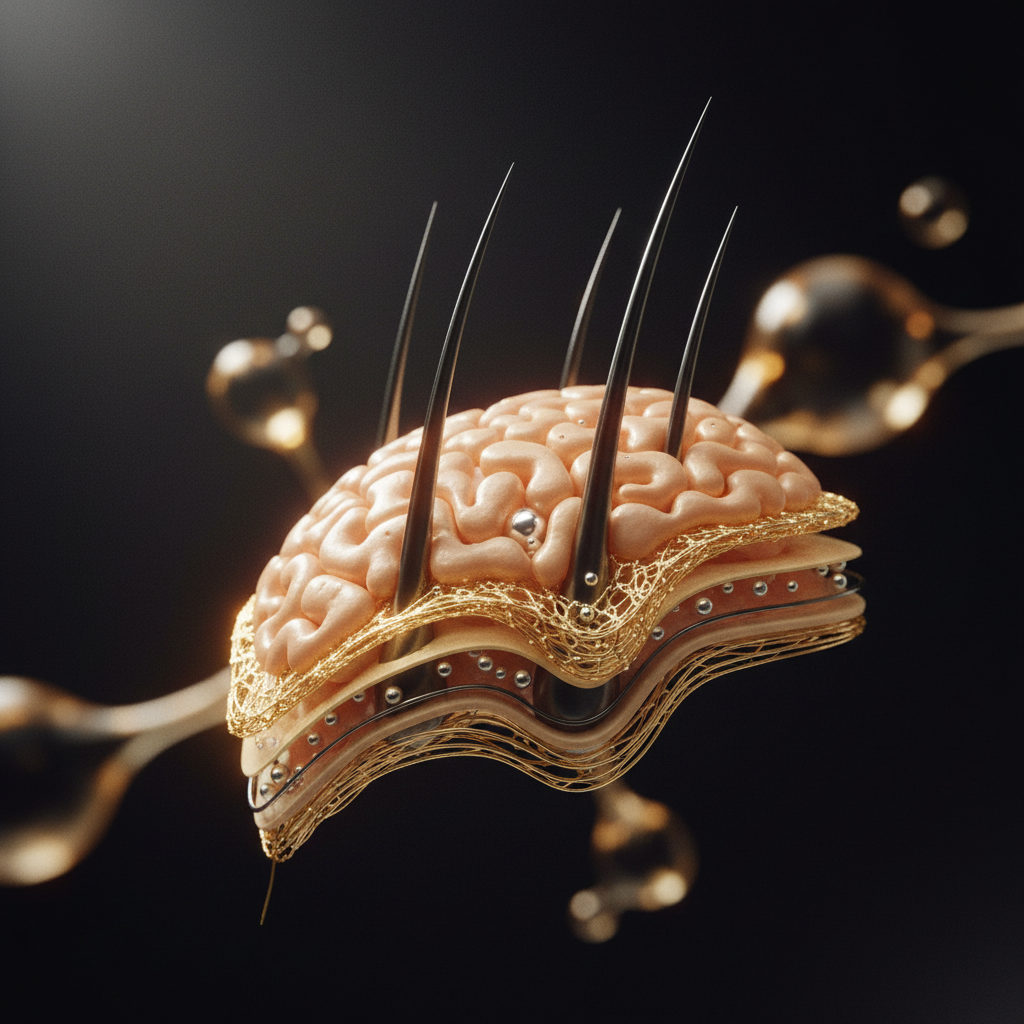
Quick answer: The Scalp Skin Barrier is the outermost protective shield of your scalp, primarily composed of the stratum corneum, natural lipids, and an acidic mantle. It retains essential hydration while preventing microbial overgrowth and environmental irritants from penetrating deeper tissue. When disrupted, it triggers flaking, itching, and inflammation that can disrupt healthy follicle function. However, topicals cannot repair internal inflammatory disorders on their own, and persistent dysfunction requires medical evaluation.
Key takeaways
- The scalp barrier consists of dead corneocyte cells bound by a lipid matrix of ceramides, cholesterol, and free fatty acids.
- A healthy scalp maintains an acidic pH between 4.5 and 5.5, which discourages opportunistic microbial pathogens.
- Scalp skin has a significantly higher density of sebaceous glands and hair follicles than facial skin, altering its lipid dynamics.
- Barrier disruption leads to elevated transepidermal water loss (TEWL), triggering inflammation that can prematurely shift follicles into shedding phases.
- Over-cleansing, harsh chemical processing, and untreated seborrhoeic dermatitis are the primary drivers of barrier breakdown.
The Scalp Skin Barrier: what the evidence shows
The Scalp Skin Barrier functions identically in architecture to the wider epidermal barrier, but operates under unique biological pressures. Research published in the International Journal of Cosmetic Science demonstrates that the scalp stratum corneum is thinner and structurally weaker than that of facial skin, despite supporting thousands of large terminal hair follicles.
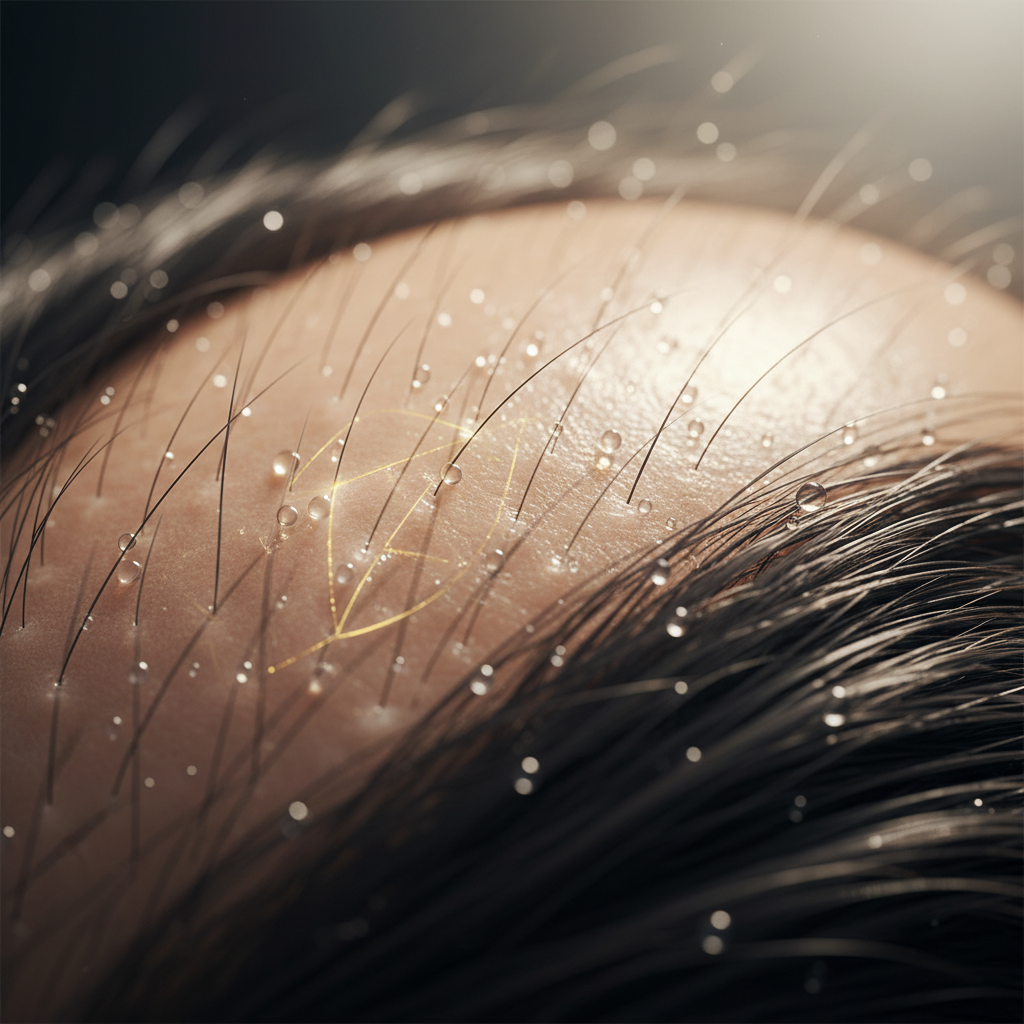
At a cellular level, the stratum corneum resembles a brick-and-mortar structure. The "bricks" are corneocytes (flattened, keratin-packed cells), while the "mortar" consists of intercellular lipids arranged in ordered lamellar sheets. These lipids comprise approximately 50% ceramides, 25% cholesterol, and 15% free fatty acids.
Alongside this lipid matrix sits the acid mantle, an invisible surface film with a physiological pH between 4.5 and 5.5. The acid mantle regulates enzymatic activity responsible for natural desquamation (the shedding of dead cells) and maintains the resident microbiome. When pH rises above 5.5, natural desquamation stalls, and opportunistic organisms such as Malassezia yeasts can proliferate uncontrollably.
Epidemiological and clinical studies show that an impaired scalp barrier correlates directly with increased transepidermal water loss (TEWL). When moisture evaporates too quickly through a broken barrier, the scalp becomes dehydrated, micro-fissures develop, and external irritants penetrate. This cascade releases pro-inflammatory cytokines like interleukin-1 alpha (IL-1α), generating erythema, burning, and pruritus.
What the evidence does not show
There is no scientific evidence that cosmetic shampoos, scalp oils, or serums can rebuild a permanently destroyed epidermal architecture overnight. Lipids applied topically can temporarily fill intercellular gaps and reduce TEWL, but biological restoration requires active physiological synthesis by viable keratinocytes over an entire cell turnover cycle, typically 28 days.
Furthermore, evidence does not show that every dry, flaky scalp stems from a lack of natural oils. In fact, many individuals who assume their barrier is "dry" actually suffer from seborrhoeic dermatitis, an inflammatory condition fuelled by an abundance of sebum combined with barrier weakness. Pouring heavy botanical oils onto an inflamed barrier in these cases often feeds fungal proliferation rather than resolving the breakdown.
Crucially, cosmetic barrier repair does not treat androgenetic alopecia (pattern hair loss). While a compromised barrier can cause temporary telogen effluvium (reactive hair shedding) through chronic perifollicular inflammation, genetic miniaturisation operates via dihydrotestosterone (DHT) receptors deep in the dermal papilla, beyond the reach of standard barrier lipids.
Mechanisms of scalp barrier disruption
The integrity of the barrier hinges on four interconnected elements: the lipid bilayer, the corneocyte integrity, the acid mantle, and the skin microbiome. Breakdown occurs when one or more of these elements is compromised.
External Aggressors (Surfactants, Bleach, Heat)
 │
 ▼
 Depletion of Intercellular Lipids
 │
 ▼
 Elevated Transepidermal Water Loss (TEWL)
 │
 ▼
 Microbial Imbalance (Malassezia Overgrowth)
 │
 ▼
 Cytokine Release & Perifollicular Inflammation
 │
 ▼
 Flaking, Itch, & Telogen Shedding
1. Surfactant-driven lipid stripping
Anionic surfactants with high detergency can bind to stratum corneum proteins and strip essential ceramides. This denatures keratin proteins and extracts intercellular lipids, causing the stratum corneum to swell, crack, and shed in large, visible clumps rather than individual microscopic cells.
2. Alkaline shifts
Normal water has a pH around 7.0, and hard municipal water can exceed 8.0. Alkaline hair dyes and perms often reach a pH of 9.0 to 11.0. Exposing the scalp to alkaline substances disrupts the enzymes needed to synthesize ceramides, whilst activating kallikreins, enzymes that prematurely degrade cellular junctions.
3. Microbial metabolites
The yeast Malassezia restricta and Malassezia globosa feed on scalp sebum, consuming saturated fatty acids and leaving behind unsaturated free fatty acids, notably oleic acid. Oleic acid directly penetrates the stratum corneum, disrupting lamellar lipid packing and triggering sub-clinical inflammation.
Signs of a compromised scalp barrier
Differentiating between temporary dryness and true barrier breakdown helps you choose the correct corrective routine.
| Symptom | Healthy Scalp Barrier | Mildly Compromised Barrier | Severely Impaired Barrier |
|---|---|---|---|
| Scalp sensation | Comfortable, neutral | Occasional tightness after washing | Persistent stinging, burning, or itch |
| Surface appearance | Clean, pale flesh tone | Slight redness, powdery flaking | Marked erythema, cracked skin, raw patches |
| Flake type | None (microscopic shedding) | Small, white, dry flecks | Large, yellowish, greasy or crusty scales |
| Response to products | Tolerates styling and wash products | Mild tingling with fragrance or alcohol | Acute burning with basic shampoos or water |
| Hair condition at root | Supple, anchored firmly | Dullness, slight increase in shedding | Increased shedding (telogen effluvium), fragility |
What you can do to support barrier recovery
Restoring the scalp barrier involves minimising chemical stress while delivering physiological lipids and humectants to lower TEWL.
Adjust your wash routine
- Lower the water temperature. Wash with lukewarm water (around 37°C to 38°C). Hot water accelerates lipid dissolution.
- Check product pH. Choose cleansers formulated close to physiological scalp pH (4.5 to 5.5).
- Cleanse with appropriate frequency. Leaving sebum on the scalp for too long allows Malassezia to generate irritants, while washing three times a day strips lipids. Most individuals thrive on washing every 1 to 3 days depending on sebum output.
Introduce physiological lipids and humectants
Look for leave-on tonics or gentle scalp formulas containing:
- Ceramides (specifically Ceramide NP, AP, and EOP): To replenish the intercellular mortar.
- Niacinamide (Vitamin B3): Proven in dermatological studies to stimulate endogenous ceramide synthesis.
- Panthenol (Pro-Vitamin B5): A penetrating humectant that improves stratum corneum hydration and soothes tissue.
- Hyaluronic acid or Glycerin: Water-binding humectants that draw moisture into dehydrated corneocytes.
Minimise mechanical and chemical trauma
Pause aggressive scalp scrubs that use physical walnut shells, salts, or stiff bristles. Physical abrasion tears fragile corneocytes. If you chemically colour or bleach your hair, apply barrier creams to the hairline, use low-volume developers, and ensure the product is rinsed thoroughly.
When the cause may be a medical condition
Not all barrier symptoms resolve with gentle washing and moisturising ingredients. Several common dermatological conditions mimic a simple damaged barrier:
- Seborrhoeic Dermatitis: Marked by greasy scales over red, inflamed patches, frequently around the hairline, eyebrows, and behind the ears. This requires targeted antifungal agents like ketoconazole or piroctone olamine.
- Scalp Psoriasis: Characterised by well-demarcated, thick, silvery-white plaques and intense itching. Psoriasis is an autoimmune condition driven by accelerated skin cell proliferation, requiring medical topicals such as corticosteroids or vitamin D analogues.
- Contact Dermatitis: An allergic or irritant response to hair dyes (such as paraphenylenediamine, or PPD), preservatives, or fragrances, resulting in acute swelling, weeping, and severe burning.
- Folliculitis: Bacterial or fungal infection of the hair follicles that presents as small, red, pustular bumps.
If your scalp shows signs of yellow crusting, open sores, bleeding, or hair shedding in distinct circular patches, see a GP, dermatologist, or qualified trichologist. Cosmetic formulations cannot replace clinical prescriptions.
Watermans approaches to scalp care
Watermans formulations are designed to support a balanced scalp environment without compromising the barrier. Products such as Grow Me Shampoo and Condition Me incorporate gentle cleansing agents, biotin, rosemary extract, niacinamide, and allantoin.
These ingredients work synergistically to clean the surface of debris and excess sebum while maintaining hydration, ensuring the delicate stratum corneum remains calm, nourished, and physically robust.
Frequently asked questions about The Scalp Skin Barrier
How long does it take to repair a damaged scalp skin barrier?
Repairing The Scalp Skin Barrier generally takes between two to four weeks. This corresponds to the natural turnover cycle of epidermal keratinocytes, which migrate from the basal layer to form a fresh stratum corneum over roughly 28 days. Using pH-balanced cleansers, avoiding harsh physical scrubs, and applying barrier-supporting humectants speeds up comfort, though full cellular recovery requires consistent care throughout this monthly cycle.
Can a damaged scalp barrier cause hair loss?
A damaged barrier does not cause permanent follicular hair loss or genetic pattern baldness. However, severe barrier impairment causes continuous micro-inflammation around the follicle (perifolliculitis). This physiological stress can prompt hair follicles to shift prematurely from the anagen (growth) phase into the telogen (resting) phase, resulting in diffuse temporary hair shedding known as telogen effluvium. Once the barrier heals, regular growth typically resumes.
Should I put coconut or olive oil on a broken scalp barrier?
Applying heavy plant oils directly to a compromised scalp is usually counterproductive. While they offer occlusive properties, olive oil contains high concentrations of oleic acid, which actively disrupts the stratum corneum lipid bilayer. Furthermore, yeasts associated with dandruff and seborrhoeic dermatitis consume these oils, worsening irritation. Formulated barrier serums containing pure ceramides, squalane, or niacinamide are safer choices.
How does water hardness affect The Scalp Skin Barrier?
Hard water contains elevated concentrations of dissolved calcium and magnesium minerals. When these minerals interact with standard cleansing agents, they form insoluble precipitates (soap scum) that cling to the scalp, clogging pores and causing irritation. The alkaline nature of hard water also raises scalp pH, weakening the acid mantle, impairing natural enzyme activity, and driving increased moisture loss through the skin.
Can exfoliating the scalp damage its natural barrier?
Yes, over-exfoliation is one of the most common causes of barrier impairment. Physical scrubs with jagged particles create micro-tears in the stratum corneum, while excessive use of chemical exfoliants like high-percentage salicylic or glycolic acid strips protective lipids faster than the skin can replenish them. Exfoliation should be gentle, limited to once weekly, and avoided entirely if the scalp is red, cracked, or actively stinging.
Maintaining scalp balance
Preserving The Scalp Skin Barrier is essential for long-term hair quality and day-to-day comfort. By respecting the natural acid mantle, using formulas tailored to physiological pH, and avoiding aggressive stripping agents, you safeguard the stratum corneum against inflammation. Treat your scalp with the same gentle, targeted approach you would afford your facial skin to ensure an optimal environment for hair to grow and thrive.
Sources and references
- International Journal of Cosmetic Science: "The scalp condition: a review of the biological mechanisms and cosmetic treatments", 2018.
- British Journal of Dermatology: "Stratum corneum lipids and water-holding capacity in human skin", 2012.
- Journal of Investigative Dermatology: "The role of the skin barrier and microbiome in seborrheic dermatitis", 2019.
- World Allergy Organization Journal: "The skin barrier in healthy and diseased states", 2021.
- NHS: "Dandruff and Seborrhoeic Dermatitis: Clinical Management", 2022.
Find these ingredients in Watermans products
- Vitamin D: you will find this ingredient in our Hair Vitamins.
- Oleic Acid: you will find this ingredient in our Camellia & Black Castor Hair & Body Oil.
- Niacinamide: you will find this ingredient in our Hair Mask.
- Panthenol (Provitamin B5): you will find this ingredient in our Heat Protection Spray.