Scalp Pruritus Relief: The Science of Calming an Itchy Scalp
8 min read ·
Discover evidence-based strategies for lasting scalp pruritus relief. Understand causes, biological itch mechanisms, and proven ways to restore scalp comfort.
Quick answer: Achieving effective scalp pruritus relief requires identifying the biological trigger behind your itchy scalp rather than masking it with heavy oils. Scalp pruritus relief stems from calming unmyelinated C-nerve fibres, restoring the skin barrier, and suppressing inflammatory pathways triggered by conditions like seborrhoeic dermatitis, contact allergy, or neurological irritation. The main limitation is that symptomatic washes provide only temporary respite if systemic issues, chronic microbial overgrowth, or underlying neuropathic conditions remain unaddressed.
Key takeaways
- Scalp pruritus is a biological sensation triggered when chemical mediators like histamine, cytokines, and proteases stimulate sensory C-nerve fibres in the dermis.
- Common dermatological drivers include seborrhoeic dermatitis, dry scalp (xerosis), contact dermatitis, and scalp psoriasis.
- Physical scratching damages the stratum corneum, creating a secondary itch-scratch cycle that invites bacterial infection and increases follicular stress.
- Topical anti-inflammatories, mild antifungal actives, and cooling agents like menthol provide immediate, targeted relief.
- True chronic scalp pruritus without visible rash may indicate neuropathic causes, such as cervical spine compression or post-herpetic neuralgia.
Scalp Pruritus Relief: what the evidence shows
Achieving lasting scalp pruritus relief depends entirely on matching the treatment mechanism to the precise underlying pathology. Controlled clinical trials demonstrate that non-specific scratching simply worsens inflammation by releasing pro-inflammatory cytokines such as interleukin-31 (IL-31) and substance P. These neurokinins directly lower the activation threshold of cutaneous nerves, locking you into a vicious itch-scratch cycle.
Research published in dermatological literature confirms that the most successful strategies for scalp pruritus relief target either microbial balance or barrier integrity. When pruritus stems from seborrhoeic dermatitis, clinical trials show that active antifungal washes (containing agents like ketoconazole 1% to 2%, piroctone olamine, or zinc pyrithione) suppress Malassezia yeast populations. By cutting down the production of irritating free fatty acids, these actives reduce sensory nerve stimulation within 7 to 14 days.
For non-microbial xerosis, evidence supports the application of physiological lipid complexes containing ceramides, urea at 3% to 5%, and lactic acid. These humectants and barrier lipids lower transepidermal water loss (TEWL) and normalise the natural scalp pH of 4.5 to 5.5, which naturally quietens hyper-reactive nerve endings.
What the evidence does not show
Controlled studies do not support the widespread domestic practice of applying heavy, unrefined plant oils to an itchy scalp. Coating an inflamed scalp in pure coconut, olive, or castor oil often intensifies itching. Malassezia yeasts feed on the specific lipid chains found in many natural oils, rapidly expanding their colonies and aggravating the inflammatory cascade.
Furthermore, evidence does not show that vigorous physical exfoliation or coarse mechanical scrubs resolve chronic scalp itching. While scrubbing may offer a momentary, counter-irritant distraction for your nerve endings, mechanical friction strips fragile stratum corneum cells. This micro-abrasion breaches the skin barrier, increases microbial penetration, and prolongs inflammation.
The biological mechanisms behind an itchy scalp
Pruritus is transmitted through unmyelinated C-fibres located at the dermo-epidermal junction. In a healthy scalp, these fibres fire only in response to genuine environmental threats. When the epidermal barrier is disrupted, several pathways activate:
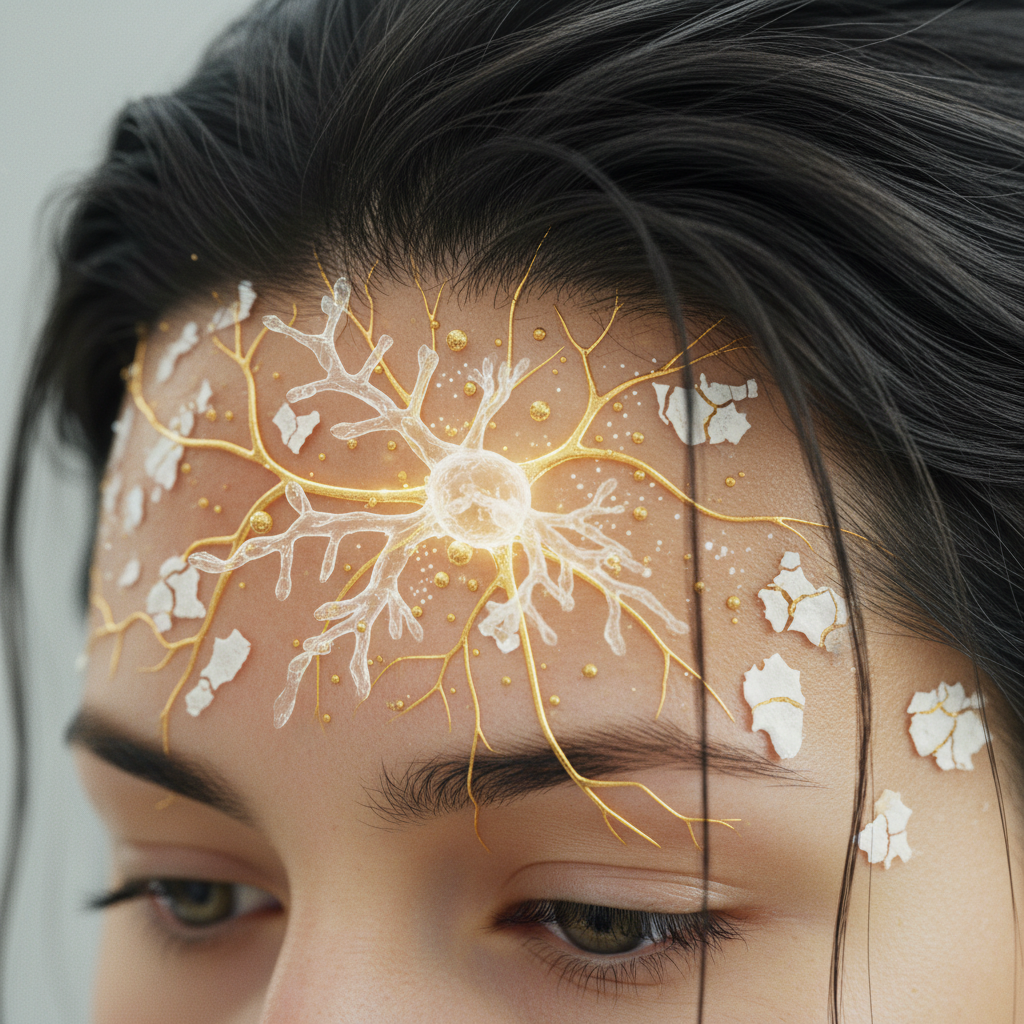
- Protease-activated receptor pathway: Environmental allergens, dust mites, and enzymes from Staphylococcus or Malassezia cleave protease-activated receptors (PAR-2) on keratinocytes. This triggers the sudden release of inflammatory mediators without requiring traditional histamine pathways.
- Histaminergic signalling: Mast cells in the dermis degranulate upon contact with specific allergens, releasing histamine that binds to H1 receptors on peripheral nerves.
- Neurogenic inflammation: Constant mechanical scratching stimulates nerve fibres to release neuropeptides, including substance P and calcitonin gene-related peptide (CGRP). These neuropeptides cause local vasodilation, swelling, and further recruitment of immune cells, amplifying the urge to scratch.
Signs and causes: comparison of primary itch drivers
Identifying the primary characteristics of your scalp condition ensures you select the correct biological intervention.
| Condition | Visual Scalp Signs | Type of Sensation | Typical Triggers |
|---|---|---|---|
| Seborrhoeic Dermatitis | Greasy, yellowish flakes; erythema (redness) | Persistent, burning itch | Overgrowth of Malassezia, stress, sebum surges |
| Scalp Xerosis (Dryness) | Fine, dry white powder; dull scalp surface | Tight, prickling sensation | Over-washing, low ambient humidity, harsh anionic detergents |
| Contact Dermatitis | Intense redness, papules, weeping skin | Sharp, stinging, acute itch | Fragrance, paraphenylenediamine (PPD) in hair dyes, preservatives |
| Scalp Psoriasis | Thick, silvery-white plaques with sharp margins | Deep, painful, throbbing itch | Autoimmune dysregulation, genetic predisposition, physical trauma |
| Neuropathic Itch | Normal scalp skin with no visible rash | Burning, tingling, crawling (formication) | Cervical spine issues, nerve entrapment, systemic conditions |
What you can do: steps toward calming the scalp
To establish effective scalp pruritus relief, adopt a calm, systematic regimen aimed at cooling nerve endings and restoring the lipid mantle:
- Lower wash temperatures: Hot water strips protective surface sebum and causes vasodilation, immediately worsening the itch reflex. Cleanse with lukewarm water (around 36 to 38 degrees Celsius).
- Introduce active targeted washes: Use formulas containing piroctone olamine, salicylic acid (0.5% to 2% to gently clear keratin scale), or niacinamide. Leave the lather on the scalp for 3 to 5 minutes so the ingredients can penetrate the follicular infundibulum before rinsing.
- Use cooling counter-irritants: Lotions containing mild menthol (0.1% to 0.5%) activate TRPM8 cold-sensing receptors on nerve endings. This sensation safely overrides the transmission of itch signals to the brain without damaging the tissue.
- Minimise leave-in fragrances: Synthetic perfumes and concentrated essential oils are frequent causes of allergic contact dermatitis. Switch to fragrance-free or dermally tested formulas while the scalp is reactive.
Supporting scalp balance with Watermans
When formulating a daily wash routine that discourages irritation without stripping natural moisture, formula balance is essential. Watermans GrowMe Shampoo brings together rosemary extract, niacinamide, biotin, and allantoin within an intentionally non-aggressive cleansing base. By maintaining surface hydration and clearing excess sebum without parching the stratum corneum, it supports an optimal scalp environment. For individuals managing intermittent scalp dryness or minor sensitivity, keeping follicles clear of inflammatory build-up helps maintain a settled, comfortable baseline.
When the cause may be something else
If your scalp shows zero visible signs of flaking, redness, or dryness, yet itches relentlessly, the root cause may be neuropathic or systemic rather than cosmetic.
Neuropathic conditions like notalgia paraesthetica or trichodynia involve damaged, compressed, or hyperactive nerves sending false itch signals to the brain. Often, these sensations are described as tiny insects crawling across the scalp, sudden pinpricks, or painful skin sensitivity when hair is moved. Furthermore, systemic conditions such as iron-deficiency anaemia, thyroid imbalances, chronic renal dysfunction, or liver disorders can trigger generalised cutaneous pruritus that presents primarily along the scalp and neck.
When to seek professional advice
Consult a GP, dermatologist, or qualified trichologist if:
- The itch disrupts your sleep or interferes with daily concentrations.
- You notice yellow crusting, open sores, weeping fluid, or localized warmth, which indicate a secondary bacterial infection (Staphylococcus aureus).
- Redness and flaking spread onto your forehead, ears, or eyebrows.
- Pruritus is accompanied by patchy, sudden hair shedding or distinct, smooth bald patches.
- Over-the-counter therapeutic washes show no noticeable improvement after 3 weeks of consistent use.
Frequently asked questions about Scalp Pruritus Relief
Can poor scalp hygiene cause chronic itching?
Yes. Infrequent washing allows natural sebum, environmental pollutants, and dead keratinocytes to accumulate. Yeasts like Malassezia consume this sebum build-up, releasing unsaturated fatty acids that irritate the skin barrier and cause persistent, low-grade pruritus.
What is the fastest method for scalp pruritus relief?
For immediate scalp pruritus relief, applying a cool compress or a topical, leave-on serum containing 0.2% to 0.5% menthol helps quiet active nerve signalling within minutes. Pairing this with a lukewarm therapeutic wash breaks acute sensory irritation while longer-term barrier repair takes effect.
Does scratching your scalp lead to permanent hair loss?
Scratching causes hair breakage along the shaft and can dislodge telogen hairs prematurely. While this mechanical trauma rarely causes true permanent follicular death, aggressive scratching that causes deep gouging, ulceration, or chronic secondary infections can lead to scarring and localized follicular damage.
Can changing my diet help stop my scalp from itching?
Dietary adjustments can help if your pruritus stems from systemic inflammation or food allergies. Reducing refined sugars can curb excess sebum secretion, while increasing dietary omega-3 fatty acids supports epidermal barrier repair from the inside out.
Why does my scalp itch more at night?
Cutaneous blood flow and skin temperature naturally rise in the evening, while systemic cortisol levels drop. This biological combination lowers your threshold for itch perception. In addition, fewer daytime cognitive distractions leave your brain more focused on sensory nerve signals.
Sustaining long-term scalp comfort
Finding reliable scalp pruritus relief is a process of systematic elimination rather than quick-fix scrubbing. When you identify whether your symptoms originate from microbial overgrowth, barrier depletion, chemical sensitivities, or neural pathways, you can apply targeted solutions that calm the skin rather than provoke it. Prioritise barrier preservation, respect the scalp's delicate acid mantle, and seek professional clinical evaluation whenever itching resists gentle, deliberate care.
Sources and references
- British Association of Dermatologists. Guidelines for the management of seborrhoeic dermatitis. British Journal of Dermatology, 2019.
- Misery, L., et al. Scalp sensitive skin and pruritus: pathophysiology and clinical management. Journal of the European Academy of Dermatology and Venereology, 2016.
- National Institute for Health and Care Excellence (NICE). Psoriasis: assessment and management. Clinical Guideline CG153, 2017.
- Borda, L. J., & Wikramanayake, T. C. Seborrheic Dermatitis and Dandruff: A Comprehensive Review. Journal of Clinical and Investigative Dermatology, 2015.
- Yosipovitch, G., & Bernhard, J. D. Clinical practice. Chronic Pruritus. New England Journal of Medicine, 2013.
Find these ingredients in Watermans products
- Zinc: you will find this ingredient in our Hair Vitamins.
- Castor Oil: you will find this ingredient in our Camellia & Black Castor Hair & Body Oil.
- Niacinamide: you will find this ingredient in our Hair Mask.