Scalp Microneedling Guide: Evidence, Techniques, and Protocols
9 min read ·
Learn how to safely stimulate follicles, enhance topical absorption, and support hair density with this definitive evidence-based Scalp Microneedling Guide.
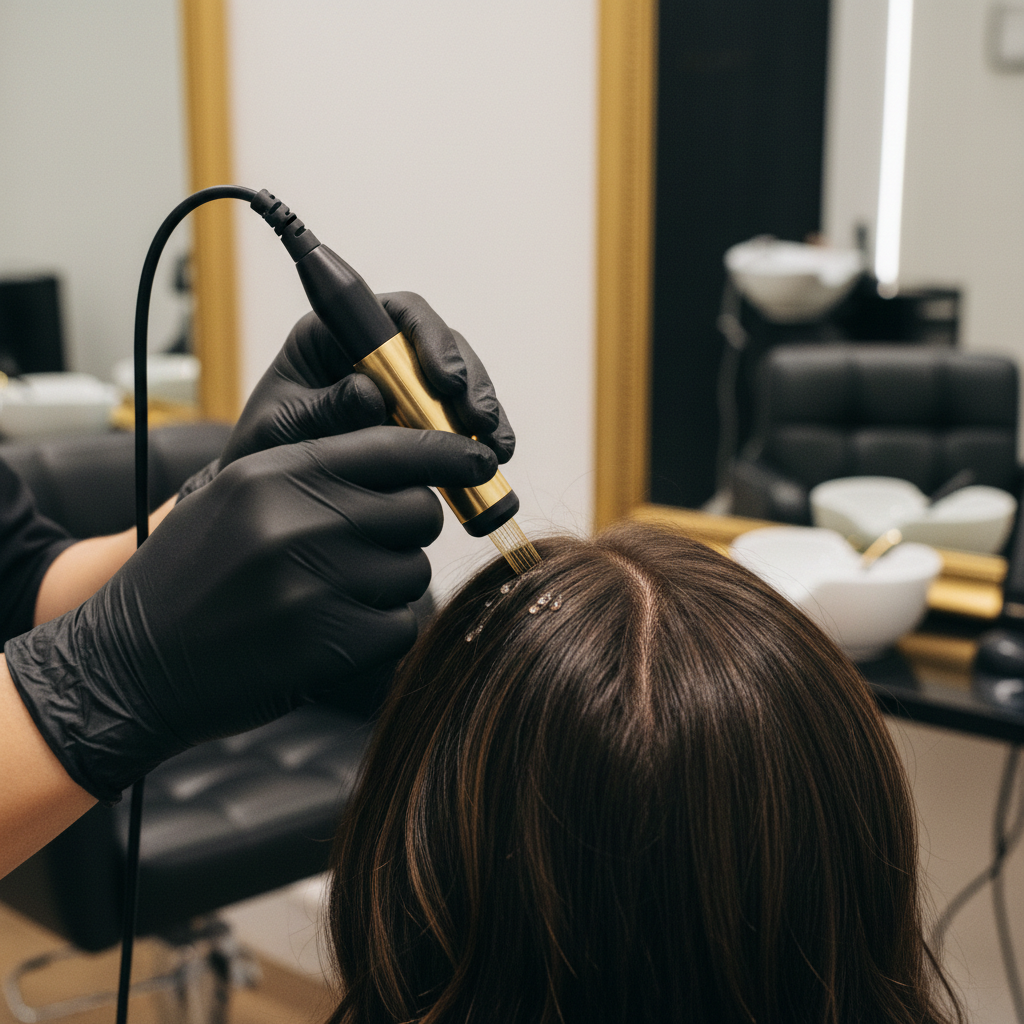
Quick answer: This Scalp Microneedling Guide explains how puncturing the skin with tiny, sterile needles can stimulate cellular regeneration, activate platelet-derived growth factors, and support thinning hair. Peer-reviewed trials show microneedling enhances blood flow and improves topical absorption across the scalp. However, its effectiveness depends heavily on needle depth (typically 0.5 mm to 1.5 mm), strict hygiene, and consistent frequency. Crucially, microneedling cannot revive completely fibrosed, long-dead hair follicles or substitute for medical diagnosis in scarring alopecias.
Key takeaways
- Scalp microneedling creates controlled micro-injuries in the stratum corneum and dermis, triggering collagen synthesis, neovascularisation, and Wnt/beta-catenin pathway activation.
- Clinical studies indicate optimal scalp needle depths generally range between 0.5 mm and 1.5 mm, performed once every 1 to 3 weeks depending on needle length.
- Derma rollers carry a higher risk of epidermal tearing due to their angled entry; derma stamps or motorised microneedling pens provide a safer, vertical puncture.
- Aggressive pressure or unsterile tools risk bacterial folliculitis, scarring, and hair shaft transection.
- Microneedling works best as an adjunct for non-scarring hair loss such as early-to-moderate androgenetic alopecia, rather than a standalone cure.
Scalp Microneedling Guide: what the evidence shows
Microneedling on the human scalp was popularised in dermatology following landmark clinical trials assessing patterned hair loss. Research published in the International Journal of Trichology (2013) demonstrated that men with androgenetic alopecia who combined weekly microneedling with a topical 5% minoxidil solution achieved significantly greater hair counts than those using topical minoxidil alone. Subsequent systematic reviews and meta-analyses in dermatological literature have confirmed that physical micro-trauma stimulates anagen-phase hair growth.
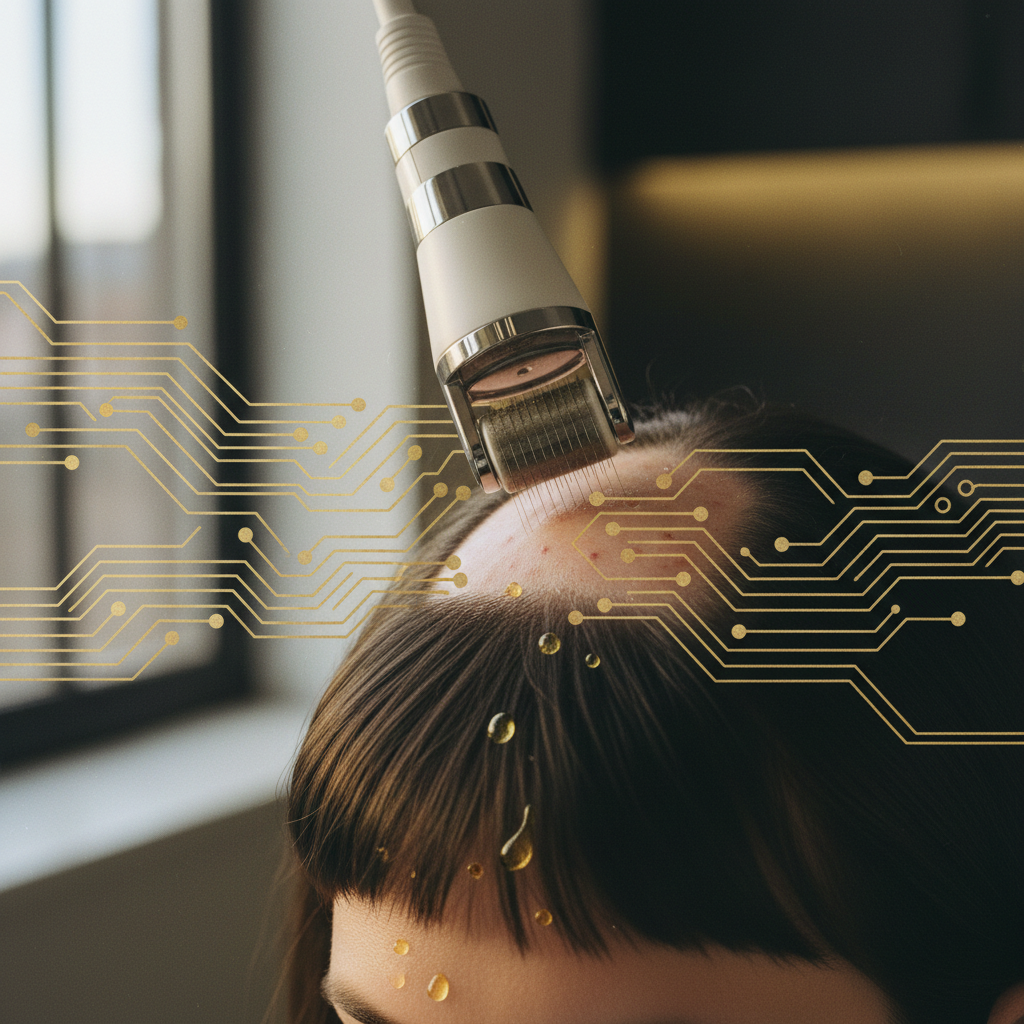
The therapeutic effect operates primarily through a wound-healing cascade. When the tiny needles breach the epidermis and upper papillary dermis, platelets release growth factors including platelet-derived growth factor (PDGF), epidermal growth factor (EGF), and vascular endothelial growth factor (VEGF). These peptides encourage neovascularisation, bringing fresh capillary blood and nutrients to miniaturised dermal papillae.
Furthermore, puncturing the scalp transiently upregulates Wnt10b and beta-catenin signalling pathways. These cellular signals are vital for prompting telogen (resting) follicles to re-enter the anagen (growth) phase. For individuals applying topical therapies or nourishing scalp lotions, microneedling temporarily bypasses the lipid-rich stratum corneum barrier, drastically multiplying topical compound absorption.
| Device Type | Puncture Angle | Depth Control | Best Use Case | Risk Profile |
|---|---|---|---|---|
| Derma Roller | Angled (rolling entry/exit) | Fixed per barrel | Scalp with very short or shaved hair | Higher risk of mechanical drag and follicle shearing |
| Derma Stamp | Perpendicular (90 degrees) | Fixed or manually adjustable | Targeted thinning patches or parted longer hair | Low drag; safe manual control |
| Motorised Pen | Perpendicular (high frequency) | Electronically adjustable (0.25 to 2.5 mm) | General scalp treatment, clinics and experienced users | Very low epidermal drag; high cross-contamination risk if cartridge reused |
What the evidence does not show
Microneedling is not an absolute cure for hair thinning, nor does it work uniformly across all conditions. The scientific literature does not support using microneedling to reverse end-stage hair loss. Where the scalp appears smooth and shiny (indicating that the follicular ostia have closed and scar tissue has replaced the dermal papilla), mechanical stimulation cannot generate new hair follicles.
There is also no evidence that deeper is better. Some individuals assume that driving 2.0 mm or 2.5 mm needles into the scalp will yield faster results. In reality, excessively deep punctures can damage the hair bulb (which sits roughly 1.5 mm to 2.5 mm beneath the scalp surface depending on gender and ethnicity) and induce permanent fibrosis.
Finally, microneedling has not been proven safe or effective for active, inflammatory scalp disorders. Rolling or stamping over lichen planopilaris, frontal fibrosing alopecia, active psoriasis plaques, or severe seborrhoeic dermatitis will likely aggravate inflammation through the Koebner phenomenon, worsening follicle destruction.
Biological mechanism: why the scalp responds to micro-trauma
The dermal papilla at the base of every hair follicle is sensitive to mechanical and biochemical cues. By inflicting controlled, micro-scale puncture wounds without removing skin layers, microneedling initiates three distinct wound-healing stages:
- Inflammation phase (Hours 1 to 48): Platelets aggregate at the micro-injury sites, releasing growth factors such as TGF-beta and PDGF. Macrophages clear cellular debris and emit chemical signals that recruit stem cells from the hair follicle bulge region.
- Proliferation phase (Days 2 to 14): Fibroblasts produce new collagen (predominantly Type III collagen initially) and extracellular matrix. Micro-capillaries form via angiogenesis, improving oxygenation to previously oxygen-depleted follicles.
- Remodelling phase (Weeks 2 to 8): Type III collagen gradually converts to denser, more elastic Type I collagen, tightening the dermal matrix around the follicular anchoring system.
This local biological cascade rejuvenates the surrounding scalp environment, counteracting some of the perifollicular fibrosis associated with dihydrotestosterone (DHT) activity in androgenetic alopecia.
What you can do: safe application and protocol
Approaching scalp microneedling with discipline protects your scalp barrier and produces far better outcomes than haphazard rolling.
Choosing needle length and frequency
- 0.25 mm to 0.3 mm (Absorption only): Can be used 2 to 3 times weekly. This depth does not reach the dermal blood supply or trigger collagen synthesis, but it creates temporary micro-channels to help topical hair serums penetrate.
- 0.5 mm to 0.75 mm (Mild stimulation): Ideal for home users. This depth reaches the papillary dermis to activate cellular signalling with minimal trauma. Perform once every 7 to 10 days.
- 1.0 mm to 1.5 mm (Clinical induction): Stimulates robust collagen production and cellular pathways. Due to the healing time required, perform this depth only once every 2 to 3 weeks.
Preparation and technique
Cleanse your scalp thoroughly before every session using a gentle, clarifying shampoo to remove surface sebum, microbes, and product build-up. Always sanitise manual rollers or stamps in 70% isopropyl alcohol for at least 15 to 20 minutes prior to use, and allow them to dry completely.
Part your hair systematically to expose bare skin. If using a stamp or pen, apply perpendicular pressure without dragging the tool across the skin. If using a roller, part the hair cleanly to avoid tangling long strands around the barrel axle, which causes hair breakage. Work across the target zone with light, controlled pressure. You are aiming for mild erythema (redness); pinpoint bleeding is acceptable in small amounts, but deep bleeding is a sign of excessive force.
Post-procedure care
Your scalp barrier is open for roughly 4 to 12 hours after needling. Avoid applying harsh, alcohol-laden commercial treatments, chemical hair dyes, or heat tools for at least 24 hours. Keep the scalp shielded from intense direct sunlight and avoid vigorous workouts or saunas that cause heavy sweating, which can introduce bacteria into open micro-punctures.
Integrating topical scalp care: the Watermans approach
Once micro-channels are created, the skin is exceptionally receptive to nourishing botanical complexes and functional peptides. Supporting your scalp ecosystem before and after microneedling ensures that the newly stimulated dermal papillae receive vital building blocks.
Watermans Grow More Elixir provides a targeted, leave-in scalp formulation designed to support the appearance of density and vitality. Containing ingredients such as biotin, rosemary extract, lupin protein, and allantoin, it hydrates the skin barrier without heavy oils that could clog sensitive pores. On non-needling days, washing with Watermans Grow Me Shampoo cleanses the follicular openings, balancing natural sebum levels while delivering niacinamide and silica to help reduce hair breakage along the shaft. When combined with safe needling protocols, this topical support helps cultivate an optimal scalp environment.
When the cause may be something else
If you notice rapid, diffuse hair shedding across your whole head rather than gradual thinning around the crown or temples, the underlying issue might not respond to microneedling. Acute telogen effluvium is frequently triggered by physiological shocks such as major illness, severe nutritional deficiencies (particularly low ferritin or vitamin D), thyroid imbalances, or post-partum hormone shifts.
Needling an inflamed, actively shedding telogen effluvium scalp can cause unnecessary mechanical stress and increase breakage. Similarly, circular patches of sudden, complete hair loss often indicate alopecia areata, an autoimmune response requiring professional medical intervention rather than mechanical trauma.
When to get professional advice
Consult a GP, dermatologist, or registered trichologist before beginning scalp microneedling if:
- You experience persistent scalp itching, burning, soreness, or flaky yellow scales.
- You have a personal or family history of scarring alopecia (such as frontal fibrosing alopecia or central centrifugal cicatricial alopecia).
- You notice signs of secondary infection, including oozing, swollen lymph nodes, or persistent tenderness longer than 48 hours after a session.
- You are currently taking blood-thinning medications, oral retinoids, or undergoing immunosuppressive treatments.
Frequently asked questions about Scalp Microneedling Guide
Does microneedling hurt on the scalp?
Discomfort depends on needle depth. Punctures between 0.25 mm and 0.5 mm feel like light prickling or sandpaper across the skin, requiring no numbing. Depths of 1.0 mm to 1.5 mm cause moderate stinging and scalp tenderness. Applying steady, methodical pressure prevents unnecessary pain and tissue bruising.
How often should I consult this Scalp Microneedling Guide for routine adjustments?
You should re-evaluate your microneedling routine every 8 to 12 weeks. Hair growth cycles move slowly; visible changes in hair texture or reduced shedding typically take between 3 and 6 months to emerge. If your scalp shows signs of irritation, decrease frequency immediately.
Can I microneedle if I have long hair?
Yes, but you should avoid standard derma rollers. The rotating barrel tends to catch and wrap long hair shafts around its axle, snapping the fibres. Use a derma stamp or a motorised microneedling pen, parting the hair into clean, damp sections and lifting the device vertically between each press.
Should I apply minoxidil immediately after needling?
Most dermatologists recommend waiting 12 to 24 hours after a 1.0 mm to 1.5 mm needling session before applying topical minoxidil. Applying it immediately to open wounds can cause systemic absorption, potentially triggering side effects like dizziness, irregular heartbeat, and headaches, as well as severe local irritation from the propylene glycol base.
Conclusion
Following this Scalp Microneedling Guide gives you a methodical, evidence-backed strategy to support follicular activity and maximise topical absorption. When approached with realistic expectations, appropriate needle depths, and rigorous hygiene, microneedling acts as a powerful non-surgical tool in modern haircare. Maintain consistency, protect your scalp barrier, and allow the biological healing process sufficient time to work.
Sources and references
- Dhurat, R., et al. (2013). A randomized evaluator blinded study of effect of microneedling in androgenetic alopecia: a pilot study. International Journal of Trichology, 5(1), 6-11.
- Starace, M., et al. (2020). Microneedling in androgenetic alopecia: A systematic review. Dermatologic Therapy, 33(1), e13198.
- British Association of Dermatologists (BAD). Patient Information Leaflets: Androgenetic Alopecia.
- Fertig, R. M., et al. (2018). Microneedling for the treatment of hair loss? Journal of the European Academy of Dermatology and Venereology, 32(4), 564-569.
- National Health Service (NHS). Hair loss: Causes and treatments.
Find these ingredients in Watermans products
- Vitamin D: you will find this ingredient in our Hair Vitamins.
- Niacinamide: you will find this ingredient in our Hair Mask.