Scalp Micromicrocirculation: Biological Mechanisms, Hair Growth, and Evidence-Based Care
8 min read ·
Explore how Scalp Micromicrocirculation fuels active follicles, what the science says about blood flow in hair growth, and practical ways to support scalp health.

Quick answer: Scalp Micromicrocirculation refers to the microscopic blood flow through arterioles, capillaries, and venules supplying dermal papillae and supporting follicle metabolism. Adequate perfusion delivers oxygen, amino acids, and glucose while removing cellular waste during active growth. However, impaired blood flow is rarely the primary standalone cause of patterned hair loss. While stimulating local blood flow provides an optimal growth environment and assists cosmetic hair vitality, it cannot reverse genetic follicle miniaturisation caused by dihydrotestosterone on its own.
Key takeaways
- Scalp microcirculation is the capillary network that sustains follicle keratinocytes and dermal papilla cells during the anagen growth phase.
- Blood supply changes dynamically across the hair cycle, expanding during active growth through vascular endothelial growth factor (VEGF) and regressing during catagen.
- Diminished capillary density is often a consequence, rather than the initial cause, of androgenetic alopecia and follicle miniaturisation.
- Mechanical stimulation, topical caffeine, and scalp massage can transiently increase cutaneous perfusion, improving nutrient delivery to the hair bulb.
- Systemic factors such as smoking, severe iron deficiency, and chronic stress can negatively alter peripheral vascular tone in the scalp tissue.
Scalp Micromicrocirculation: what the evidence shows
Scalp Micromicrocirculation represents the microvascular bed embedded within the scalp's dermis and subcutaneous adipose tissue. This network consists of microscopic blood vessels measuring less than 100 micrometres in diameter, primarily capillaries wrapping around the lower third of the hair follicle.
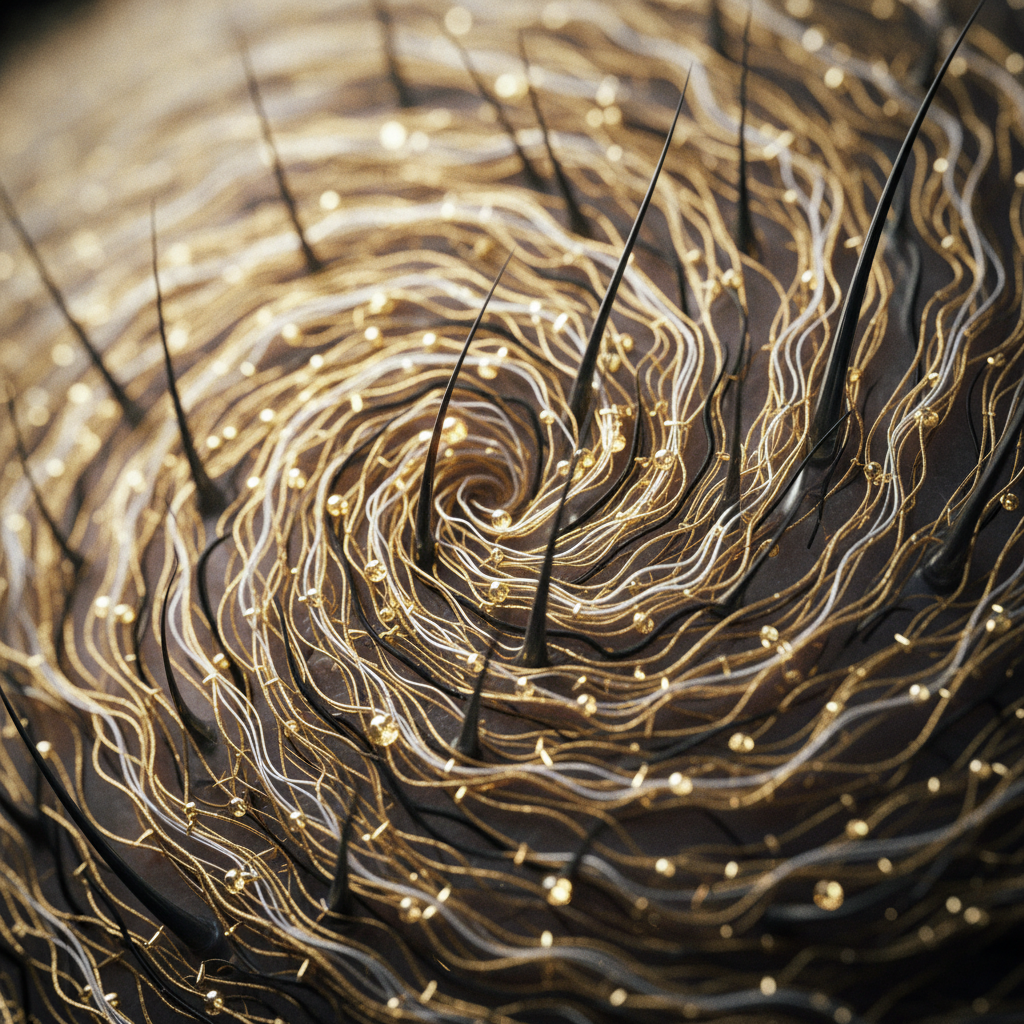
Research shows that hair follicles are among the most metabolically active structures in the human body. During the anagen (growth) phase, rapid cell division in the hair matrix requires constant nourishment. Capillary loops penetrate the dermal papilla at the base of each follicle, delivering vital nutrients including iron, zinc, amino acids, and oxygen.
Studies measuring cutaneous blood flow in the human scalp indicate that active anagen follicles exhibit up to four times greater vascularisation than telogen (resting) follicles. Dermal papilla cells actively secrete angiogenic factors, most notably vascular endothelial growth factor (VEGF). This signalling molecule prompts nearby endothelial cells to sprout new capillaries, an essential biological process termed angiogenesis. When follicles transition into catagen (regression) and telogen, local microvessels regress, reducing local metabolic exchange until the next cycle begins.
What the evidence does not show
There is a widespread misconception that male and female pattern hair loss is simply caused by "poor circulation" or tight scalp muscles "choking" the hair root. Clinical research does not support this mechanical choking hypothesis.
In androgenetic alopecia, follicular miniaturisation is driven primarily by genetic sensitivity to dihydrotestosterone (DHT), not an initial lack of blood supply. While studies using laser Doppler flowmetry do show lower overall blood perfusion in bald scalp areas compared to hair-bearing areas, evidence demonstrates this is largely secondary. Because the follicle miniaturises under hormonal influence, its metabolic requirements drop dramatically. The body naturally scales down capillary architecture to match the smaller follicle size.
Increasing microcirculation through physical massage or topical stimulants can create a favourable environment for healthy cell division. However, increasing perfusion alone will not block androgen receptors or halt androgen-driven miniaturisation.
The biological mechanism of scalp perfusion
The microvascular architecture of the scalp operates through a multi-tiered vascular network:
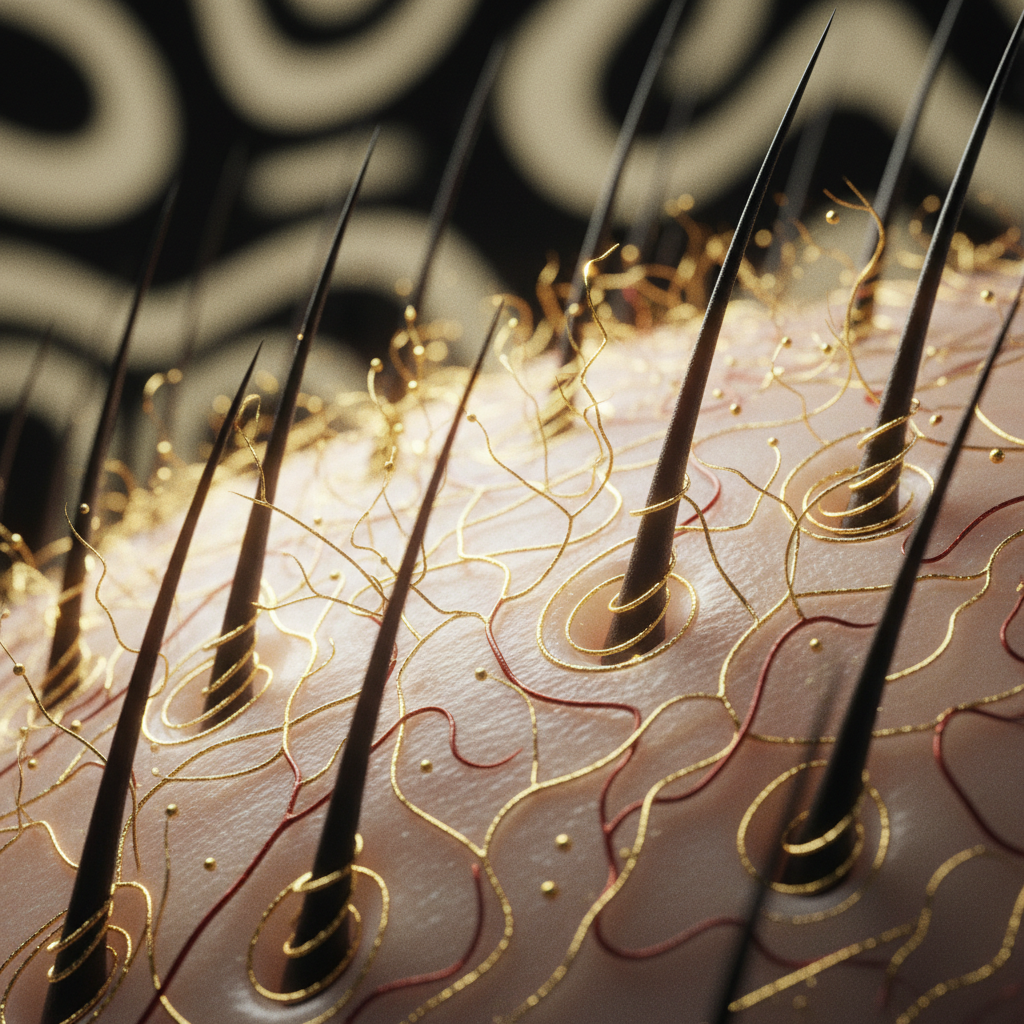
- Subcutaneous vascular plexus: Larger branching arterioles run parallel to the scalp surface beneath the dermis, originating from external carotid artery branches (such as the superficial temporal and occipital arteries).
- Dermal capillary loops: Ascending arterioles travel upwards to form dense capillary loops surrounding the upper outer root sheath and lower hair bulb.
- Dermal papilla capillary bed: A dedicated loop of fenestrated capillaries sits inside the dermal papilla cavity, directly interfacing with the rapidly dividing matrix keratinocytes.
Gases and water-soluble micronutrients pass across the semi-permeable capillary walls via passive diffusion and active transport. Metabolic waste, including lactic acid and cellular debris, drains out through the post-capillary venules into the jugular venous system.
| Parameter | Healthy anagen follicle | Miniaturised / telogen follicle |
|---|---|---|
| Capillary density around bulb | Dense, multi-looped network | Sparse, regressed capillary plexus |
| VEGF expression | High, continuous secretion | Significantly down-regulated |
| Local tissue oxygenation (pO2) | High, matching high matrix mitosis | Lower, matching reduced metabolic demand |
| Primary regulatory driver | Angiogenic signalling molecules | Hormonal signalling (DHT, TGF-beta) |
| Follicle diameter | Terminal (roughly 60 to 80 microns) | Vellus-like (under 30 microns) |
Signs of altered scalp microcirculation
Because microscopic vessels sit beneath the epidermal layers, you cannot see individual capillaries with the naked eye. However, clinicians and trichologists look for subtle tissue markers that reflect peripheral perfusion:
- Delayed capillary refill: When pressed firmly with a thumb for three seconds, healthy scalp tissue turns pale and returns to its natural tone within one to two seconds. A sluggish return may indicate reduced superficial perfusion.
- Persistent cool scalp temperature: While scalp skin is naturally exposed to ambient air, chronically cool peripheral tissue can reflect localised vasoconstriction.
- Tissue pallor or dull tone: An under-perfused scalp often appears pale, waxy, or tight across the galea aponeurotica.
- Slow wound recovery: Minor scratches or scalp abrasions that take unusually long to heal can point to impaired local microvascular function.
None of these signs confirms follicular disease on their own. They must be evaluated alongside shedding patterns, dermoscopy, and blood work.
Everyday ways to support healthy scalp blood flow
Maintaining healthy peripheral circulation across the scalp involves mechanical, topical, and systemic practices.
Regular scalp massage
Physical manipulation exerts shear stress on the endothelial cells lining the scalp capillaries. Studies suggest that standardised daily scalp massage (around four minutes per day) can transiently dilate microvessels, increase dermal papilla gene expression, and encourage thicker-feeling hair shafts over several months. Use the pads of your fingers in circular motions rather than your fingernails to avoid surface abrasion.
Topical stimulants
Cosmetics containing topical caffeine, rosemary oil, or niacinamide (vitamin B3) have been shown in cosmetic dermatology literature to produce transient vasodilation. Caffeine penetrates the follicular infundibulum quickly, supporting cellular energy pathways and local microvascular activity without systemic side effects.
Cardiovascular exercise
Aerobic exercise elevates cardiac output and stimulates nitric oxide production in endothelial walls. Nitric oxide acts as a natural vasodilator, relaxing vascular smooth muscle and improving blood distribution to peripheral tissues, including the scalp dermis.
Temperature regulation and cold exposure
Chronic exposure to freezing temperatures without headwear causes reflexive vasoconstriction in the superficial scalp vessels to preserve core body heat. Wearing protective headwear in winter prevents prolonged cutaneous vessel constriction.
When reduced hair density is driven by other factors
If you notice sudden shedding or widening partings, poor scalp microcirculation is rarely the solitary culprit. Common underlying drivers include:
- Telogen effluvium: Widespread shedding occurring two to three months after a physiological shock, such as high fever, severe illness, childbirth, or rapid weight loss.
- Nutritional deficiencies: Insufficient serum ferritin (stored iron), vitamin D, or zinc limits the oxygen-carrying capacity of red blood cells and impairs cellular repair, regardless of vessel flow.
- Thyroid dysfunction: Both hypothyroidism and hyperthyroidism disrupt normal hair cycling and peripheral blood regulation.
- Autoimmune conditions: Conditions like alopecia areata involve immune cell attacks on the follicle bulb, creating localised inflammation that requires medical intervention.
Supporting the scalp environment with Watermans
Maintaining a clean, stimulated, and well-nourished scalp is the baseline of any healthy haircare routine. Watermans GrowMe Shampoo brings together targeted cosmetic ingredients including caffeine, biotin, rosemary extract, niacinamide, and argan oil. Formulated to cleanse the scalp of sebum and debris without stripping natural lipids, its invigorating lather creates an ideal surface environment to support cosmetic hair vitality, promote fuller-looking hair, and leave roots feeling refreshed and reinforced against everyday breakage.
When to seek medical advice
Consult a GP or a registered trichologist if you experience:
- Sudden, patchy hair loss leaving smooth circular spots.
- Rapid, diffuse shedding of more than 100 to 150 hairs daily lasting beyond six to eight weeks.
- Scalp symptoms including intense burning, pain, scaling, pustules, or visible redness.
- Hair loss accompanied by extreme fatigue, unexplained weight shifts, or heavy menstrual cycles.
A specialist can carry out trichoscopy, order targeted serum blood tests (such as full blood count, ferritin, and thyroid profiles), and differentiate between cosmetic shedding, systemic deficiencies, and progressive alopecias.
Frequently asked questions about Scalp Micromicrocirculation
Can poor scalp microcirculation cause permanent baldness?
No. While reduced blood flow is observed in balding areas, clinical research shows this is primarily a consequence of follicle miniaturisation, not the root trigger. Permanent pattern hair loss is driven by genetic sensitivity to dihydrotestosterone (DHT).
How quickly does blood flow increase after scalp massage?
Laser Doppler imaging indicates that cutaneous blood flow increases immediately during manual massage and remains elevated for several minutes afterwards. Regular daily massage helps maintain tissue flexibility and cellular stimulation over time.
Does Scalp Micromicrocirculation affect hair growth speed?
Yes, to a degree. The hair matrix requires steady oxygen and nutrient delivery to manufacture keratin. While optimal Scalp Micromicrocirculation allows follicles to grow at their natural genetic rate (roughly 1 to 1.25 cm per month), boosting circulation cannot speed growth past that biological ceiling.
Can smoking damage blood vessels in the scalp?
Yes. Nicotine acts as a potent vasoconstrictor that temporarily narrows peripheral capillaries, while carbon monoxide reduces the oxygen-carrying capacity of the blood. Long-term smoking impairs microvascular health throughout the dermis, potentially dulling hair fibre quality.
Does cold water improve scalp blood flow?
Cold water causes immediate vasoconstriction, meaning superficial blood vessels narrow to conserve heat. When the cold stimulus is removed, the body may trigger a rebound vasodilation. However, extreme cold water offers no proven clinical benefit for hair growth over lukewarm washing.
Scalp microcirculation and long-term follicular health
Scalp Micromicrocirculation is a fundamental physiological pathway that supplies the energetic demands of growing hair fibres. While optimising capillary blood flow supports cell vitality, prevents localised stagnation, and improves cosmetic hair density, it operates as part of a wider biological ecosystem. Treating hair thinning effectively requires a balanced approach that combines gentle scalp stimulation and good nutrition with an accurate understanding of underlying hormonal and genetic influences.
Sources and references
- British Journal of Dermatology: "Vascular endothelial growth factor expression in human hair follicles," 2001.
- Journal of Dermatological Science: "Standardized scalp massage results in increased hair thickness by inducing stretching forces on dermal papilla cells," 2016.
- National Institute for Health and Care Excellence (NICE): "Alopecia androgenetica: Clinical Knowledge Summary," 2022.
- Dermatology Practical & Conceptual: "The role of microcirculation in hair biology and hair loss disorders," 2017.
- Archives of Dermatological Research: "Cutaneous blood flow in male pattern baldness: a laser Doppler study," 1989.
Find these ingredients in Watermans products
- Zinc: you will find this ingredient in our Hair Vitamins.
- Niacinamide: you will find this ingredient in our Hair Mask.