Scalp Microcirculation and Growth: Biological Mechanisms and Practical Care
9 min read ·
Discover the biological link between Scalp Microcirculation and Growth, how capillary networks feed follicles, what science proves, and how to care for your scalp.
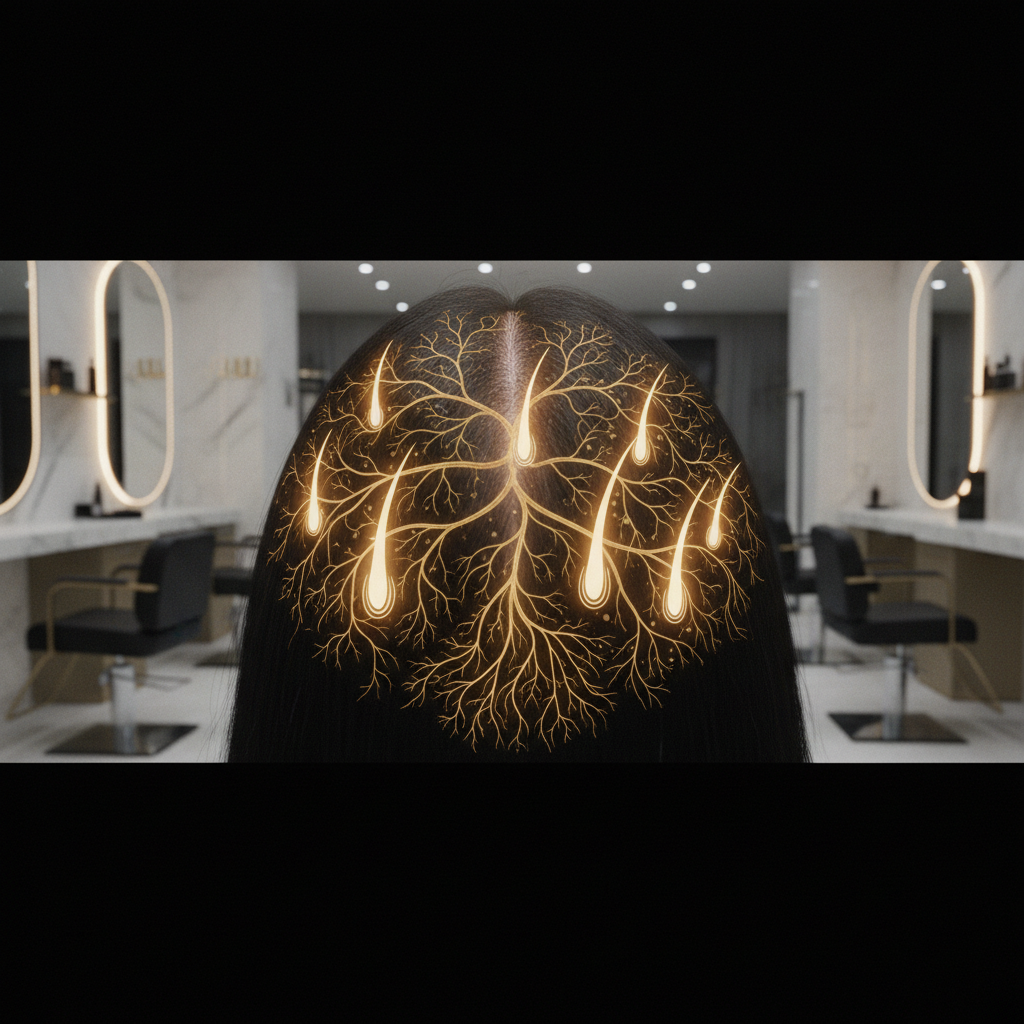
Quick answer: The relationship between Scalp Microcirculation and Growth centres on how tiny blood vessels deliver oxygen, amino acids, and micronutrients to the dividing cells of the dermal papilla. Active anagen hair follicles demand intense metabolic energy, which depends on continuous capillary perfusion. However, poor circulation alone rarely triggers pattern baldness or primary alopecia; improving blood flow supports an optimal follicular environment, but it cannot override genetic androgen sensitivity or autoimmune conditions on its own.
Key takeaways
- Hair follicles are among the most metabolically active tissues in the human body, relying on a dense capillary network around the dermal papilla during the growth (anagen) phase.
- Vascular endothelial growth factor (VEGF) plays a critical role in signalling angiogenesis, the creation of new blood vessels, to feed actively growing hair fibres.
- Reduced blood flow often reflects miniaturisation rather than causes it; when follicles shrink due to genetics or hormones, their vascular beds naturally scale down.
- Mechanical stimulation (such as standardized scalp massage) and vasodilating topical agents can transiently boost cutaneous perfusion, helping to support healthier-feeling hair.
- Poor blood flow should not be confused with systemic arterial disease or primary hair loss conditions like alopecia areata and androgenetic alopecia, which require targeted dermatological care.
Scalp Microcirculation and Growth: what the evidence shows
Research into Scalp Microcirculation and Growth confirms that the hair follicle undergoes substantial vascular remodelling across every hair cycle. During the anagen (growth) phase, the capillary plexus surrounding the lower third of the follicle expands dramatically. Endothelial cells proliferate to meet the immense bioenergetic demands of matrix keratinocytes, which divide rapidly to generate the physical hair shaft.
When the follicle transitions into catagen (regression) and telogen (resting), this capillary network largely regresses through programmed endothelial cell death. Studies published in dermatological literature demonstrate that the dermal papilla synthesises angiogenic factors, most notably vascular endothelial growth factor (VEGF). This protein orchestrates the expansion of local microvessels. When anagen begins anew, local angiogenesis must recur to sustain healthy fibre production.
Research also shows that hair follicles suffering from progressive miniaturisation (as seen in androgenetic alopecia) exhibit reduced microvascular networks compared to terminal, non-balding follicles. However, evidence indicates that this capillary decline is predominantly a consequence of tissue atrophy rather than its primary trigger. As dihydrotestosterone (DHT) forces the follicle to shrink, metabolic demand drops, causing the surrounding capillary bed to downsize accordingly.
| Factor | High microcirculation (Anagen phase) | Reduced microcirculation (Catagen/Telogen or Miniaturised) |
|---|---|---|
| Follicular state | Actively dividing matrix cells, robust terminal fibre production | Quiescent or miniaturised dermal papilla, vellus-like fibre |
| Capillary density | High; complex loop network enveloping the dermal papilla | Low; sparse, straight vessels with minimal branching |
| VEGF expression | Elevated; promotes local endothelial cell proliferation | Markedly decreased or absent |
| Nutrient delivery | High influx of glucose, oxygen, amino acids, and trace minerals | Lower metabolic throughput matching reduced cellular activity |
| Tissue oxygenation (TcPO2) | Optimal partial pressure of oxygen in active perifollicular zones | Lower measured local oxygen tension in balding scalp regions |
What the evidence does not show
It is a common myth that simple "bad circulation" is the sole or primary reason people lose their hair. The evidence does not show that standing upside down, wearing tight hats, or experiencing everyday fluctuations in blood pressure causes permanent follicular death.
Furthermore, clinical trials show that merely forcing blood into the scalp via vasodilation does not automatically reverse pattern hair loss. While minoxidil was originally developed as an oral vasodilator, decades of pharmacodynamics reveal its mechanism on hair relies heavily on opening adenosine triphosphate-sensitive potassium channels and stimulating cellular metabolism, not purely on mechanical blood flow. If simple vasodilation were a cure, every systemic blood pressure drug would prompt hair growth, which is not the case.
Cosmetic products, scalp scrubs, and invigorators cannot claim to treat genetic alopecia, cure telogen effluvium, or generate brand new follicles where tissue has scarred over. Improving the local microenvironment keeps active follicles performing at their best, but it cannot alter inherited DNA receptors.
The biological mechanism of scalp perfusion
Microcirculation in the scalp occurs within the dermis and subcutaneous tissue through arterioles, capillaries, and post-capillary venules measuring less than 100 micrometres in diameter. The dermal papilla, situated at the base of the hair bulb, contains specialized mesenchymal cells that communicate directly with adjacent capillary loops.
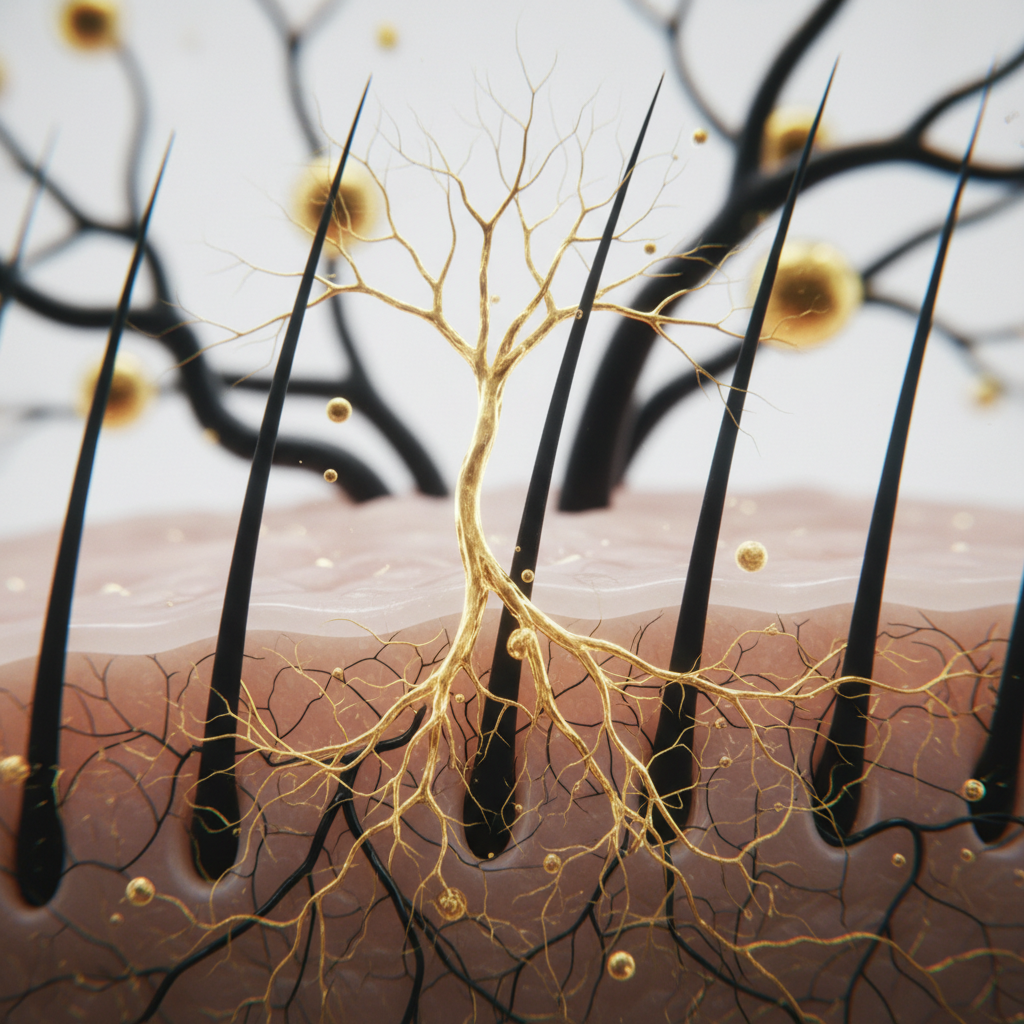
- Nutrient transport: Blood supplies L-cysteine, methionine, zinc, iron, and glucose directly across the endothelial barrier to nourish the keratinocytes.
- Waste clearance: Efficient venous and lymphatic drainage removes metabolic by-products, preventing local oxidative stress and cellular fatigue.
- Signalling molecules: Microvessels deliver systemic endocrine signals while serving as conduits for paracrine factors that regulate stem cell niches in the hair follicle bulge.
When perfusion is uncompromised, matrix cells maintain their rapid mitotic rate (roughly dividing every 18 to 36 hours during peak anagen), producing thick, robust hair shafts with intact cuticle layers.
What you can do to support healthy scalp circulation
Supporting your scalp environment requires a mix of mechanical, lifestyle, and topical habits that foster balanced cutaneous blood flow without traumatising the skin:
- Gentle manual massage: Standardized scalp massage using the pads of your fingers for 4 to 5 minutes daily applies mechanical shear stress to dermal cells. Studies indicate this mechanical force can upregulate genes associated with hair growth, including BMP4 and vascular signalling pathways.
- Avoid excessive tension: Tight hairstyles, including rigid braids, tight ponytails, or poorly applied extensions, place chronic mechanical strain on the scalp. This can compress local vessels and lead to traction alopecia.
- Maintain adequate iron and micronutrient status: Red blood cells carry oxygen via haemoglobin. Low ferritin levels or deficiencies in B vitamins impair the oxygen-carrying capacity of your microcirculation, weakening follicular output.
- Incorporate active topical formulations: Ingredients such as caffeine, niacinamide (vitamin B3), rosemary oil, and menthol have been shown in cosmetic studies to produce temporary warming, sensory stimulation, or mild localized microvascular activation, leaving the scalp invigorated and the hair feeling fuller.
- Manage systemic cardiovascular health: Aerobic exercise and avoiding smoking protect endothelial health across all microvascular networks, including the scalp dermis. Nicotine is a potent vasoconstrictor that measurably reduces peripheral blood flow.
Supporting the scalp environment with Watermans
When formulating products to support hair vitality, maintaining an optimal scalp environment is key. Watermans incorporates ingredients like caffeine, rosemary, biotin, and niacinamide into its GrowMe Shampoo and ConditionMe Conditioner.
These ingredients work together topically to cleanse buildup, condition the scalp surface, and leave the hair fibre feeling noticeably thicker and stronger. While cosmetic preparations never replace prescription medical therapies for diagnosed alopecias, using a nourishing, stimulating wash routine helps maintain the ideal dermal conditions your follicles need to thrive.
When the cause may be something else
If you notice widespread shedding, widening part lines, or sudden patchy bald spots, poor circulation is rarely the primary suspect. You should differentiate between distinct hair issues:
- Hair breakage: The hair fibre snaps along the shaft due to chemical processing, heat damage, or dry weather. The follicle is completely healthy, and microcirculation is unaffected.
- Telogen effluvium: Widespread hair shedding occurring two to three months after a physiological shock (such as high fever, severe illness, childbirth, or extreme psychological stress). This is a cycle disruption, not a circulatory blockage.
- Androgenetic alopecia: Progressive miniaturisation driven by genetics and sensitivity to dihydrotestosterone (DHT). While the capillary bed shrinks alongside the follicle, androgen receptor sensitivity is the root driver.
- Autoimmune or scarring alopecias: Conditions like alopecia areata, lichen planopilaris, or frontal fibrosing alopecia involve immune cells attacking the follicle or destroying stem cell niches, requiring urgent medical intervention.
When to seek professional advice
You should consult a GP, board-certified dermatologist, or qualified trichologist if you notice:
- Sudden, rapid shedding leaving handfuls of hair on your pillow or in the drain.
- Distinct, smooth, round patches of bare skin.
- Persistent scalp pain, burning, redness, scaling, or pustules.
- Visible scarring, where follicular openings appear lost or smooth.
A medical professional can perform a pull test, dermoscopy (trichoscopy), or blood panels to check ferritin, thyroid-stimulating hormone (TSH), and inflammatory markers before designing a targeted treatment plan.
Frequently asked questions about Scalp Microcirculation and Growth
Does scalp massage really increase Scalp Microcirculation and Growth?
Yes, clinical evaluations show that regular, standardized scalp massage increases localized blood flow and exerts mechanical stretch on dermal papilla cells. A small study from Japan demonstrated that daily mechanical stimulation over 24 weeks altered gene expression in human dermal papillae, leading to thicker individual hair fibres. However, massage alone will not stop genetic hair loss.
Can cold water rinses damage scalp microcirculation?
Cold water rinses cause temporary vasoconstriction, narrowing surface capillaries for a short period. While this will not permanently harm your hair or prevent growth, it does not offer the miraculous "follicle closing" benefits often claimed online. Washing with comfortable, lukewarm water remains best for cleansing sebum without stressing delicate skin vessels.
Does smoking reduce Scalp Microcirculation and Growth?
Yes. Nicotine acts as a potent vasoconstrictor, narrowing arterioles and reducing cutaneous microvascular perfusion. Cigarette smoke also releases carbon monoxide, which binds to haemoglobin and decreases oxygen delivery to rapidly dividing follicular cells. Chronic smoking is consistently linked in epidemiological studies to premature grey hair and aggravated thinning.
Will exercise improve my scalp blood circulation?
Cardiovascular exercise increases overall cardiac output and peripheral capillary perfusion throughout the body, including the skin. While exercise supports general endothelial health and reduces stress hormones like cortisol, it cannot prevent androgenetic alopecia, which depends primarily on genetic sensitivity to hormones rather than systemic fitness levels.
Maintaining optimal conditions for hair vitality
Understanding the relationship between Scalp Microcirculation and Growth demystifies how our bodies fuel the demanding process of hair production. Follicles require a constant supply of oxygen, amino acids, and energy delivered via a complex web of microcapillaries. While healthy microcirculation provides the vital foundation for strong, resilient hair, it works as part of a wider biological system. Pairing thoughtful scalp care with proven lifestyle habits ensures your hair receives the nourishment it needs at every stage of the cycle.
Sources and references
- British Association of Dermatologists. Guidelines for the management of alopecia areata. 2012.
- National Institute for Health and Care Excellence (NICE). Alopecia androgenetica: Scenario: Management. Clinical Knowledge Summaries. 2022.
- Koyama, T., Kobayashi, K., Hama, T., Murakami, K., & Ogawa, R. Standardized Scalp Massage Results in Increased Hair Thickness by Inducing Stretching Forces on Dermal Papilla Cells in the Subcutaneous Tissue. Eplasty, 2016.
- Yano, K., Brown, L. F., & Detmar, M. Control of hair growth and follicle size by VEGF-mediated angiogenesis. The Journal of Clinical Investigation, 2001.
- Goldman, C. K., et al. Dermal papilla cell-derived vascular endothelial growth factor (VEGF) plays a critical role in hair follicle cycling. Journal of Investigative Dermatology, 2005.
Find these ingredients in Watermans products
- Zinc: you will find this ingredient in our Hair Vitamins.
- Niacinamide: you will find this ingredient in our Hair Mask.