Scalp Microbiome Dysbiosis: Understanding and Restoring Scalp Balance
9 min read ·
Understand Scalp Microbiome Dysbiosis: its biological mechanisms, link to flaking and shedding, and evidence-based ways to restore scalp balance.

Quick answer: Scalp Microbiome Dysbiosis is an ecological imbalance among the diverse micro-organisms residing on the skin of the head, predominantly involving bacteria and fungi. When the delicate ratio between species like Cutibacterium acnes, Staphylococcus epidermidis, and Malassezia yeasts is disrupted, scalp barrier function weakens. This shift drives inflammation, itching, flaking, and conditions such as seborrhoeic dermatitis. However, topical solutions cannot completely sterilise or permanently rewrite the microbiome; management relies on restoring barrier lipids and regulating surface conditions.
Key takeaways
- Microbial balance matters: A healthy scalp relies on an equilibrium between lipophilic fungi (Malassezia) and commensal bacteria (Cutibacterium and Staphylococcus).
- Not an infection: Dysbiosis is not an invasion by foreign pathogens, but an overgrowth or shift in proportions of native micro-organisms.
- Barrier breakdown: Disruptions in natural sebum composition and scalp pH (normally 4.5 to 5.5) trigger inflammatory cascades that compromise epidermal barrier integrity.
- Shedding versus loss: Severe scalp inflammation from dysbiosis can trigger temporary telogen effluvium (diffuse shedding), but it does not cause androgenetic alopecia (pattern hair loss).
- Targeted care works best: Restoring balance requires gentle cleansing, sebum regulation, and antifungal or soothing actives rather than aggressive harsh detergents.
Scalp Microbiome Dysbiosis: what the evidence shows
Research using genomic sequencing has transformed how dermatologists view the skin on our heads. The scalp harbours one of the densest microbial communities on the human body, sustained by high concentrations of sebaceous glands. Under normal physiological conditions, bacteria such as Cutibacterium acnes and Staphylococcus epidermidis coexist alongside lipophilic yeasts of the genus Malassezia (predominantly M. Restricta and M. Globosa).
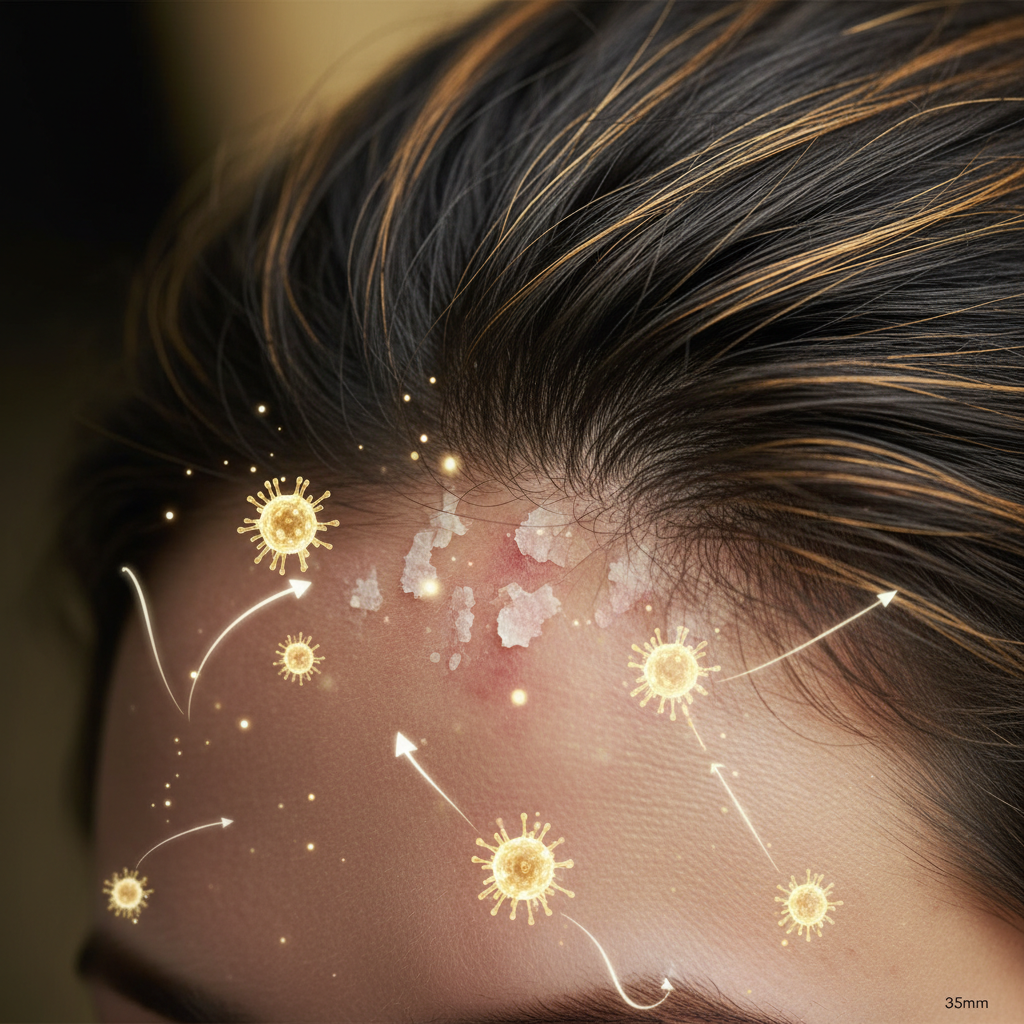
In a balanced state, these organisms perform vital immune-modulating roles. They break down sebum into free fatty acids that help maintain an acidic skin mantle, keeping opportunistic pathogens in check.
Scalp Microbiome Dysbiosis occurs when this community slips out of balance. Genomic studies demonstrate that dandruff and seborrhoeic dermatitis correlate directly with distinct shifts in bacterial and fungal ratios. Rather than Malassezia simply increasing in gross volume, the ratio of Cutibacterium to Staphylococcus shifts markedly, often accompanied by an overproduction of irritating free fatty acids (such as oleic acid) generated during fungal lipid metabolism. These metabolites penetrate a weakened stratum corneum, instigating micro-inflammation, accelerating skin cell turnover, and producing visible flakes.
What the evidence does not show
It is tempting to blame every scalp grievance on microbial imbalance, but current science urges caution around several common myths:
- It does not cause permanent follicular destruction: An altered microbiome does not destroy the hair follicle stem cells. While intense inflammation can cause premature entry of follicles into the telogen (resting) phase, leading to diffuse hair shedding, it does not cause scarring or permanent alopecia.
- Eradication is not the goal: Clinical evidence does not support attempts to create a "sterile" scalp. Using harsh, broad-spectrum antimicrobial cleansers often worsens dysbiosis by wiping out beneficial commensal bacteria that prevent fungal overproliferation.
- Diet is not a sole trigger: While systemic metabolic health influences sebum output, there is no clinical proof that eliminating specific food groups like sugar or dietary yeast directly cures dysbiosis on the scalp.
The biological mechanism of microbial imbalance
The biological progression of dysbiosis follows a cyclical pathway involving sebum, surface enzymes, and the host immune system:
- Lipid secretion: Sebaceous glands produce sebum rich in triglycerides, squalene, and wax esters.
- Enzymatic breakdown: Malassezia species, which lack the genes to produce their own fatty acids, secrete lipase enzymes. These enzymes cleave triglycerides into saturated and unsaturated free fatty acids.
- Barrier penetration: The fungi consume the saturated fatty acids they need to survive, leaving behind unsaturated fatty acids like oleic acid and arachidonic acid on the surface of the skin.
- Inflammatory response: In susceptible individuals, these residual unsaturated fatty acids penetrate the stratum corneum. This triggers an innate immune reaction, releasing pro-inflammatory cytokines (including interleukin-1 alpha and interleukin-8).
- Hyperproliferation: To shed the irritant, the scalp speeds up epidermal cell turnover from the standard 28 days down to 7 to 14 days. These premature, poorly cohesive keratinocytes clump together, manifesting as visible flakes.
Sebum Secretion ➔ Fungal Lipase Activity ➔ Release of Oleic Acid ➔ Barrier Permeation ➔ Cytokine Release ➔ Hyperproliferation & Flaking
Signs of an unbalanced scalp ecosystem
Recognising microbial dysbiosis requires looking beyond ordinary dryness. A scalp with altered microbial communities presents specific clinical characteristics:
- Persistent pruritus (itching): A prickling, uncomfortable sensation driven by inflammatory mediator release.
- Greasy, yellowish flakes: Distinct from small, dry skin flakes, dysbiotic flaking often clusters around follicle openings and feels waxy.
- Perifollicular erythema: Localised redness surrounding the base of hair shafts.
- Altered sebum production: An immediate sensation of greasiness within 24 hours of washing, often paired with an underlying feeling of tightness or irritation.
- Increased hair shedding: Noticeable strands coming loose during washing or brushing due to inflammatory disruption of the hair cycle.
Microbial states: balanced versus dysbiotic
Understanding the functional differences between healthy scalp biology and dysbiosis clarifies why aggressive stripping makes symptoms worse.
| Feature | Balanced Scalp Ecosystem | Scalp Microbiome Dysbiosis |
|---|---|---|
| Dominant Bacteria | Balanced C. Acnes and S. Epidermidis | Elevated S. Epidermidis, suppressed C. Acnes |
| Fungal Activity | Controlled Malassezia colonisation | High lipase secretion, rapid lipid hydrolysis |
| Surface pH | Acidic (pH 4.5 to 5.5) | Shifted neutral to alkaline (pH 6.0 or higher) |
| Stratum Corneum | Intact, cohesive lamellar lipid sheets | Disorganised lipids, high transepidermal water loss |
| Follicular Impact | Normal anagen-to-telogen ratio | Mild to moderate reactive telogen shedding |
| Common Sensation | Comfortable, neutral, no tenderness | Pruritus, burning, soreness, or tenderness |
Practical steps to restore balance
Managing dysbiosis requires strategies designed to modulate the surface environment rather than strip it bare.
Maintain an optimal surface pH
The scalp microbiome flourishes at an acidic pH between 4.5 and 5.5. Washing with high-pH alkaline soaps (pH 8.0 to 10.0) swells the hair cuticle and alters the bacterial ecosystem, encouraging Staphylococcus overgrowth. Use acidic, pH-balanced cleansers to support the acid mantle.
Regulate excess lipids without harsh stripping
Leaving sebum on the scalp for extended periods provides excess fuel for fungal lipases. Conversely, using concentrated sulfates daily can strip essential barrier ceramides, triggering reactive sebum production. Wash regularly using balanced, mild surfactants that thoroughly remove oxidised lipids without drying out the skin.
Incorporate targeted bio-active ingredients
Specific ingredients can help balance microbial populations and calm surface inflammation:
- Piroctone Olamine: A gentle antimicrobial agent that helps control fungal overgrowth while soothing flaking.
- Salicylic Acid (0.5% to 2.0%): A lipid-soluble beta-hydroxy acid that gently exfoliates follicular scale and dissolves sebum plugs.
- Niacinamide: Known to support epidermal barrier repair and help regulate oil production.
- Prebiotic compounds: Ingredients like inulin or alpha-glucan oligosaccharide that nourish beneficial commensal bacteria over opportunistic species.
Watermans approach to balanced scalp care
When supporting a healthy, refreshed foundation for hair growth, environmental scalp balance is paramount. Watermans develops formulas aimed at cleansing away build-up, soothing surface irritation, and maintaining optimal scalp condition without stripping away the essential natural oils that protect your skin barrier.
When the cause may be something else
Not all scalp flaking or irritation stems from simple microbial dysbiosis. It is essential to distinguish dysbiotic conditions from other dermatological issues:
- Psoriasis: Characterised by well-demarcated, thick, silvery-white plaques that often extend beyond the hairline onto the forehead or neck. This is an autoimmune condition driven by T-cells, not a microbial shift.
- Contact Dermatitis: An allergic or irritant response to hair dyes, fragrances, or preservatives (such as methylisothiazolinone). Symptoms often appear suddenly after introducing a new styling product.
- Dry Scalp (Asteatosis): Simple moisture deficiency without inflammation or fungal involvement, typically caused by cold weather, low humidity, or under-washing with drying agents. Flakes are fine, white, and powdery.
When to seek professional advice
While mild flaking and minor itching respond well to cosmetic balancing treatments, certain symptoms warrant a visit to a GP, trichologist, or dermatologist. Seek professional evaluation if you observe:
- Severe redness spreading across the scalp, face, or ears.
- Oozing, weeping, or crusting lesions, which may indicate a secondary bacterial infection like impetigo.
- Hair shedding that leaves distinct patches of baldness or visible scarring.
- Symptoms that do not improve after four weeks of consistent, targeted care.
Frequently asked questions about Scalp Microbiome Dysbiosis
What causes Scalp Microbiome Dysbiosis?
Scalp Microbiome Dysbiosis is caused by environmental and biological triggers that disrupt natural skin flora. Shifts in hormone levels can drive excess sebum production, supplying more lipids for Malassezia yeasts. Over-washing with alkaline detergents, infrequent cleansing that leaves behind oxidised sebum, chemical processing, high humidity, and chronic stress can also alter the surface environment, causing commensal species to fall out of balance.
Can Scalp Microbiome Dysbiosis cause permanent hair loss?
No, it does not cause permanent hair loss. Scalp Microbiome Dysbiosis leads to superficial epidermal inflammation, which can trigger telogen effluvium (temporary shedding as stressed follicles enter their resting phase early). However, it does not damage or scar follicular stem cells, meaning hair density naturally recovers once surface inflammation is resolved.
How is a dry scalp different from microbial dysbiosis?
A dry scalp lacks water and natural lipids, presenting with tiny, white, flyaway flakes and an absence of erythema. Scalp Microbiome Dysbiosis involves microbial activity altering surface oils, resulting in greasy, clustered, yellowish flakes, localised redness, and noticeable itching caused by inflammatory fatty acids.
How long does it take to rebalance the scalp microbiome?
Rebalancing typically takes between two and six weeks of consistent care. Because skin cells turn over approximately every 28 days, you must maintain a gentle, pH-balanced cleansing routine long enough for the stratum corneum to repair itself and re-establish a stable ecosystem.
Can oiling my hair improve dysbiosis?
Generally, no. Applying heavy vegetable oils (such as olive, coconut, or argan oil) can worsen dysbiosis. Many native yeasts, especially Malassezia, feed directly on fatty acids found in natural plant oils, potentially accelerating microbial overgrowth and aggravating inflammation.
Restoring harmony to the scalp ecosystem
Understanding Scalp Microbiome Dysbiosis shifts the focus of haircare away from aggressive stripping and towards supportive ecological balance. A healthy head of hair depends on an environment where diverse bacteria and yeasts coexist peacefully within an intact, acidic skin barrier. By respecting natural surface pH, avoiding heavy feeding oils, and using gentle, targeted cleansers, you can soothe irritation and establish the ideal conditions for strong, resilient hair growth.
Sources and references
- British Association of Dermatologists. Seborrhoeic Dermatitis Guidelines and Patient Information. 2020.
- Clavaud, C., et al. Dandruff is associated with disequilibrium in the bacterial and fungal sub-communities of the scalp microbiome. PLOS ONE, 2013. DOI: 10.1371/journal.pone.0058203.
- Saxena, R., et al. Comparison of Healthy and Dandruff Scalp Microbiomes Reveals Reciprocal Associations between Fungal and Bacterial Populations. Experimental Dermatology, 2018. DOI: 10.1111/exd.13520.
- Dawson, T. L. Malassezia globosa and restricta: Breakthrough Comprehension of the Etiology of Dandruff and Seborrheic Dermatitis. Journal of Investigative Dermatology Symposium Proceedings, 2007. DOI: 10.1038/sj.jidsymp.5650038.
- Grimshaw, S. G., et al. The diversity and abundance of fungi and bacteria on the healthy and dandruff affected human scalp. PLOS ONE, 2019. DOI: 10.1371/journal.pone.0225796.
Find these ingredients in Watermans products
- Argan Oil: you will find this ingredient in our Hair Growth Shampoo.
- Oleic Acid: you will find this ingredient in our Camellia & Black Castor Hair & Body Oil.
- Niacinamide: you will find this ingredient in our Hair Mask.