The Scalp Microbiome and pH: Science, Function, and Hair Health
8 min read ·
Discover how the Scalp Microbiome and pH work together to protect your skin barrier, stop flakes, reduce hair breakage, and support optimal hair growth.
Quick answer: The relationship between your Scalp Microbiome and pH determines how well your scalp defends against irritation, flaking, and barrier breakdown. A healthy scalp maintains a mildly acidic surface pH between 4.5 and 5.5, creating an optimal habitat for beneficial bacteria like Cutibacterium acnes while checking fungal overgrowth like Malassezia. When alkaline cleansers or environmental stressors raise this pH, microbial balance destabilises, often triggering dandruff or inflammation. However, restoring pH alone will not resolve underlying genetic alopecia or autoimmune scalp disorders.
Key takeaways
- The human scalp naturally sits at an acidic pH of 4.5 to 5.5, forming an acid mantle that regulates microbial colonisation.
- The two dominant microbial players on your scalp are bacteria (chiefly Cutibacterium acnes and Staphylococcus epidermidis) and fungi (primarily Malassezia species).
- Elevating scalp pH above 5.5 disrupts the lipid barrier, encouraging pathogenic overgrowth, desquamation (flaking), and itching.
- Hair fibres have an even lower isoelectric point (around pH 3.67), meaning alkaline products swell the cuticle, accelerating friction and breakage.
- Topical pH balance supports follicular health and calms the skin barrier, but cosmetic pH adjustment cannot cure medical hair loss conditions like androgenetic alopecia.
Scalp Microbiome and pH: what the evidence shows
Research into the Scalp Microbiome and pH reveals a tightly linked biological ecosystem where slight chemical shifts alter microbial populations. Human skin is naturally acidic, with measurements on the scalp typically falling between pH 4.5 and 5.5. This acidity stems from sebum breakdown by microflora, lactic acid in sweat, and natural cellular lipids.
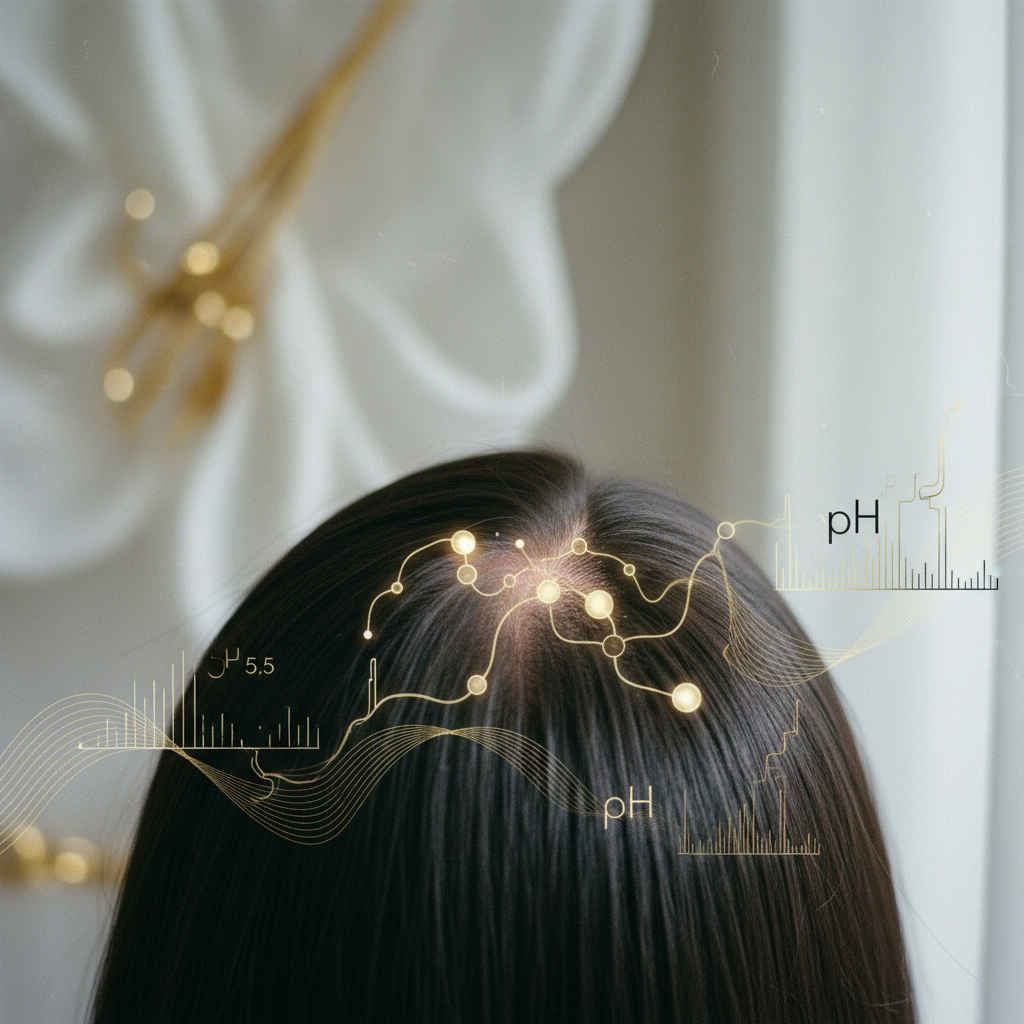
The scalp provides a unique microenvironment compared to the rest of the body. It boasts high densities of sebaceous glands and hair follicles, producing abundant sebum rich in triglycerides, squalene, and wax esters. This lipid-rich habitat supports a complex microbial community dominated by:
- Bacteria: Primarily Cutibacterium acnes (formerly Propionibacterium acnes) and Staphylococcus epidermidis.
- Fungi: Mostly basidiomycetous yeasts belonging to the genus Malassezia, specifically M. Restricta and M. Globosa.
When the surface environment sits within its physiological acidic range, these microorganisms live in functional equilibrium. C. Acnes hydrolyses sebum triglycerides into free fatty acids, directly reinforcing the skin's acidic barrier. This acidity suppresses competitive, pathogenic organisms.
However, when external factors elevate surface pH, this delicate system fractures. Studies show that alkaline environments impair the enzymes responsible for lipid synthesis while activating neutral proteases that degrade skin barrier cohesion. As a result, microbial equilibrium destabilises, often culminating in inflammatory conditions like seborrhoeic dermatitis.
| Factor | Healthy Scalp Baseline | Disrupted / Alkaline Scalp |
|---|---|---|
| Surface pH Range | 4.5 to 5.5 | 6.5 to 8.5+ |
| Dominant Microflora | Balanced C. Acnes & S. Epidermidis | Elevated Staphylococcus, shifted ratios |
| Fungal Activity | Controlled, commensal Malassezia | Irritating oleic acid production increases |
| Stratum Corneum Integrity | Intact lipid bilayers, optimal cohesion | Increased moisture loss (TEWL), impaired barrier |
| Hair Cuticle State | Tightly closed, smooth, low friction | Swollen, raised scales, prone to breakage |
| Common Symptoms | Calm, clear skin, minimal shedding | Pruritus (itching), scaling, erythema, flaking |
How pH regulates the scalp ecosystem
The skin's acid mantle is not just an inanimate film; it serves as a biochemical control switch for enzymatic activity and microbial growth.
Malassezia yeasts depend entirely on external lipids because they lack genes for fatty acid synthesis. They consume sebum triglycerides and release unsaturated fatty acids, primarily oleic acid. In individuals prone to flaking, oleic acid penetrates a weakened stratum corneum, provoking subclinical inflammation and accelerating epidermal turnover.
When your scalp pH rises above 6.0, the activity of key barrier-forming enzymes, such as beta-glucocerebrosidase, drops sharply. At the same time, alkaline conditions increase the adhesion of transient pathogenic bacteria like Staphylococcus aureus. The interplay between your Scalp Microbiome and pH dictates whether these organisms behave as peaceful commensals or active drivers of inflammatory irritation.
Hair fibres react just as strongly to pH changes. Hair fibre possesses an isoelectric point around pH 3.67. At this point, positive and negative electrical charges on the keratin proteins balance. When exposed to products with a pH above 5.5, the cuticle scales swell and flare open, raising negative surface electrical charge. This increases friction between adjacent strands, leaving hair vulnerable to mechanical breakage during combing and styling.
What the evidence does not show
It is vital to distinguish between cosmetic scalp health and the pathology of follicular hair loss.
Current dermatological evidence does not show that shifts in scalp pH directly cause permanent conditions such as androgenetic alopecia (pattern baldness) or alopecia areata. Androgenetic alopecia is governed by genetic sensitivity of hair follicles to dihydrotestosterone (DHT), while alopecia areata is an autoimmune attack on the hair bulb.
While an imbalanced microbiome and high pH can trigger flaking, pruritus, and reactive shedding (such as short-term telogen effluvium driven by intense scratch-induced inflammation), correcting pH will not reverse miniaturised follicles. Conflating hair breakage from swollen, high-pH fibres with follicular hair loss creates false expectations.
Signs of a disrupted scalp balance
When the acidity of your scalp rises and the microbiome falls out of balance, your skin sends distinct physical signals:
- Persistent itching and tightness: A sensation of dryness or mild burning shortly after washing, signalling compromised barrier function.
- Flaking and dandruff: Either powdery white flakes or greasy, yellowish scales that stick to the scalp surface.
- Rapid greasiness combined with surface dryness: The scalp overcompensates for a stripped acid mantle by accelerating sebum output.
- Rough, frizzy roots: The hair fibre swelling near the base of the follicle, leading to dullness and styling difficulty.
- Redness and tenderness: Localised erythema around follicular openings, indicating inflammatory microbial irritation.
Practical steps to protect your scalp equilibrium
Balancing your scalp requires adjusting your wash routine and product selection to respect its natural chemistry:
- Choose pH-balanced cleansers: Look for shampoos formulated between pH 4.5 and 5.5. Traditional soap bars and high-alkalinity surfactants (often sitting between pH 8.0 and 10.0) strip structural lipids and disrupt microflora.
- Avoid harsh mechanical stripping: Over-scrubbing with stiff scalp brushes physically damages the stratum corneum and strips commensal bacteria faster than they can regenerate.
- Rinse thoroughly: Surfactant residues left on the scalp continue to alter surface pH and irritate the skin barrier throughout the day.
- Mind your wash water: Hard municipal water contains high concentrations of calcium and magnesium carbonates, which elevate scalp surface pH during washing. If you live in an exceptionally hard water zone, using a mildly acidic rinse can help neutralise residual minerals.
- Maintain consistent wash frequency: Washing too infrequently allows sebum buildup, feeding Malassezia blooms. Washing too often with harsh detergents strips lipids and spikes pH. Find a rhythm that keeps excess oil controlled without leaving skin tight.
Watermans: supporting the scalp foundation
A healthy hair cycle starts at the follicle, and a balanced scalp environment provides the ideal foundation for normal hair growth. Watermans approaches hair wellness by focusing on everyday scalp care and hair vitality. Watermans GrowMe Shampoo is formulated with gentle cleansing agents and scalp-supportive ingredients, including biotin, rosemary extract, caffeine, and niacinamide. By respecting the natural skin barrier rather than stripping it, it helps foster a clean, refreshed, and comfortable scalp environment while reducing hair breakage through revitalised fibre strength.
When to seek professional advice
Cosmetic adjustments work well for standard flaking, product buildup, and mild surface irritation. However, you should consult a doctor, dermatologist, or qualified trichologist if you notice:
- Thick, silvery scales accompanied by clearly defined red plaques, which may point to scalp psoriasis.
- Suppurating sores, crusting, or painful pustules that could indicate a secondary bacterial folliculitis.
- Localised circular bald patches, which suggest alopecia areata or tinea capitis (a fungal ringworm infection that requires oral antifungal medication).
- Rapid, widespread hair shedding accompanied by scalp burning or pain.
- Lack of improvement after four to six weeks of dedicated, pH-appropriate scalp care.
Frequently asked questions about Scalp Microbiome and pH
What is the ideal pH for maintaining a healthy scalp?
The ideal surface pH for a healthy scalp ranges between 4.5 and 5.5. This mildly acidic state maintains the integrity of the skin's lipid barrier, keeps the outer hair cuticle closed and smooth, and prevents the overproliferation of problematic microbes like Malassezia.
How does hair washing alter the Scalp Microbiome and pH?
Washing temporarily raises surface pH because tap water usually sits between 6.5 and 8.5, and many commercial shampoos are slightly alkaline. A healthy scalp self-regulates back to its acidic baseline within several hours, but aggressive surfactants can prolong alkalinity, depleting beneficial bacteria and causing barrier breakdown.
Can an imbalanced scalp pH cause permanent hair loss?
No, an imbalanced scalp pH does not cause permanent follicular hair loss like androgenetic alopecia. It can, however, trigger inflammation, severe itching, and secondary fungal overgrowth. Vigorous scratching and chronic inflammation can cause hair breakage or trigger temporary telogen effluvium shedding.
What is the difference between dandruff and a dry scalp?
Dry scalp occurs when the skin lacks moisture and lipids, leading to small, dry, white flakes without inflammation. Dandruff is an inflammatory response tied to the Scalp Microbiome and pH, driven by Malassezia yeasts feeding on sebum and causing larger, oilier flakes alongside itchiness.
Do natural remedies like apple cider vinegar restore scalp balance?
Apple cider vinegar has an acidic pH (typically 2.0 to 3.0), which can lower surface pH if diluted correctly. However, undiluted application is far too acidic, risking chemical burns and contact dermatitis. Formulated, pH-controlled cosmetic products provide a safer, more stable solution.
Summary
Maintaining the natural balance between your Scalp Microbiome and pH is an essential part of fundamental hair hygiene. When your scalp sits comfortably within its acidic window of 4.5 to 5.5, beneficial microflora flourish, the skin barrier remains fortified against pathogens, and hair fibres stay shielded from unnecessary friction and breakage. By prioritising pH-conscious cleansing and addressing persistent inflammatory symptoms with medical professionals when needed, you create the optimal environment for strong, healthy-looking hair.
Sources and references
- British Association of Dermatologists. Seborrhoeic Dermatitis Guidelines. bad.org.uk
- Gavazzoni Dias, M. F., et al. (2014). The Shampoo pH can Affect the Hair: Myth or Reality? International Journal of Trichology, 6(3), 95-99.
- Grice, E. A., & Segre, J. A. (2011). The skin microbiome. Nature Reviews Microbiology, 9(4), 244-253.
- Ali, S. M., & Yosipovitch, G. (2013). Skin pH: From Basic Science to Basic Skin Care. Acta Dermato-Venereologica, 93(3), 261-267.
- Saxena, R., et al. (2018). Comparison of Healthy and Dandruff Scalp Microbiome Reveals the Role of Commensals. Frontiers in Cellular and Infection Microbiology, 8, 346.
Find these ingredients in Watermans products
- Oleic Acid: you will find this ingredient in our Camellia & Black Castor Hair & Body Oil.
- Niacinamide: you will find this ingredient in our Hair Mask.