Scalp Care for Textured Hair: An Evidence-Based Guide
11 min read ·
Discover the science of Scalp Care for Textured Hair. Learn how to cleanse, hydrate, and balance the scalp microbiome while preventing breakage and inflammation.
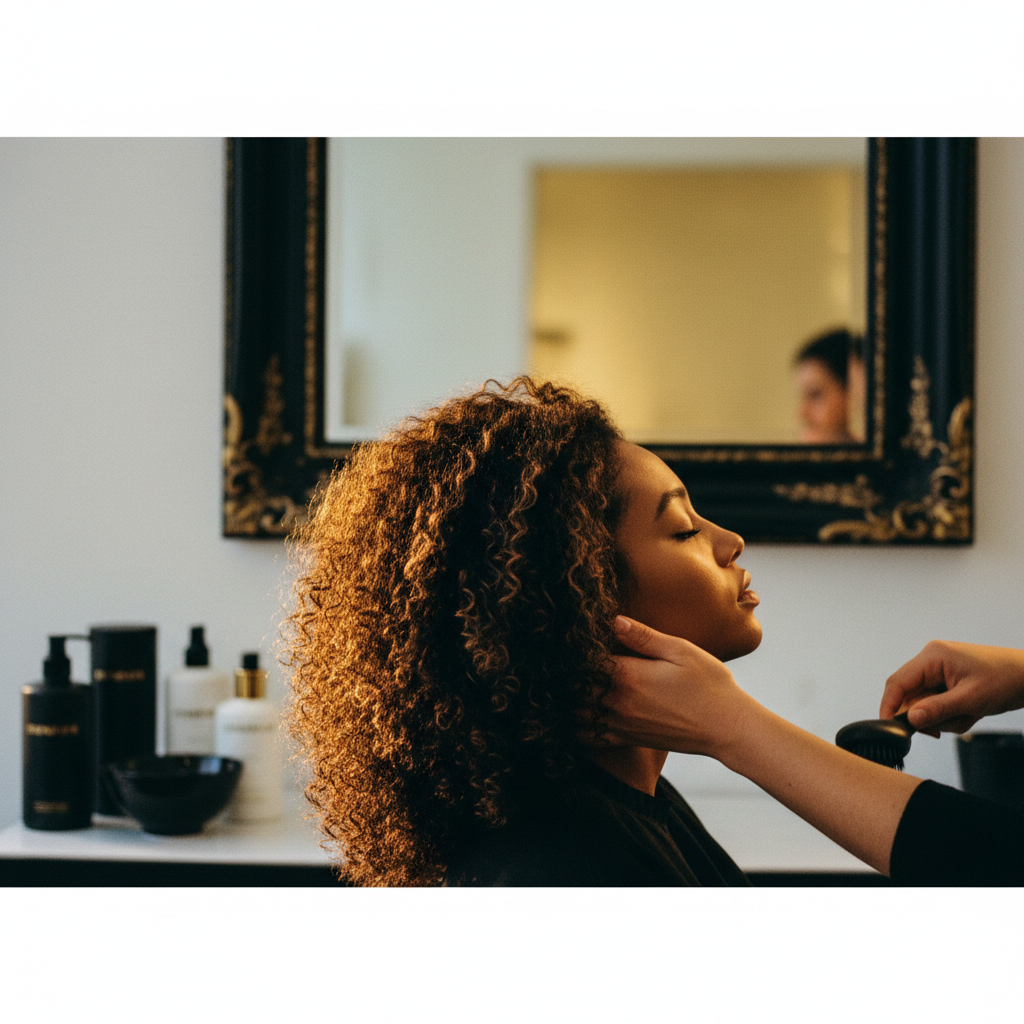
Quick answer: Effective Scalp Care for Textured Hair requires balancing gentle, regular cleansing with targeted barrier hydration while avoiding heavy oil occlusion directly on the skin. Curly, coily, and afro hair types produce natural sebum just like straight hair, but elliptical follicle geometry and tight curl patterns prevent oils from travelling down the strand. This often leads to a dry hair fibre alongside a neglected, product-laden scalp. The main limitation is that topical scalp routines cannot alter underlying genetic hair loss or resolve active inflammatory dermatoses without medical intervention.
Key takeaways
- Textured hair shafts are prone to moisture loss, but the underlying scalp skin still produces physiological levels of sebum and sheds dead skin cells.
- Heavy plant butters and thick mineral oils applied directly to the scalp can feed lipophilic yeast such as Malassezia, worsening flaking and irritation.
- Cleansing frequencies should balance scalp barrier hygiene with fibre protection, typically settling between once every 7 to 10 days.
- Protective styling requires specialised scalp maintenance to avoid traction stress, product accumulation, and chronic low-grade folliculitis.
- Persistent itching, tenderness, burning, or patchy shedding indicates an inflammatory condition such as seborrhoeic dermatitis or central centrifugal cicatricial alopecia (CCCA), requiring dermatologist review.
Scalp Care for Textured Hair: what the evidence shows
Textured hair refers to hair patterns ranging from loose curls (Type 3) to tight coils and zig-zag afro textures (Type 4). Dermatological research shows that while the follicle shape is asymmetrical and curved, the scalp skin itself shares the same fundamental biology as any other human scalp. It houses sebaceous glands, a complex microbiome, and an acid mantle with a resting pH between 4.5 and 5.5.
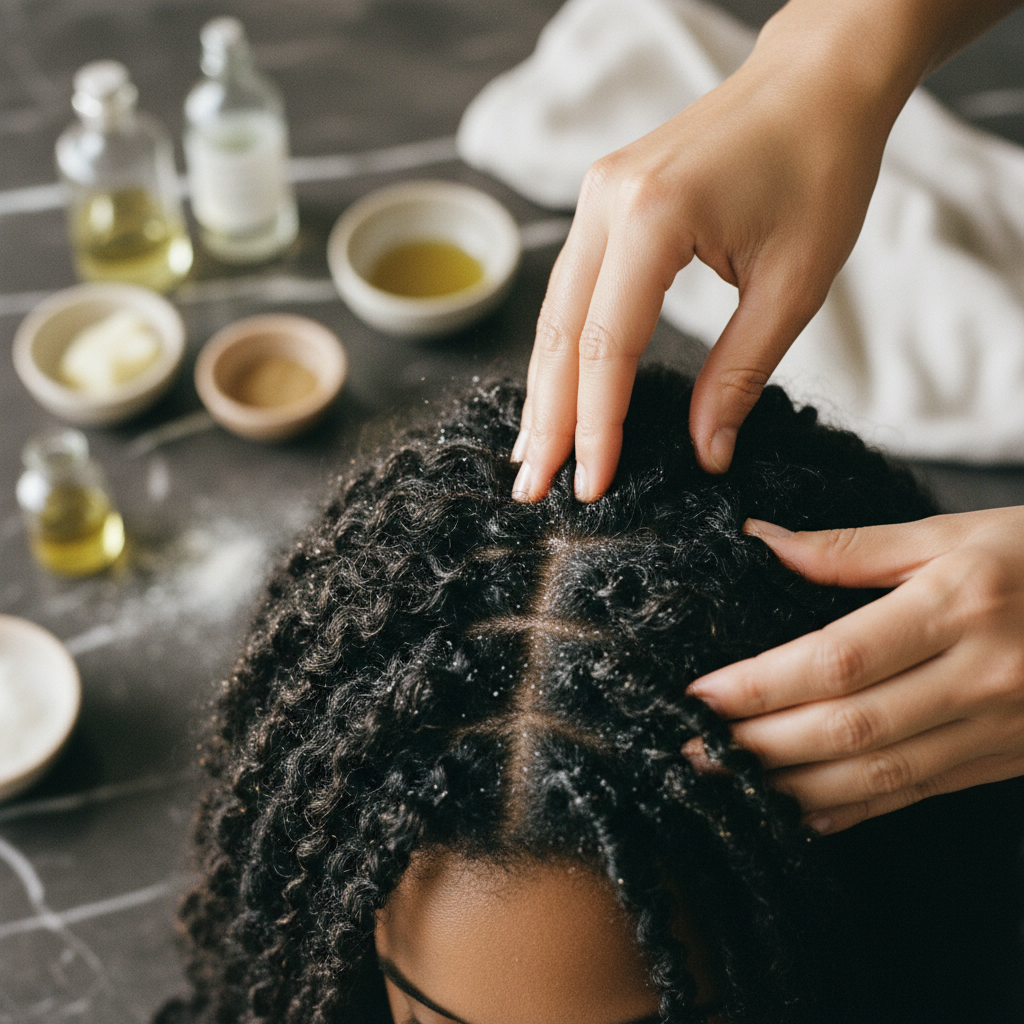
The challenge in Scalp Care for Textured Hair stems from the mechanical tension between the needs of the hair fibre and the needs of the scalp. Because sebum struggles to navigate the tight turns of a curly or coily hair shaft, the fibre feels chronically dry. Historically, this prompted the traditional practice of "greasing the scalp" with petrolatum, pomades, or heavy vegetable oils.
However, dermatological studies published in the International Journal of Dermatology indicate that applying thick, occlusive oils directly onto the scalp disrupts the skin microbiome. The scalp hosts Malassezia globosa and Malassezia restricta, lipid-dependent yeasts that feed on triglycerides. When supplied with exogenous oils, these yeasts metabolise the fatty acids, leaving behind irritating free fatty acids like oleic acid. This triggers inflammation, scaling, and compromised barrier function, often mistaken for simple dryness.
Evidence confirms that effective management requires separating hair shaft moisturisation from scalp skin health. The scalp requires periodic cleansing, gentle exfoliation, and water-based hydrators, whereas heavy emollients belong strictly on the mid-lengths and ends of the hair fibre.
Common myths: what the evidence does not show
Several long-standing beliefs surrounding textured hair care are not supported by clinical evidence:
- Myth: Flaking on a textured scalp always means dry skin. Dermatological examinations show that visible flakes in textured hair are far more frequently caused by seborrhoeic dermatitis or product residue than simple xerosis (dry skin). Adding more raw oils to these flakes usually exacerbates the inflammatory cycle.
- Myth: Textured hair should only be washed once a month. While daily washing can strip moisture from delicate afro coils, extending wash intervals beyond 14 days allows sweat, sebum, dead keratinocytes, and styling polymers to accumulate. This buildup creates an ideal environment for bacterial and fungal folliculitis.
- Myth: Oils moisturise the scalp. Oils are occlusives or emollients; they do not contain water and therefore cannot hydrate tissue. Applying oil to a dry, unwashed scalp merely traps dead cells against the skin surface without delivering hydration.
- Myth: Scalp oils stimulate follicle growth directly. Systematic reviews show that topical oils cannot reverse genetic hair loss or restart dormant follicles. While gentle mechanical massage may temporarily increase local microcirculation, the oils themselves are not medical treatments for follicular thinning.
Biological mechanisms of the textured scalp
The distinct properties of textured hair influence scalp health in several measurable ways:
1. Follicle curvature and sebum distribution
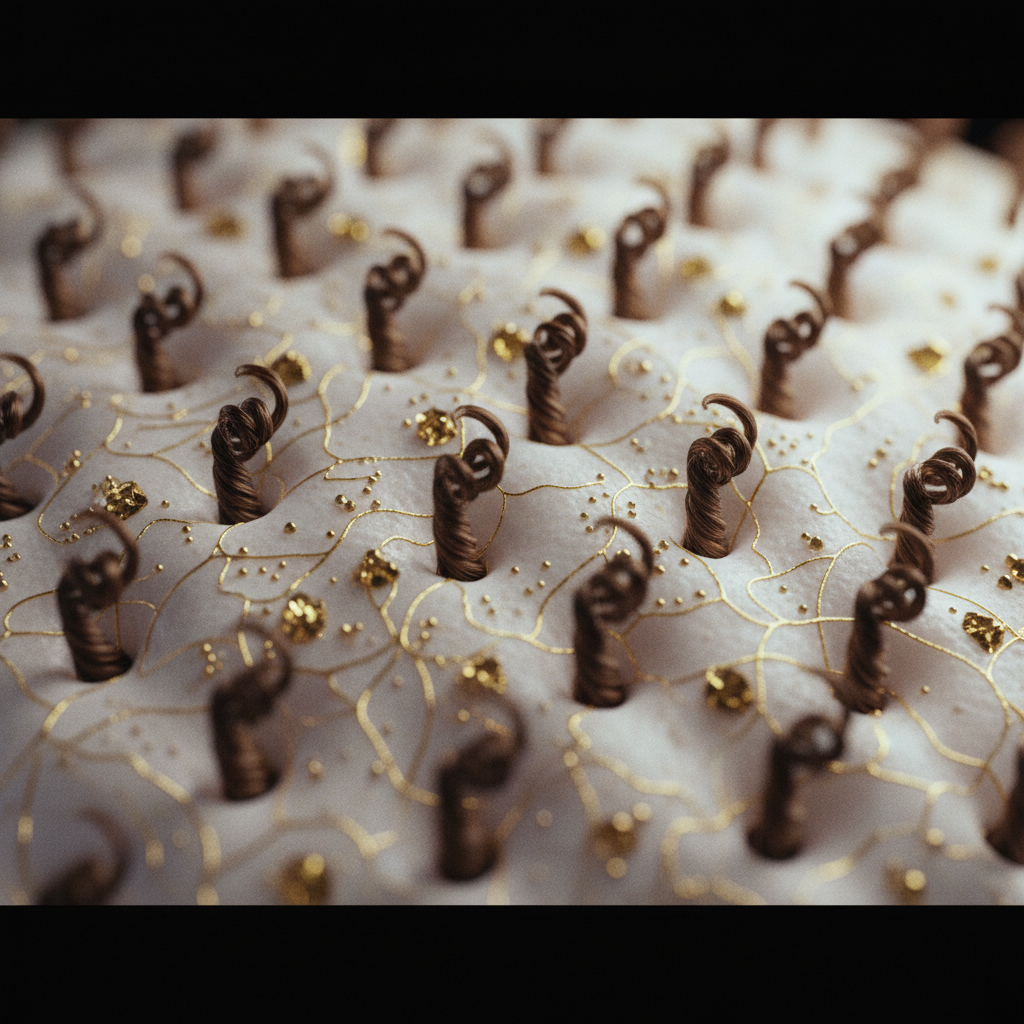
The hair follicle of afro-textured hair is curved like a golf club beneath the skin surface, emerging at an acute angle relative to the epidermis. The cross-section of the hair shaft is elliptical or flattened rather than circular. This geometry produces natural points of structural weakness along the fibre and limits the passive flow of sebum down the shaft. Sebum remains pooled near the follicular infundibulum, while the lengths remain devoid of lipid coating.
2. Barrier function and transepidermal water loss
Clinical measurements demonstrate that darker skin phototypes and afro-textured scalps often exhibit lower levels of ceramides in the stratum corneum compared to lighter skin types. This can lead to higher rates of transepidermal water loss (TEWL). When combined with infrequent washing or aggressive chemical processing (such as relaxers or texturisers), the epidermal barrier becomes compromised, making the scalp reactive to environmental irritants and harsh surfactants.
3. Microbial balance
The scalp microbiome relies on a fine equilibrium between Cutibacterium acnes, Staphylococcus epidermidis, and Malassezia species. When synthetic waxes, heavy butters, or leave-in conditioning polymers build up at the base of the follicle, oxygen exchange is reduced. This anaerobic, lipid-rich microenvironment allows opportunistic microbes to proliferate, initiating micro-inflammation around the follicular opening.
Comparison: Scalp needs versus hair fibre needs
Understanding the distinct requirements of the scalp and the hair fibre prevents common care errors.
| Feature | Scalp Skin | Textured Hair Fibre |
|---|---|---|
| Primary tissue type | Living stratified squamous epithelium | Dead, keratinised protein structure |
| Optimal pH range | 4.5 to 5.5 (acid mantle) | 3.6 to 4.5 (isoelectric point) |
| Primary need | Regular hygiene, balanced microbiome, cellular turnover | Moisture retention, tensile strength, lubrication |
| Response to heavy oils | Follicular occlusion, yeast overgrowth, itchiness | Reduced friction, cuticle sealing, moisture retention |
| Cleansing objective | Remove excess sebum, debris, sweat, and microbes | Cleanse gently without stripping internal structural lipids |
| Signs of poor health | Erythema, scaling, tenderness, pruritus | Breakage, split ends, dullness, extreme porosity |
Signs of an unhealthy scalp environment
Identifying early signs of scalp distress allows for prompt routine adjustments before chronic inflammation affects hair growth:
- Tightly adherent white or yellowish flakes: Suggests an active Malassezia reaction or excess sebum turnover rather than mild environmental dryness.
- Persistent pruritus (itching): Indicates barrier disruption or inflammatory mediator release beneath the skin surface.
- Follicular papules or pustules: Small, tender red bumps forming around the base of hair shafts, signalling folliculitis.
- Scalp tenderness or burning: Frequently linked to excessive tension from tight braids, weaves, or extensions, which can progress to traction alopecia.
- Dull film or unpleasant odour: A sign of oxidised sebum mixed with degraded styling products, requiring clarifying intervention.
Practical steps for maintaining a healthy textured scalp
Achieving a healthy balance involves practical, sustainable techniques:
Adopt a rational cleansing frequency
Wash the scalp every 7 to 10 days using a sulphate-free, hydrating shampoo that removes buildup without stripping the hair fibre. If you wear protective styles such as box braids or twists, use a diluted cleanser applied directly to the scalp with an applicator nozzle, followed by thorough rinsing.
Target hydration correctly
Hydrate the scalp skin using water-based humectants rather than heavy plant greases. Look for lightweight serums containing ingredients like hyaluronic acid, glycerin, panthenol (vitamin B5), and aloe vera. Apply these directly to the parted scalp while damp.
Apply oils to the fibre, not the skin
If using plant oils (such as jojoba, argan, or marula), apply them from 2 to 3 centimetres away from the root down to the ends. Jojoba oil is chemically a liquid wax ester similar to human sebum and can be tolerated in very small amounts, but heavy butters (such as shea or cocoa butter) should remain strictly on the hair shaft.
Exfoliate gently
Introduce a mild chemical exfoliant once or twice a month to clear dead skin cells. Low-dose salicylic acid (0.5% to 2%) is lipid-soluble, allowing it to penetrate and clear sebum within the follicular pore without mechanical friction that snaps fragile coils.
Manage tension during styling
Ensure that protective styles are installed without excessive traction on the hair follicles. If your scalp feels tight, throbs, or develops small bumps along the hairline immediately after styling, the tension is too high and must be released immediately to protect against permanent follicular damage.
When the cause may be something else
Not all scalp symptoms in textured hair stem from product choices or washing schedules. Several medical conditions mimic everyday dryness:
- Seborrhoeic Dermatitis: An inflammatory skin disorder characterised by erythematous (red or discoloured) plaques covered with greasy scales, highly prevalent in textured hair populations.
- Traction Alopecia: Hair loss caused by chronic pulling force on the hair follicle, predominantly affecting the frontal and temporal margins. Early stages present with perifollicular erythema and pustules.
- Central Centrifugal Cicatricial Alopecia (CCCA): A form of scarring (cicatricial) alopecia seen primarily in women of African descent. It begins at the crown or vertex and radiates outwards. It is frequently accompanied by burning, tingling, or itching, and destroys the hair follicle permanently if left untreated.
- Scalp Psoriasis: An autoimmune condition causing rapid skin cell turnover, resulting in thick, silvery-white plaques that require specialised medical therapy.
When to seek professional advice
Consult a board-certified dermatologist or qualified trichologist if you observe any of the following symptoms:
- Itching or burning that disrupts sleep or daily activities.
- Smooth, shiny bald patches where follicular openings are no longer visible.
- Small bumps, pustules, or crusting that does not clear after two weeks of gentle cleansing.
- Rapid hair shedding (more than 100 to 150 hairs daily) leaving the scalp noticeably visible.
- Flaking that fails to respond to over-the-counter anti-dandruff cleansers formulated with zinc pyrithione, piroctone olamine, or ketoconazole.
Supporting scalp vitality: cosmetic approaches
For individuals seeking to optimise their cosmetic hair routine, Watermans provides carefully formulated products that support the scalp environment without weighing down delicate strands. Watermans GrowMe Shampoo is formulated with biotin, rosemary, caffeine, niacinamide, and argan oil, offering a balanced cleanse that invigorates the scalp skin while remaining gentle on fragile hair types. Used alongside targeted topical hydrators, it helps maintain clean follicular openings and a revitalised scalp foundation.
For styling textured hair without compromising scalp balance, Frojus provides moisture-rich formulas designed specifically to nourish curls, coils, and waves, keeping mid-lengths and ends protected while keeping heavy occlusives away from the delicate scalp barrier.
Frequently asked questions about Scalp Care for Textured Hair
How often should you wash your scalp if you have Type 4 coily hair?
Most people with Type 4 hair achieve the best results by cleansing their scalp every 7 to 10 days. Washing less frequently than every two weeks allows sebum, sweat, dead skin cells, and styling products to accumulate, which can trigger fungal overgrowth and folliculitis. If your hair fibre feels dry, use a gentle hydrating cleanser and focus application exclusively on the scalp skin, letting the lather rinse down the lengths.
Can you grease your scalp if you have textured hair?
Dermatological consensus advises against applying heavy greases, petrolatum, or thick vegetable butters directly to the scalp. While these products seal the hair shaft effectively, placing them on the skin traps dead keratinocytes and provides a rich food source for Malassezia yeast, increasing the risk of flaking and irritation. Keep heavy butters on the hair lengths and use lightweight, water-based serums on the scalp.
What is the most effective approach to Scalp Care for Textured Hair in braids?
Effective Scalp Care for Textured Hair in protective styles involves regular cleansing and light hydration without mechanical disturbance. Use an applicator bottle to apply a diluted sulphate-free shampoo or antimicrobial scalp rinse directly between the parts once a week, gently massaging with your fingertips. Rinse thoroughly and allow the scalp to dry completely to prevent moisture-induced mildew or bacterial growth beneath the braids.
How do I tell the difference between dry scalp and dandruff?
Dry scalp presents with tiny, powdery white flakes that easily fall from the skin, accompanied by general tightness across the skin. Dandruff (seborrhoeic dermatitis) typically produces larger, greasy, yellowish or grey flakes that cling to the scalp and hair shafts, often accompanied by noticeable redness, inflammation, and persistent itching. Dandruff is an inflammatory fungal reaction requiring targeted antifungal cleansers, not additional oils.
Does scalp massage improve hair growth in textured hair?
Scalp massage does not alter genetic hair growth rates or treat clinical alopecias. However, gentle manual massage for 4 to 5 minutes daily can help stimulate local skin microcirculation and assist in loosening surface debris prior to cleansing. Avoid aggressive friction or using fingernails, which can cause mechanical breakage along fragile textured hair shafts.
Achieving balanced scalp health
Establishing a successful approach to Scalp Care for Textured Hair requires stepping away from heavy occlusives and embracing a routine built on regular, gentle hygiene and balanced hydration. By understanding that your scalp is living skin with an active microbiome, while your curls are delicate protein fibres requiring moisture protection, you can treat both components according to their biological needs. Monitor your scalp for early signs of inflammation, respect the skin barrier, and seek professional clinical support promptly if persistent irritation or thinning occurs.
Sources and references
- American Academy of Dermatology Association. "African American Hair: Tips for Everyday Care." aad.org, 2022.
- Callender, V. D., et al. "Hair and scalp disorders in women of African descent: an overview." Journal of Clinical and Aesthetic Dermatology, 2014.
- Gathers, R. C., et al. "Hair cosmetic practices and hair and scalp disorders in African American women." International Journal of Dermatology, 2009.
- British Association of Dermatologists. "Seborrhoeic Dermatitis Patient Information Leaflet." bad.org.uk, 2020.
- Aguh, C., & Okoye, G. A. Fundamentals of Ethnic Hair: The Dermatologist's Perspective. Springer, 2017.
Find these ingredients in Watermans products
- Biotin: you will find this ingredient in our Hair Growth Shampoo.
- Zinc: you will find this ingredient in our Hair Vitamins.
- Oleic Acid: you will find this ingredient in our Camellia & Black Castor Hair & Body Oil.
- Niacinamide: you will find this ingredient in our Hair Mask.
- Panthenol (Provitamin B5): you will find this ingredient in our Heat Protection Spray.
- Aloe Vera: you will find this ingredient in our Curly Hair Conditioner.