Scalp Build Up and Sebum: Causes, Biology, and Management
8 min read ·
Understand the biology of Scalp Build Up and Sebum, how natural oils and product residues interact, and evidence-based ways to maintain a clean, balanced scalp.
Quick answer: Dealing with Scalp Build Up and Sebum involves managing a complex mixture of physiological oils, dead skin cells, sweat, and cosmetic residues that accumulate on the skin's surface. Sebum is naturally produced by your sebaceous glands to protect the skin barrier, but excess production combined with product residue can clog follicles and encourage microbial overgrowth. While regular cleansing and chemical exfoliants effectively reset the scalp, cosmetic washes cannot cure underlying medical dermatoses like seborrhoeic dermatitis.
Key takeaways
- Sebum is a protective lipid mixture containing squalene, wax esters, and triglycerides, naturally maintaining a skin pH of roughly 4.5 to 5.5.
- Scalp build-up is rarely pure sebum; it is typically an amalgamation of oxidised lipids, desquamated corneocytes (dead skin cells), sweat salts, and styling polymers.
- Over-accumulation feeds Malassezia yeast, which breaks triglycerides into irritating free fatty acids that trigger inflammation and flaking.
- Product residue forms a film over the follicular funnel, but cosmetic build-up does not directly cause androgenetic alopecia or permanent hair loss.
- Scalp cleansing routines should be determined by personal sebum excretion rates, hair texture, and the presence of cosmetic filming agents.
Scalp Build Up and Sebum: what the evidence shows
Clinical dermatology demonstrates that Scalp Build Up and Sebum are deeply intertwined yet fundamentally distinct in their origin. Sebum is an endogenous substance synthesised by the sebaceous glands connected to each hair follicle. The typical human scalp contains between 400 and 900 sebaceous glands per square centimetre, producing between 1 and 2 mg of sebum per 10 square centimetres every three hours under normal physiological conditions.
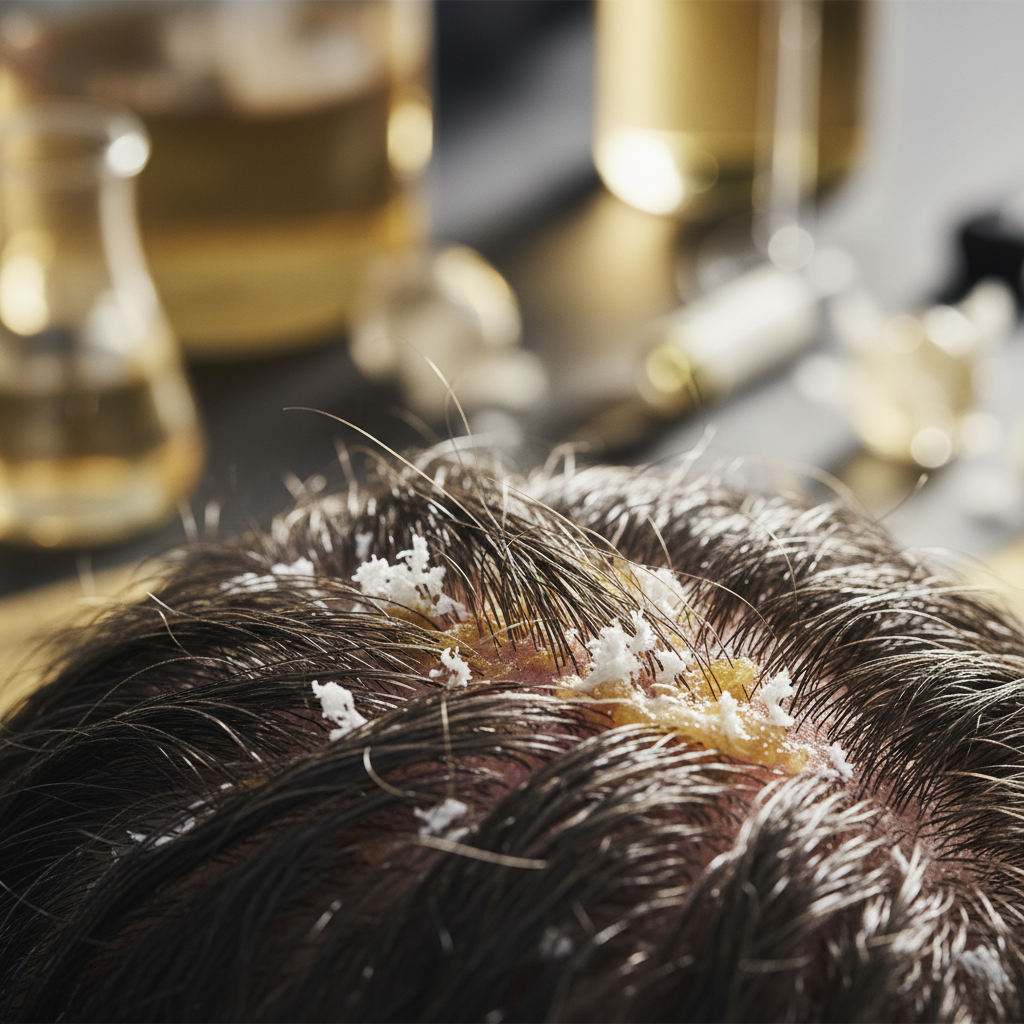
When researchers analyse scalp residue, they find it is not just oily grease. Instead, it consists of:
- Endogenous lipids: Squalene (around 12%), wax esters (around 25%), triglycerides and free fatty acids (around 57%), and cholesterol (under 5%).
- Desquamated keratinocytes: Shed corneocyte cells from the stratum corneum that fail to detach freely.
- Environmental and mineral particulates: Airborne pollution, pollen, and hard water minerals like calcium and magnesium carbonate.
- Cosmetic residues: Silicones, polyquaterniums, heavy plant butters, waxes, and dry shampoo starches.
When natural oils remain on the skin too long, squalene and unsaturated fatty acids undergo lipid peroxidation from exposure to ultraviolet light and atmospheric oxygen. Peroxidised lipids cause low-grade follicular inflammation, itchiness, and an unpleasant odour.
 [ Sebaceous Gland ]
 │
 ▼
 Produces Sebum
 (Triglycerides, Squalene, Wax Esters)
 │
 ▼
 Mixes at Scalp Surface with:
 • Dead Skin Cells (Corneocytes)
 • Cosmetic Polymers & Silicones
 • Environmental Dust & Minerals
 │
 ▼
 [ Scalp Build-Up Layer ]
 │
 ▼
 Metabolised by Malassezia Yeast
 │
 ▼
 Releases Free Fatty Acids (Oleic Acid)
 │
 ▼
 Micro-Inflammation, Pruritus & Flaking
What the evidence does not show
There is no scientific backing for the idea that Scalp Build Up and Sebum physically "choke" hair roots to death, resulting in permanent balding or androgenetic alopecia. Follicular miniaturisation in genetic hair loss is governed by dihydrotestosterone (DHT) interacting with genetically susceptible androgen receptors deep inside the dermal papilla, not by a physical plug of oil sitting at the scalp surface.
Furthermore, sebum does not turn hair follicles permanently dormant. While severe, neglected build-up can induce folliculitis or exacerbate telogen effluvium due to inflammatory stress, washing away the residue allows normal shedding rates to stabilise.
Another common misconception is that washing your hair every day "trains" sebaceous glands to produce exponentially more oil. Sebaceous gland activity is primarily dictated by internal androgens, systemic hormones, genetics, and age, rather than the mechanical frequency of surface washing. Stripping the scalp with high-pH surfactants can cause temporary surface dehydration, but it does not reprogram baseline glandular output.
Signs of sebum accumulation versus cosmetic build-up
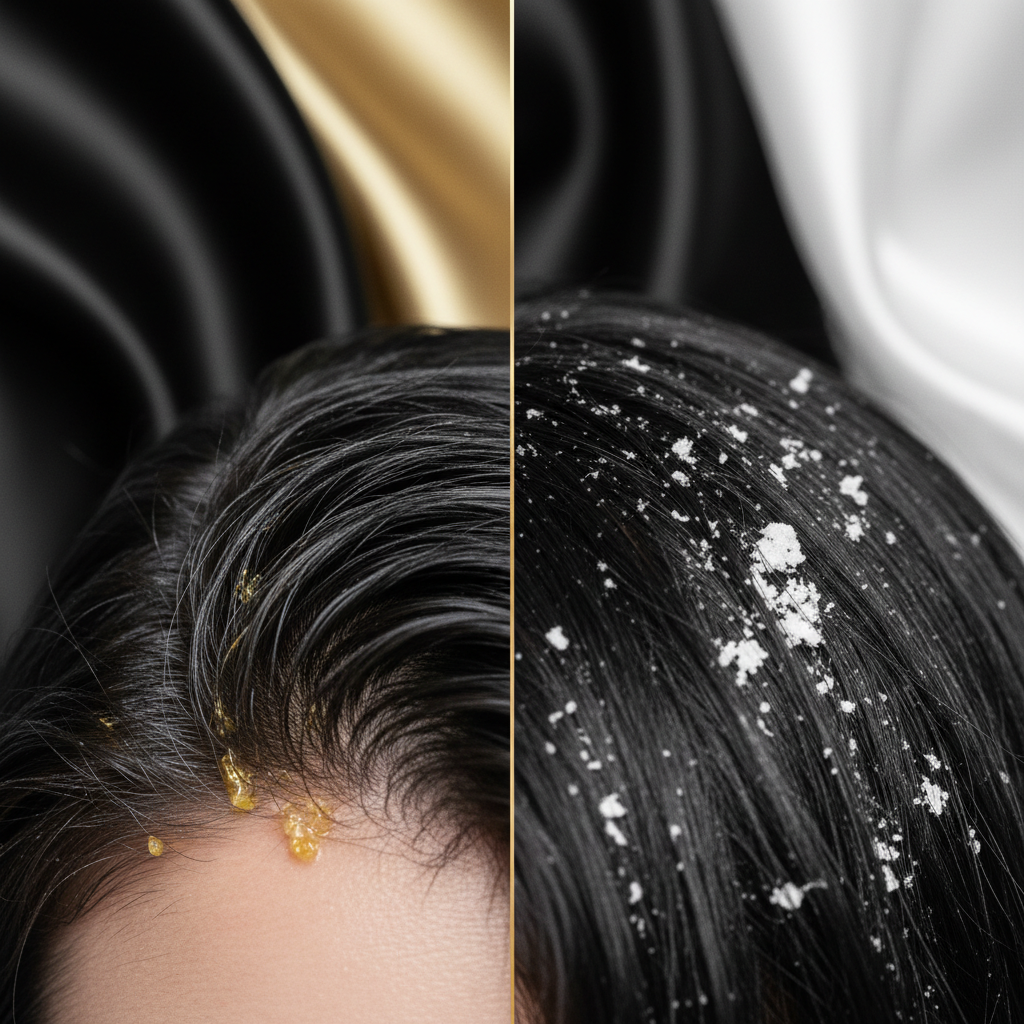
Recognising whether your symptoms stem from glandular hypersecretion or product accumulation ensures you choose the right clarifying approach.
| Characteristic | Sebum Hypersecretion | Cosmetic Product Build-Up |
|---|---|---|
| Primary Source | Sebaceous glands (endogenous) | Shampoos, conditioners, styling aids (exogenous) |
| Visual Appearance | Shiny, greasy roots, clumping strands, yellowish tint | Dull, matte cast, powdery flakes, gummy film |
| Texture to Touch | Slick, oily, damp | Grimy, waxy, stiff, coated |
| Odour | Distinct sour or stale lipid smell due to oxidation | Fragrance mixed with stale notes, or neutral |
| Common Location | Crown, hairline, and follicular funnels | Along the entire hair strand, particularly mid-lengths |
| Flake Type | Soft, yellowish, adherent, greasy scales | Dry, white, irregular particles that dust off easily |
Mechanisms of scalp accumulation
Your scalp sheds thousands of dead skin cells every day through a process known as desquamation. In a healthy cycle, individual corneocytes separate invisibly thanks to enzymes breaking down cellular bonds (corneodesmosomes).
Excess sebum acts as an adhesive. When high rates of lipid secretion flood the stratum corneum, dead cells cannot slough off individually. They stick together in dense clusters, forming visible flakes and crusts.
At the same time, the resident scalp microbiome alters. Malassezia globosa and Malassezia restricta, lipid-dependent yeasts, thrive on the abundant triglycerides found in sebum. These yeasts consume the lipids and release irritants, primarily oleic acid. In individuals sensitive to this byproduct, oleic acid breaches the compromised skin barrier, triggering an accelerated epidermal turnover cycle. The skin races to shed cells in 7 to 14 days rather than the healthy 28-day cycle, creating the visible cycle of dandruff and seborrhoeic scaling.
Practical steps to manage build-up and excess oil
To clear accumulation without disrupting your skin mantle, structure your hair washing routine around your personal scalp biology:
- Incorporate targeted surfactants: Choose clarifying formulas containing anionic or amphoteric surfactants (such as sodium lauroyl sarcosinate, cocamidopropyl betaine, or sodium C14-16 olefin sulfonate) once every 1 to 2 weeks to clear stubborn polymers and lipid layers.
- Use chemical exfoliants: Water-soluble salicylic acid (a beta-hydroxy acid, BHA) penetrates lipid-rich follicles directly. Formulations with 1% to 2% salicylic acid dissolve excess sebum, unclog the follicular ostia, and loosen compacted dead skin.
- Optimise contact time: Cleansing products require sufficient time to solubilise complex oils. Massage shampoo into your scalp using your fingertips (never fingernails) for at least 60 seconds before rinsing thoroughly.
- Control leave-in conditioners: Keep heavy oils, butters, and film-forming styling silicones at least 2 to 3 centimetres away from your roots. Reserve these ingredients for the mid-lengths and ends where lipid replenishment is genuinely needed.
- Address hard water minerals: If you live in an area with high water hardness (above 180 mg/L of calcium carbonate), alternate with a chelating wash containing disodium or tetrasodium EDTA to stop metal ions binding to sebum.
Supporting the scalp ecosystem
Maintaining a fresh, balanced scalp does not mean stripping it completely dry. The skin thrives when provided with active botanical and nutritional support that nurtures the surrounding follicle without leaving suffocating residues.
Watermans focuses on non-greasy formulations engineered to stimulate the scalp environment while keeping the follicular funnel completely clean. The inclusion of ingredients like caffeine, rosemary, and biotin in lightweight delivery bases helps refresh congested areas, supporting normal hair growth cycles without contributing to heavy, waxy residue.
When the cause is something else
Persistent accumulation at the roots does not always point to a simple hygiene or styling issue. Several chronic dermatological conditions present with similar symptoms:
- Seborrhoeic Dermatitis: An inflammatory skin condition marked by erythematous (red or discoloured) patches topped with thick, greasy, yellowish scales, accompanied by intense itching.
- Scalp Psoriasis: An autoimmune condition causing silvery-white, thick, sharply demarcated plaques that can extend past the hairline onto the forehead or neck.
- Pityriasis Capitis: Classic non-inflammatory dandruff, producing small, loose, dry white flakes without severe background erythema.
- Folliculitis: Bacterial or fungal infection of the hair follicles, producing small, tender, red pustules that resemble acne across the scalp.
When to seek professional advice
Make an appointment with a GP, dermatologist, or qualified trichologist if:
- Your scalp shows open sores, persistent weeping, or bleeding crusts.
- Scalp tenderness is accompanied by burning sensations or swelling.
- Over-the-counter anti-dandruff or clarifying shampoos produce no visible improvement after 4 weeks of consistent use.
- Flaking and irritation are accompanied by sudden, patchy hair loss (alopecia).
Frequently asked questions about Scalp Build Up and Sebum
How often should you wash your hair to prevent Scalp Build Up and Sebum?
Washing frequency depends on your individual sebum excretion rate, hair texture, and styling habits. Straight and fine hair allows sebum to migrate rapidly down the hair shaft, often requiring cleansing every 1 to 2 days. Coarse, curly, or afro textures naturally restrict oil migration; washing every 5 to 7 days is usually sufficient to control build-up without stripping essential moisture from delicate fibres.
Does sebum build-up cause permanent hair loss?
No, sebum accumulation does not cause androgenetic alopecia or permanent damage to hair follicles. However, excessive neglected build-up can trigger acute inflammation, pruritus, and secondary microbial infections. Vigorous scratching and micro-inflammation around the follicular infundibulum can cause mechanical breakage and temporary hair shedding, which resolves once healthy scalp balance is restored.
Can dry shampoo replace regular washing for oily scalps?
Dry shampoo cannot replace wet cleansing. Dry shampoo uses absorbent starches and clays to soak up visible surface oil, making hair look temporarily cleaner. However, it does not remove sebum, sweat salts, or dead skin cells. Overusing dry shampoo simply adds another layer of powder residue to the follicle, exacerbating scalp congestion and increasing irritation.
Why does my scalp smell even after washing?
A persistent sour or stale odour on the scalp is usually caused by lipid oxidation and bacterial degradation. When endogenous sebum mixes with sweat and sits in the hair follicle, resident bacteria (such as Cutibacterium acnes) break down the lipids into short-chain fatty acids like isovaleric acid. If your shampoo lacks sufficient cleansing strength or contact time, these oxidised compounds remain trapped against your skin.
Conclusion
Finding the right equilibrium between Scalp Build Up and Sebum is essential for maintaining both long-term hair quality and day-to-day comfort. Sebum serves a vital biological function by keeping your skin barrier supple and acidic, but unmanaged lipid accumulation provides the ideal environment for microbial overgrowth and inflammation. By combining regular, methodical cleansing with gentle chemical exfoliants and steering heavy cosmetic styling agents away from your roots, you can foster a healthy scalp ecosystem that allows your hair to grow cleanly and unhindered.
Sources and references
- British Association of Dermatologists. Seborrhoeic Dermatitis Guidelines.
- National Institute for Health and Care Excellence (NICE). Dandruff and Seborrhoeic Dermatitis Clinical Knowledge Summary.
- Journal of Clinical and Aesthetic Dermatology. The Role of Sebum and the Stratum Corneum in Scalp Health.
- International Journal of Cosmetic Science. Scalp Condition and its Impact on Hair Growth and Quality.
- PubMed Central. Malassezia and Its Relationship with Scalp Disorders.
Find these ingredients in Watermans products
- Oleic Acid: you will find this ingredient in our Camellia & Black Castor Hair & Body Oil.