Scalp Acid Mantle and pH Balance: The Complete Guide
8 min read ·
Understand how the Scalp Acid Mantle and pH Balance protect against flaking, regulate microbial balance, and prevent cuticle damage and fibre breakage.
Quick answer: The Scalp Acid Mantle and pH Balance refer to the thin, slightly acidic film of sebum, sweat, and amino acids that coats the scalp surface, typically sitting at a pH between 4.5 and 5.5. This barrier regulates microbial populations like Malassezia, controls moisture loss, and prevents cuticle swelling along the hair fibre. However, maintaining pH balance alone cannot cure medical scalp disorders such as severe psoriasis or androgenetic hair loss, which originate beneath the epidermal surface.
Key takeaways
- A healthy scalp maintains an acidic surface pH between 4.5 and 5.5, while pure water sits at neutral pH 7.0.
- The acid mantle inhibits opportunistic microbes, particularly yeast species that trigger flaking, itchiness, and irritation.
- Alkaline haircare products with a pH above 6.5 force the hair cuticle open and deplete cutaneous barrier lipids.
- Disrupted scalp pH causes barrier breakdown, leading to dehydration, redness, and brittle fibre breakage.
- Restoring barrier function requires mild, pH-balanced formulas, careful rinsing, and minimizing mechanical friction.
Scalp Acid Mantle and pH Balance: what the evidence shows
Dermatological research demonstrates that the Scalp Acid Mantle and pH Balance form a primary physiological defense against environmental insults and microbial overgrowth. First coined by Heinrich Schade and Alfred Marchionini in 1928, the term "acid mantle" describes the acidic microenvironment found on mammalian skin.
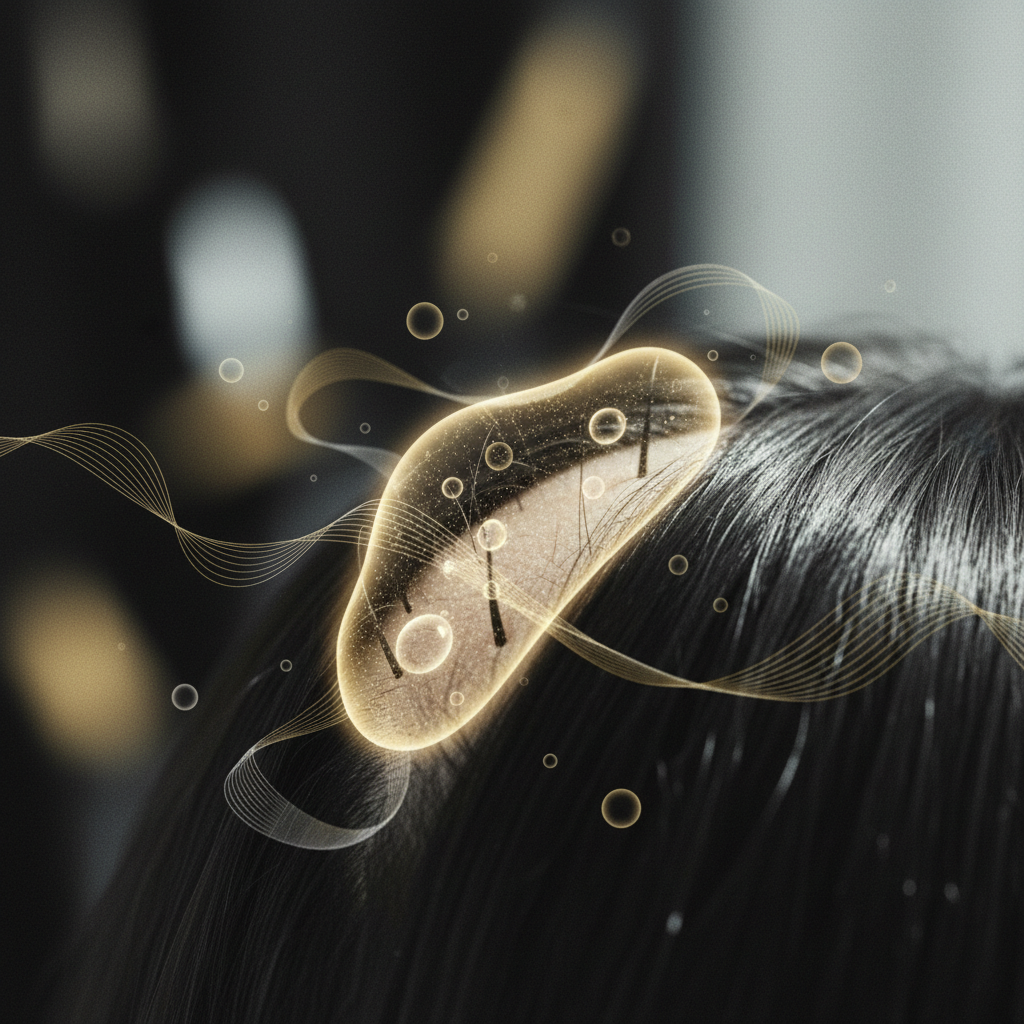
On the scalp, this layer consists of free fatty acids released from sebum by resident bacteria, lactic acid from eccrine sweat glands, and amino acids from cornified skin cells. Published measurements consistently place normal, undisturbed scalp skin at an average pH between 4.5 and 5.5.
Hair fibre structure itself also relies on an acidic state. The isoelectric point of hair keratin, where the fibre carries no net electrical charge, sits around pH 3.67. When the scalp and hair environment climbs higher on the pH scale (becoming alkaline), the negative electrical charge of the hair increases. This electrical shift causes the outer cuticle scales to lift and swell, exposing the inner cortex to moisture loss, protein degradation, and mechanical friction.
Research published in the International Journal of Trichology analyzed commercial shampoos and found that over 60 percent exhibited an alkaline pH higher than 5.5. The study established that alkaline shampoos increase electrostatic friction, elevate cuticular roughness, and can irritate the underlying scalp skin, whereas acidic formulations preserve fibre integrity and epidermal homeostasis.
The biological mechanism of pH regulation
Understanding how the scalp maintains acidity reveals why modern cleansing habits frequently disturb it:
- Sebaceous lipid hydrolysis: Sebaceous glands produce sebum containing triglycerides. Commensal scalp bacteria, notably Cutibacterium acnes, metabolise these triglycerides into free fatty acids (such as sapienic acid), which deposit on the stratum corneum and drive down the surface pH.
- Sodium-hydrogen antiporter activation: The skin cells utilise an internal biochemical pump (NHE1) that transports hydrogen ions outwards, actively acidifying the extracellular space.
- Enzyme regulation: Vital epidermal enzymes, such as beta-glucocerebrosidase (which builds moisture-locking ceramides), require a strict pH of 4.5 to 5.5 to synthesize protective barrier lipids. Neutral or alkaline environments disable these lipid-processing enzymes.
- Antimicrobial peptide stability: The scalp produces natural antimicrobial peptides called defensins. These molecules perform best in acidic media, controlling populations of the lipophilic yeast Malassezia globosa and Malassezia restricta.
When products shift the scalp above pH 6.0, the enzyme kallikrein triggers accelerated desquamation (flaking), ceramide synthesis drops, and opportunistic yeasts proliferate.
| Surface Condition | Typical pH Range | Cuticle State | Microbial Environment | Scalp Sensation |
|---|---|---|---|---|
| Healthy Scalp Acid Mantle | 4.5 to 5.5 | Smooth, closed, flat | Balanced Malassezia and commensal bacteria | Calm, hydrated, supple |
| Hair Fibre Isoelectric Point | 3.6 to 3.8 | Maximum structural stability | Inhospitable to pathogens | Not applicable (fibre core) |
| Tap Water (Average) | 6.5 to 8.5 | Mild swelling | Temporary neutralisation of surface | Neutral to tight |
| Alkaline Cleansers / Soaps | 7.5 to 10.0 | Lifted, rough, vulnerable | Yeast proliferation, bacterial disruption | Itchy, stinging, dry, taut |
| Chemical Bleach / Relaxers | 10.0 to 12.0 | Severe swelling, cortical damage | Extreme barrier collapse | Stinging, chemical irritation |
What the evidence does not show
While the biological importance of surface acidity is well documented, marketing claims frequently exaggerate what pH balance can accomplish:
- It does not resolve follicular hair loss: Disrupted surface pH does not cause androgenetic alopecia or autoimmune conditions like alopecia areata. Follicular miniaturisation occurs deep within the dermis, governed by genetics, androgens, and cellular signaling, far below the reach of surface acidity.
- It cannot instantly repair broken bonds: While an acidic rinse smooths down the cuticle layer, it cannot reconnect shattered disulfide bonds within the cortex caused by bleach or extreme thermal heat.
- It is not an immediate cure for clinical infections: A fungal infection like tinea capitis requires targeted pharmaceutical antifungals. Acidic cleansers alone lack the capacity to eliminate established dermatophyte infections.
Signs of a disrupted scalp barrier
When your acid mantle is compromised, the scalp usually sends clear physical signals:
- Persistent itchiness without clear infestation: An elevated pH triggers inflammatory cytokines in the skin, activating itch receptors even in the absence of external parasites.
- Tightness after washing: If your scalp feels rigid or uncomfortable within thirty minutes of exiting the shower, your cleanser has likely stripped epidermal lipids and elevated surface pH.
- Dry, powdery flaking: A broken acid mantle impairs lipid synthesis, leading to abnormal shedding of immature corneocytes that appear as fine, non-oily flakes.
- Increased fibre friction and tangling: Because products reach both skin and hair, an alkaline wash lifts hair cuticles, causing strands to catch, tangle, and snap during combing.
Practical steps to protect your scalp acid mantle
You can support physiological pH balance through evidence-based washing and styling adjustments:
- Audit your cleanser pH: Choose shampoos specifically buffered between pH 4.5 and 5.5. Avoid bar soaps or traditional saponified soaps on the scalp, as these naturally carry an alkaline pH between 9.0 and 10.0.
- Moderate wash temperature: Very hot water melts protective sebaceous lipids and strips natural moisturising factors (NMFs). Wash using lukewarm water to minimise barrier degradation.
- Rinse thoroughly: Leaving surfactant residue on the skin allows continued lipid emulsification, which prevents the acid mantle from naturally recovering its baseline pH.
- Limit harsh clarifying washes: Highly clarifying washes remove stubborn mineral buildup, but using them daily keeps the scalp in a state of chronic alkalinity. Reserve them for occasional use.
Supporting scalp balance with Watermans
When formulating daily hair products, aligning with scalp biology is essential. Watermans develops shampoos and conditioners that respect the cutaneous barrier. Formulations such as Watermans GrowMe Shampoo are pH-balanced to safeguard the delicate microenvironment of the scalp while thoroughly cleansing grease and residue. By respecting the natural acid mantle, these formulas leave the scalp hydrated and soothe mechanical stress on vulnerable hair fibres.
When the cause may be something else
If flaking, redness, or tenderness does not resolve after switching to a pH-balanced routine, the underlying issue might extend beyond simple barrier alteration:
- Seborrheic dermatitis: This condition involves a severe inflammatory response to Malassezia byproducts, producing greasy, yellow scales and stubborn plaques that often require active medicinal agents like ketoconazole or zinc pyrithione.
- Scalp psoriasis: An autoimmune acceleration of skin cell turnover resulting in thick, silvery scales and circumscribed plaques. It cannot be cleared through pH adjustment alone.
- Contact dermatitis: An allergic reaction to specific fragrances, preservatives (such as methylisothiazolinone), or styling chemicals that causes acute swelling, blistering, and intense burning.
Frequently asked questions about Scalp Acid Mantle and pH Balance
What is the normal pH of a healthy human scalp?
The normal pH of a healthy human scalp ranges between 4.5 and 5.5. This natural acidity is maintained by secretions from sebum and sweat glands alongside the activity of benign resident bacteria. Keeping the scalp within this range ensures barrier integrity and prevents cuticular swelling along the hair shaft.
Can water alone disrupt the Scalp Acid Mantle and pH Balance?
Yes, ordinary tap water usually sits at a neutral to slightly alkaline pH between 6.5 and 8.5. Rinsing your hair with water temporarily elevates the surface pH of the scalp. In healthy individuals, the skin recovers its acidic baseline within 30 to 120 minutes, though hard water can prolong this recovery.
How does high pH cause hair breakage?
High pH products raise cuticular scales on the hair shaft by increasing negative electrical charges. When the cuticle swells and opens, hair strands experience higher friction during brushing and washing. Over time, this friction chips away the protective cuticle layer, exposing the inner cortex and causing the hair fibre to snap.
Is an apple cider vinegar rinse safe for the scalp?
Pure apple cider vinegar has a harsh pH of around 2.0 to 3.0, which is too acidic for direct application and can burn delicate skin. When properly diluted with water to a safe pH of 4.5 to 5.0, it can assist in removing product residue and smoothing hair cuticles without stripping barrier lipids.
Does an alkaline scalp cause permanent hair loss?
No, an alkaline scalp does not cause direct follicle loss or genetic alopecia. It primarily causes skin irritation, dryness, flaking, and cuticle damage that leads to hair breakage. While severe, chronic scratching from scalp inflammation can occasionally trigger temporary hair shedding (telogen effluvium), it does not destroy healthy follicles permanently.
Safeguarding your scalp's natural defenses
The Scalp Acid Mantle and pH Balance serve as the biological frontline for both skin comfort and fibre integrity. When surface acidity remains undisturbed between 4.5 and 5.5, the stratum corneum locks in hydration, commensal microflora stay in balance, and the hair cuticle lies flat and reflective. By choosing mild, pH-conscious haircare and avoiding aggressive alkaline soaps, you protect your scalp from chronic irritation and shield your hair against unnecessary daily breakage.
Sources and references
- Gavazzoni Dias, M. F., et al. (2014). The Shampoo pH can Affect the Hair: Myth or Reality? International Journal of Trichology, 6(3), 95-99.
- Ali, S. M., & Yosipovitch, G. (2013). Skin pH: From Basic Science to Basic Skin Care. Acta Dermato-Venereologica, 93(3), 261-267.
- Schade, H., & Marchionini, A. (1928). Der Wasserstoffionenkonzentration der Hautoberfläche. Klinische Wochenschrift, 7, 12-14.
- Proksch, E. (2018). PH in nature, humans and skin. The Journal of Dermatology, 45(9), 1044-1052.
- British Association of Dermatologists. (2022). Seborrhoeic Dermatitis Patient Information Leaflet.
Find these ingredients in Watermans products
- Zinc: you will find this ingredient in our Hair Vitamins.