Salicylic Acid for Scalp Health: Evidence, Benefits, and Safe Use
9 min read ·
Discover how Salicylic Acid for Scalp Health exfoliates, unclogs follicles, and controls flakes, along with clinical evidence, usage tips, and expert advice.
Quick answer: Using Salicylic Acid for Scalp Health helps clear adherent flakes, unclog follicular openings, and regulate surface sebum by dissolving intercellular lipids in the stratum corneum. As an oil-soluble beta-hydroxy acid, it penetrates oily residues effectively at concentrations between 1.5% and 3%. However, its main limitation is that it exfoliates surface dead skin rather than eradicating the underlying fungal overgrowth (such as Malassezia) responsible for conditions like seborrhoeic dermatitis. It must be balanced carefully to avoid excessive dryness.
Key takeaways
- Salicylic acid is a beta-hydroxy acid (BHA) that dissolves excess sebum and loosens dead skin cells around follicular ostia.
- Typical cosmetic and therapeutic formulations for the scalp contain between 0.5% and 3% salicylic acid at a pH of 3.0 to 4.5.
- It acts primarily as a keratolytic agent; it lifts existing flakes and scales rather than killing fungal organisms directly.
- Overuse can disrupt the scalp barrier, leading to compensatory sebum overproduction, irritation, and dryness.
- While it improves the scalp environment, it does not treat follicular hair loss conditions such as androgenetic alopecia or alopecia areata.
Salicylic Acid for Scalp Health: what the evidence shows
Salicylic Acid for Scalp Health is backed by decades of clinical dermatology, particularly for scaling dermatoses. Peer-reviewed dermatological studies confirm that salicylic acid acts as a desmolytic agent. This means it breaks apart the corneodesmosomes (the protein structures binding dead skin cells together) in the stratum corneum, enabling natural desquamation without aggressive mechanical scrubbing.
Because salicylic acid is lipophilic (fat-soluble), it mixes directly with scalp sebum. This allows it to penetrate deep into the infundibulum of the hair follicle. Clinical trials evaluating shampoos containing 2% to 3% salicylic acid report marked reductions in surface scaling and itching within two to four weeks of consistent use. When combined with antifungal actives like zinc pyrithione, piroctone olamine, or ketoconazole, salicylic acid enhances their penetration by clearing away the hyperkeratotic crust that blocks active ingredients from reaching the scalp surface.
What the evidence does not show is any direct reversal of genetic hair loss. Salicylic acid does not block dihydrotestosterone (DHT), nor does it stimulate miniature follicles to re-enter the anagen (growth) phase. It supports follicular health purely by removing follicular plugs, which may reduce peri-infundibular inflammation and mechanical stress on the emerging hair fibre.
The biochemical mechanism: how salicylic acid works on the scalp
The outer layer of human skin, the stratum corneum, consists of flattened keratinocytes embedded in a lipid-rich matrix. In healthy scalp skin, individual corneocytes shed invisibly. In inflammatory scalp conditions such as dandruff, seborrhoeic dermatitis, and scalp psoriasis, cellular turnover accelerates from the standard 28-day cycle to roughly 7 to 14 days. This rapid turnover forces cells to clump together in large, visible clusters bound by excess sebum.
Salicylic acid addresses this dysregulation through three main biochemical actions:
- Desmolytic exfoliation: It lowers the pH of the superficial skin layers, weakening the calcium-dependent adhesion of corneocytes. This dissolves the "cellular glue", allowing scales to rinse away cleanly.
- Lipophilic sebum penetration: Unlike water-soluble alpha-hydroxy acids (such as glycolic or lactic acid), salicylic acid dissolves readily in oil. It travels into the sebaceous duct and follicle neck, softening hardened sebum plugs.
- Mild anti-inflammatory action: Derived from salicin, salicylic acid shares structural similarities with acetylsalicylic acid (aspirin). It downregulates local pro-inflammatory prostaglandins, soothing erythema (redness) and pruritus (itching) on contact.
Scalp conditions that benefit from salicylic acid
Salicylic acid provides targeted relief across several specific scalp presentations:
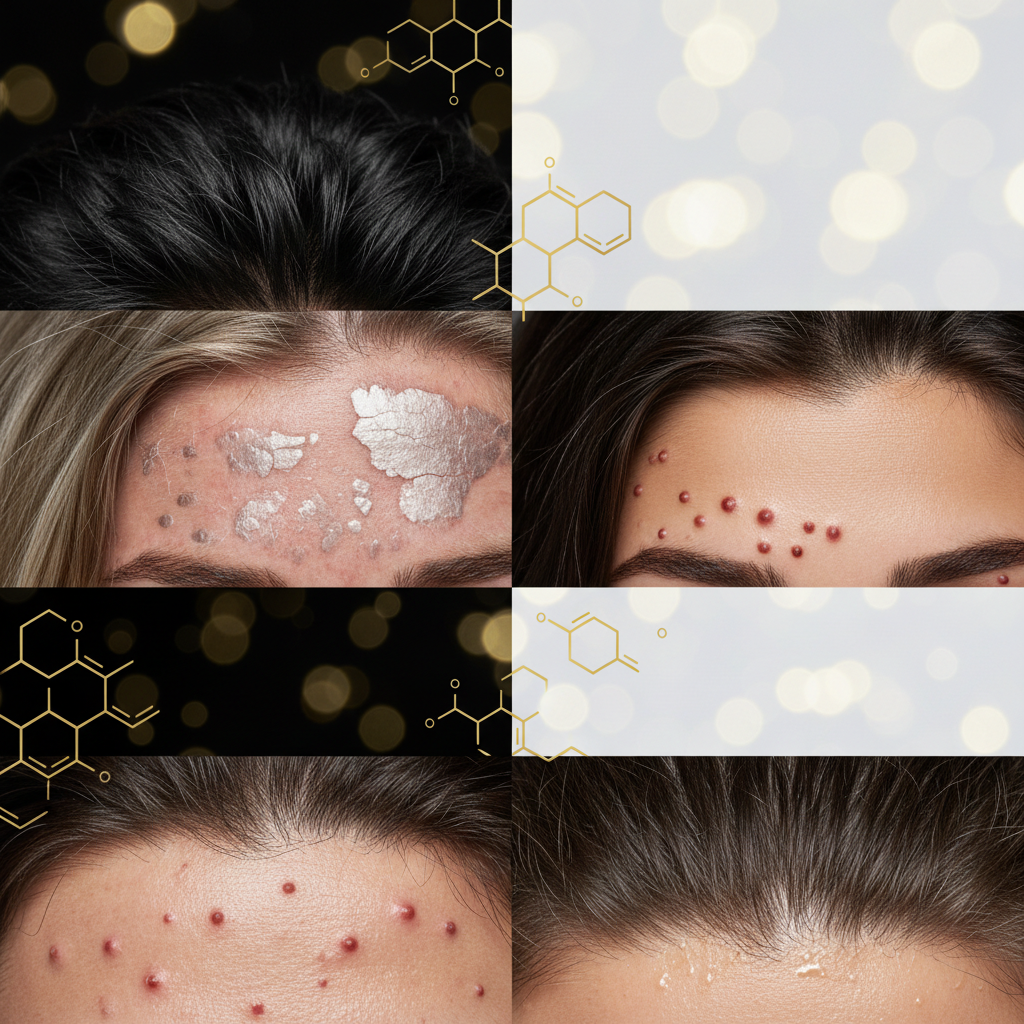
Dandruff (Pityriasis capitis)
Characterised by fine, loose, white or grey flakes accompanied by mild itching. Salicylic acid loosens the micro-aggregates of corneocytes before they shed visibly onto clothing.
Seborrhoeic dermatitis
Marked by greasy, yellowish scales, erythema, and intense itching, typically concentrated around the crown, hairline, and retroauricular zones. Salicylic acid breaks down the thick, sebum-rich biofilm that shelters resident Malassezia yeasts.
Scalp psoriasis
Psoriasis produces thick, silvery-white plaques that adhere stubbornly to the scalp skin. In clinical dermatology, salicylic acid preparations (often up to 3% to 5% under medical supervision) serve as indispensable pre-treatments to soften and lift plaques, allowing topical corticosteroids or phototherapy to work effectively.
Follicular congestion and product build-up
Heavy silicones, waxes, dry shampoos, and persistent sweat can combine with natural sebum to form dense residue around the follicle opening. A mild salicylic acid wash effectively dissolves these hydrophobic deposits.
Comparison: Salicylic acid versus other scalp actives
Understanding how salicylic acid compares to alternative and complementary scalp ingredients helps pinpoint the right formulation for your needs:
| Active Ingredient | Primary Action | Target Condition | Typical Concentration | Mechanism |
|---|---|---|---|---|
| Salicylic Acid | Keratolytic and sebum-clearing | Thick scaling, greasy dandruff, clogged pores | 1.5% to 3.0% | Dissolves intercellular lipids and desmosomes |
| Glycolic Acid | Superficial exfoliation | Dry scalp, mild surface roughness | 2.0% to 5.0% | Loosens surface corneocytes (water-soluble only) |
| Piroctone Olamine | Antifungal and antimicrobial | Dandruff, seborrhoeic dermatitis | 0.5% to 1.0% | Destroys Malassezia fungal cell membranes |
| Ketoconazole | Broad-spectrum antifungal | Moderate to severe seborrhoeic dermatitis | 1.0% to 2.0% | Inhibits fungal ergosterol synthesis |
| Coal Tar | Antimitotic and keratoplastic | Scalp psoriasis, severe seborrhoeic dermatitis | 0.5% to 5.0% | Slows epidermal cell synthesis |
Signs of an unhealthy scalp barrier
Before introducing exfoliating acids, evaluate whether your scalp concerns stem from hyperkeratosis (excess scaling) or a compromised moisture barrier. Using acids on an impaired barrier will worsen symptoms. Look for these distinguishing signs:
- Hyperkeratosis (benefits from salicylic acid): Thick, greasy crusting; large visible flakes that cling to hair shafts; sensation of heavy, oily build-up within 24 hours of washing; persistent follicular bumping without severe stinging.
- Barrier impairment (worsened by salicylic acid): Tight, burning sensation during or after washing; widespread stinging when applying clean water or gentle products; fine, powdery flakes accompanied by parched, red skin; absence of excess sebum.
If your scalp shows signs of barrier damage, hold off on active chemical exfoliants. Focus on gentle, pH-balanced cleansing and barrier repair until the skin recovers its natural equilibrium.
How to use salicylic acid on the scalp safely
Incorporating salicylic acid into your haircare routine requires a measured approach. Over-cleansing can strip essential surface ceramides, prompting the sebaceous glands to produce excess rebound oil.
- Select the appropriate delivery format: Rinse-off shampoos and scalp cleansers containing 1.5% to 2% salicylic acid are the safest and most practical choice for routine home care. Leave-on serums (typically 0.5% to 1%) should be reserved for localised, stubborn plaques.
- Mind the contact time: For a rinse-off salicylic acid shampoo, massage gently into the wet scalp with your fingertips (never your nails). Allow the lather to sit undisturbed on the scalp for 3 to 5 minutes. This pause gives the acid time to dissolve corneodesmosome bonds before you rinse.
- Control your frequency: Begin by using the treatment once or twice weekly. If scaling is severe, you may temporarily increase to three times weekly. Once flakes and build-up clear, drop back to once weekly or fortnightly for maintenance.
- Target the roots, protect the lengths: Salicylic acid is an effective keratolytic on living skin, but it can dry out the non-living keratin fibres of the hair shaft. Apply the active formulation strictly to the scalp and hair roots. Follow with a rich conditioning treatment from the mid-lengths to the ends to preserve hair fibre hydration and tensile strength.
When the cause is something else
Not all scalp flaking and irritation responds to keratolytic treatment. If your symptoms do not improve after three to four weeks of careful salicylic acid use, the underlying cause may require an entirely different clinical strategy:
- Contact dermatitis: Allergic or irritant reactions to fragrance components, preservatives (such as methylisothiazolinone), or harsh surfactants can mimic dandruff with intense itching and shedding.
- Tinea capitis: A fungal ringworm infection common in children and young adults that causes scaling, patchy hair shedding, and black dots where hair fibres break off at the skin level. This requires systemic oral antifungals, not topical acids.
- Cicatricial (scarring) alopecia: Conditions like lichen planopilaris or frontal fibrosing alopecia cause inflammation, itching, and scaling directly around follicular units, followed by permanent follicular destruction. These require immediate medical intervention from a dermatologist.
When to seek professional advice
Consult a GP, dermatologist, or qualified trichologist if you experience any of the following:
- Scalp pain, persistent swelling, or raw, bleeding patches
- Yellow crusting accompanied by honey-coloured weeping or pus (potential bacterial infection)
- Rapid, patchy hair loss alongside scalp scaling
- No noticeable improvement after four weeks of consistent, appropriate over-the-counter care
- Severe itching that interrupts your sleep or causes open excoriations from scratching
Everyday support: the role of Watermans in scalp care
A balanced scalp environment is the true foundation of strong-feeling, healthy-looking hair. When using targeted active routines, supporting the scalp with high-calibre, nourishing formulations keeps hair resilient against daily stressors. Watermans products are formulated to foster an optimal scalp environment. Their nutrient-dense shampoo, conditioner, and scalp elixir lines focus on delivering botanical extracts, caffeine, biotin, and rosemary directly to the scalp and root zone. This helps strengthen hair against mechanical breakage and leaves both scalp and hair feeling revitalised, moisturised, and thoroughly balanced.
Frequently asked questions about Salicylic Acid for Scalp Health
Can I use salicylic acid on colour-treated hair?
Salicylic acid cleanses the scalp effectively, but its lower pH and clarifying action can lift artificial colour molecules from the hair fibre if washed through the mid-lengths frequently. To safeguard your colour, apply the treatment strictly to the scalp skin and root zone. Keep application times under five minutes, and follow immediately with a colour-safe, moisture-replenishing conditioner on the lengths and ends.
Does salicylic acid cause hair shedding or hair loss?
Salicylic acid does not cause follicular hair loss. However, when you first start using it, you may observe a brief increase in shedding during your wash. This occurs because the acid frees hairs that had already detached from the follicle (telogen phase) but were held flat against the scalp by sebum and hyperkeratotic crusts. This temporary release is normal and should subside quickly.
Can Salicylic Acid for Scalp Health clear up scalp acne?
Yes. Scalp acne and superficial folliculitis frequently occur when excess sebum and dead skin cells clog follicular funnels, creating an anaerobic environment for bacteria to multiply. By penetrating deep into the pore lining and removing sebum plugs, salicylic acid reduces the blockages that lead to tender papules and pustules along the hairline and crown.
How long does it take for salicylic acid to improve scalp scaling?
Most individuals notice a reduction in surface flaking, oiliness, and itching within two to three washes. For chronic conditions such as seborrhoeic dermatitis or thick psoriatic plaques, consistent use two to three times per week over a period of three to four weeks is generally required to achieve smooth, clear scalp skin.
Caring for your scalp long term
Maintaining a clean, comfortable, and well-regulated scalp is entirely achievable with the right approach. Incorporating Salicylic Acid for Scalp Health provides a scientifically grounded, non-abrasive method for sweeping away cellular build-up, regulating surface lipids, and creating an ideal environment for natural hair growth. By respecting your skin barrier, avoiding overuse, and pairing chemical exfoliation with supportive hydration, you can resolve stubborn scaling and ensure your hair looks and feels its best from root to tip.
Sources and references
- American Academy of Dermatology Association. "Dandruff: How to treat." AAD Public Health Resources.
- National Health Service (NHS). "Seborrhoeic dermatitis." NHS Conditions.
- British Association of Dermatologists. "Pityriasis capitis and seborrhoeic dermatitis management guidelines."
- National Institute for Health and Care Excellence (NICE). "Head lice and scalp conditions: Topical keratolytics in hyperkeratotic skin disorders." Clinical Knowledge Summaries.
- Journal of the American Academy of Dermatology. "Efficacy of salicylic acid shampoos in the management of scalp scaling."
Find these ingredients in Watermans products
- Zinc: you will find this ingredient in our Hair Vitamins.