Safe Blow Drying Techniques: The Evidence-Based Guide
8 min read ·
Master safe blow drying techniques to protect your hair from thermal breakage, preserve the cuticle, and dry strands efficiently based on dermatological research.
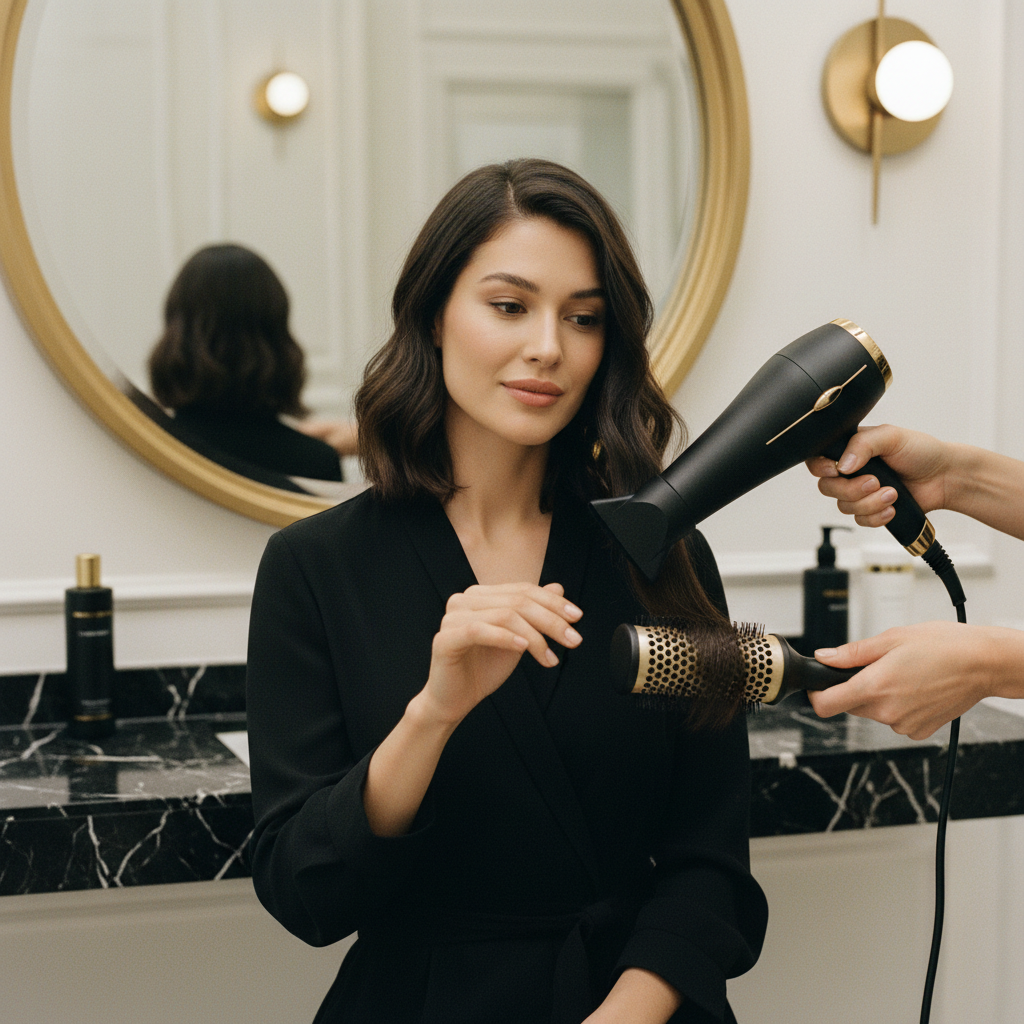
Quick answer: Adopting safe blow drying techniques protects the delicate cuticular layers of the hair fibre from thermal degradation, moisture evaporation, and structural cracking. Mastered safe blow drying techniques involve keeping the nozzle at least 15 centimetres away, continuously moving the airflow, using medium heat settings, and applying a quality heat protectant beforehand. However, while these methods minimise physical and thermal strain, they cannot reverse pre-existing cortex fractures or chemical trauma already present within the hair shaft.
Key takeaways
- Wet hair swells and weakens, leaving the keratin cortex exceptionally vulnerable to mechanical stress and excessive heat.
- Research shows that holding a hairdryer 15 centimetres away with continuous motion causes less cell membrane complex damage than prolonged natural air-drying.
- Bubble hair deformity and surface cuticle cracking occur when temperatures exceed 140 to 160 degrees Celsius on damp fibres.
- Heat protectants containing silicones or specialised polymers create a thermal barrier that slows heat conduction into the hair cortex.
- Always finish drying sessions with a cool shot to set hydrogen bonds and smooth down lifted cuticle scales.
Safe blow drying techniques: what the evidence shows
Scientific research reveals that improper drying degrades hair structure, but surprisingly, letting hair air-dry naturally is not always harmless. A landmark study published in the Annals of Dermatology (2011) compared natural drying with varying blow-drying distances. The researchers discovered that while high heat damages the outer cuticle, natural air-drying keeps the hair fibre swollen with water for extended periods. This prolonged swelling harms the cell membrane complex (CMC), the biological glue holding the cuticular scales together.
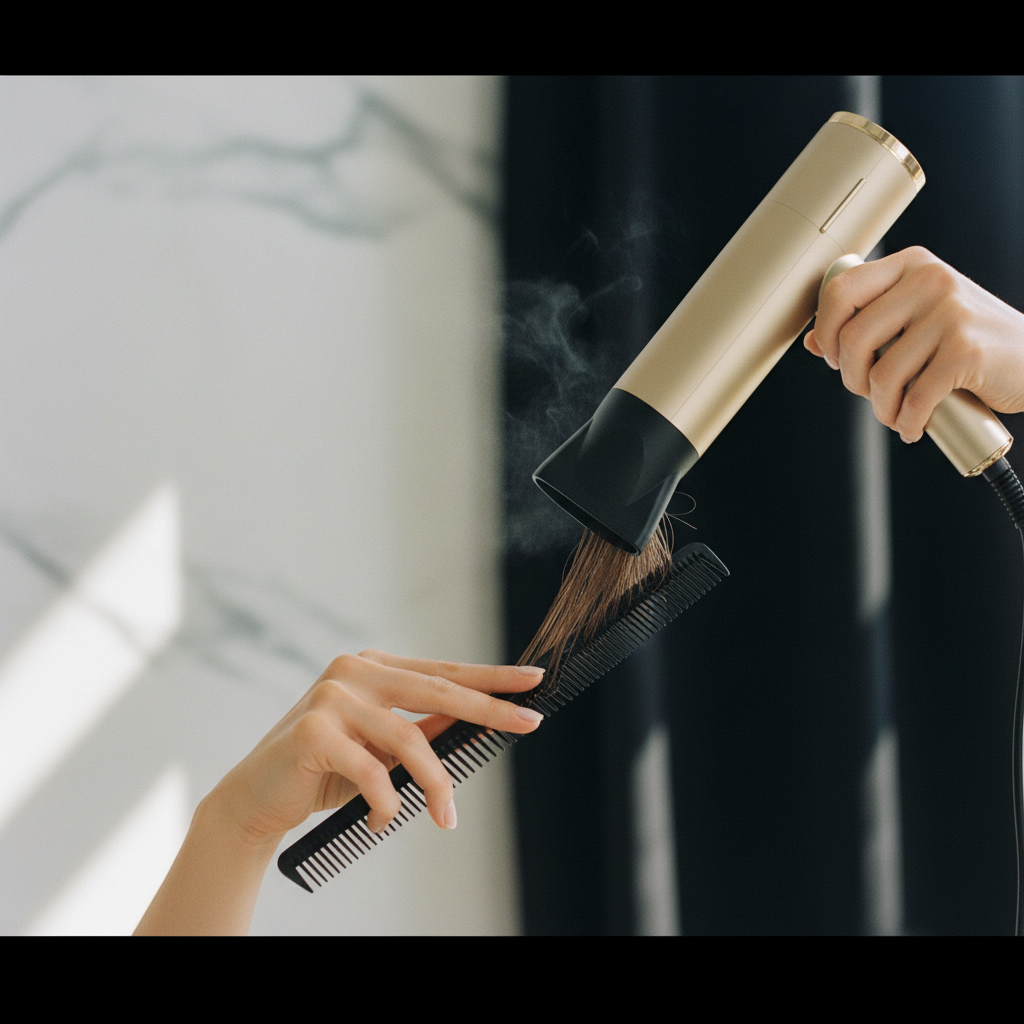
Implementing safe blow drying techniques bridges this gap. When you dry your hair using a moderate temperature from a distance of at least 15 centimetres while keeping the dryer in continuous motion, you remove moisture rapidly without raising the fibre temperature to damaging thresholds. This method prevents the prolonged internal moisture stress caused by air-drying while avoiding the thermal blistering associated with aggressive heat styling.
The primary objective of thermal styling is moisture management. Hair fibres absorb up to 30 percent of their dry weight in water during washing. Water disrupts the temporary hydrogen bonds that give hair its elasticity and shape. Controlled drying resets these bonds smoothly without scorching the structural proteins.
The biological mechanism of heat damage
To understand why careful handling matters, you must examine the internal architecture of the hair shaft. Hair consists of an outer protective cuticle, a structural cortex rich in fibrous keratin proteins, and occasionally a central medulla.
When hair is soaked, the shaft swells and cuticular scales lift. Exposing wet hair to sudden, intense heat creates rapid steam expansion inside the cortex. If the water trapped within the cortex reaches boiling point before evaporating gently through the cuticle, steam pockets form. This phenomenon, known clinically as "bubble hair deformity", creates hollow cavities along the fibre that snap under minimal tension.
Thermal degradation also targets the 18-methyleicosanoic acid (18-MEA) lipid layer that coats the outer cuticle. This lipid layer provides natural hydrophobicity, slip, and shine. Temperatures above 140 degrees Celsius strip these lipids, leaving hair porous, dry, and prone to static charge.
Step-by-step methods: what you can do
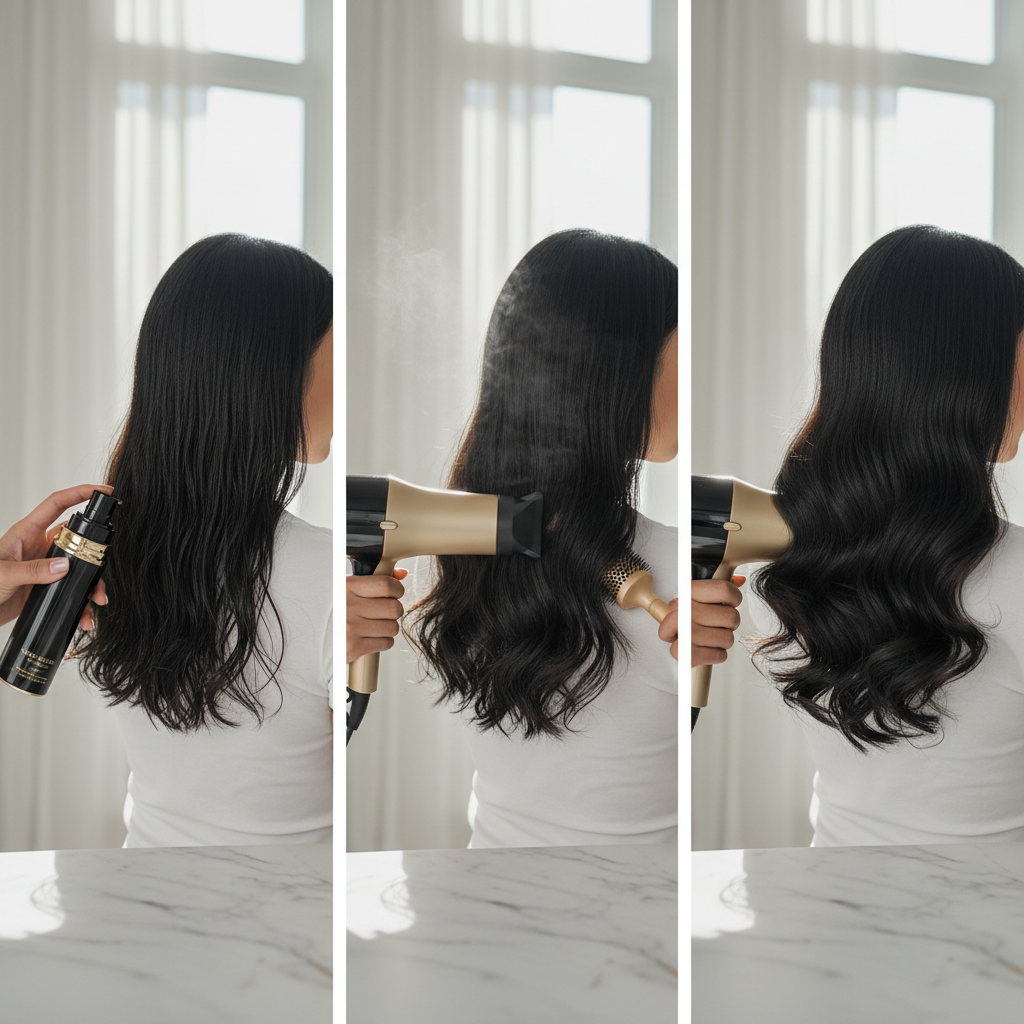
Drying your hair safely requires systematic preparation and controlled handling. Rushing the process with maximum heat almost always results in avoidable fibre breakage.
1. Prep with gentle moisture removal
Never point a hairdryer at soaking wet hair. Blot and press your strands gently with a soft microfibre towel or cotton cloth. Rubbing hair aggressively with a standard terrycloth towel causes friction, chipping cuticle edges and generating split ends. Aim to remove 50 to 60 percent of excess water before introducing heat.
2. Apply a dedicated heat protectant
Distribute an even layer of heat protectant through damp lengths and ends. Ingredients such as dimethicone, amodimethicone, or polyquaternium polymers form a protective shield across the cuticle surface. These ingredients distribute heat evenly across the shaft and slow thermal conduction, preventing localised hot spots.
3. Maintain distance and continuous motion
Hold the dryer nozzle roughly 15 to 20 centimetres away from the hair surface. Never press the nozzle directly against the hair or round brush. Keep the dryer moving steadily down the shaft from root to tip. Following the natural downward lay of the cuticles prevents scales from snagging and lifting.
4. Direct airflow with a nozzle attachment
A concentrator nozzle is essential for controlled styling. It focuses the air stream into a smooth, directional path rather than scattering fibres wildly. Wild airflow forces fibres to tangle, inducing friction and breakage while you brush.
5. Lock in the style with the cool shot
Once the section is 90 to 95 percent dry, press the cool shot button. Lowering the temperature rapidly locks temporary hydrogen bonds into place, stabilizes the keratin structure, and seals down the cuticle layer for maximum light reflection.
| Drying Technique | Cortex Stress | Cuticle Condition | Risk of Breakage | Time Required |
|---|---|---|---|---|
| High Heat, Close Contact (<5 cm) | Severe (Risk of bubble hair) | Cracked, stripped lipids | High | Fast (8 to 12 mins) |
| Prolonged Natural Air-Drying | High (Extended CMC swelling) | Intact but softened | Moderate (while wet) | Very Slow (2 to 4 hours) |
| Safe Blow Drying Techniques (15 cm, Mid-Heat) | Low (Controlled water release) | Smooth, preserved | Minimal | Moderate (15 to 20 mins) |
| Towel Rubbing Prior to Drying | Low | Chipped, abraded | High | Fast |
Signs of thermal damage to look for
Thermal damage does not manifest overnight. It builds progressively through repeated high-heat exposure. Watch for these physical indicators:
- Trichorrhexis nodosa: Tiny white dots visible along the hair shaft where the cortex has fractured internally due to excessive heat.
- Rough or raspy texture: Hair feels rough when sliding fingers from tip to root, indicating missing or chipped cuticle scales.
- Loss of elasticity: Strands snap immediately under gentle tension rather than stretching slightly and returning to shape.
- Dull, matte appearance: Heat strips the outer lipid layer, scattering light rather than reflecting it evenly.
- Persistent tangling: Lifted, damaged cuticles hook onto adjacent strands like Velcro, producing chronic knots.
When the cause may be something else
If you notice significant shedding, thinning patches, or widespread loss of density, hot tools are rarely the sole cause. It is vital to separate hair breakage along the fibre from true hair loss at the follicle level.
Hair breakage occurs when the external strand fractures due to physical, chemical, or thermal trauma. The hair bulb is absent from the snapped end. In contrast, telogen effluvium (diffuse shedding) or androgenetic alopecia (pattern thinning) originate beneath the scalp within the hair follicle. Factors such as iron deficiency, thyroid dysfunction, severe illness, or hormonal shifts trigger follicular shedding. No change in blow drying habits will resolve internal or systemic hair loss.
When to seek professional advice
Consult a qualified trichologist or dermatologist if you notice sudden handfuls of hair shedding at the root, scalp irritation, redness, or patches of bare skin. If your hair breaks off near the scalp despite using gentle styling techniques, a professional can evaluate whether past chemical treatments (such as bleaching or relaxers) have critically compromised your hair's tensile strength.
Enhancing hair resilience with Watermans
While using proper mechanical techniques preserves the hair shaft, supporting the condition of the scalp creates the foundation for stronger-feeling hair. Watermans GrowMe Shampoo and ConditionMe Conditioner are formulated to nourish the scalp environment and condition the hair fibre.
Infused with biotin, rosemary extract, caffeine, niacinamide, and argan oil, this targeted regime hydrates the scalp while coating the hair lengths with fortifying moisture. Applying ConditionMe smooths down the cuticle, reducing comb resistance and preparing damp strands to withstand the mechanical stress of round-brush styling.
Frequently asked questions about Safe Blow Drying Techniques
What are the most effective safe blow drying techniques for fine hair?
For fine hair, keep your dryer on a low-to-medium heat setting and use a concentrator nozzle held at least 15 centimetres away. Fine hair heats up much faster than coarse hair because it has a smaller diameter. Always apply a lightweight thermal protectant beforehand to prevent rapid cuticular scorching.
Is air-drying always safer than using a hairdryer?
No. Research shows that letting hair air-dry keeps the internal cortex and cell membrane complex swollen with moisture for hours. This constant swelling places physical stress on internal structures. Controlled safe blow drying techniques using medium heat at a 15-centimetre distance remove moisture quickly without damaging the fibre.
Can safe blow drying techniques prevent hair loss?
Safe drying methods prevent mechanical breakage and heat damage along the hair shaft, but they cannot treat follicular hair loss. True hair loss, such as androgenetic alopecia or telogen effluvium, originates inside the scalp follicle due to genetics, hormones, or systemic health issues, not blow-drying habits.
What temperature should my hairdryer be set to?
Dryers should ideally operate between 50 and 60 degrees Celsius at the hair surface. Temperatures exceeding 140 degrees Celsius begin to denature keratin proteins and boil water trapped within wet strands, leading to permanent structural cracks.
Should I blow dry soaking wet hair or damp hair?
Always dry damp hair, not soaking wet hair. Remove roughly 50 to 60 percent of excess moisture using a soft microfibre towel before switching on your dryer. Applying intense airflow to saturated hair takes longer and increases thermal exposure.
Summary
Mastering safe blow drying techniques allows you to style your hair efficiently without sacrificing structural integrity. By maintaining a 15-centimetre working distance, keeping airflow in constant motion, using protective products, and sealing the style with a cool shot, you safeguard the natural cuticle barrier against thermal trauma. Thoughtful daily handling ensures your hair retains its natural strength, smoothness, and shine over time.
Sources and references
- Lee, Y. Et al. (2011). "Hair Shaft Damage from Heat and Drying Time of Hair Dryer." Annals of Dermatology, 23(4), 455-462.
- Robbins, C. R. (2012). Chemical and Physical Behavior of Human Hair. 5th Edition, Springer-Verlag.
- British Association of Dermatologists. (2020). "Hair Care and Thermal Damage." BAD Clinical Guidelines.
- Sinclair, R. D. (2007). "Healthy Hair: What Is It?" Journal of Investigative Dermatology Symposium Proceedings, 12(2), 2-5.
Find these ingredients in Watermans products
- Niacinamide: you will find this ingredient in our Hair Mask.