The Role of the Cell Membrane Complex in Hair Structure
8 min read ·
Understand the role of the cell membrane complex in human hair, how it binds cuticle scales, controls moisture diffusion, and what causes its breakdown.
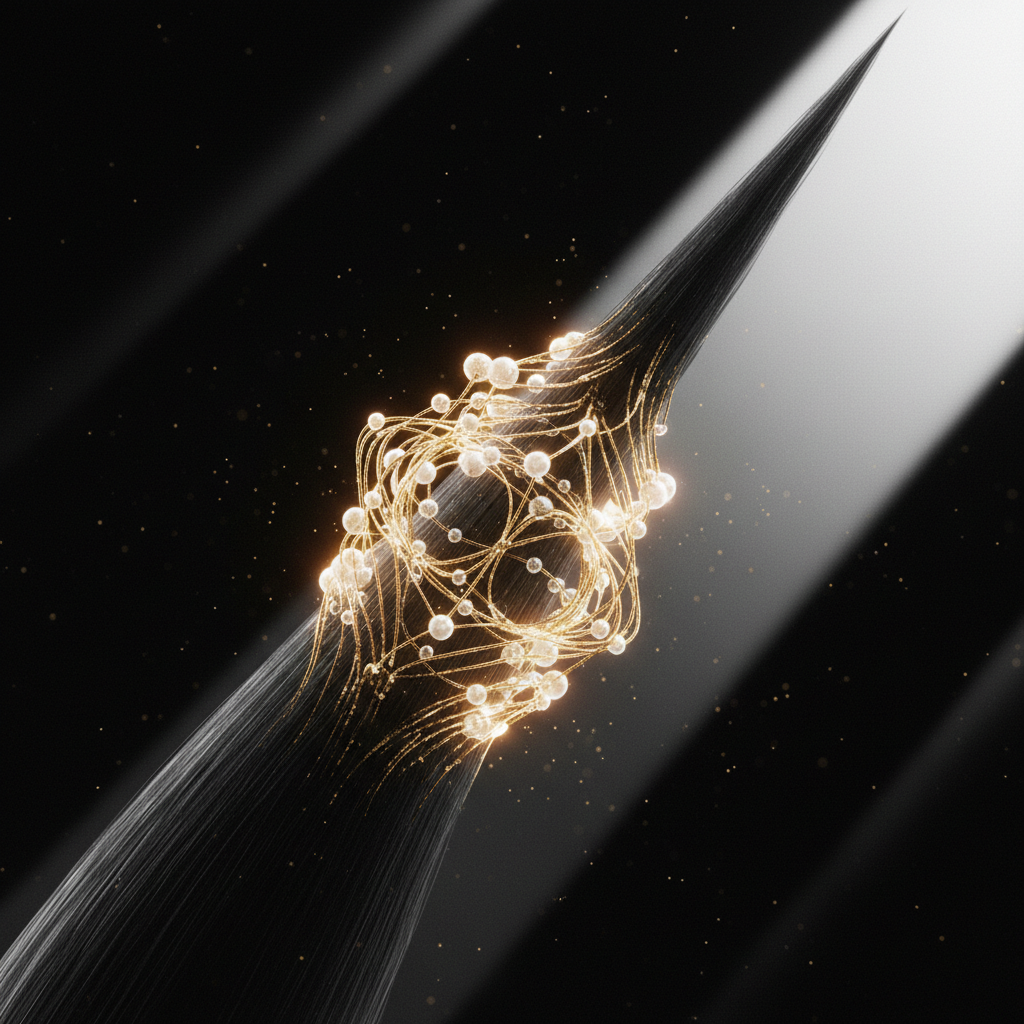
Quick answer: The Role of the Cell Membrane Complex (CMC) is to serve as the biological intercellular cement that binds cuticle scales together and anchors them to the hair cortex. Accounting for roughly 2 to 3 percent of total fibre weight, it forms continuous pathways for moisture, lipids, and chemical penetration throughout the strand. While vital for fibre cohesion and elasticity, the CMC cannot regenerate biologically once damaged by chemical processing, heat, or weathering; cosmetic treatments can only temporarily patch its lipid and protein components.
Key takeaways
- The cell membrane complex acts as an intercellular adhesive that bonds outer cuticle layers and internal cortical cells.
- It consists of three primary distinct structural layers: a non-proteinaceous lipid-rich delta layer sandwiched between two proteinaceous beta layers.
- The CMC acts as the primary diffusion pathway through which water, dyes, perms, and active cosmetic ingredients travel into the hair shaft.
- Chemical lifting, aggressive bleaching, and thermal tools strip the essential 18-methyl eicosanoic acid (18-MEA) lipids bound within the CMC, making hair porous and prone to snapping.
- Because hair is non-living tissue, lost CMC lipids cannot be rebuilt by the body. Cosmetic conditioning temporarily replenishes surface slip and moisture barriers.
The Role of the Cell Membrane Complex: what the evidence shows
Microscopic and biochemical analyses demonstrate that human hair is not a single solid filament, but an intricate composite structure. Within this matrix, the role of the cell membrane complex is to maintain mechanical integrity across the entire hair shaft. The CMC spans the intercellular spaces throughout the hair fibre, measuring approximately 25 to 30 nanometres in thickness between individual cells.
Without the CMC, the protective cuticle scales would shed instantly through daily friction, leaving the delicate cortical core exposed to immediate destruction. The CMC is divided into two distinct anatomical regions:
- Cuticular CMC: Found between overlapping cuticle cells, securing up to 10 layers of protective scales to one another and keeping the outer shield impermeable.
- Cortical CMC: Found between the elongated spindle-shaped cortical cells deeper within the strand, providing structural elasticity and tensile resistance against bending.
Research reveals that the CMC functions as the main route of trans-fibre diffusion. Because the protein keratin within hair cells is heavily cross-linked with rigid disulphide bonds, large molecules cannot easily pass directly through cell walls. Instead, water, treatment chemicals, and cosmetic agents travel along the lipid pathways provided by the cell membrane complex. When this complex is sound, water absorption happens at a measured, controlled rate. When disrupted, the hair absorbs water excessively, swelling rapidly and snapping under minor mechanical tension.
| Structural Component | Primary Composition | Thickness / Share | Primary Biological Function |
|---|---|---|---|
| Beta Layers (Outer) | Hydrophobic proteins, cysteine residues | ~5 nm each | Binds lipid layer to cell walls via peptide cross-links |
| Delta Layer (Central) | Free fatty acids, ceramides, cholesterol | ~15 to 20 nm | Acts as an intercellular cushion and moisture diffusion channel |
| 18-MEA Layer | 18-Methyl eicosanoic acid (branched fatty acid) | Monolayer (~1 nm) | Provides hydrophobic surface shielding and low friction |
| Cortical CMC | Low-sulphur proteins and polar lipids | ~1 to 2% of cortex | Absorbs torsional shear during bending and styling |
The biochemical mechanism: lipids and protein layers
To understand the durability of hair, one must look at how the cell membrane complex is assembled. Electron microscopy reveals a distinctive trilaminar sandwich structure, often described as a beta-delta-beta arrangement.
The central delta layer consists largely of hydrophilic and neutral lipids, including free fatty acids, ceramides, and cholesterol sulphate. Flanking the delta layer on either side are the beta layers, which are made of protein fractions rich in basic amino acids. These beta layers link directly to the exterior membranes of the adjacent cortical or cuticle cells.
At the outermost surface of the cuticle, the cell membrane complex hosts a specialised lipid known as 18-methyl eicosanoic acid (18-MEA). This branched-chain fatty acid is covalently bonded via thioester linkages to the underlying protein structure. 18-MEA acts as hair's primary water repellent. It creates an ultra-slick, hydrophobic surface that forces water droplets to roll off, prevents excessive moisture absorption, and keeps the coefficient of friction low so hairs slide past each other without tangling.
What happens when the CMC breaks down?
When hair undergoes harsh alkaline treatments (such as permanent hair dyes, bleaching, or chemical relaxers at pH 9.0 to 11.0), the thioester bonds holding 18-MEA are cleaved. The removal of this lipid layer marks the initial degradation of the cell membrane complex.
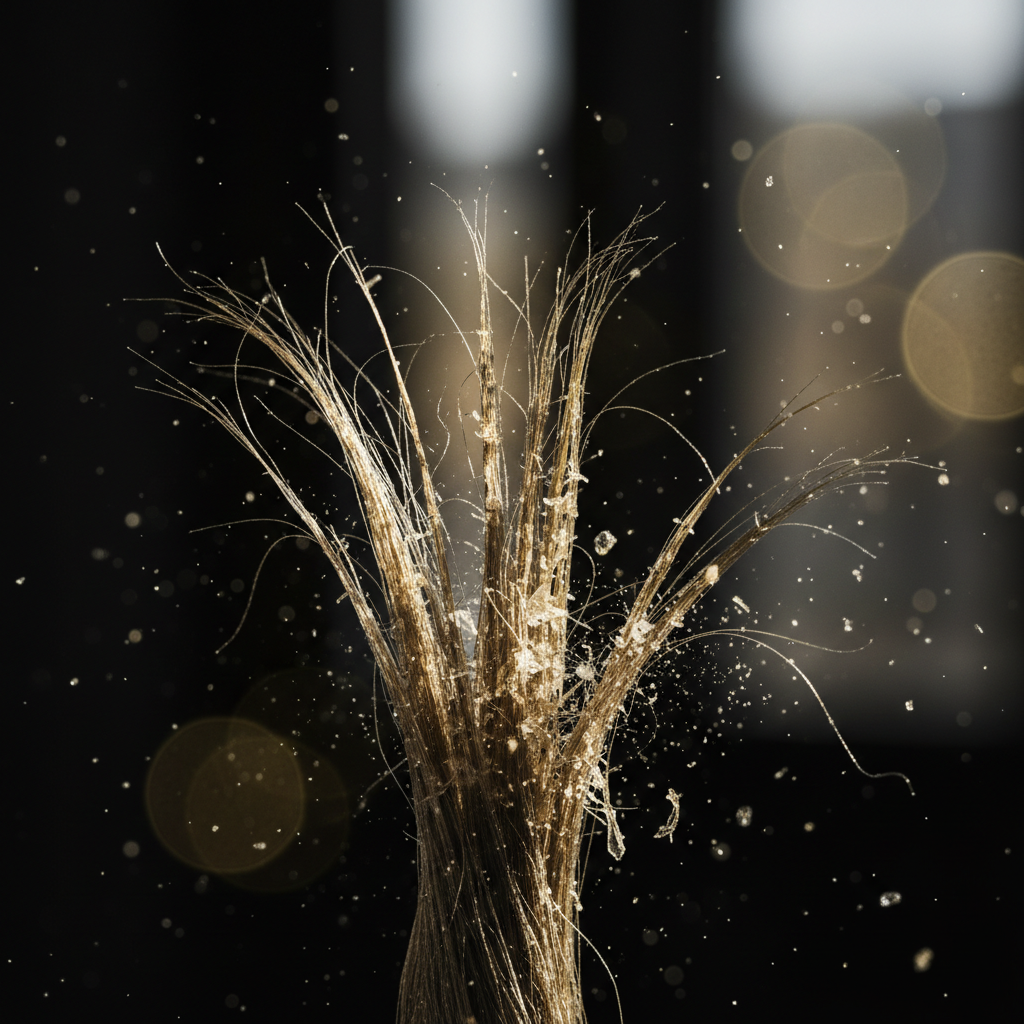
Repeated chemical exposure dissolves the lipid components of the internal delta layer. When these lipids are stripped, the glue fails:
- Cuticle scales begin to lift away from the shaft (delamination), catching on neighbouring strands.
- Hair shifts from hydrophobic (water-repelling) to hydrophilic (water-attracting).
- The strand absorbs excessive water in high humidity, causing hygral fatigue as the cortex swells and shrinks repeatedly.
- The fibre loses torsional resilience. Instead of flexing during brushing, the cuticle fractures and the fibre snaps along the shaft.
This fibre snapping is hair breakage. It is critical to differentiate breakage caused by CMC breakdown from follicular hair shedding (telogen effluvium) or genetic hair loss (alopecia). CMC degradation occurs entirely outside the scalp on the non-living fibre.
Signs of cell membrane complex degradation
Stylists and individuals can identify depleted CMC through several tactile and visual cues:
- Rough, dry texture: The hair feels raspy when stroked backwards from tip to root, indicating lifted, unglued cuticle scales.
- Extreme porosity: Strands sink quickly when submerged in water or dry unevenly, absorbing moisture like a sponge yet feeling parched minutes later.
- Constant knotting: The absence of the boundary lipid layer increases surface friction, leading to severe tangling.
- Loss of elasticity: Wet hair stretches abnormally without bouncing back, eventually tearing rather than recovering its shape.
- Dull appearance: A disordered, poorly cemented cuticle scatters light unevenly instead of reflecting a smooth, glossy shine.
What you can do to protect and reinforce the CMC
Because the cells of the hair shaft are biologically dead, the body cannot generate new lipids to replace degraded CMC. However, targeted cosmetic habits can minimise further loss and mimic the missing intercellular glue:
1. Control chemical alkalinity
Avoid overlapping high-lift bleach or relaxers onto previously treated lengths. Use acidic bonding treatments or post-colour rinses (pH 4.0 to 5.5) immediately after salon services to help compress the cuticle layer back against the underlying CMC.
2. Replenish surface and inter-scale lipids
Cosmetics containing ceramides, bio-identical fatty acids, and biomimetic 18-MEA compounds can temporarily integrate into the lipid voids of the delta layer. These ingredients smooth the cuticle interface, restore partial hydrophobicity, and significantly reduce combing friction.
3. Lower heat exposure
Direct heat from flat irons and curling wands above 185 degrees Celsius melts surface lipids and degrades the proteinaceous beta layers of the CMC. Always apply thermal protectors containing functional silicones or high-slip polymers that distribute heat evenly across the hair shaft.
4. Support mechanical resilience with targeted care
Watermans offers formulations developed to support overall hair vitality and fibre strength. Watermans GrowMe Shampoo and ConditionMe Conditioner deliver nutrient-rich botanicals, hydrolysed proteins, and smoothing emollients designed to condition stressed cuticle layers, reduce mechanical breakage, and leave the hair shaft looking smoother, fuller, and noticeably glossier from root to tip.
Frequently asked questions about The Role of the Cell Membrane Complex
What is the primary role of the cell membrane complex in hair?
The primary role of the cell membrane complex is to act as an adhesive matrix that cements cuticle and cortical cells together. It maintains structural coherence, provides flexibility during bending, and controls how water and chemical treatments diffuse through the fibre.
Can a damaged cell membrane complex repair itself?
No, the cell membrane complex cannot repair itself biologically. Hair fibres consist of non-living, non-cellular keratin structures. Once the lipid bonds or protein layers within the CMC are broken by bleaching, heat, or styling, they cannot regenerate. Cosmetic masks, ceramides, and conditioners can temporarily coat and seal these gaps, but continuous maintenance is necessary.
How does bleaching affect the cell membrane complex?
Bleaching uses strong alkaline agents (usually pH 9.0 to 11.0) and hydrogen peroxide to oxidise melanin in the cortex. This harsh chemical reaction strips away the protective 18-MEA lipid layer and dissolves portions of the lipid-rich delta layer in the CMC, leading to scale lifting, increased porosity, and structural weakness.
Is hair breakage the same as hair shedding?
No, hair breakage is distinctly different from shedding. Breakage happens when the physical fibre snaps due to mechanical stress or degraded internal structures like the cell membrane complex. Shedding occurs at the scalp when the hair follicle naturally releases a club hair at the end of the telogen phase.
How do ceramides support the cell membrane complex?
Ceramides are natural structural lipids found within the delta layer of the cell membrane complex. In cosmetic haircare products, biomimetic ceramides slot into damaged voids between lifted cuticle cells, helping to temporarily restore moisture barriers, reduce water absorption, and boost hair suppleness.
Summary
The Role of the Cell Membrane Complex is fundamental to the strength, flexibility, and outer defence of the hair shaft. By binding individual cuticle scales to one another and keeping cortical cells aligned, this ultra-thin lipid-protein sandwich governs hair resilience. While it cannot be restored naturally once compromised by aggressive chemical treatments or thermal tools, conscious styling practices, acidic sealants, and biomimetic lipid treatments can shield the CMC from premature degradation, keeping hair visibly resilient and protected against day-to-day breakage.
Sources and references
- Robbins, C. R. (2012). Chemical and Physical Behavior of Human Hair. 5th Edition, Springer-Verlag New York.
- Swift, J. A. (1999). "The hair surface and its role in hair grooming." International Journal of Cosmetic Science, 21(4), 227-239.
- Wortmann, F. J., & Wortmann, G. (2010). "The role of the cell membrane complex in human hair." Journal of Cosmetic Science, 61(1), 31-40.
- Cruz, C. F., et al. (2016). "Human hair characteristics: A review on the role of the cell membrane complex and cuticle layers." Biomacromolecules, 17(10), 3201-3212.