Repairing Split Ends: The Biological Reality and Practical Care
9 min read ·
Can you truly repair split ends? Learn the science behind hair breakage, temporary cosmetic menders, and proven ways to protect damaged hair fibres.
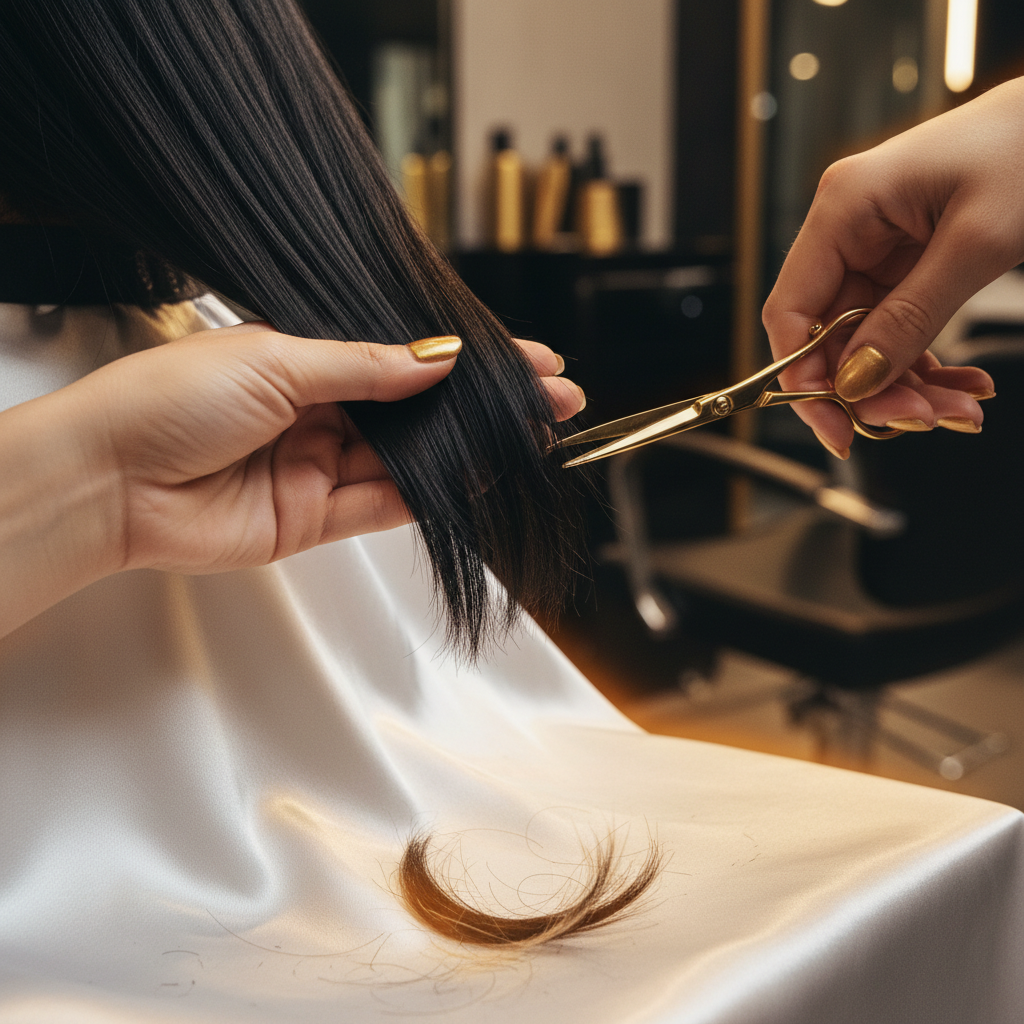
Quick answer: With Repairing Split Ends, biological science offers a firm reality check: hair fibre is non-living tissue, meaning split ends cannot be permanently healed, re-fused, or regenerated once broken. Cosmetic formulations can temporarily glue frayed keratin fibrils together, smooth the cuticle, and conceal structural damage until the next wash. However, the only genuine, permanent fix for split ends is cutting off the damaged portion to prevent longitudinal tearing further up the hair shaft.
Key takeaways
- Hair is dead keratinised tissue; genuine biological repair of fractured ends is physiologically impossible.
- Cosmetic serums and conditioners use cationic polymers, silicones, and polyquaterniums to temporarily bind frayed fibres together via adhesion.
- Left untrimmed, split ends (trichoptilosis) propagate upward along the hair shaft, turning mild tip wear into severe structural breakage.
- Heat tools above 185°C, chemical bleaching, aggressive brushing, and UV radiation accelerate cuticle erosion and cortex splitting.
- Preventive care, including regular trims every 6 to 10 weeks, lubricates cuticles and halts damage before it starts.
Repairing Split Ends: what the evidence shows
Research published in cosmetic and dermatological literature demonstrates that Repairing Split Ends via topical products is strictly temporary and cosmetic. When hair splits, the protective outer cuticle layers have worn away completely, exposing the inner cortex. Under stress, the cortex separates along its vertical microfibrillar lines, producing the characteristic split tip known technically as trichoptilosis.
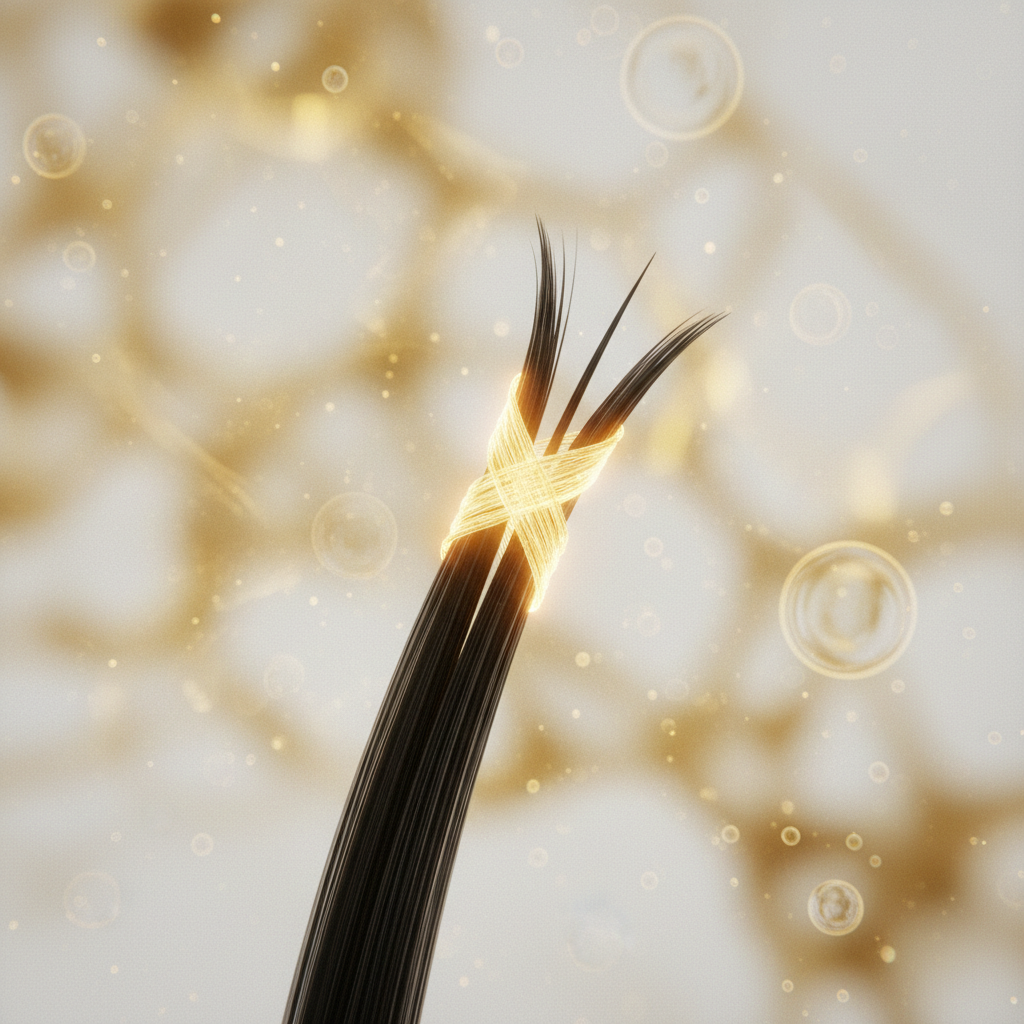
Studies evaluating split-end mending agents show that specific polymer blends, particularly those pairing positively charged cationic polymers with polyanions (complex coacervates), can form adhesive bridges between separated cortical fragments. Optical and scanning electron microscopy (SEM) confirms that these products temporarily seal the gap, reducing the visual appearance of split tips by 60 to 90 percent after application.
However, this seal relies solely on physical and electrostatic bonding. Tensile testing reveals that mended split ends regain very little of their original mechanical tensile strength. Furthermore, washability trials demonstrate that standard surfactant cleansing strips away the polymer matrix, reopening the split end immediately. The evidence shows that cosmetic mending improves combability and optical shine while shielding the exposed core from instant mechanical friction, but it does not reverse the damage.
What the evidence does not show
Marketing campaigns frequently claim that serums, masks, or oils "rebuild", "fuse", or "permanently fix" damaged ends. The scientific literature does not support these claims.
There is currently no published clinical or lab evidence showing that any topical cosmetic can biologically restore the broken disulphide, hydrogen, and salt bonds of separated cortical fibres to an intact state. Hair contains no living cells, vascular supply, or metabolic machinery to synthesise new structural proteins. Protein treatments such as hydrolysed keratin or wheat protein temporarily fill small microscopic pits in the cuticle, but they cannot weld severed macro-fibres back into a continuous unit. Relying on products instead of cutting damaged hair allows the split to travel upward, sacrificing length in the long term.
The biological and physical mechanism of split ends
To understand split ends, you must examine the architecture of the hair shaft. Healthy hair consists of an outer protective cuticle made of overlapping scale-like cells (5 to 10 layers deep), wrapped around an elongated cortex packed with keratin intermediate filaments embedded in a sulphur-rich matrix.
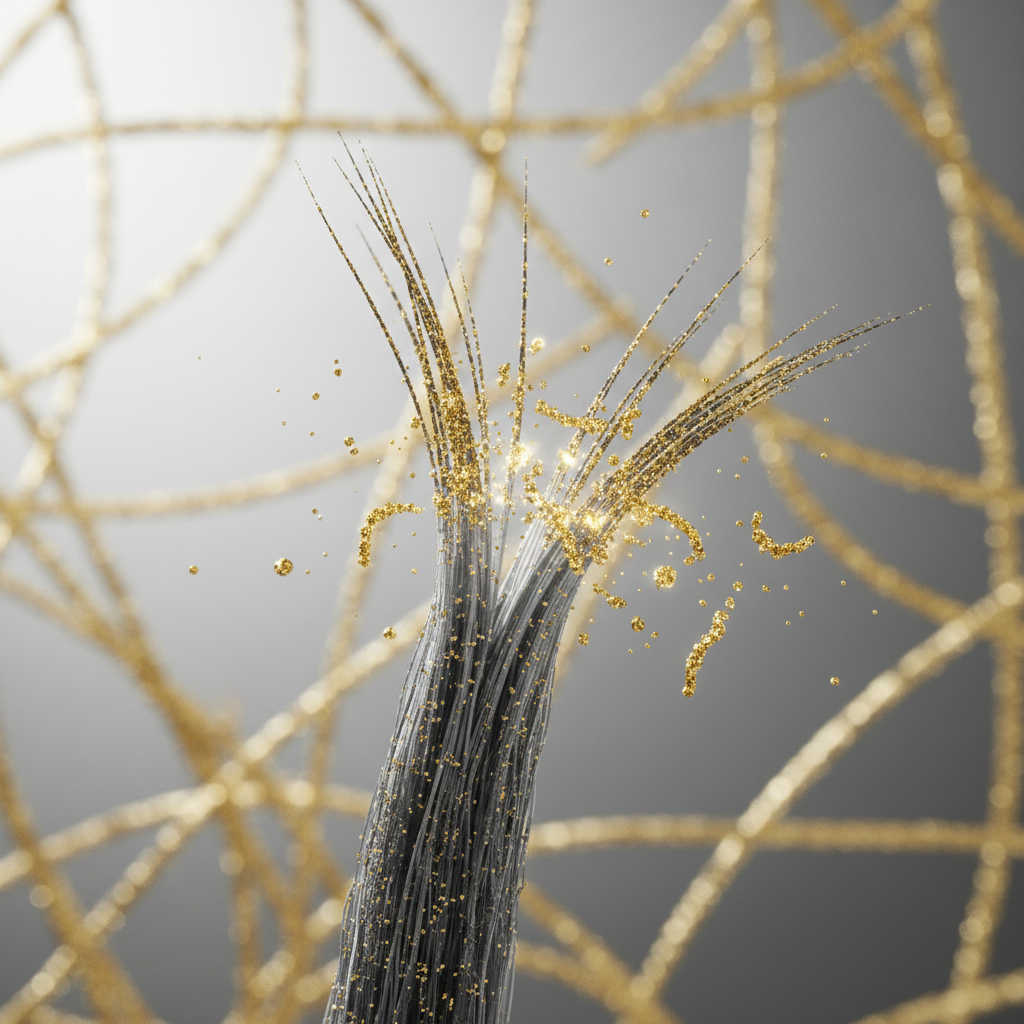
Cuticle degradation occurs through continuous physical, chemical, and thermal wear:
- F-layer degradation: The outermost lipid barrier, composed predominantly of 18-methyleicosanoic acid (18-MEA), is stripped away by alkaline processes (such as bleaching or permanent dyeing) and ultraviolet light. This transforms the cuticle surface from hydrophobic (water-repellent) to hydrophilic (water-absorbing).
- Cuticle chipping and loss: Without the lubricating 18-MEA layer, friction between fibres rises sharply. Mechanical forces from detangling, along with heat-induced moisture boiling from flat irons above 185°C, cause the edges of cuticle scales to lift, crack, and chip away.
- Cortical exposure: Once the protective cuticle shell erodes, the inner cortex is exposed to ambient humidity and mechanical abrasion.
- Fibril delamination: The cortex has high longitudinal strength but relatively low transverse cohesion. Tension and shear forces cause the keratin microfibrils to separate lengthwise, producing a split.
Intact Fibre: [Cuticle Cuticle Cuticle] -> [Dense Cortex Core]
Early Damage: [Chipped / Lifted Cuticle] -> [Exposed Cortical Cells]
Trichoptilosis: [Missing Cuticle Shell] -> [Separated Cortical Fibrils (Split)]
Signs and morphology of terminal fibre breakdown
Split ends do not appear in a single uniform shape. Trichologists classify end damage into several structural forms:
- The Traditional Split (Y-Split): The fibre separates cleanly into two branches at the very tip, signalling early cortical delamination.
- The Tree Split: Multiple splits branch off one side of the shaft, indicating widespread mechanical erosion on that surface.
- The Feather Split: Fine, delicate fraying at the tip resembling down feathers, common in bleached or chemically over-processed hair.
- The Candle or Tapering End: The tip narrows dramatically because the outer cuticle has peeled off entirely, though the cortex has not yet separated. This is an immediate precursor to a split.
- Trichorrhexis Nodosa (The "Dot"): Microscopic structural collapses appear as tiny white beads along the shaft. The fibre bends sharply at this weak point and snaps under minimal load.
Comparing interventions for frayed ends
| Intervention | Mechanism | Longevity | Effect on Tensile Strength | True Structural Fix? |
|---|---|---|---|---|
| Mechanical Scissors Trim | Physical excision of damaged, split cortex | Permanent until new wear occurs | High (eliminates the stress fracture point) | Yes |
| Cationic Polymer Menders | Forms an electrostatic, adhesive bridge across fibrils | Wash-to-wash | Negligible (cosmetic closure only) | No |
| Silicones (e.g. Dimethicone) | Lubricates and forms a hydrophobic sheath, reducing friction | Wash-to-wash | None (reduces further mechanical friction) | No |
| Hydrolysed Protein Masks | Adsorbs to surface gaps, temporarily increasing mass | 1 to 3 washes | Modest temporary surface reinforcement | No |
| Plant Oils (e.g. Argan, Coconut) | Coats outer fibre, penetrates slightly to slow water uptake | Until washed | None (improves slip and softens fibre) | No |
Practical steps: what you can do to manage and prevent damage
Because damaged hair cannot biologically regenerate, hair care strategy must focus on physical removal of existing splits alongside strict mechanical preservation of intact fibres.
1. Execute precise mechanical trims
The most effective way to eliminate split ends is using sharp hairdressing shears to trim 5 to 15 mm above the visible split. Using blunt household scissors crushes the fibre tip, creating fresh mechanical trauma that splits again within days. Regular maintenance trims every 6 to 10 weeks prevent minor wear from ascending into the mid-lengths.
2. Control heat styling temperatures
Thermal degradation of alpha-keratin accelerates rapidly above 160°C, and structural damage to the crystalline protein core occurs past 185°C. Always dry hair on medium settings, keep styling irons below 180°C, and apply a heat-protective formula containing polymers that dissipate heat transfer across the fibre.
3. Minimize wet mechanical stress
Hair fibres swell when wet, increasing shaft diameter and lowering tensile resilience by roughly 30 to 50 percent. Never brush wet hair vigorously with rigid bristles. Instead, use a wide-tooth comb or flexible detangling brush, working upwards from the tips to the roots, ideally after applying a leave-in conditioner to provide slip.
4. Restore surface lubricity
Because damaged tips lack 18-MEA, they require external conditioning agents. Fatty alcohols (cetyl, stearyl alcohol), quaternary ammonium compounds (behentrimonium chloride), and protective silicones reduce inter-fibre friction by up to 80 percent, preventing the snagging that tears cortical bundles apart.
When the cause may be something else
If hair is breaking rapidly across the mid-lengths rather than just splitting at the tips, investigate beyond standard styling habits:
- Chemical over-processing: Repeated high-lift bleaching, hydroxide relaxers, or perms permanently strip the cystine content from hair, causing generalised trichorrhexis nodosa rather than simple end splits.
- Internal health and nutritional deficiencies: Severe iron deficiency (low ferritin), zinc deficiency, or protein-energy malnutrition can alter hair shaft synthesis in the follicle, yielding weak, structurally defective fibres that break under negligible tension.
- Telogen effluvium confusion: Patients frequently confuse shedding with breakage. If hairs shed from the root, they will display a tiny white keratin bulb at the tip. True split ends and mechanical breaks have blunted, frayed, or jagged ends without a bulb.
When to seek professional advice
Visit a registered trichologist or dermatologist if you notice sudden, diffuse breakage within a few centimetres of the scalp, if you spot multiple white nodes along the length of your hair shafts, or if your hair seems to stop gaining length despite minimal styling and heat. A professional can use polarised light microscopy to determine whether the issue is standard environmental wear or a structural hair shaft disorder, such as monilethrix or pili torti.
Supporting overall hair resilience with Watermans
Maintaining resilient, healthy-looking lengths starts with practical fibre protection and a well-nourished scalp environment. Watermans Grow Me Shampoo and Condition Me Conditioner work together to support overall fibre resilience. The formula delivers hydrolysed lupin protein, caffeine, biotin, rosemary extract, and argan oil to coat and soften dry hair, smoothing rough cuticles, reducing combing friction, and supporting fuller-looking, stronger-feeling lengths from root to tip.
Frequently asked questions about Repairing Split Ends
Can split ends ever be repaired naturally without cutting?
No. Because hair is biologically dead tissue once it emerges from the follicle, split ends cannot be healed naturally or knit back together permanently. While natural plant oils can soften the hair, increase slip, and reduce friction, they cannot mend the split cortex. Trimming away the fractured hair is the only permanent solution.
How often should I trim my hair to prevent split ends from worsening?
Most stylists and trichologists recommend trimming ends every 6 to 10 weeks, depending on your chemical processing and heat styling frequency. Removing 0.5 to 1 cm prevents split tips from travelling further up the shaft, which protects your overall hair length.
Do split end mender serums really work?
Split end serums work cosmetically, not structurally. They use specialised polymers, silicones, and proteins to bind split fibres together temporarily, improving smoothness and shine until your next shampoo. While they help protect the exposed inner cortex from friction, they wash out completely and do not permanently repair the fibre.
Why do my split ends keep coming back so quickly?
Frequent recurrence usually points to three common triggers: using dull household scissors during trims (which crushes the fibre instead of cutting it cleanly), styling with excessive heat over 185°C without protection, or detangling roughly when hair is wet and vulnerable.
Closing thoughts on Repairing Split Ends
Understanding the fundamental physical limits of Repairing Split Ends transforms how you care for your hair. Products can temporarily smooth and protect worn ends, but they cannot rewrite hair biology. The most reliable path to smooth, unbroken lengths combines proactive prevention, gentle mechanical handling, regular micro-trims with sharp tools, and friction-reducing leave-in care.
Sources and references
- Robbins, C. R. (2012). Chemical and Physical Behavior of Human Hair (5th ed.). Springer-Verlag.
- Gavazzoni Dias, M. F. (2015). Hair cosmetics: An overview. International Journal of Trichology, 7(1), 2-15.
- Sinclair, R. D. (2007). Healthy hair: what is it? Journal of Investigative Dermatology Symposium Proceedings, 12(2), 2-5.
- Cruz, C. F., et al. (2016). Human hair characteristics and methods to evaluate hair physical and chemical properties. International Journal of Cosmetic Science, 38(5), 443-453.
Find these ingredients in Watermans products
- Zinc: you will find this ingredient in our Hair Vitamins.