Protein and Moisture Balance in Hair: Science and Care Guide
9 min read ·
Understand how to achieve the ideal protein and moisture balance in hair to prevent hygral fatigue, reduce brittle breakage, and maintain optimal tensile strength.

Quick answer: The concept of Protein and Moisture Balance in Hair refers to maintaining the structural integrity of keratin while preserving adequate hydration within the hair shaft. Healthy hair requires internal cortex strength from proteins and external flexibility from water and conditioning emollients. When hair tips too far toward excess protein, it becomes brittle and snaps. When it absorbs excessive water without structural reinforcement, it turns limp, gummy, and weak. However, topical cosmetic products cannot permanently rebuild broken keratin bonds.
Key takeaways
- Hair fibres consist of roughly 65 to 90 percent keratin protein, up to 32 percent water depending on relative humidity, and small amounts of structural lipids.
- Protein treatments deposit hydrolysed amino acids on and within the cuticle to temporarily reinforce tensile strength and plug micro-gaps.
- Moisture in haircare involves both water content and the lipid-based emollients or humectants that slow down water evaporation from the cortex.
- Hygral fatigue occurs when excessive swelling and deswelling of the hair fibre degrades the cell membrane complex, causing elasticity loss.
- An imbalance manifests as distinct physical symptoms: protein overload produces stiff, dry, straw-like snapping, whereas moisture overload produces mushy, over-stretching strands.
Protein and Moisture Balance in Hair: what the evidence shows
The mechanical behaviour of human hair relies on a delicate relationship between cortex proteins and free or bound water molecules. Studies in cosmetic science demonstrate that the hair cortex provides tensile strength and elastic recovery, derived from its complex network of intermediate filament proteins cross-linked by cystine disulphide bonds.
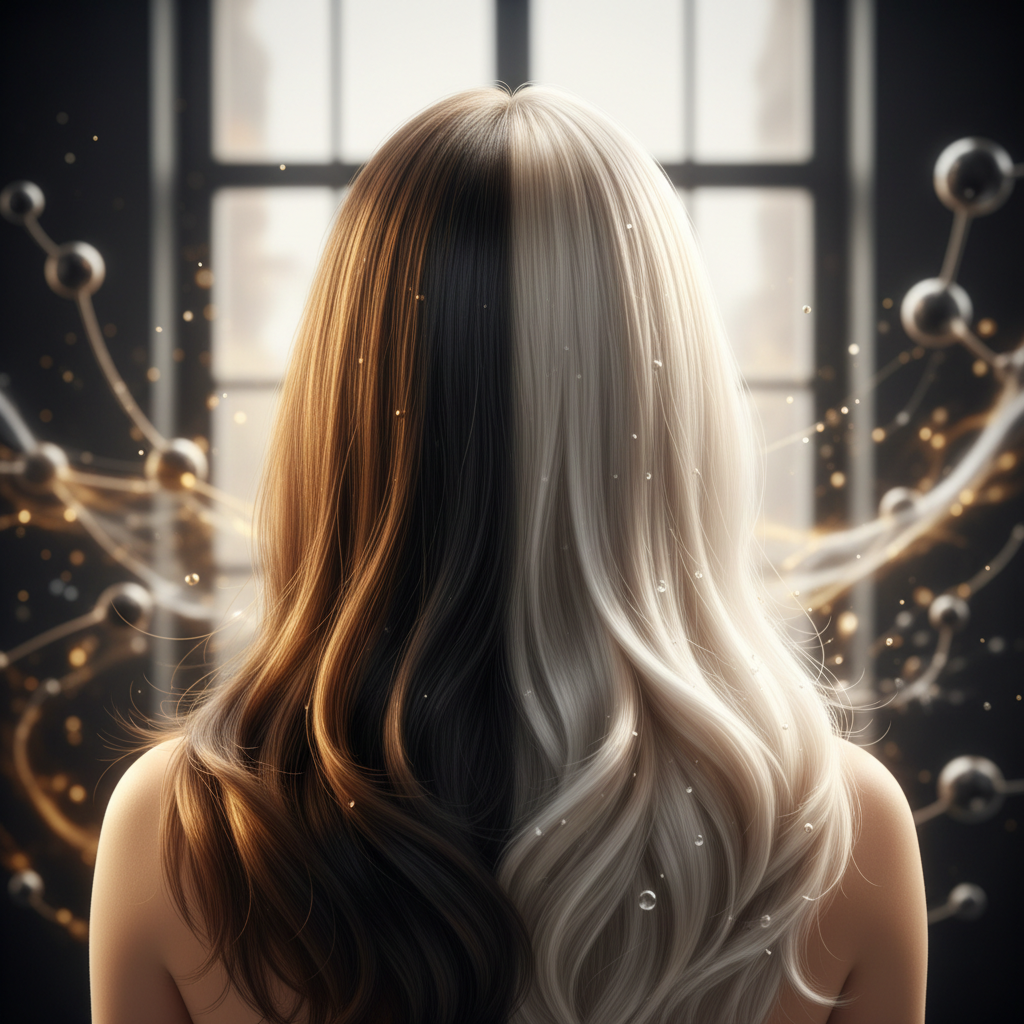
Water acts as an essential plasticiser in keratin fibres. When hair absorbs water, water molecules disrupt temporary hydrogen bonds between keratin chains, allowing the fibre to stretch more easily. At typical ambient conditions of 50 to 65 percent relative humidity, healthy hair holds approximately 10 to 15 percent water by weight. In completely dry air, this drops below 10 percent; at 100 percent relative humidity or when soaked, water content can rise toward 30 to 32 percent.
Topical protein treatments do not permanently fuse into your natural biological hair matrix. Instead, hydrolysed proteins, such as hydrolysed wheat, keratin, or silk proteins, possess a molecular weight small enough (typically between 500 and 3,000 Daltons) to penetrate the superficial layers of the cuticle and temporarily adhere to negative charges on damaged keratin surfaces. This temporary deposition increases the fibre's modulus (rigidity) and reduces combing friction.
Conversely, emollients, fatty alcohols, and film-forming humectants do not simply add water; they regulate the rate of moisture exchange between the hair shaft and ambient air. Maintaining balance means pairing the fibre-stiffening support of protein with the softening, pliable barrier of conditioning lipids.
What the evidence does not show
There is no scientific basis for the myth that cosmetic conditioners can biologically heal or permanently regenerate dead hair fibre. Hair is non-living tissue. Once keratin chains undergo chemical degradation from bleaching, permanent dyeing, relaxing, or high-heat styling, topical products can only offer temporary cosmetic masking and mechanical protection until the next wash.
Furthermore, evidence does not show that every individual requires an equal 50-50 ratio of protein to moisture products. Low-porosity, chemically untreated hair often rejects heavy protein treatments, as the intact cuticle prevents larger peptides from penetrating, resulting in surface buildup.
Finally, do not confuse hair breakage resulting from an internal fibre imbalance with hair shedding or medical hair loss. Breakage occurs along the length of the shaft due to mechanical or chemical trauma. True hair loss, such as androgenetic alopecia or telogen effluvium, originates deep within the living follicle beneath the scalp surface.
Mechanisms of fibre damage: overload and fatigue
Understanding how hair behaves mechanically reveals why these imbalances develop in the first place.
The mechanics of protein overload
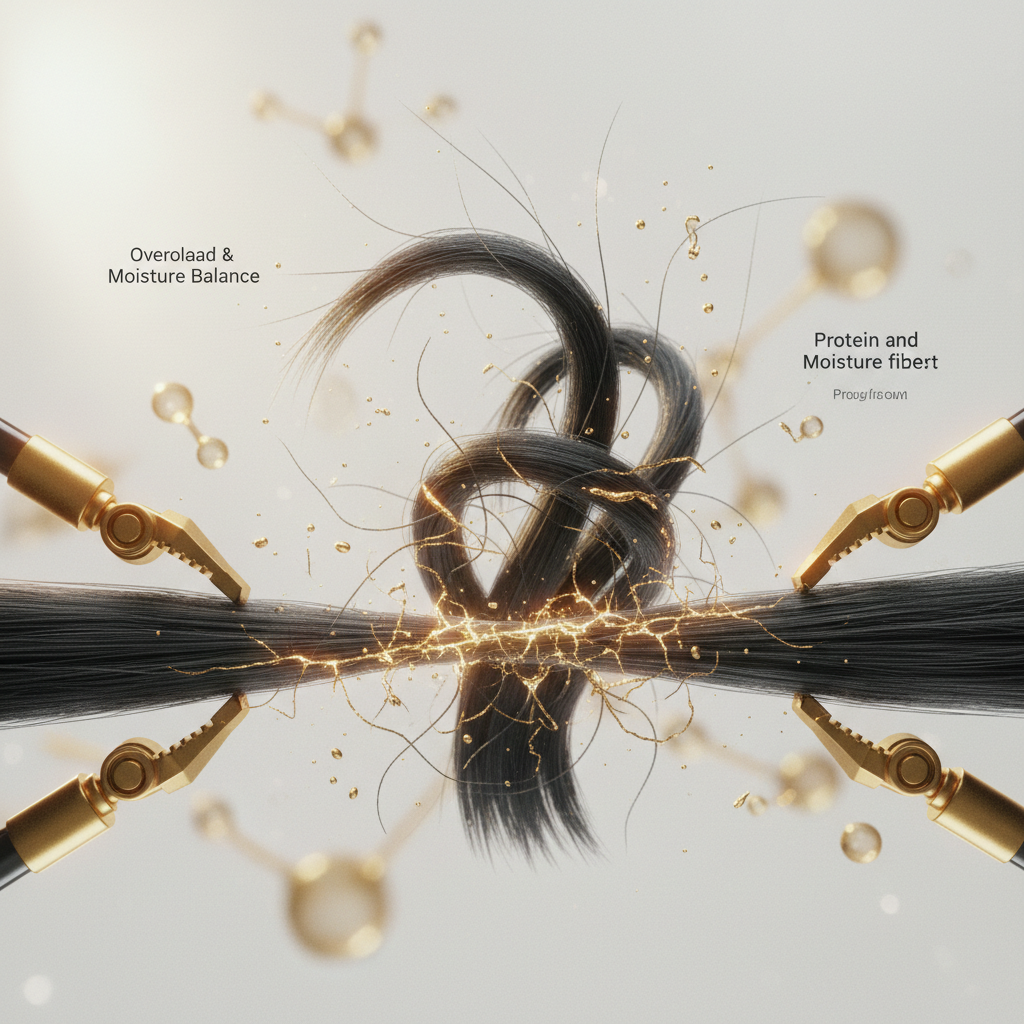
When hair is subjected to frequent treatments containing high concentrations of proteins or polymers without sufficient lubricating emollients, excessive protein complexes adhere to the outer cuticle layer. This rigid coating dramatically reduces fibre elasticity. Under mechanical stress, such as brushing or tying up, the fibre cannot deform or stretch safely, resulting in brittle fractures along the shaft.
The mechanics of moisture overload and hygral fatigue
When the protective outer lipid layer (the 18-methyleicosanoic acid or 18-MEA barrier) is stripped away by alkaline chemicals, surfactants, or bleaching, the cuticle lifts. This allows massive amounts of water to rush into the cortex.
Repeated cycles of rapid swelling when wet and shrinking when dry weaken the internal cell membrane complex (CMC). This condition, known as hygral fatigue, leaves the hair fibre limp, mushy, and devoid of spring. The hair may stretch excessively like worn-out elastic before tearing without snapping back into place.
Identifying the signs: protein vs moisture issues
To correct your hair regimen, you must accurately diagnose whether your hair is experiencing a structural deficit or a hydration issue.
| Symptom / Test | Protein Deficiency (Moisture Overload) | Protein Overload (Moisture Deficiency) | Balanced Fibre |
|---|---|---|---|
| Feel when dry | Mushy, limp, flat, overly soft | Rough, stiff, straw-like, coarse | Smooth, pliable, holds shape |
| Feel when wet | Gummy, sticky, lacks definition | Tangled, hard, dry to the touch | Soft yet resilient, easy to comb |
| Wet stretch test | Stretches past 30 to 50% without returning; snaps limply | Does not stretch at all; snaps immediately with minimal tension | Stretches roughly 20 to 30%, returns cleanly to normal length |
| Common cause | Frequent deep conditioning, overnight soaking, high porosity | Heavy reconstructors, frequent keratin treatments, lack of emollients | Well-timed wash routine with matched conditioning agents |
Practical steps to restore fibre equilibrium
Restoring order to your routine requires specific, targeted actions depending on which direction your hair has tilted.
If your hair has protein overload
- Clarify thoroughly: Use a chelating or clarifying shampoo to strip away excess protein deposits clinging to the cuticle.
- Pause protein ingredients: Review your ingredient labels. Avoid products containing hydrolysed wheat protein, keratin, collagen, amino acids, or soy protein for two to three weeks.
- Deep condition with pure emollients: Apply moisture-rich formulations packed with fatty alcohols (cetyl, stearyl, or cetearyl alcohol) and plant oils (such as argan or jojoba) to soften the cuticle and restore flexibility.
- Use indirect heat: Apply a warm towel or shower cap over your conditioner for 15 to 20 minutes to encourage emollient absorption.
If your hair has moisture overload
- Incorporate hydrolysed proteins: Introduce a targeted protein mask or rinse-off reconstructor containing small-chain hydrolysed proteins or amino acids.
- Shorten wet times: Never sleep with wet hair or leave conditioning masks on for hours at a time. Limit wet conditioning to 5 to 15 minutes.
- Incorporate film-formers: Use mild protein leave-in sprays that help rebuild surface resistance.
- Reinforce cuticles with mild acidity: Use conditioners formulated at an acidic pH (between 3.5 and 5.0) to encourage the cuticle scales to lay flat, reducing excessive water absorption.
When the cause is something else
If your hair remains fragile, dull, or unmanageable despite adjusting your products, other factors may be at work:
- Hard water buildup: High concentrations of calcium, magnesium, and copper ions can bind to hair cuticles, mimicking the brittle feel of protein overload. A chelating treatment is required to remove these mineral deposits.
- Severe chemical processing: When disulphide bonds are critically broken from repeated bleach, relaxing, or perm applications, cosmetic conditioners alone cannot repair the structural damage.
- Thermal degradation: High heat tool use (above 185 degrees Celsius) denatures keratin proteins permanently, melting natural protective fats and creating voids that cannot be reversed.
- Underlying medical factors: Sudden changes in hair texture, such as widespread thinning or extreme brittleness from the root, can stem from thyroid irregularities, nutritional deficiencies (such as iron or zinc), or metabolic shifts.
Supporting cosmetic maintenance with Watermans
When managing day-to-day structural resilience, choosing supportive formulas makes a clear difference. The Watermans collection focuses on revitalising cosmetic haircare that supports both scalp vitality and fibre strength.
Products such as Watermans Grow Me Shampoo and Condition Me Conditioner blend nutrient-dense botanicals, hydrolysed lupin protein, caffeine, and conditioning emollients. This formula supports stronger-feeling hair, improves surface glide to prevent combing breakage, and fosters a balanced environment for both the scalp and developing strands without leaving excessive, brittle residues.
Frequently asked questions about Protein and Moisture Balance in Hair
What is the wet stretch test for Protein and Moisture Balance in Hair?
To perform the wet stretch test, isolate a single wet strand of shed hair between your fingers and gently pull it taut. If the strand stretches slightly and bounces back to its original length, balance is optimal. If it snaps immediately with zero give, it likely suffers from protein overload or dehydration. If it stretches endlessly like chewing gum and breaks without springing back, it points to moisture overload.
How often should you use protein treatments on hair?
Most hair types only require a targeted protein treatment every 4 to 6 weeks. If your hair is bleached, chemically processed, or fine, a mild treatment every 2 to 3 weeks may help maintain tensile strength. Overusing protein-rich reconstructors on healthy, untreated hair can quickly cause stiffness and mechanical breakage.
Can low-porosity hair tolerate protein treatments?
Low-porosity hair has tight, overlapping cuticle scales that naturally resist moisture and product penetration. It is often sensitive to heavy protein treatments because large protein molecules accumulate on the exterior shaft rather than entering the cortex. If low-porosity hair requires strength, look for ultra-light hydrolysed silk or wheat peptides in small concentrations, followed by heat-assisted deep conditioning.
Can water alone cause hair breakage?
Yes, excessive water exposure can contribute significantly to breakage through hygral fatigue. Soaking hair repeatedly for extended periods forces the cortex to swell and shrink continuously. This cyclic stress degrades the cell membrane complex between cuticles, weakening the fibre so that everyday grooming, detangling, or brushing snaps the strand.
Healthy equilibrium for strong hair
Achieving the right Protein and Moisture Balance in Hair comes down to understanding the physical needs of your specific hair fibre. Hair is neither a living sponge that needs continuous soaking nor a rigid rod that needs endless structural reinforcement. By monitoring how your strands stretch, adjusting your routine between hydrolysed proteins and conditioning emollients, and avoiding excessive chemical or mechanical stress, you can maintain flexible, strong, and visibly vibrant hair.
Sources and references
- Robbins, C. R. (2012). Chemical and Physical Behavior of Human Hair (5th ed.). Springer-Verlag.
- Dawber, R. (1996). Hair: Its structure and response to cosmetic preparations. Clinics in Dermatology, 14(1), 105-112.
- Evans, T., & Wickett, R. R. (2012). Practical Modern Hair Science. Allured Business Media.
- Cruz, C. F., Fernandes, M. M., Gomes, A. C., Coderch, L., Martí, M., Méndez, S., & Cavaco-Paulo, A. (2016). Keratins and interior lipids of human hair: structural and cosmetic implications. International Journal of Cosmetic Science, 38(5), 446-455.
- Wortmann, F. J., & Deutz, H. (1995). Characterizing hair properties by water sorption. Journal of the Society of Cosmetic Chemists, 46(6), 287-300.
Find these ingredients in Watermans products
- Zinc: you will find this ingredient in our Hair Vitamins.
- Wheat Amino Acids: you will find this ingredient in our Heat Protection Spray.