Product Layering: The Art of Combining Hair Products
5 min read ·
Product layering involves applying multiple haircare products in a specific order to achieve enhanced results without overloading the hair.
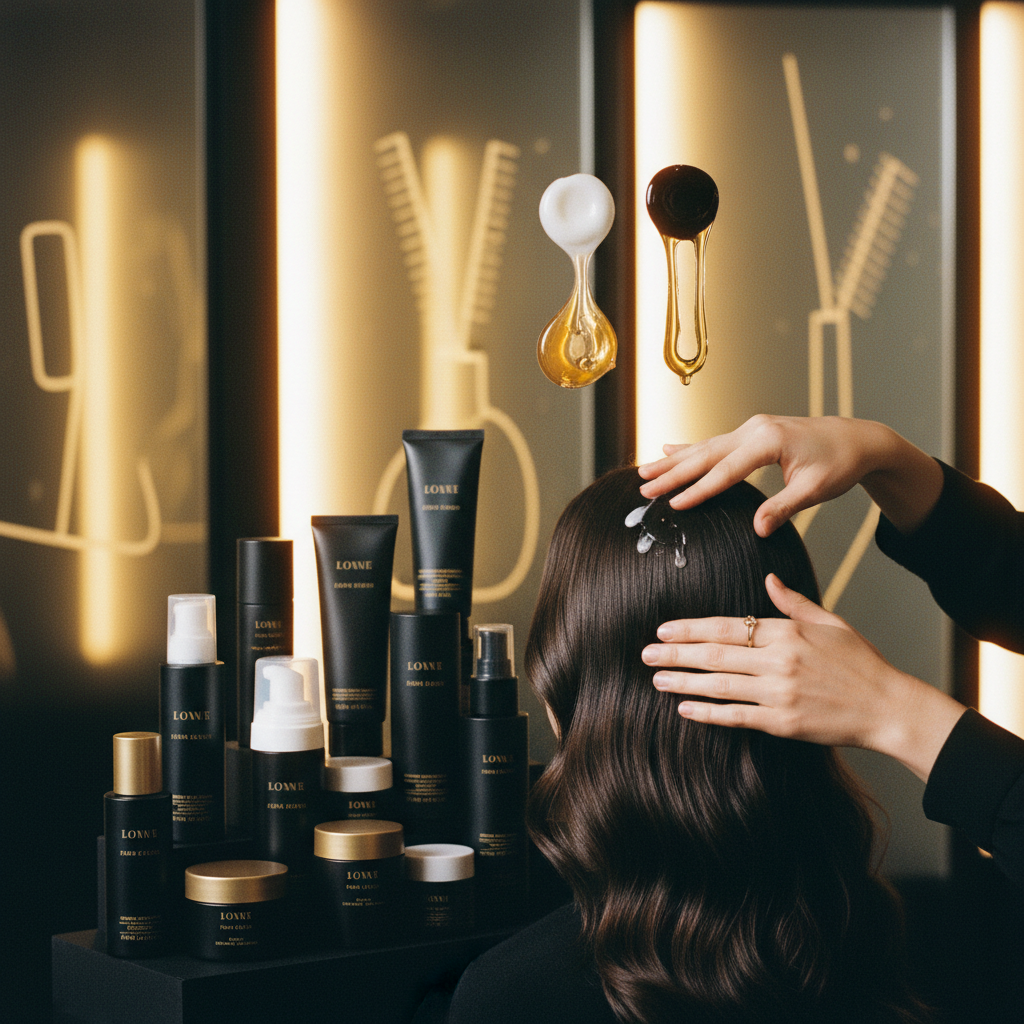
Understanding Product Layering
Product layering is a technique in haircare where multiple styling and treatment products are applied sequentially to the hair. The goal is to maximise the benefits of each product, address various hair concerns simultaneously, and create a desired style with greater hold, shine, or volume, without creating buildup or weighing the hair down. This approach leverages the individual properties of each product to achieve a synergistic effect.
The "Why" Behind Layering
Hair often has multiple needs. For example, one might have fine hair that lacks volume but also experiences dryness. A single product may not adequately address all these concerns. Layering allows for a customized approach, where a volumizing mousse can be used at the roots, a moisturising cream on the ends, and a heat protectant throughout. When done correctly, layering enhances the performance of each product, leading to more effective and longer-lasting results.
Key Principles of Effective Layering
-
Product Order Matters: The general rule of thumb is to apply products from thinnest consistency to thickest, or from lightest to heaviest. This allows lighter products to penetrate and perform their function without being blocked by heavier, film-forming products. Water-based serums and leave-in conditioners are typically applied first, followed by creams, mousses, gels, and finally, oils or hairsprays.
-
Less is More: While layering involves multiple products, it does not mean using large quantities of each. Over-application can lead to product buildup, making hair feel greasy, stiff, or dull. Use a small amount of each product and distribute it evenly.
-
Hair Type and Condition: Your hair type (fine, medium, thick) and condition (oily, dry, damaged) should dictate your layering strategy. Fine hair, for instance, benefits from lightweight products that won't weigh it down, while coarse or dry hair can tolerate richer formulations.
-
Desired Outcome: Consider the end goal. Are you aiming for volume, definition, frizz control, shine, or a combination? Select products specifically formulated to achieve these outcomes.
-
Application Technique: How you apply each product is crucial. For example, a volumizer is best applied at the roots, while a frizz-control product might be concentrated on the mid-lengths and ends.
Common Layering Scenarios and Product Combinations
Different hair goals necessitate different layering techniques. Here are some common scenarios:
For Volume and Lift
- Scenario: Fine, limp hair that struggles to hold a style.
- Strategy: Focus on root lift and overall body without heavy ingredients.
- Order:
- Leave-in conditioner/lightweight detangler (optional): Provides basic hydration and eases combing.
- Root-lifting spray or volumizing mousse: Applied directly to the roots on damp hair.
- Volumizing spray or foam: Distributed through the mid-lengths and ends.
- Light hold hairspray: After styling, to set the volume.
For Frizz Control and Smoothness
- Scenario: Frizzy, unruly hair, especially in humid conditions.
- Strategy: Create a protective barrier and provide deep hydration.
- Order:
- Leave-in conditioner/anti-frizz serum: Applied to damp hair to seal the cuticle.
- Styling cream or lotion: Provides additional moisture and light hold, further smoothing the hair.
- Hair oil or finishing serum: Applied sparingly to dry hair after styling to add shine and control flyaways.
For Defined Curls
- Scenario: Naturally curly or wavy hair that needs definition and hold.
- Strategy: Hydrate, clUmp curls, and lock them in place.
- Order:
- Leave-in conditioner/curl primer: Provides a base of moisture and prepares curls.
- Curl cream or lotion: Applied to wet hair to enhance curl pattern and provide hydration.
- Curl gel or mousse: Applied after the cream to provide hold and lock in definition.
- Hair oil (optional): Once dry, to "scrunch out the crunch" and add shine.
For Heat Protection and Damage Prevention
- Scenario: Hair regularly exposed to heat styling (blow dryers, flat irons, curling irons).
- Strategy: Create a thermal barrier while also addressing styling needs.
- Order:
- Leave-in conditioner or hydrating mist: Ensures hair is properly moisturized before heat application.
- Heat protectant spray or cream: Applied generously and evenly through damp hair before any heat styling. This is non-negotiable for heat protection.
- Styling product (e.g., mousse for volume, serum for smoothness): Applied after heat protectant to achieve the desired style.
The Role of Product Consistency and Application
| Product Type | Consistency | Typical Application Order | Primary Function |
|---|---|---|---|
| Leave-in Conditioners | Light liquid/cream | 1st | Hydration, detangling, prep |
| Serums | Light liquid | 1st or 2nd | Smoothness, shine, targeted treatment |
| Mousses/Foams | Light foam | 2nd or 3rd | Volume, hold, definition |
| Creams/Lotions | Medium cream | 2nd or 3rd | Hydration, frizz control, light hold |
| Gels | Thick gel | 3rd or 4th | Strong hold, definition, frizz control |
| Oils/Silicone Sprays | Oily liquid | Last | Shine, frizz control, seal moisture |
| Hairsprays | Aerosol spray | Last | Hold, finish |
Always ensure each product is distributed thoroughly before applying the next. For most products, applying to damp, towel-dried hair is ideal, as the water helps to spread the product evenly and allows for better absorption of conditioning agents. For Watermans products, follow specific instructions regarding application on wet or dry hair.
Potential Pitfalls to Avoid
- Product Buildup: Applying too much product or not cleansing the hair effectively can lead to buildup, making hair feel heavy, greasy, or dull. Regular clarifying shampoos can help mitigate this.
- Incompatibility: Most modern haircare products are designed to be compatible, but occasionally, certain formulations may react poorly, leading to flaking or a strange texture. If this occurs, adjust your product combination.
- Over-conditioning: While beneficial, excessive use of heavy conditioners, especially on fine hair, can lead to limpness or greasiness. Balance is key.
- Ignoring Hair's Response: Pay attention to how your hair reacts. If it feels weighed down or sticky, reduce the amount of product or reconsider the combination. If it's not achieving the desired effect, experiment with different products or application orders.
Product layering is a dynamic process. It requires understanding your hair's unique needs, the properties of different product types, and a willingness to experiment to find the optimal combination for your desired style and hair health.