Preventing Hair Breakage During Styling: An Evidence-Based Guide
7 min read ·
Learn evidence-based techniques for Preventing Hair Breakage During Styling, from thermal limits to friction reduction and snag-free accessory choices.
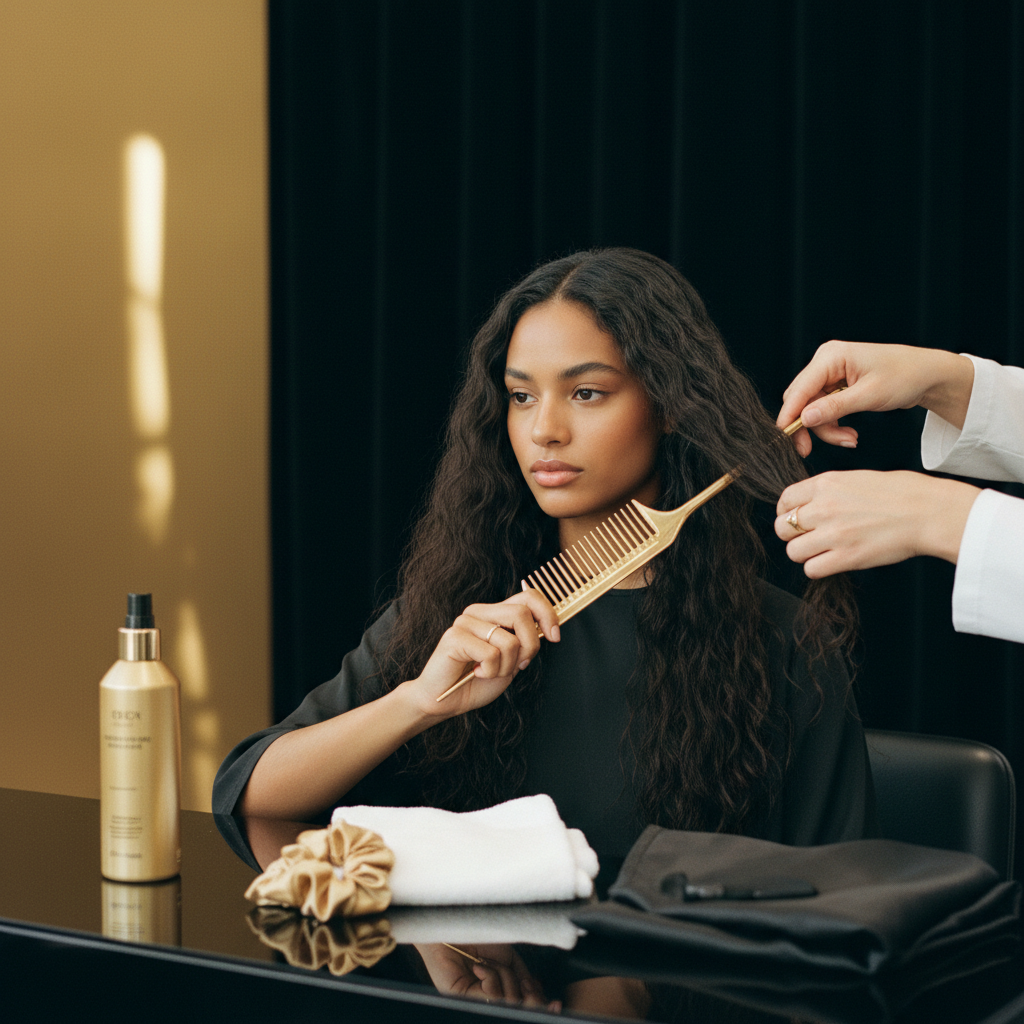
Quick answer: Preventing Hair Breakage During Styling requires controlling mechanical tension, surface friction, and thermal exposure. Hair breakage occurs when physical stress exceeds the tensile strength of the hair shaft, causing fractures along the fibre rather than shedding from the root. Protecting the hair involves detangling from ends to roots on lubricated hair, keeping heated tools below critical protein degradation thresholds, and minimising traction from accessories. The main limitation is that dead hair fibres cannot biologically regenerate once fractured; prevention preserves existing integrity rather than repairing severed bonds.
Key takeaways
- Hair breakage is structural fracture along the fibre, fundamentally distinct from hair loss or follicular shedding.
- Wet hair has increased elasticity but a weakened cortex, making vigorous wet brushing a leading cause of tensile snap.
- Thermal tools strip internal moisture and degrade keratin above 185 degrees Celsius, drastically lowering the force required to break a strand.
- Surface lubrication from silicones, polymers, or conditioning agents reduces inter-fibre friction by up to 50 percent, mitigating mechanical fracture.
- Elastic hair ties with exposed metal fastenings, dry backcombing, and excessive tension on protective styles cause localised cuticular shearing.
Preventing Hair Breakage During Styling: what the evidence shows
Preventing Hair Breakage During Styling centres on managing the physical properties of the hair shaft. Hair consists of an outer protective cuticle, an inner structural cortex composed of coiled keratin filaments, and an occasional central medulla. Tensile strength comes predominantly from disulphide bonds within the cortex. When styling forces, such as combing resistance, tension from tight bands, or thermal degradation, exceed the load-bearing capacity of these bonds, the fibre fractures.
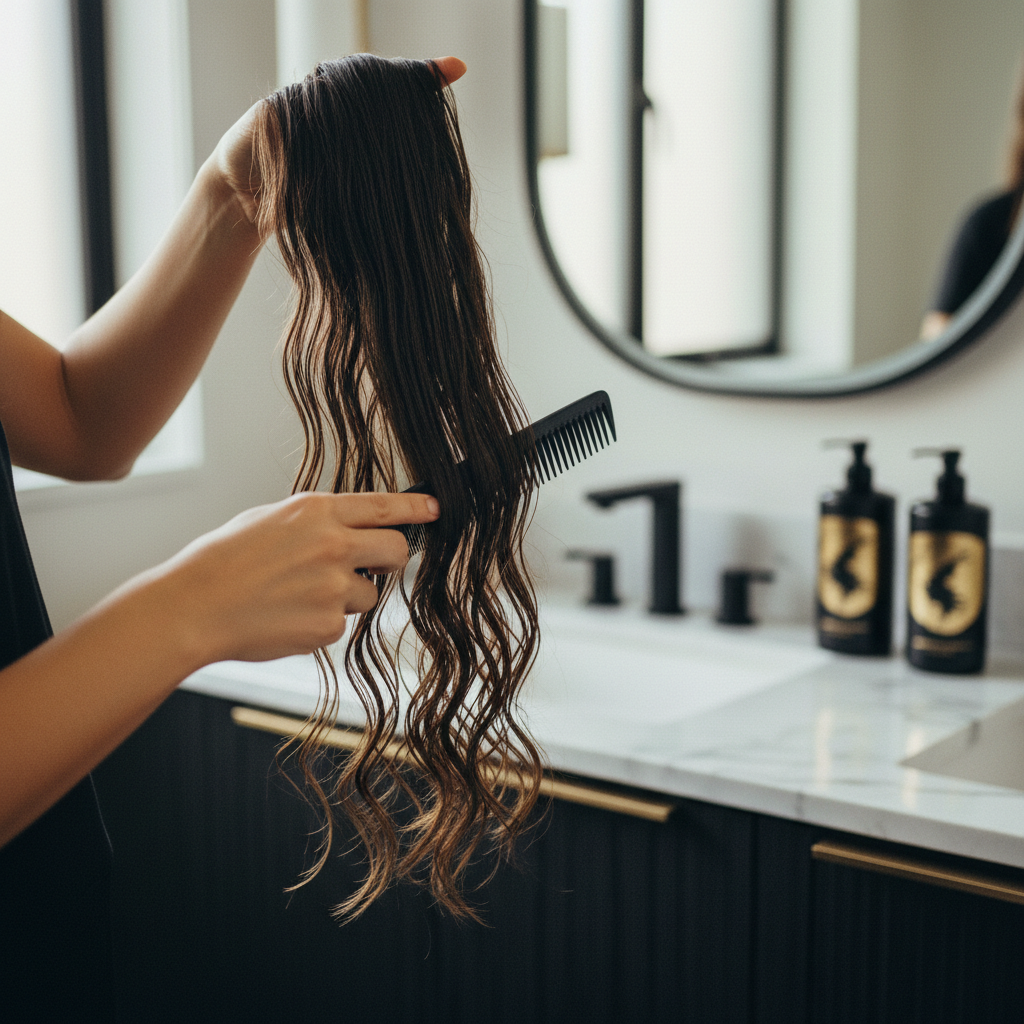
Biophysical studies published in the Journal of Cosmetic Science demonstrate that combing force spikes drastically when knots encounter unlubricated fibres. Dry hair can typically stretch around 15 to 30 percent before breaking, whereas water-swollen hair can stretch up to 50 percent. However, wet hair possesses significantly lower yield strength. The hydrogen bonds that stabilise alpha-keratin are temporarily broken by water molecules, meaning wet strands deform under far lower mechanical loads and break without returning to their original shape.
Thermal research confirms that heat styling above 150 degrees Celsius denatures keratin proteins and alters moisture distribution. At temperatures approaching 200 degrees Celsius, natural lipid membranes within the cuticle melt, creating micro-voids that turn into longitudinal cracks. Preventing mechanical failure during styling requires understanding these thermal and physical limits.
The mechanisms behind styling breakage
Styling-induced fracture happens through three primary mechanisms: mechanical fatigue, frictional shear, and thermal degradation.
Mechanical tensile stress
When you pull a brush through a tangle, you apply axial tension. If the teeth of the tool snag on a knot, the localized stress concentration can instantly exceed the tensile strength of the fibre, resulting in a clean snap. Alternatively, repeated low-level tension stretches the hair past its elastic limit, causing permanent structural deformity known as plastic deformation, which later snaps during routine handling.
Frictional cuticular wear
Combing, backcombing, and rough towel drying generate friction. Each pass of a rough tool strips away cuticular scales, exposing the delicate cortical cells beneath. Without the protective cuticle mantle, the cortex quickly frays, producing split ends (trichoptilosis) or mid-shaft nodules (trichorrhexis nodosa).
Thermal moisture explosion
Using high heat on damp hair creates a phenomenon known as "bubble hair". Trapped moisture inside the cortex boils rapidly, vaporising and expanding into steam. This creates visible cavities within the fibre that permanently undermine structural rigidity, causing the strand to snap under minimal subsequent tension.
Signs of styling breakage versus natural shedding
It is critical to distinguish between broken hairs and naturally shed telogen hairs. Conflating the two leads to incorrect treatments and unnecessary alarm.
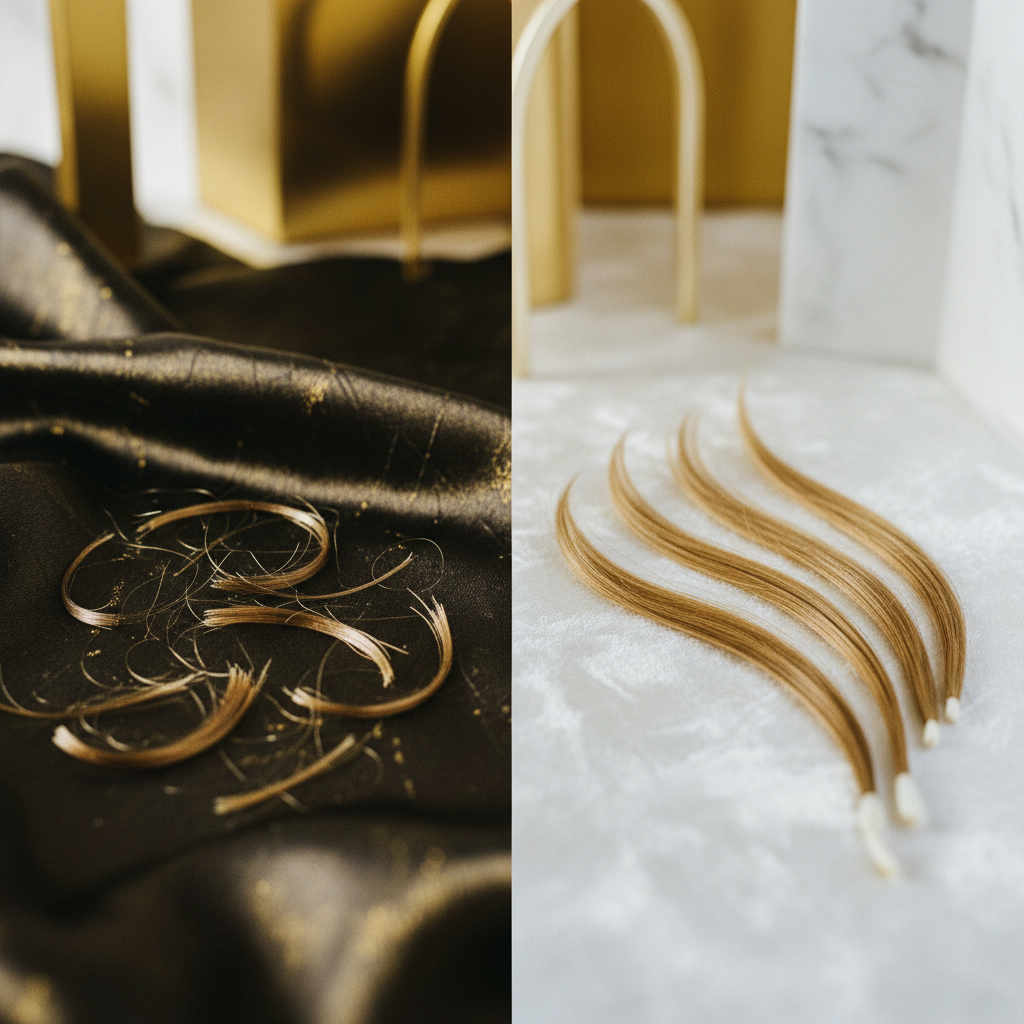
| Diagnostic Marker | Hair Breakage | Follicular Hair Shedding |
|---|---|---|
| White Bulb | Absent (ends are blunt, frayed, or jagged) | Present at the proximal root end |
| Strand Length | Varied, often short, uneven fragments | Full length of your hair cycle |
| Location Found | Sinks, clothes, bathroom floor during styling | Shower drain, hairbrush, pillow |
| Fibre Texture | Rough, porous, often features split ends | Consistent calibre from root to tip |
| Root Cause | Mechanical, thermal, or chemical damage | Hormonal shifts, stress, telogen effluvium |
Evidence-based techniques for protecting your hair
Adopting evidence-based habits drastically lowers the mechanical load placed on your strands each day.
1. Detangle with lubrication
Never dry-brush curly or coily hair, and never aggressively pull through wet, unconditioned straight hair. Apply a leave-in conditioner or detangling spray containing slip agents like amodimethicone, behentrimonium chloride, or natural fatty alcohols. These ingredients coat the cuticle, reducing the friction coefficient so tangles slide apart under minimal tension. Always work incrementally from the ends upward toward the roots.
2. Control heat settings
Keep thermal styling tools below 185 degrees Celsius (365 degrees Fahrenheit). Studies show that keratin degradation accelerates rapidly past this point. Always apply a film-forming thermal protectant beforehand. Ingredients such as PVP/DMAPA acrylates copolymer and hydrolysed wheat proteins absorb and distribute heat, slowing the transfer of thermal energy into the core of the fibre.
3. Modernise your hair accessories
Traditional rubber bands and hair ties with metal crimps concentrate intense pressure onto a tiny strip of hair, physically cutting into the cuticle. Swap them for silk scrunchies, seamless microfiber elastics, or spiral telephone-cord bands. These distribute tension over a broader surface area, reducing shear stress.
4. Limit backcombing and teasing
Backcombing forces cuticular scales to flare open against their natural downward orientation. This breaks the edges of the cuticle and accelerates cortical fraying. If volume is desired, rely on lightweight root-lifting powders or targeted blow-drying with a round brush rather than aggressive mechanical teasing.
When the cause is chemical or systemic
Preventing Hair Breakage During Styling is far harder if your hair has already been chemically compromised. Bleaching, permanent waving, and chemical relaxers cleave internal disulphide bonds to alter colour or texture. High-lift bleaches can reduce tensile strength by 30 to 50 percent, making strands susceptible to snapping under tensions that virgin hair easily withstands.
Similarly, nutritional insufficiencies (such as severe protein restriction or iron deficiency) can alter keratin synthesis, leading to weaker hair shafts that break under light styling pressure. If you notice widespread fragility accompanied by thinning at the scalp, consult a trichologist, dermatologist, or your GP for blood panels checking ferritin, thyroid function, and zinc levels.
Supporting hair condition with Watermans
While cosmetic formulas cannot physically fuse snapped hair back together, maintaining a nourished scalp and conditioned fibre structure reduces your risk of future breakage. Watermans GrowMe Shampoo and ConditionMe Conditioner are formulated to improve strand manageability, smooth the outer cuticle, and strengthen the feel of brittle hair. Packed with hydrolysed lupin protein, biotin, caffeine, and argan oil, this routine provides essential slip and structural conditioning to help mitigate styling-induced friction.
Frequently asked questions about Preventing Hair Breakage During Styling
Can leave-in conditioners stop styling breakage?
Leave-in conditioners significantly help by depositing fatty alcohols, polymers, or light silicones onto the outer cuticle layer. This lowers inter-fibre friction, softens rough edges, and allows styling tools to pass through tangles with less resistance, directly preventing mechanical snap.
Does blow-drying cause more breakage than air-drying?
Evidence shows that improper air-drying can swell the cell membrane complex for prolonged periods, while high-heat blow-drying causes cuticular blistering. The ideal method is air-drying until hair is 70 to 80 percent dry, followed by low-heat blow-drying kept at least 15 centimetres away from the hair surface.
What is the most effective approach to Preventing Hair Breakage During Styling for curly hair?
For curly and afro-textured hair, the key is moisture and gentle handling. Curly fibres have elliptical cross-sections with natural weak points along each twist. Always detangle wet hair coated in slippery conditioner using flexible wide-tooth combs or your fingers, and avoid heat over 175 degrees Celsius.
How do I know if my hair is breaking or shedding from the root?
Examine the fallen strands under bright light. If there is a tiny, pale white bulb at one tip, the hair has naturally shed from the follicle. If both ends are blunt or split without a bulb, you are dealing with hair breakage.
Conclusion
Preventing Hair Breakage During Styling is an engineering challenge: you must keep the physical and thermal forces you exert lower than your hair fibre's threshold of resistance. Hair cannot heal itself once severed, so preservation is everything. By respecting the fragile nature of wet strands, maintaining moderate heat thresholds, choosing snag-free accessories, and incorporating detangling lubricants, you preserve cuticular integrity and protect your hair from premature mechanical snap.
Sources and references
- Journal of Cosmetic Science, "Combing and tensile properties of human hair after chemical and thermal treatments", 2011.
- International Journal of Trichology, "Hair cosmetics: An overview", 2015.
- British Association of Dermatologists, "Hair breakage and weathering guidelines", 2020.
- Journal of the American Academy of Dermatology, "Thermal styling damage to human hair and heat-protective polymers", 2018.
Find these ingredients in Watermans products
- Biotin: you will find this ingredient in our Hair Growth Shampoo.
- Zinc: you will find this ingredient in our Hair Vitamins.