Preventing Chemical and Heat Hair Breakage: The Complete Guide
9 min read ·
Learn the science behind Preventing Chemical and Heat Hair Breakage. Discover safe temperature limits, chemical precautions, and evidence-based ways to protect hair.
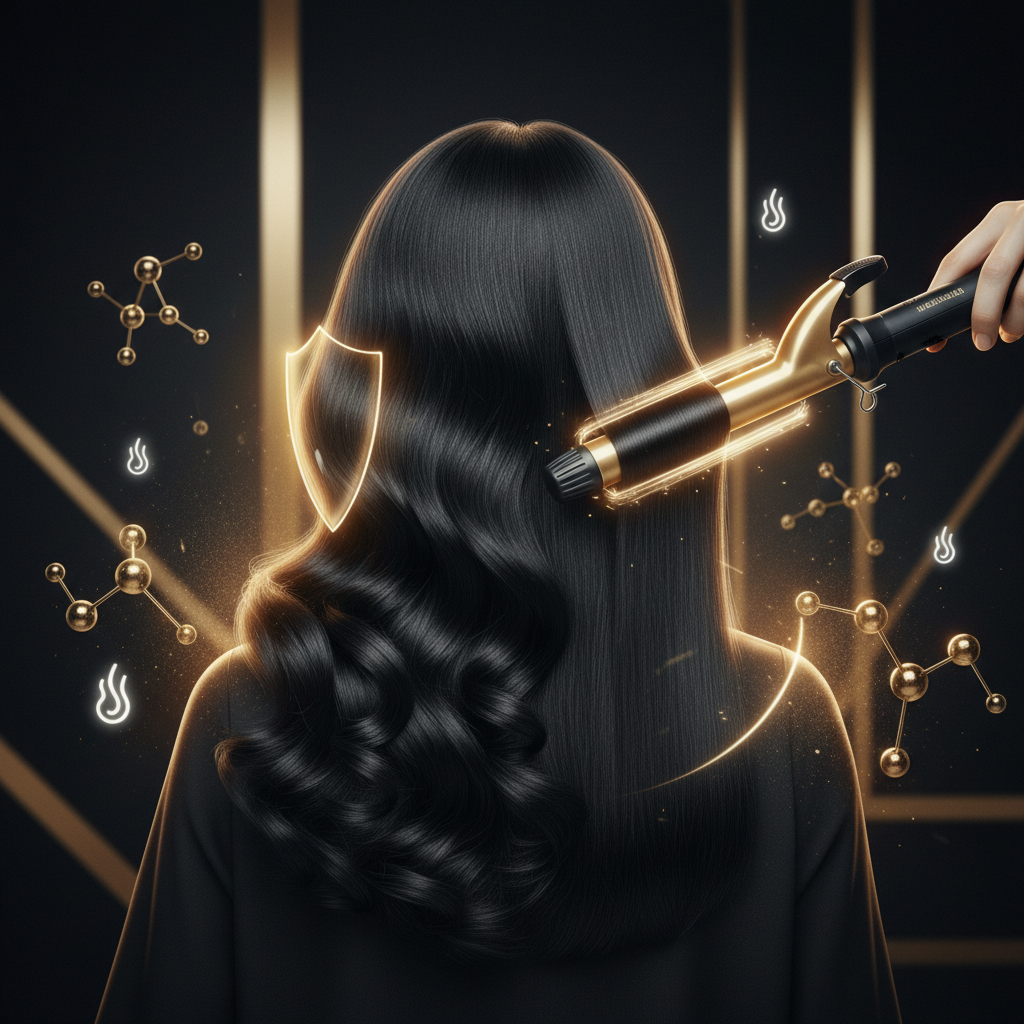
Quick answer: Preventing Chemical and Heat Hair Breakage requires maintaining the structural integrity of hair keratin by controlling thermal exposure, spacing chemical services, and preserving the hair fibre lipid barrier. Thermal tools operating above 185°C denature alpha-keratin, while bleaches and relaxers break vital disulphide bonds. The main limitation is that hair is non-living tissue: once severe cortical fractures or full cuticular stripping occur, the fibre cannot biological regenerate, meaning prevention and surface reinforcement are your primary defences against snapping.
Key takeaways
- Chemical treatments degrade disulphide bonds and strip the protective 18-methyleicosanoic acid (18-MEA) lipid layer, making fibres porous and vulnerable.
- Thermal styling past 185°C denatures structural keratin proteins, whereas temperatures exceeding 220°C cause severe cuticular blistering and mechanical collapse.
- Hair breakage is entirely distinct from follicular shedding; breakage represents structural fracture along the shaft rather than detachment from the dermal papilla.
- Effective thermal protection relies on ingredients like silicones and hydrolysed wheat or vegetable proteins that distribute heat evenly and reduce heat transfer rates.
- Severely compromised hair requires professional assessment, gentle mechanical handling, and balanced protein-moisture conditioning regimens to halt catastrophic fibre loss.
Preventing Chemical and Heat Hair Breakage: what the evidence shows
Preventing Chemical and Heat Hair Breakage is fundamentally an exercise in polymer preservation. Scientific research published in cosmetic and dermatological literature demonstrates that human hair is composed of roughly 85 to 90 percent protein (primarily keratin), 1 to 9 percent lipids, and water. When you expose this composite structure to high temperatures and alkaline chemical processes, you alter its tensile strength.
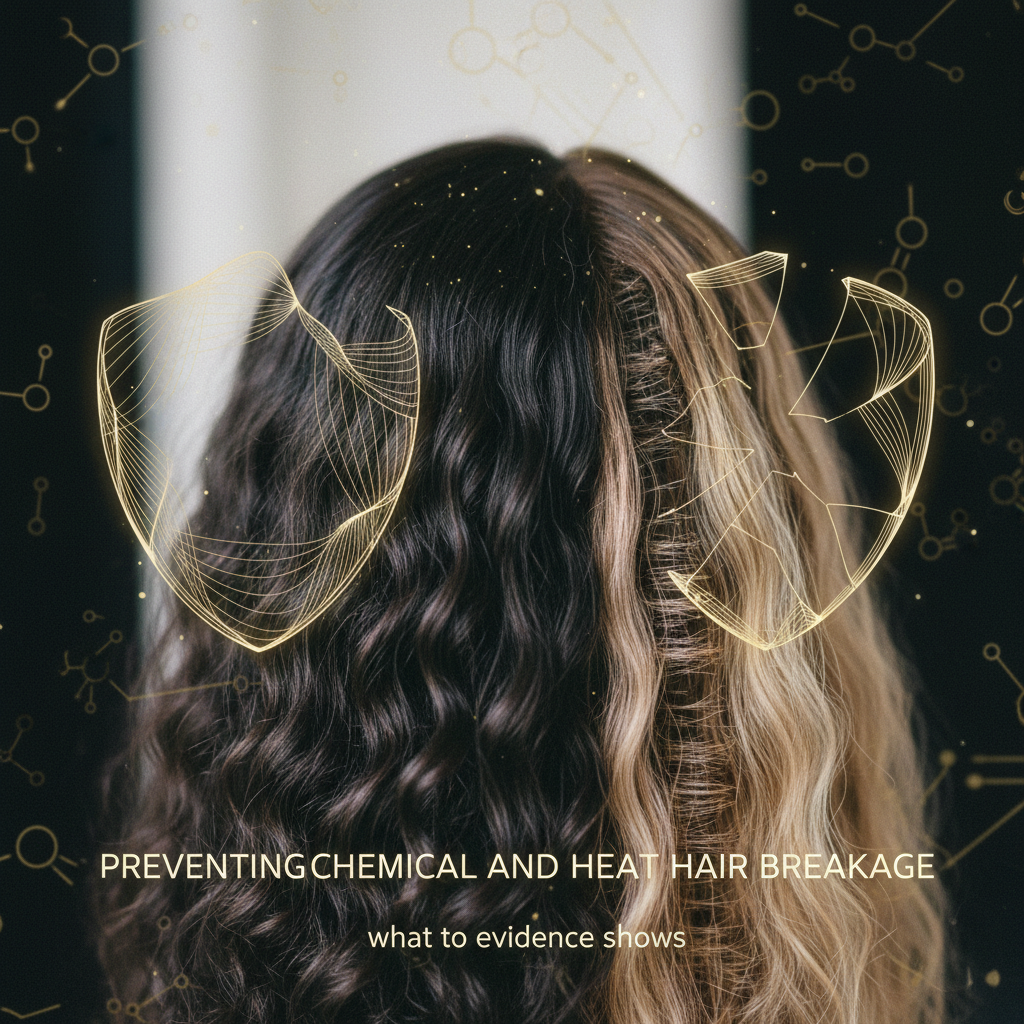
Studies measuring hair tensile properties show that bleaching degrades cystine content by up to 50 percent, converting disulphide linkages into cysteic acid residues. This process weakens the wet and dry strength of the fibre. Concurrently, thermal styling tools such as flat irons, curling wands, and high-heat hair dryers rapidly vaporise free and bound water within the cortex. If applied to damp hair, this rapid vaporisation leads to "bubble hair", an irreversible deformity where microscopic steam pockets expand inside the cortex, causing immediate brittleness and snapping.
Evidence also shows that the natural protective layer of the cuticle, an covalently bound lipid called 18-methyleicosanoic acid (18-MEA), is stripped during the very first alkaline chemical service (such as lifting colour or permanent waving). Without 18-MEA, hair becomes hydrophilic, absorbing environmental moisture irregularly, swelling, and frictionally abrading during mechanical brushing.
+---------------------------+-----------------------------------+-----------------------------------+
| Stressor | Primary Structural Damage | Visible Mechanical Result |
+---------------------------+-----------------------------------+-----------------------------------+
| Bleaching & High Lift | Disulphide bond cleavage, | Spongy wet feel, fraying ends, |
| Permanent Colour | cysteic acid formation, loss | loss of tensile elasticity |
| | of 18-MEA surface lipid layer | |
+---------------------------+-----------------------------------+-----------------------------------+
| Chemical Relaxers & | Extensive cleavage of cystine | Extreme brittleness, localized |
| Permanent Waves | cross-links, altered cortex | fracture points near roots |
| | alignment | |
+---------------------------+-----------------------------------+-----------------------------------+
| Thermal Tools (>185°C) | Alpha-to-beta keratin phase | Blistering, split ends, reduced |
| | transition, protein denaturation | flexural strength |
+---------------------------+-----------------------------------+-----------------------------------+
| Wet Thermal Styling | Rapid moisture vaporisation, | "Bubble hair", sudden shattering |
| (Sizzling) | internal cortical cavitation | mid-shaft |
+---------------------------+-----------------------------------+-----------------------------------+
What the evidence does not show
Research does not show that any cosmetic product can truly "heal", "repair", or reconnect broken hair back to an undamaged, virgin state permanently. While bond-building formulations containing cross-linking agents can temporarily patch structural weaknesses and improve dry tensile measurements, they do not reconstitute the living hair follicle or restore the natural distribution of 18-MEA completely.
Furthermore, evidence does not show that natural oils (such as coconut, argan, or olive oil) act as adequate heat protectants on their own. While some vegetable oils penetrate the cortex to reduce protein loss during washing, their smoke points and thermal conduction profiles do not insulate the cuticle against 200°C styling irons. Relying on cooking or raw cosmetic oils as sole thermal barriers often leads to accelerated thermal cooking of the cuticle.
The mechanical mechanisms behind fibre failure
To protect hair, you must understand how structural failure occurs at the microscopic level.

Chemical degradation of disulphide bonds
The strength of the hair cortex depends on disulphide cross-links formed between cysteine amino acids. High-pH treatments (pH 9.0 to 13.0) swell the hair shaft, open cuticle scales, and dissolve melanin or break chemical bonds to reshape curls. In doing so, they also dissolve natural cortical matrix proteins. Once disulphide bonds drop below a critical threshold, the hair fibre loses its elasticity. It stretches without returning to its resting length, ultimately snapping under minimal tension.
Thermal denaturation and cuticle ablation
At temperatures between 140°C and 160°C, the natural alpha-keratin helices within the cortex begin to unravel into unstructured beta-keratin sheets. When iron temperatures exceed 185°C to 190°C, structural proteins melt and denature permanently. At 220°C and above, cuticular scales undergo physical decomposition: they lift, blister, and crack off entirely, leaving the delicate cortex exposed to environmental friction and UV radiation.
Signs that your hair is snapping rather than shedding
It is vital to distinguish between normal follicular shedding and shaft breakage:
- Look at the ends: A shed hair features a tiny, white bulb at its tip, signifying that it completed the telogen phase and separated naturally from the follicle. A broken hair has blunt, jagged, or frayed ends with no bulb present.
- Inspect fragment lengths: Shed hairs are usually the full length of your current hair growth cycle. Broken hair pieces often measure anywhere from a few millimetres to several centimetres in length.
- Check for the "snap test" response: Gently stretch a single damp hair strand. Healthy hair stretches up to 30 percent of its original length and bounces back. Chemically degraded or heat-fried hair will either snap immediately under tension or stretch excessively like chewing gum before disintegrating.
- Observe sudden halo frizz: Short, uneven hairs sticking out along the crown or mid-lengths that do not align with natural new regrowth patterns often point to widespread heat or chemical fracture.
Practical steps for preventing chemical and heat hair breakage
Minimising physical damage requires a structured, multi-step regimen aimed at reducing thermal exposure and reinforcing the cuticle layer:
- Cap hot tool temperatures at 180°C: Unless hair is exceptionally coarse or chemically virgin, setting styling tools between 150°C and 180°C provides adequate styling capability while preventing catastrophic protein denaturation.
- Never apply hot tools to damp hair: Ensure hair is 100 percent dry before touching it with a flat iron or curling wand. This eliminates the risk of bubble hair induced by boiling trapped intra-fibre moisture.
- Always use scientifically formulated heat protectants: Formulations containing heat-stable silicones (like dimethicone or amodimethicone), polyquaternium polymers, and hydrolysed proteins form a low-conductivity film over the cuticle, spreading thermal energy evenly and reducing friction.
- Space out alkaline chemical services: Allow at least 8 to 12 weeks between chemical services (such as colour retouching, bleaching, or perming), and apply strong chemicals only to the regrowth, avoiding overlapping previously processed lengths.
- Incorporate protein and conditioning balances: Regular use of products containing hydrolysed keratin, wheat protein, and panthenol helps fill microscopic cuticular gaps, temporarily improving the fibre's resistance to mechanical abrasion.
Supporting hair health from scalp to tip with Watermans
While hair fibre integrity is largely protected through proper mechanical and thermal habits, maintaining optimal conditions at the scalp level ensures that new hair emerges resilient from the start. Watermans GrowMe Shampoo and ConditionMe Conditioner are designed to nurture this foundation.
Formulated with revitalising ingredients like biotin, rosemary, caffeine, niacinamide, and argan oil, the Watermans system supports a balanced scalp environment and smooths the external cuticle. By conditioning the surface of the hair, it reduces the drag caused by everyday styling tools, assisting in overall breakage reduction and keeping your hair looking fuller, thicker, and visibly stronger.
When breakage indicates a different underlying issue
Sometimes hair weakness goes beyond hot tools and bleach. If you observe excessive breakage alongside changes in your scalp or general health, consider other contributing factors:
- Nutritional deficiencies: Insufficient dietary protein, severe caloric restriction, or deficiencies in iron (ferritin), zinc, and essential fatty acids produce thinner, weaker hair shafts with compromised mechanical strength.
- Thyroid disorders: Both hypothyroidism and hyperthyroidism can cause hair to become brittle, dry, and prone to breaking along the mid-lengths.
- Endocrine changes: Hormonal shifts during postpartum or perimenopause can change fibre diameter, making hair more susceptible to everyday styling stresses.
- Trichorrhexis nodosa: This condition, marked by small, bead-like nodes along the shaft where fibres easily fracture, can be genetic or acquired through chronic trauma.
When to seek professional advice
Consult a certified trichologist or dermatologist if you experience sudden, widespread breaking that does not improve after discontinuing chemical services and heat styling, or if breakage is accompanied by scalp redness, scaling, burning, or patchy shedding. Additionally, consult an experienced professional colourist to handle chemical corrective work rather than attempting at-home chemical remedies, which often result in irrecoverable fibre damage.
Frequently asked questions about Preventing Chemical and Heat Hair Breakage
Can deep conditioners reverse chemical damage?
No cosmetic treatment can truly reverse chemical damage. Deep conditioners containing conditioning agents, lipids, and hydrolysed proteins temporarily coat the shaft, smooth down raised cuticle scales, and reduce friction during styling. While this dramatically lowers the risk of subsequent fractures, the underlying disulphide bond loss remains.
What is the most effective approach to Preventing Chemical and Heat Hair Breakage on bleached hair?
Preventing Chemical and Heat Hair Breakage on bleached hair requires reducing thermal styling to absolute minimums, capping iron temperatures below 160°C, and using leave-in protectants rich in silicones and proteins. Additionally, avoid overlapping bleach on previously lightened areas, and handle damp hair with extreme gentleness using wide-tooth combs.
At what exact temperature does heat cause permanent hair breakage?
Permanent structural damage begins at 185°C, where alpha-keratin helices denature into beta-keratin. At temperatures above 220°C, the protective cuticle scales blister, lift, and decompose. Thermal styling above these thresholds rapidly leads to severe cuticular loss, moisture depletion, and immediate snapping along the hair shaft.
Does air drying completely prevent hair breakage?
Air drying eliminates heat damage, but wet hair is in a fragile state where the cortex can stretch and break easily if brushed roughly. Furthermore, leaving hair wet for extended hours can cause hygral fatigue (repeated cuticle swelling and contracting). Gently blotting hair with a microfibre towel and applying a detangling conditioner before drying is the safest technique.
How do I know if my hair is breaking or shedding from the root?
Examine the fallen hair strands closely under good lighting. If you see a small, white bulb at one end, the hair has shed naturally from the follicle. If there is no bulb and the ends appear blunt, frayed, or the strand is shorter than your normal hair length, it has broken.
Summary
Preventing Chemical and Heat Hair Breakage requires respect for the structural limits of keratin fibres. Because the hair shaft is an acellular, non-living biological composite, it lacks the ability to heal once severed or severely fractured. By lowering the operating temperatures of thermal tools, avoiding the compounding stress of overlapping chemical treatments, and reinforcing the cuticle with scientifically formulated protectants, you can safeguard your hair against structural failure and maintain strong, resilient lengths.
Sources and references
- Journal of Cosmetic Science: "Thermal Degradation of Hair Keratin: A Study by DSC and High-Temperature Infrared Spectroscopy", 2011.
- International Journal of Trichology: "Hair Shaft Damage from Heat and Chemical Processing", 2019.
- British Journal of Dermatology: "Chemical and physical properties of human hair after chemical treatments", 2015.
- Society of Cosmetic Chemists: "The Effect of Bleaching and Permanent Waving on Human Hair", 2018.
Find these ingredients in Watermans products
- Zinc: you will find this ingredient in our Hair Vitamins.
- Niacinamide: you will find this ingredient in our Hair Mask.
- Panthenol (Provitamin B5): you will find this ingredient in our Heat Protection Spray.