PPD Allergy Symptoms: Clinical Identification, Mechanisms, and Scalp Management
9 min read ·
Learn how to recognise PPD allergy symptoms, from scalp itching and blisters to facial swelling. Discover mechanisms, safe alternatives, and clinical steps.

Quick answer: Identifying PPD allergy symptoms quickly is vital because reactions to paraphenylenediamine, a common chemical coupler in permanent hair dyes, range from mild scalp irritation to life-threatening anaphylaxis. Typical symptoms include severe scalp itching, stinging, erythematous rashes, facial swelling, and fluid-filled blisters that emerge 24 to 72 hours after dye application. While patch testing identifies most sensitised individuals, it cannot completely rule out late-onset reactions or prevent initial sensitisation during subsequent salon services.
Key takeaways
- PPD (paraphenylenediamine) is an aromatic amine used in permanent oxidative hair dyes that acts as a potent contact allergen.
- Classic allergic reactions present as type IV delayed-type hypersensitivity, with symptoms usually peaking between 48 and 72 hours post-exposure.
- Common physical signs include burning sensations, contact dermatitis on the scalp, weeping blisters, and marked oedema around the eyelids, forehead, and ears.
- Severe cases can escalate to type I immediate hypersensitivity, bringing systemic hives, airway constriction, and anaphylaxis requiring emergency care.
- An allergy to PPD is lifelong; once sensitised, individuals must switch to verified PPD-free alternatives such as pure vegetable dyes or direct semi-permanent formulations.
PPD allergy symptoms: what the evidence shows
Clinical dermatology categorises paraphenylenediamine as one of the most prevalent causes of allergic contact dermatitis (ACD) associated with cosmetics. In permanent hair colour formulations, PPD functions as a dye intermediate. It penetrates the hair shaft at an alkaline pH (commonly between pH 9.0 and 10.5) and oxidises into larger pigment molecules inside the cortex. During this chemical process, partially oxidised monomeric intermediates can bind directly to skin proteins, triggering an adaptive immune response in susceptible individuals.
Epidemiological patch-test studies conducted by the British Association of Dermatologists and the European Society of Contact Dermatitis consistently rank PPD among the top ten contact allergens in clinical populations. Data shows that patch-test reactivity to PPD in dermatitis patients typically ranges between 3% and 7% across Europe. The clinical picture varies depending on whether a person experiences a mild irritant reaction or a fully mounted immunological response.
Early and moderate clinical signs
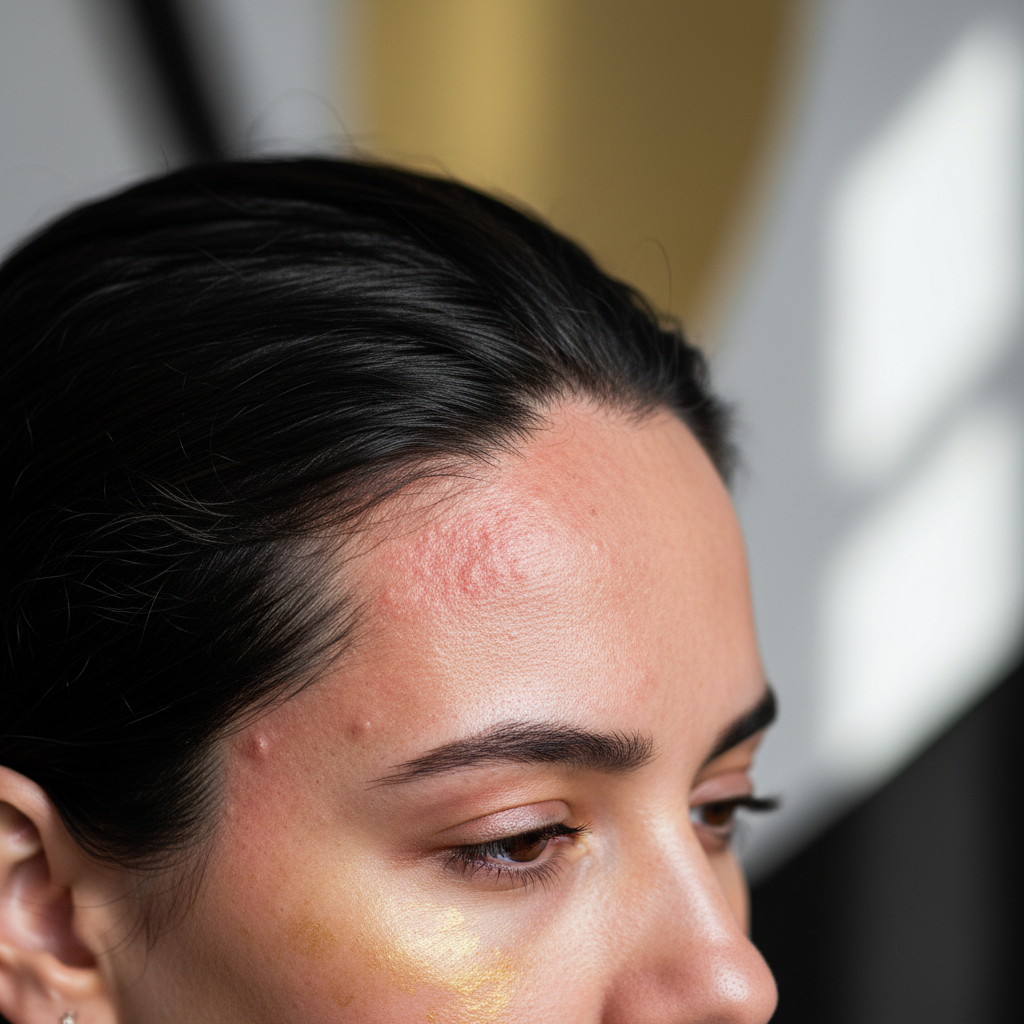
In the vast majority of cases, allergic contact dermatitis to hair dye presents within 24 to 48 hours of application. The initial sensation is usually an intense, persistent itch (pruritus) across the scalp, hairline, nape, and posterior ears. Because the scalp skin is relatively thick, the most severe visible inflammation often manifests where the dye touches thinner adjacent tissue:
- Erythema and oedema: Redness, heat, and swelling along the hairline, temples, and upper eyelids. Eyelid swelling is especially common due to the delicate, distensible nature of periorbital tissue.
- Vesiculation: Small, fluid-filled blisters (vesicles) that form on the scalp margin or ears. These can break open, ooze serous fluid, and crust over.
- Dryness and scaling: Secondary flaking, tightness, and secondary lichenification if low-grade exposure continues over time.
Severe and systemic reactions
Although less frequent than delayed eczema, immediate-type (IgE-mediated) reactions can occur. When these present, symptoms can appear within minutes to a few hours of salon application:
- Generalised urticaria (widespread raised, itchy wheals across the neck, chest, and arms).
- Angioedema, involving substantial swelling of the lips, tongue, and throat lining.
- Respiratory distress, including bronchospasm, audible wheezing, and chest tightness.
- Anaphylactic shock, marked by a precipitous drop in blood pressure, dizziness, and collapse. This constitutes a medical emergency.
The immunological mechanism behind the reaction
PPD has a low molecular weight (108.14 g/mol), allowing it to easily cross the stratum corneum barrier of the epidermis. However, unoxidised PPD is technically a hapten, meaning it is too small on its own to stimulate an immune response.
Once absorbed, PPD undergoes rapid auto-oxidation or enzymatic conversion. It forms reactive intermediates, including Bandrowski's base, which covalently conjugate with local dermal proteins. Epidermal Langerhans cells (antigen-presenting dendritic cells) internalise these hapten-protein complexes, migrate to regional lymph nodes, and present them to naive T-lymphocytes.
This initial process is the sensitisation phase, which takes 10 to 14 days and produces no outward symptoms. Once a person is sensitised, any subsequent contact with PPD activates memory T-cells. These lymphocytes release pro-inflammatory cytokines (such as interferon-gamma and interleukin-2), drawing cytotoxic T-cells, macrophages, and neutrophils to the site of dye application. This cascade culminates in epidermal cell damage, spongiosis, and the classic clinical symptoms of eczema.
Irritation vs allergy: comparison of reactions
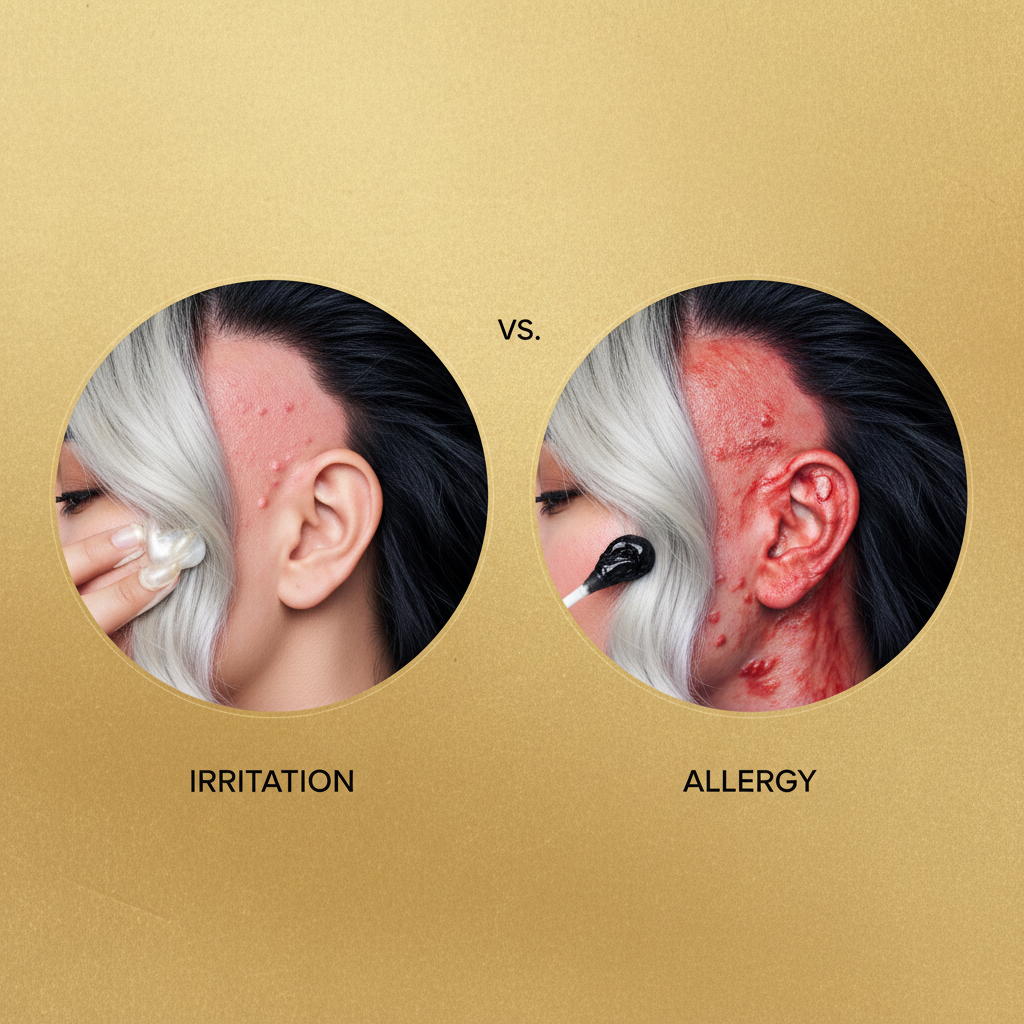
Distinguishing between irritant contact dermatitis (ICD) and true allergic contact dermatitis (ACD) is vital for proper scalp management. The following table highlights the key clinical differences:
| Clinical Feature | Irritant Contact Dermatitis (ICD) | Allergic Contact Dermatitis (ACD) |
|---|---|---|
| Underlying mechanism | Direct chemical damage to skin barrier | Type IV cell-mediated immune response |
| Typical onset window | Minutes to hours during or after application | 24 to 72 hours following exposure |
| Primary symptom | Burning, smarting, or stinging sensation | Intense, unyielding itching (pruritus) |
| Visible margins | Strictly confined to areas of direct dye contact | Spreads beyond dye lines (eyelids, neck, ears) |
| Skin lesions | Erythema, mild peeling, occasional chemical burns | Spongiotic papules, weeping blisters, crusts |
| Systemic potential | None | Possible (facial angioedema, rare anaphylaxis) |
| Lifelong persistence | No; barrier repairs once chemical is removed | Yes; immune memory persists indefinitely |
What the evidence does not show
There is no scientific evidence to support the idea that natural hair texture, porosity, or thickness changes your biological risk of developing an allergy to PPD. Sensitisation is entirely mediated by the immune system and cutaneous barrier function, not hair genetics.
Furthermore, evidence does not show that hair dyes marketed as organic or ammonia-free are inherently safe for people allergic to PPD. While these products may omit ammonia or synthetic fragrances to reduce scalp irritation, many still rely on PPD or closely related chemicals (such as para-toluene diamine or toluene-2,5-diamine sulphate) to achieve permanent colour deposit. Cross-reactivity between these diamines exceeds 50% in patch-tested patients.
Finally, having coloured your hair for years without incident does not grant immunity. Sensitisation can develop unpredictably after decades of routine exposure.
Practical steps to take if symptoms occur
If you suspect an active allergic reaction to hair dye, swift action helps limit chemical absorption and reduce tissue inflammation:
- Rinse thoroughly: Wash the scalp immediately with copious amounts of lukewarm water. Use a gentle, fragrance-free cleanser to lift residual oxidised colour from the skin surface.
- Neutralise residual oxidants: In clinical settings, dermatologists sometimes suggest applying a 2% hydrogen peroxide rinse or gentle saline compresses to help neutralise unreacted dye intermediates, followed by thorough rinsing.
- Avoid further chemical treatments: Do not apply toners, bleaches, or heat styling tools to an inflamed scalp.
- Use targeted topical relief: Over-the-counter 1% hydrocortisone cream applied sparingly to the hairline, ears, and neck (avoiding the eyes) can ease localised swelling. Oral non-sedating antihistamines can help reduce itching.
- Seek formal patch testing: Arrange a consultation with a registered dermatologist or allergy specialist for an authorised patch test (using the European baseline series) to confirm PPD sensitisation and rule out co-allergies to preservatives or resorcinol.
When the cause may be something else
Scalp inflammation following a salon visit is not always driven by PPD. Several other agents and pre-existing conditions produce similar manifestations:
- Hydrogen peroxide and persulphates: High-volume peroxide (30 or 40 volume) or bleaching persulphate salts can cause acute irritant chemical burns, presenting with immediate stinging, scalp scabbing, and localised hair breakage.
- Preservatives: Methylisothiazolinone (MI) and methylchloroisothiazolinone (MCI) are common preservatives in shampoos and conditioners that act as potent allergens independently of hair dye.
- Seborrhoeic dermatitis: A flare-up of this chronic condition, driven by Malassezia yeast overgrowth, can cause redness, greasy yellow scaling, and pruritus that mimics mild post-dye dermatitis.
- Psoriasis: Plaque psoriasis can be provoked along the hairline following chemical trauma, known as the Koebner phenomenon.
Supporting scalp barrier health with Watermans
When managing a sensitive or recovering scalp, maintaining optimal cutaneous barrier function and gentle follicular hygiene is essential. Watermans focuses on non-irritating, sulphate-free formulations designed to cleanse the hair and scalp without aggressive detergents that strip essential epidermal lipids.
Products like Watermans Grow Me shampoo provide a balanced, revitalising environment for thinning or stressed hair fibres using carefully chosen botanical extracts and vitamins. While cosmetic haircare products cannot treat, prevent, or diagnose an underlying immunological allergy, choosing mild, high-performance formulations helps support natural barrier recovery and keeps hair fibres feeling strong once clinical dermatitis has fully subsided under medical care.
Frequently asked questions about PPD Allergy Symptoms
How quickly do PPD allergy symptoms appear after colouring hair?
Most symptoms develop between 24 and 72 hours after exposure due to the delayed nature of a type IV cell-mediated immune response. However, people who have already developed severe sensitisation may notice intense burning, redness, and itching within a few hours. Immediate-type reactions like hives or facial swelling can emerge within minutes.
Can PPD allergy symptoms cause permanent hair loss?
PPD allergy primarily causes dermatitis of the skin surface and does not damage deeper stem cells inside hair follicles. While severe, neglected blistering can trigger temporary hair shedding (telogen effluvium) or localized hair breakage from aggressive scratching, it does not cause permanent scarring alopecia unless secondary bacterial infections severely destroy the scalp tissue.
What should I do immediately if I notice facial swelling from hair dye?
Facial swelling, particularly around the eyes, lips, or throat, indicates a spreading inflammatory reaction that requires urgent medical attention. Contact emergency services or visit the nearest accident and emergency department immediately. Do not attempt to treat spreading facial oedema or breathing difficulty at home with over-the-counter creams alone.
Is a 48-hour patch test reliable for detecting a PPD allergy?
An open consumer patch test done behind the ear or in the crook of the elbow catches many sensitised individuals, but it is not infallible. Reactions can take up to 96 hours to appear. Professional dermatological patch testing remains the gold standard, as it uses standardised allergen concentrations applied under occlusion for accurate, validated diagnostic readings.
Summary of managing allergic reactions to hair dye
Recognising the early clinical markers of PPD allergy symptoms enables individuals and colourists to intervene before mild scalp dermatitis progresses to extensive facial swelling or systemic distress. Paraphenylenediamine remains an effective industrial dye coupling agent, but its potential to elicit life-long allergic contact dermatitis requires vigilance, disciplined pre-colour testing, and an understanding of underlying immunological mechanisms. Anyone displaying persistent symptoms should seek medical confirmation from a dermatologist and transition permanently to verified, non-cross-reactive colouring alternatives.
Sources and references
- British Association of Dermatologists. Guidelines for the management of contact dermatitis. British Journal of Dermatology, 2017.
- European Society of Contact Dermatitis. Diagnostic patch testing safety and protocols: Paraphenylenediamine. Contact Dermatitis, 2020.
- Scientific Committee on Consumer Safety (SCCS). Opinion on p-Phenylenediamine (PPD), European Commission, 2012.
- National Health Service (NHS). Allergic reaction to hair dye: Symptoms and clinical management, 2023.