Postpartum Hair Loss Explained: Causes, Cycle, and Recovery
9 min read ·
Postpartum hair loss explained: discover why sudden shedding happens after childbirth, how hormones control the cycle, and when to expect full regrowth.

Quick answer: With Postpartum Hair Loss Explained, the sudden shedding experienced after childbirth is identified as postpartum telogen effluvium, triggered by a steep plunge in circulating oestrogen and progesterone. Instead of true follicular damage or permanent baldness, this is temporary excessive hair shedding where resting hairs release simultaneously. The main limitation is that no topical product or supplement can instantly halt this hormonal transition, though normal hair density typically returns naturally within 6 to 12 months.
Key takeaways
- Postpartum shedding is a physiological form of telogen effluvium, not permanent alopecia or follicular death.
- During pregnancy, elevated oestrogen levels prolong the anagen (growth) phase, keeping hairs anchored far longer than usual.
- The precipitous drop in hormones after delivery shifts high numbers of follicles simultaneously into the telogen (resting) phase.
- Shedding typically peaks between 3 and 5 months postpartum and resolves on its own within 6 to 12 months.
- Distinguishing between shedding (bulb intact) and breakage (fibre snapping) helps avoid unnecessary panic and incorrect treatments.
Postpartum Hair Loss Explained: what the evidence shows
When having Postpartum Hair Loss Explained, clinical research confirms that this condition affects roughly 40 to 50 percent of new mothers. While alarming when clumps appear on hairbrushes or in shower drains, dermatological studies categorise it strictly as an acute, self-limiting telogen effluvium.

Under baseline conditions, a healthy scalp maintains roughly 85 to 90 percent of its 100,000 follicles in the active growth phase (anagen), 1 to 2 percent in the transitional phase (catagen), and roughly 10 percent in the resting phase (telogen). On any given day, losing 50 to 100 telogen hairs is completely normal.
During the second and third trimesters of pregnancy, surging oestrogen and human placental lactogen alter this rhythm dramatically. The proportion of follicles in anagen rises above 95 percent. The natural shedding cycle pauses, giving expectant mothers noticeably thicker, fuller hair.
At delivery, the placenta separates, and circulating oestrogen and progesterone levels drop precipitously back to baseline within 48 to 72 hours. This abrupt endocrine shift signals thousands of prolonged anagen hairs to enter catagen and transition into telogen at the exact same moment. Because the telogen resting phase lasts roughly 100 days (about 3 months), the visible shedding does not begin immediately after birth. It typically starts around week 12, creating the impression of sudden, unexplained hair loss.
What the evidence does not show
Misinformation surrounding postpartum shedding is common. Controlled dermatological research clarifies several critical boundaries:
- It does not cause permanent baldness: The hair follicle remains alive, structurally sound, and anchored in the dermis. The dermal papilla does not miniaturise as it does in androgenetic alopecia.
- Breastfeeding is not the direct trigger: Clinical studies show that non-lactating mothers experience postpartum shedding along the same timeline as breastfeeding mothers. While prolactin influences cycle dynamics slightly, the main driver is the universal drop in gestational steroids.
- Topical products cannot stop the cycle: Once a follicle enters the telogen phase, that hair fibre will inevitably release when the new hair below it starts growing. Shampoos, oils, or serums cannot lock a telogen hair permanently into the scalp.
The underlying physiological mechanism
The hair growth cycle operates through four continuous stages:
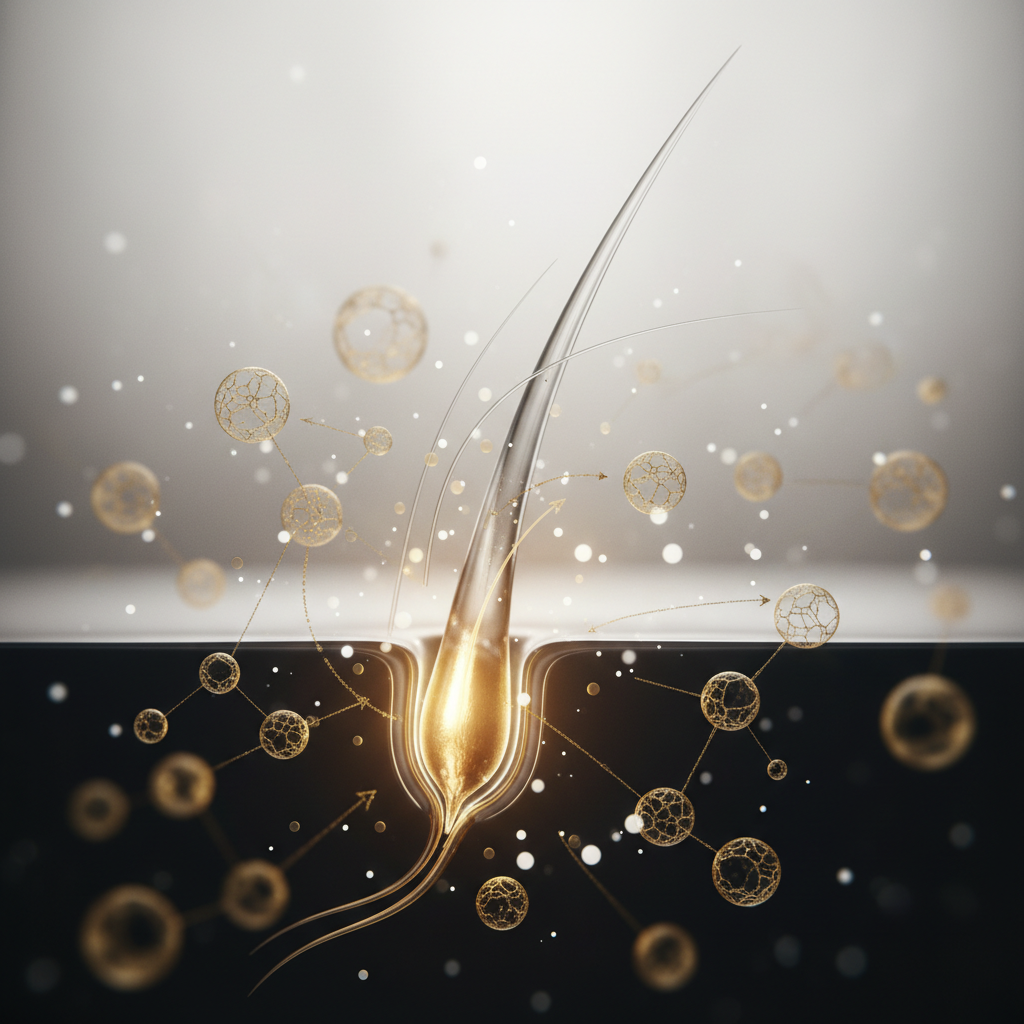
- Anagen (Growth): Lasts 2 to 7 years. Cells in the follicle bulb divide rapidly, synthesising keratin.
- Catagen (Regression): Lasts 2 to 3 weeks. Follicle shrinks and detaches from the dermal blood supply.
- Telogen (Rest): Lasts 2 to 4 months. The follicle remains dormant while holding the club hair in place.
- Exogen (Shedding): The club hair sheds, pushed out as a new anagen hair emerges beneath it.
Following childbirth, up to 30 to 40 percent of all scalp follicles can shift into telogen concurrently. When they reach exogen roughly 90 to 120 days later, daily hair fall can escalate from the baseline 100 hairs up to 300 to 500 hairs per day. This dramatic shedding is actually a sign of regeneration: the old club hairs are being pushed out by fresh anagen hairs emerging underneath.
Understanding the difference: shedding, loss, and breakage
Managing hair after pregnancy requires knowing whether you are experiencing telogen shedding, cosmetic fibre breakage, or underlying alopecia.
| Characteristic | Postpartum Shedding (Telogen Effluvium) | Hair Breakage (Fibre Fracture) | Pattern Hair Loss (Androgenetic) |
|---|---|---|---|
| Root Cause | Rapid drop in oestrogen and progesterone | Mechanical stress, heat, chemical bleaching | Genetic sensitivity to dihydrotestosterone (DHT) |
| Visible Fibre | Full-length strand with a white bulb at the root | Short, fractured pieces with frayed ends, no bulb | Thinned, miniaturised strands over time |
| Scalp Pattern | Diffuse thinning, prominent at temples and hairline | Localised to areas of tension, heat, or processing | Widening central part or receding hairline |
| Timeframe | Peaks at 3 to 5 months; resolves by 12 months | Immediate upon physical or chemical trauma | Progressive and gradual over years |
| Follicle Status | Healthy; cycling into a new growth phase | Healthy; intact inside the scalp | Progressively shrinking (miniaturisation) |
Signs to look for
Postpartum shedding follows distinct characteristics:
- Diffuse thinning across the entire scalp: Unlike patchy alopecia, the reduction in volume is spread out, though it often feels most noticeable around the temples and frontal hairline.
- White bulb at the hair root: Shed hairs display a small, solid, white or translucent club at the root, confirming the hair completed its natural telogen phase rather than snapping mid-shaft.
- Sudden onset around 3 months: Shedding accelerates rapidly around 12 to 16 weeks after delivery.
- Emergence of short "baby hairs": Around 6 to 9 months postpartum, a fringe of short, upright new hairs often appears along the hairline, signalling active anagen regrowth.
Practical steps to support your hair and scalp
While you cannot alter the biological hormonal reset, you can minimise unnecessary mechanical damage and optimise the scalp environment for returning hair:
- Handle wet hair gently: Wet hair stretches and snaps at lower tensile loads. Use a wide-tooth comb or flexible detangling brush, working from ends upward.
- Minimise high-tension styles: Tight ponytails, slick buns, and tight braids apply continuous traction to follicles already weakened by hormonal shifts, risking traction alopecia alongside telogen shedding.
- Lower heat styling temperatures: Keep hair dryers, straighteners, and curling wands below 180 degrees Celsius to preserve the cuticle and prevent structural breakage.
- Ensure nutritional repletion: Pregnancy and blood loss deplete maternal nutrient reserves. Work with a GP to verify levels of serum ferritin, vitamin D, zinc, and B vitamins. Ferritin levels below 30 to 50 mcg/L can prolong diffuse shedding.
- Use volumising, lightweight formulations: Heavy conditioners and silicones can weigh down low-density hair, making thinning more visible. Lightweight, clarifying cleansers lift the root.
Cosmetic support with Watermans
During the recovery phase, supporting the physical scalp environment helps existing hair look its best. Watermans GrowMe Shampoo is formulated with biotin, rosemary, caffeine, and niacinamide to cleanse the scalp surface thoroughly without stripping natural sebum. Pairing it with a lightweight conditioner improves fibre slip and reduces comb friction, preventing mechanical breakage while the follicles complete their natural regrowth cycle.
When the cause may be something else
Not all excessive postpartum shedding is simple telogen effluvium. The intense physiological stress of childbirth, fluid shifts, and immune fluctuations can trigger or unmask other conditions:
- Postpartum thyroiditis: Inflammation of the thyroid gland occurs in roughly 5 to 10 percent of women within the first year after giving birth. Both hyperthyroidism and hypothyroidism disrupt the hair cycle, causing prolonged shedding alongside fatigue, unexpected weight changes, heart palpitations, or brain fog.
- Severe iron deficiency anaemia: Blood loss during delivery combined with the high iron demands of lactation can cause severe iron depletion. Low iron stores impair follicular matrix proliferation.
- Early-onset female pattern hair loss: In rare cases, pregnancy unmasks an underlying genetic sensitivity to androgens as protective oestrogen levels disappear.
When to seek professional advice
Consult a GP, dermatologist, or qualified trichologist if:
- Shedding continues at a severe rate beyond 12 months postpartum.
- You observe distinct, smooth, round bald patches (which may point to alopecia areata).
- The scalp shows visible signs of inflammation, erythema, scaling, burning, or tenderness.
- You experience concurrent systemic symptoms like extreme exhaustion, sudden mood swings, heat or cold intolerance, or brittle nails.
A healthcare professional can arrange full blood panels, including full blood count, serum ferritin, thyroid stimulating hormone (TSH), free T4, and vitamin D3, to rule out secondary contributors.
Frequently asked questions about Postpartum Hair Loss Explained
Does breastfeeding make postpartum hair loss worse?
No. High-quality clinical trials show that lactation does not cause or worsen postpartum hair loss. The hormonal drop responsible for shedding is the loss of placental oestrogen and progesterone right at birth. While prolactin stays elevated during breastfeeding, it does not drive the massive telogen shift. Weaning can occasionally cause a secondary, minor hormonal fluctuation, but it does not lead to permanent hair loss.
Can supplements prevent hair from shedding after delivery?
No dietary supplement can prevent postpartum shedding. With Postpartum Hair Loss Explained, the trigger is an internal endocrine drop that already committed follicles into the resting phase months prior. While correcting genuine deficiencies in iron, zinc, or vitamin D supports healthy new growth, excess supplementation of vitamins A, E, or selenium can paradoxically trigger additional shedding.
How long does postpartum hair regrowth take?
Most women see shedding taper off significantly between 6 and 9 months postpartum. Because scalp hair grows at an average rate of 1 to 1.25 centimetres per month, noticeable regrowth takes time. Short new hairs along the hairline usually become visible around 6 months, and overall hair volume and density typically return to baseline between 12 and 15 months postpartum.
Can a haircut help with postpartum hair shedding?
A haircut cannot stop follicles from releasing shed hairs at the root level, but it can make a substantial cosmetic difference. Shorter styles, such as a blunt bob or layered lob, remove weight from the ends. This adds natural volume, reduces tangling, and minimises the mechanical drag placed on vulnerable strands during brushing, reducing secondary breakage.
Navigating postpartum hair changes
Understanding Postpartum Hair Loss Explained provides reassurance during an already demanding phase of life. The sudden loss of hair volume that occurs several months after childbirth is not a sign of poor health, failed care, or permanent damage. It is a predictable, biological correction as your follicles rebalance after months of hormone-induced retention. By protecting fragile lengths from unnecessary physical stress, replenishing vital nutrients, and giving your hair cycle time to stabilise, full natural density will steadily re-establish itself.
Sources and references
- British Association of Dermatologists. Telogen Effluvium: An Information Leaflet. 2021.
- National Institute for Health and Care Excellence (NICE). Alopecia - unnatural hair loss: Clinical Knowledge Summary. 2022.
- Headington, J. T. Telogen effluvium: New concepts and review. Archives of Dermatology, 1993. DOI: 10.1001/archderm.1993.01680270090011.
- American Academy of Dermatology. Hair loss in new moms. 2023.
- Piérard-Franchimont, C., & Piérard, G. E. Alterations in hair cycle during pregnancy and the post-partum. International Journal of Cosmetic Science, 2013. DOI: 10.1111/ics.12040.
Find these ingredients in Watermans products
- Zinc: you will find this ingredient in our Hair Vitamins.
- Niacinamide: you will find this ingredient in our Hair Mask.