Porosity and Hair Care: The Complete Scientific Guide
8 min read ·
Understand how Porosity and Hair Care work together to balance moisture retention, protect fragile cuticles, and prevent unnecessary hair breakage.

Quick answer: Understanding Porosity and Hair Care comes down to how effectively your hair fibre absorbs and retains moisture. Hair porosity describes the condition of the outer cuticle layer: low porosity features tightly overlapping scales that resist water, while high porosity features raised or missing scales that absorb water rapidly but lose it just as fast. The main limitation is that porosity cannot be permanently fixed, because the hair shaft is non-living tissue; it can only be managed with targeted washing, conditioning, and styling habits.
Key takeaways
- Hair porosity reflects the structural state of the protective cuticle layer, dictating moisture absorption and evaporation.
- Genetics determine baseline porosity, while chemical processing, heat styling, and UV radiation increase porosity through physical cuticle erosion.
- Low porosity hair repels water and resists product absorption, requiring light formulations and gentle heat during deep conditioning.
- High porosity hair drinks moisture quickly but dries out fast, requiring film-forming sealants and structural proteins to reduce fibre snapping.
- Porosity alters hair breakage risk rather than follicular hair loss; shedding from the root stems from scalp or biological cycles, not cuticle damage.
Porosity and Hair Care: what the evidence shows
Scientific research on human hair structure demonstrates that the outermost layer, the cuticle, directly governs how hair interacts with its environment. The cuticle consists of five to ten overlapping layers of dead, flattened keratinocytes. When researchers examine hair under scanning electron microscopy, healthy, virgin hair displays smooth, tightly shingled edges. Damaged hair shows chipped, lifted, or entirely stripped cuticle scales.
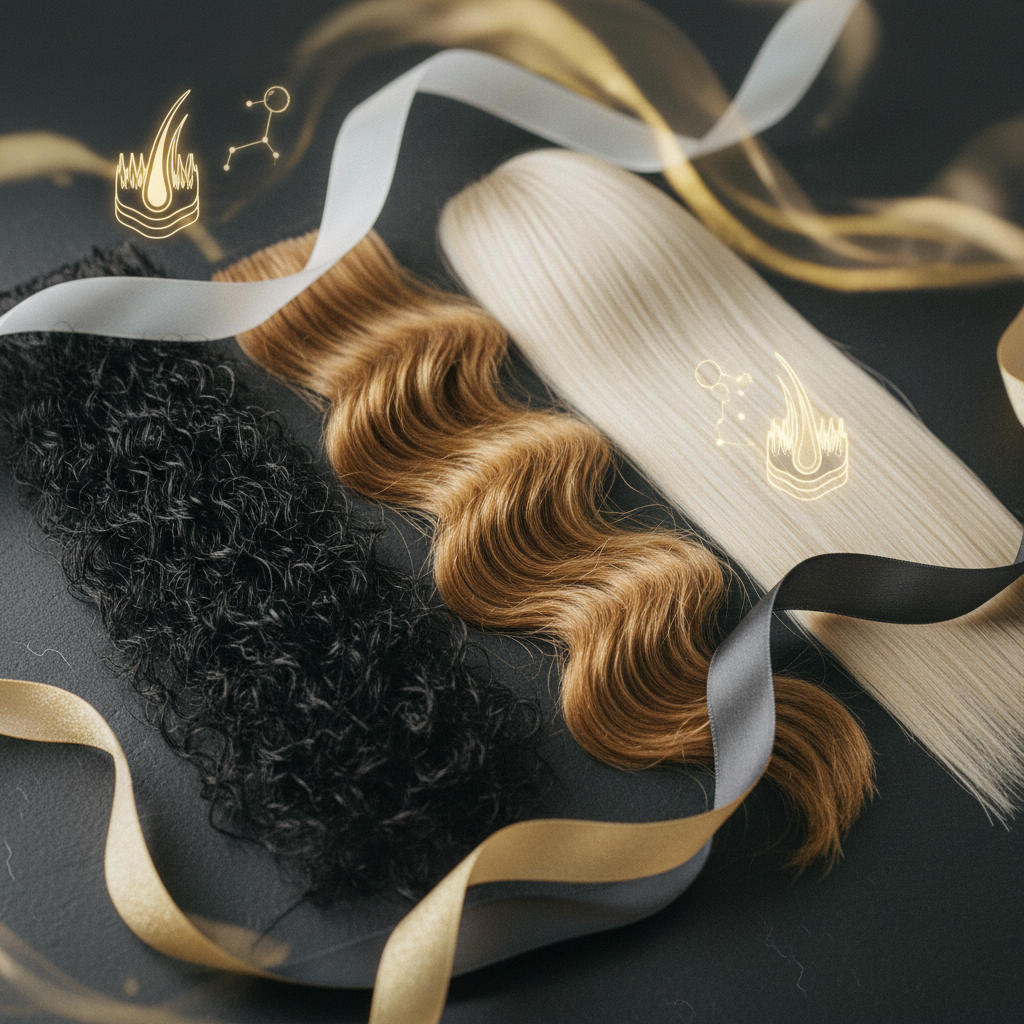
The relationship between Porosity and Hair Care is fundamentally biophysical. Water molecules penetrate porous hair effortlessly because gaps exist in the lipid-rich 18-methyleicosanoic acid (18-MEA) layer and the underlying endocuticle. A study published in the Journal of Cosmetic Science observed that bleached hair (characterised by high porosity) can hold significantly more water than virgin hair. However, this hydration is fleeting. Because the protective lipid seal is gone, moisture evaporates rapidly, leaving the inner cortex vulnerable to friction, tangling, and mechanical breakage.
Conversely, low porosity hair possesses an intact, hydrophobic lipid barrier. Water beads on the surface rather than sinking into the cortex. This makes washing, hydrating, and colouring low porosity hair slower, as products tend to sit on the surface rather than penetrating the shaft.
+------------------+-----------------------------+-----------------------------+-----------------------------+
| Feature | Low Porosity | Medium (Normal) Porosity | High Porosity |
+------------------+-----------------------------+-----------------------------+-----------------------------+
| Cuticle Status | Flat, tightly sealed | Slightly raised, uniform | Lifted, chipped, or missing |
| Water Absorption | Very slow, beads up | Balanced and steady | Instantaneous |
| Drying Time | Several hours, dries slowly | Moderate drying rate | Dries very quickly |
| Product Reaction | Prone to surface build-up | Absorbs evenly | Drinks heavy creams easily |
| Primary Concern | Build-up and stiffness | Maintenance of condition | Moisture loss and breakage |
+------------------+-----------------------------+-----------------------------+-----------------------------+
The biological mechanism behind hair porosity
Every human hair strand consists of three main regions: the medulla (central core, often absent in fine hair), the cortex (structural bulk containing keratin chains and melanin), and the cuticle (protective armour).
In low porosity hair, the cuticle tiles lie flat against the shaft at a tight angle. This structure is sealed by 18-MEA, an integral fatty acid layer that provides natural hydrophobicity. Because of this impermeable exterior, moisture cannot easily pass in or out.
High porosity develops when this architecture breaks down. While some people naturally inherit looser cuticle arrangements, most high porosity results from external stressors:
- Alkaline swelling: Chemical bleaches, permanent hair dyes, and relaxers raise the cuticle by swelling the hair shaft (often operating at pH 9.0 to 11.0). When rinsed, the cuticles fail to lay completely flat again.
- Thermal wear: Blow-drying at close range or using flat irons above 185°C vaporises internal moisture, creating micro-cavities within the cuticle and cortex.
- Photodegradation: Ultraviolet rays break down cystine disulphide bonds, leaving the outer sheath fragile and porous.
When cuticles remain open, water enters the cortex instantly, causing the fibre to swell. Repeated cycles of swelling and rapid drying, termed hygral fatigue, weaken the cell membrane complex between cortical cells. This eventually causes the fibre to snap, leading to mechanical breakage rather than true follicular shedding.
Common signs of low versus high porosity hair
Determining your porosity helps tailor your washing and styling routines effectively.
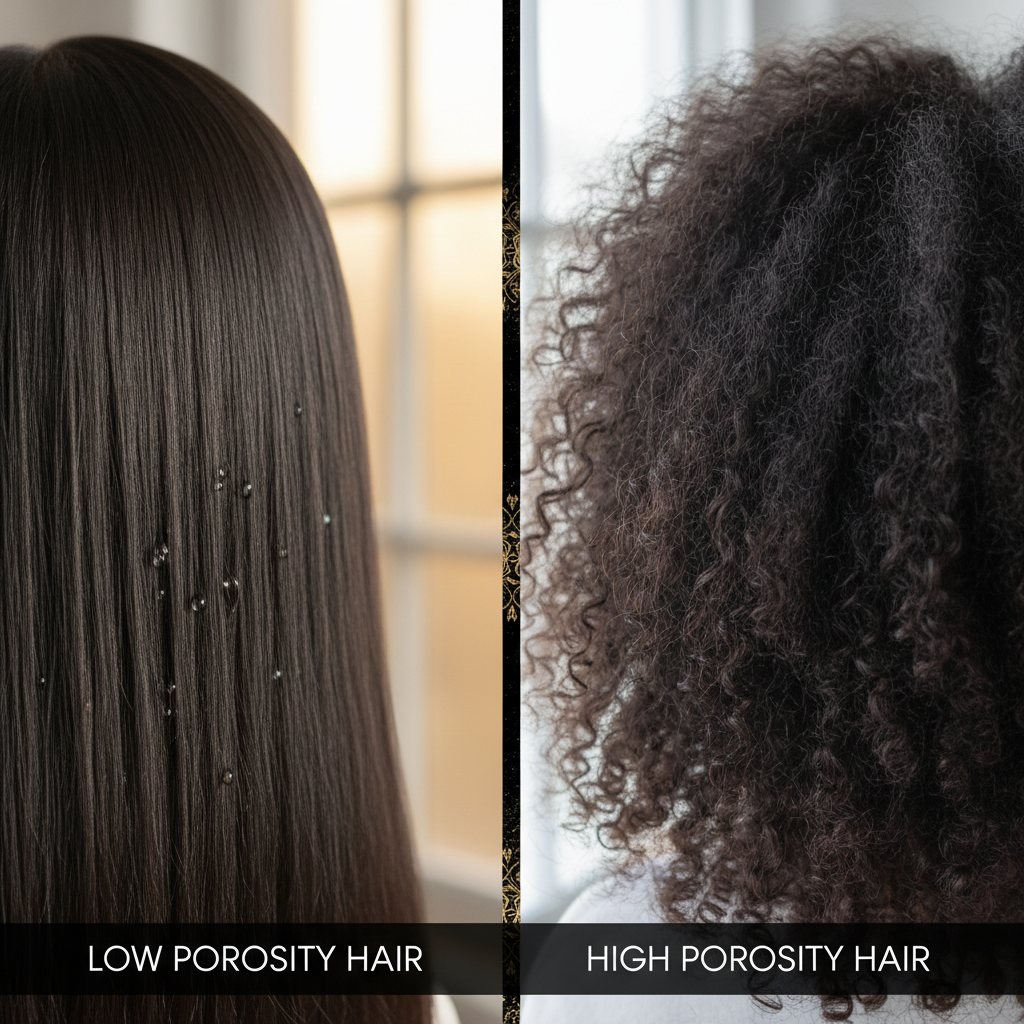
Signs of low porosity hair
- Water takes several minutes to thoroughly saturate your hair under the shower head.
- Hair takes a remarkably long time to dry naturally, often taking six to eight hours or more.
- Products, especially oils and butters, tend to sit on top of the strand, feeling greasy or tacky rather than absorbed.
- Clarifying shampoos are frequently needed because residue accumulates quickly, causing hair to feel stiff or wiry.
Signs of high porosity hair
- Hair gets wet the second it encounters water.
- Strands dry out rapidly, sometimes within thirty minutes to an hour of washing.
- Hydrating lotions, leave-in conditioners, and oils vanish into the hair without providing lasting softness.
- The hair feels rough, coarse, or snaggy when you slide your fingers upwards from the tip to the root.
- Tangles form easily, and you see short, broken fragments of hair when brushing.
The myth of the float test
You may have seen the popular home test of dropping a shed strand into a glass of water to see if it floats or sinks. Cosmetic chemists generally advise against relying on this test. Surface tension, natural scalp sebum, and leftover product residue frequently keep highly damaged strands floating on top. Conversely, clean low porosity hair can sink if pushed below the water's surface tension. Evaluating how your hair behaves during washing and drying provides a far more accurate diagnosis.
Tailoring your hair care routine by porosity level
Adapting your regimen to your hair's structural needs ensures you maintain adequate elasticity and minimise breakage.
Managing low porosity hair
- Use gentle warmth: Apply deep conditioning treatments under a warm towel or shower cap. Moderate warmth temporarily softens and opens the cuticle scales, allowing conditioning agents to enter the cortex.
- Choose lightweight humectants: Opt for formulations containing glycerin, aloe vera, or hydrolysed silk rather than heavy plant butters.
- Clarify regularly: Use an effective clarifying shampoo once every two to three weeks to strip away built-up silicones and emollients that block hydration.
- Apply products to soaking wet hair: Water acts as a carrier vehicle; working conditioners through saturated strands helps distribute ingredients before cuticles fully close.
Managing high porosity hair
- Incorporate hydrolysed proteins: Formulations with hydrolysed wheat, keratin, or rice protein temporarily fill micro-fissures along the damaged cuticle sheath, boosting structural integrity.
- Layer sealants (the LOC/LCO method): Apply a liquid or leave-in conditioner first, followed by a light cream, and finish with a heavier plant oil (like argan or jojoba) to lock moisture inside the cortex and reduce evaporation.
- Maintain a low pH environment: Rinse with slightly acidic conditioners (around pH 4.0 to 5.0). Acidic pH values cause the cuticle scales to contract and flatten, which smooths the strand and protects the interior.
- Minimise heat exposure: Avoid direct heat tools or keep temperatures below 150°C, and always apply a thermal protectant beforehand.
When the issue is not porosity: shedding versus breakage
It is critical to distinguish between cuticle damage and biological hair shedding. Porosity issues result in fibre snapping, split ends, and rough texture. This is structural breakage.
If you notice hairs falling out with a white bulb attached to the end, or if you experience widespread thinning across the crown or widening of your parting, porosity is not the primary cause. True hair loss involves follicular processes, such as:
- Telogen effluvium: Widespread shedding triggered by acute stress, illness, hormonal fluctuations, or nutritional shortfalls.
- Androgenetic alopecia: Genetic thinning driven by follicular sensitivity to dihydrotestosterone (DHT).
- Scalp inflammation: Conditions such as seborrhoeic dermatitis or psoriasis that impair follicular health.
Cosmetic treatments for porosity cannot resolve follicular thinning. If you notice persistent shedding from the scalp, consult a dermatologist or qualified trichologist.
Supporting hair condition: the Watermans approach
For individuals balancing cuticle wear with scalp vitality, Watermans offers targeted formulations designed to support both the follicular environment and the physical strand. Watermans Grow Me Shampoo combines biotin, rosemary extract, caffeine, and hydrolysed lupin protein. While the natural botanical extracts invigorate the scalp, the hydrolysed proteins adhere to lifted cuticle scales, reinforcing fragile, porous shafts to reduce everyday wash-and-style breakage.
Pairing this with a rich conditioning treatment like Watermans Condition Me Conditioner introduces essential cholesterol and softening emollients. This helps seal elevated cuticles without weighing down lower porosity strands, leaving the hair feeling stronger, smoother, and visibly fuller.
Frequently asked questions about Porosity and Hair Care
Can you permanently change hair porosity?
No, you cannot permanently change hair porosity because the hair shaft is composed of non-living, non-regenerative keratin fibres. While you can permanently damage cuticles through chemical bleaching or excessive heat, thereby increasing porosity, you cannot permanently lower it once damaged. You can only temporarily manage porosity using pH-balanced products, protein-rich treatments, and protective sealants until new hair grows in.
Does high porosity hair require more protein than low porosity hair?
High porosity hair generally benefits much more from regular protein treatments than low porosity hair. Because high porosity strands feature gaps and missing cuticle shingles, small hydrolysed proteins can temporarily patch those structural deficits, improving tensile strength. Low porosity hair already has an intact cuticle framework, so excessive protein treatments can make it feel stiff, brittle, and prone to snapping.
What is the most effective approach to Porosity and Hair Care for bleached hair?
The best approach to Porosity and Hair Care for bleached hair combines structural strengthening with moisture retention. Bleaching strips natural protective lipids and leaves cuticles permanently raised. To care for it, use low-pH, sulphate-free shampoos, alternate between hydrolysed protein treatments and moisturising masks, and always finish styling with a sealing serum or oil to trap moisture inside the hair shaft.
Does cold water really close the hair cuticle?
Cold water has a negligible effect on closing the hair cuticle. While cold temperatures can cause minor physical contraction, cuticle alignment is primarily governed by chemical pH. Rinsing hair with products formulated at a mildly acidic pH (between 4.0 and 5.5) flattens cuticle scales far more effectively than cold water rinses ever could.
Mastering Porosity and Hair Care
Understanding how cuticles respond to daily handling, chemical treatments, and product ingredients is central to successful Porosity and Hair Care. Recognising whether your strands resist water or lose moisture rapidly allows you to select the right humectants, proteins, and conditioners to maintain healthy elasticity. While cosmetic products cannot alter your hair's living biology or resurrect damaged cuticles, matching your styling routine to your porosity type will protect the strand, mitigate breakage, and keep your hair looking its best.
Sources and references
- Journal of Cosmetic Science, "The effect of chemical treatments on the structural and mechanical properties of human hair," 2007.
- International Journal of Trichology, "Hair Cosmetics: An Overview," 2015.
- Robbins, C. R., Chemical and Physical Behavior of Human Hair, 5th ed., Springer, 2012.
- British Journal of Dermatology, "Cuticle damage and hair breakage from styling practices," 2011.
Find these ingredients in Watermans products
- Aloe Vera: you will find this ingredient in our Curly Hair Conditioner.