Understanding the PH Balance of Hair and Scalp
9 min read ·
Discover how the natural PH Balance of Hair and Scalp protects cuticle integrity, prevents breakage, and defends against irritation with evidence-based care.
Quick answer: The natural PH Balance of Hair and Scalp is naturally acidic, sitting between pH 3.67 for the hair fibre and pH 4.5 to 5.5 for the scalp surface. Maintaining this acidic environment keeps the hair cuticle flat, compact, and resilient against mechanical damage while protecting the scalp skin barrier against microbial overgrowth. However, cosmetic pH balancing cannot reverse existing structural hair damage or cure underlying follicular conditions like alopecia, making ongoing preventative care essential.
Understanding the delicate balance between acidity and alkalinity is fundamental to effective trichology and daily hair care. When the natural pH shifts, both skin biology and hair fibre mechanics suffer.
Key takeaways
- The scalp surface has an acidic mantle with a normal pH range of 4.5 to 5.5, which protects against pathogen colonisation and maintains the epidermal barrier.
- The hair shaft is more acidic than the scalp, possessing an isoelectric point around pH 3.67, where it carries no net electrical charge.
- Alkaline cosmetic products with a pH above 5.5 raise cuticle scales, increase negative electrical charge, induce friction, and leave the cortex vulnerable to breakage.
- Water alone typically has a neutral to mildly alkaline pH of 7.0 to 8.5, which temporarily swells the hair fibre during washing.
- Formulations balanced between pH 4.5 and 5.5 prevent excessive swelling, seal the cuticle layer, and support the natural scalp microbiome.
PH Balance of Hair and Scalp: what the evidence shows
Research published in the International Journal of Trichology demonstrates that the PH Balance of Hair and Scalp plays a critical role in cuticular integrity and scalp health. The human scalp is covered by an acid mantle, a thin hydrolipidic film composed of sebum, sweat, and breakdown products of cellular turnover. This biological barrier registers an acidic pH between 4.5 and 5.5. In contrast, the hair fibre does not produce sebum or sweat; its chemical properties are dictated by the keratin proteins that form the cuticle and cortex.
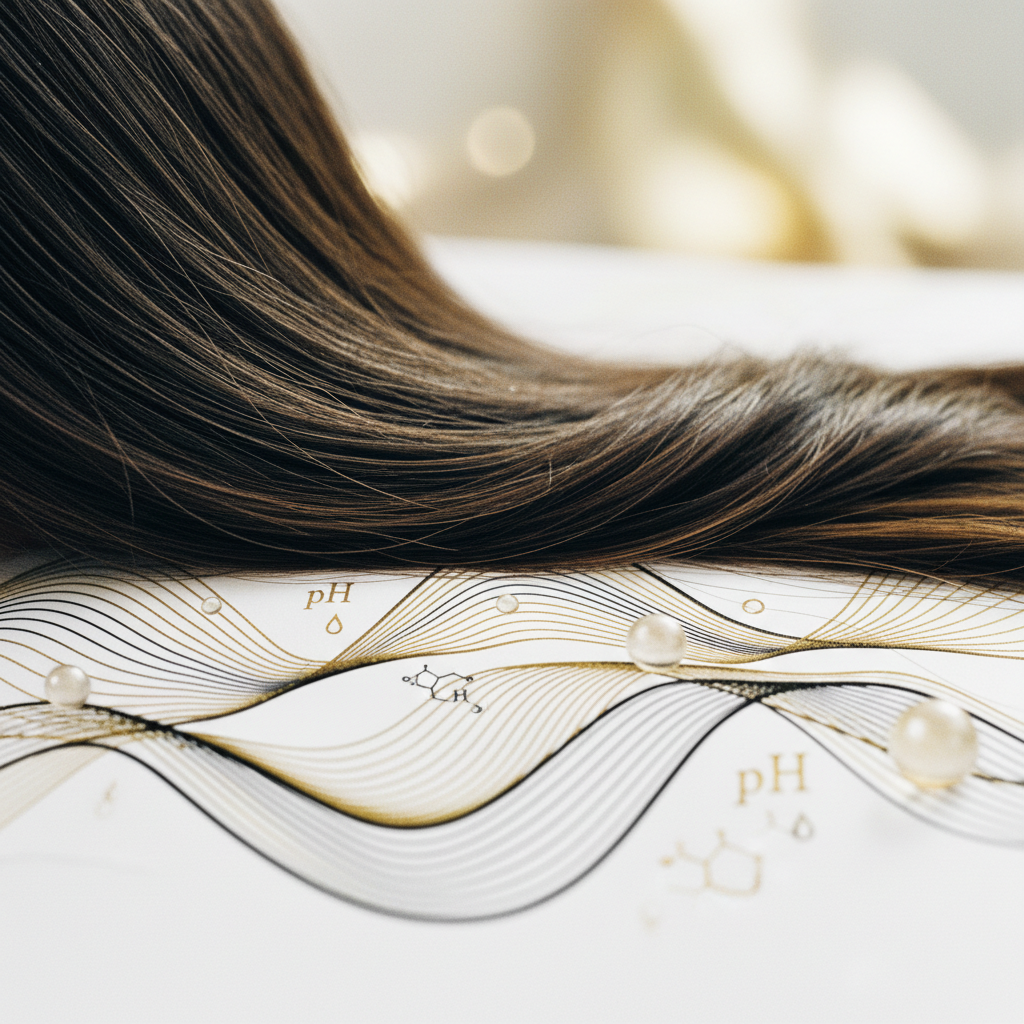
The hair shaft reaches its isoelectric point at approximately pH 3.67. At this specific value, positive and negative electrical charges across the keratin chains balance out completely. When hair is exposed to products with a pH higher than 3.67, the net negative electrical charge of the hair increases. This electrical repulsion forces the overlapping scales of the outer cuticle layer to flare outward.
A study evaluating commercial shampoos revealed that over 60 percent of salon products and over 70 percent of supermarket shampoos had a pH greater than 5.5. Washing hair with alkaline formulations increases static electricity, causes inter-fibre friction, and promotes cuticular erosion. On the scalp, higher pH disrupts the lipid processing enzymes responsible for the skin barrier, creating transepidermal water loss and leaving room for opportunistic microbes like Malassezia to proliferate.
The biochemical mechanism: cuticles, friction, and the acid mantle
To understand why pH matters, you must examine how acidic and alkaline solutions interact with keratin and epidermal lipids.
Keratin contains amino acids with acidic carboxyl groups and basic amino groups. In an acidic environment close to pH 3.67 to 4.5, these groups form strong ionic bonds known as salt bridges. These salt bridges hold the keratin filaments tightly together. The exterior cuticle scales, consisting of five to ten flattened cellular layers rich in cystine, stay sealed tightly against the hair shaft. This tight arrangement keeps the surface smooth, reflects light efficiently for natural shine, and locks moisture within the fibrous cortex.
When the hair encounters water or alkaline cleansers with a pH of 7.0 or higher, the chemical landscape changes:
- Cuticle flaring and swelling: Alkaline pH neutralises positive charges, leaving an excess of negative charges. The cuticle scales repel one another, lifting away from the shaft. Water penetrates deeply into the cortex, causing the entire fibre to swell by up to 16 percent in diameter.
- Frictional drag: Raised cuticles act like microscopic serrations. Individual strands snag and drag against each other during washing, combing, and styling. This mechanical friction accelerates cuticle chipping, split ends, and hair breakage.
- Acid mantle degradation: The scalp relies on acidic conditions to regulate enzymes such as beta-glucocerebrosidase, which synthesises ceramides for the stratum corneum. When alkaline products elevate scalp pH, these enzymes shut down. The scalp barrier weakens, leading to dryness, tightness, and inflammation.
Signs that hair and scalp pH is off balance
Because you cannot see chemical ions directly, you must observe physical symptoms across the scalp and lengths.
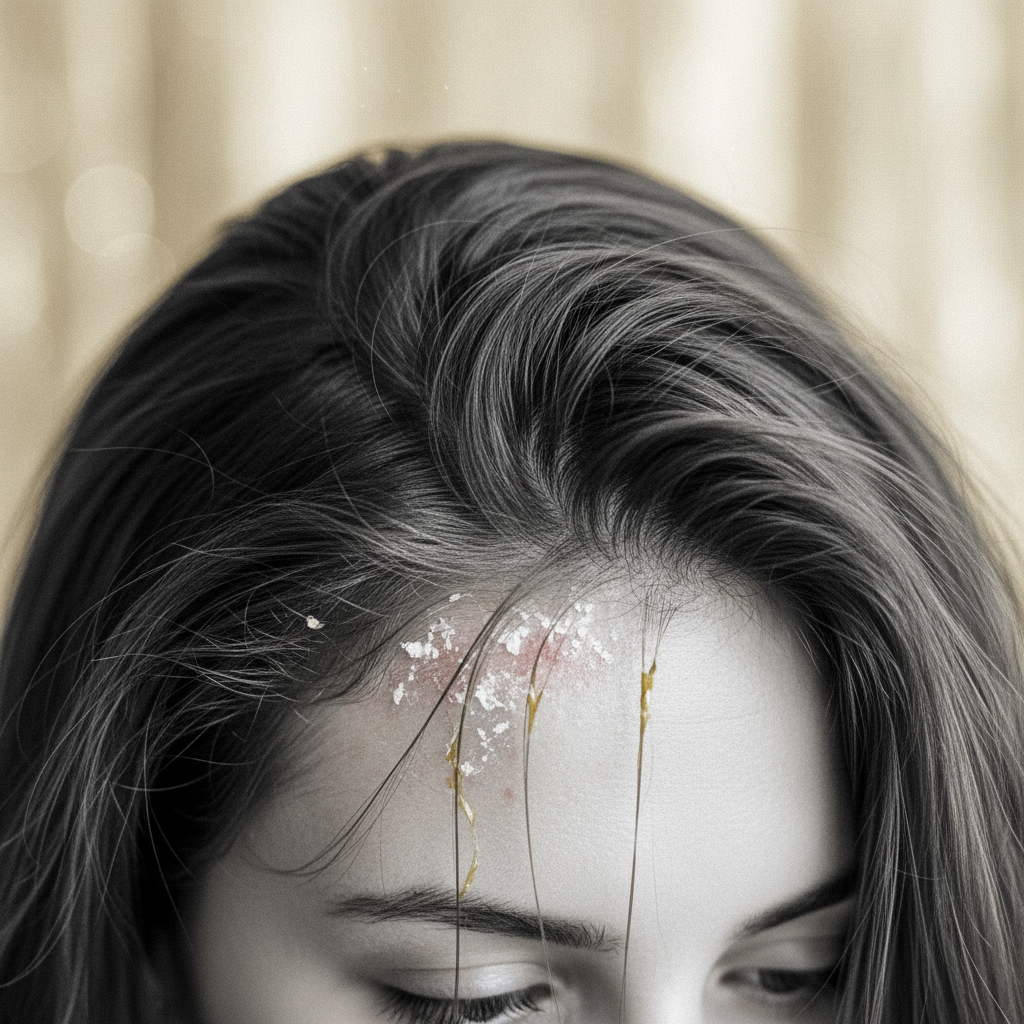
Symptoms of an alkaline shift
- Dull, rough texture: Hair feels coarse or straw-like because raised cuticle edges scatter light rather than reflecting it smoothly.
- Tangling and breakage: Wet hair mats easily during washing, requiring excessive force to detangle. Snapping occurs along the fibre shaft rather than from the root.
- Scalp irritation and flaking: The scalp feels tight, itchy, or dry after washing. A disrupted acid mantle allows common commensal fungi to trigger inflammatory responses, resulting in visible flakes.
- Rapid colour fading: In artificially coloured hair, lifted cuticles allow oxidative dye molecules to leach out quickly during rinses.
Symptoms of excessive acidity
While rare in standard haircare, using unbuffered, highly acidic rinses (such as undiluted vinegar with a pH below 3.0) can also cause issues. Extreme acidity hardens the hair structure excessively, rendering the fibre brittle and rigid. On the scalp, concentrated acids can cause chemical burns, redness, and acute contact dermatitis.
Comparative pH of common haircare substances
The following table outlines typical pH levels of everyday substances and treatments compared to the biological baseline of the scalp and hair.
| Substance / Treatment | Typical pH Range | Impact on Hair Fibre | Impact on Scalp Barrier |
|---|---|---|---|
| Hair Isoelectric Point | 3.67 | Zero net charge, minimum swelling | N/A (non-living fibre) |
| Healthy Scalp Surface | 4.5 to 5.5 | Cuticle compact, minimal friction | Optimal barrier, balanced flora |
| Pure Tap Water | 6.5 to 8.5 | Mild cuticle swelling, light friction | Temporary neutralisation of mantle |
| Alkaline Shampoos | 6.0 to 8.0 | Cuticle lifting, static charge, frizz | Lipid disruption, potential dryness |
| pH-Balanced Shampoos | 4.5 to 5.5 | Smooth cuticle, preserved strength | Protects acid mantle, calms skin |
| Standard Hair Conditioners | 3.5 to 4.5 | Cuticle contraction, detangling | Helps restore surface acidity |
| Permanent Hair Dye | 9.0 to 11.0 | Severe cuticle lifting, cortex penetration | Irritation risk, barrier stripping |
| Undiluted Apple Cider Vinegar | 2.0 to 3.0 | Protein hardening, potential brittleness | Acid irritation, burning sensation |
What the evidence does not show
It is vital to separate cosmetic fibre preservation from medical dermatology. Marketing claims frequently exaggerate the role of pH, leading to common misconceptions.
First, maintaining a proper pH will not treat or reverse pattern hair loss (androgenetic alopecia) or autoimmune shedding (alopecia areata). These conditions originate within the dermal papilla and are governed by genetics, hormones such as dihydrotestosterone (DHT), or systemic immune pathways. An acidic shampoo cannot halt genetic follicle miniaturisation.
Second, restoring pH balance cannot repair a hair fibre that is already broken or split. Once the dead protein matrix of the cortex snaps, no level of acidity can chemically re-fuse the split ends back together. Acidic formulas merely flatten remaining cuticles to prevent further progressive unraveling.
Finally, pH balancing does not replace broad-spectrum antimicrobial agents when severe medical scalp disorders are present. While an acidic environment discourages microbial overgrowth, moderate-to-severe seborrhoeic dermatitis or psoriasis requires targeted pharmaceutical interventions rather than cosmetic pH management alone.
Practical steps to maintain proper pH balance
You can protect your hair and scalp chemistry through deliberate product choices and gentle washing habits:
- Select pH-balanced cleansers: Look for products that state their pH on the bottle or fall within the 4.5 to 5.5 range. Avoid traditional bar soaps, which are naturally alkaline (pH 9.0 to 10.0) due to saponification.
- Always follow with conditioner: Shampoos cleanse through anionic surfactants that carry a negative charge. Conditioners contain cationic surfactants and are formulated at a low pH (3.5 to 4.5). This acidity contracts the swollen keratin, flattens the cuticle, and neutralises static electricity.
- Rinse thoroughly with lukewarm water: Extremely hot water accelerates cuticular expansion and dissolves protective surface sebum. Lukewarm water limits thermal stress on the lipid matrix.
- Avoid raw kitchen remedies: Pouring neat lemon juice (pH 2.0) or undiluted vinegar directly onto the scalp disrupts tissue integrity. If using an acidic rinse, dilute it thoroughly with water until it reaches a safe pH around 4.5 to 5.0, or choose a commercially formulated, buffered hair rinse.
A balanced approach to scalp care
At Watermans, supporting the scalp's natural physiology forms the foundation of everyday hair wellness. Cleansing systems like GrowMe are formulated with careful consideration of the scalp's delicate surface environment. Rather than stripping the lipid barrier with harsh, high-alkalinity detergents, gentle cleansing helps maintain the acid mantle while clearing sebum, environmental dirt, and dead cells.
When you maintain an optimal scalp environment, you minimise mechanical hair breakage, calm surface irritation, and provide the ideal biological foundation for stronger, healthier-looking hair.
When to seek professional advice
A routine imbalance in scalp pH usually resolves within a few washes after switching to gentle, acidic formulas. However, persistent symptoms warrant professional assessment:
- You experience relentless itching, burning, or painful tenderness on the scalp.
- Flaking is accompanied by thick, greasy, yellowish crusts or bleeding.
- Hair is shedding from the root at an alarming rate (more than 100 to 150 hairs daily for multiple consecutive weeks).
- You observe circular patches of total hair loss.
Consult a registered trichologist, GP, or dermatologist to rule out contact allergies, fungal infections, or medical scalp conditions that require prescription therapy.
Frequently asked questions about PH Balance of Hair and Scalp
What is the natural PH Balance of Hair and Scalp?
The scalp has a normal pH of 4.5 to 5.5, forming an acidic barrier against bacteria and moisture loss. The hair shaft itself has an isoelectric point around pH 3.67. At this acidic level, the keratin structure carries zero net charge, which keeps the cuticle scales tightly sealed and resilient against friction.
Can washing with hard water alter my scalp pH?
Yes. Hard water contains high concentrations of dissolved calcium and magnesium minerals and typically carries an alkaline pH between 7.5 and 8.5. Repeated exposure neutralises the scalp's acidic film, binds mineral deposits to the hair shaft, and lifts cuticle layers, leading to stiffness, dullness, and increased hair breakage.
Does an alkaline shampoo cause hair loss?
Alkaline shampoo does not cause follicular hair loss or stop biological growth from the root. However, it forces cuticle scales to open, increasing friction and tangling during washing. This leads directly to hair breakage along the shaft, which is often mistaken for genuine hair loss.
Is apple cider vinegar safe for pH balancing?
Undiluted apple cider vinegar is too acidic (pH 2.0 to 3.0) and can burn the scalp and dry out hair fibres. It is only safe when heavily diluted with water to reach a gentle pH of 4.5 to 5.0. Alternatively, use cosmetically formulated acidic rinses that contain buffers to prevent skin irritation.
Maintaining the optimal PH Balance of Hair and Scalp
Balancing hair chemistry is a fundamental component of preventative haircare. Understanding the PH Balance of Hair and Scalp clarifies why acidic products keep hair fibres resilient, shiny, and manageable while safeguarding the skin's protective lipid barrier. By choosing formulations balanced between pH 4.5 and 5.5 and avoiding harsh alkaline treatments, you protect your hair from preventable mechanical breakage and sustain a calm, healthy scalp environment over the long term.
Sources and references
- International Journal of Trichology: Gavazzoni Dias et al., "The Shampoo pH Can Affect the Hair: Myth or Reality?", 2014.
- British Association of Dermatologists: "Seborrhoeic Dermatitis Guidelines", 2019.
- Journal of Cosmetic Dermatology: Robbins, C. R., "Chemical and Physical Behavior of Human Hair", 5th Edition, Springer, 2012.
- International Journal of Cosmetic Science: Ali, N. And Strom, G., "The effect of pH and ionic strength on keratin swelling", 2018.