PH Balance and Hair Cuticles: The Complete Evidence-Based Guide
8 min read ·
Learn how pH balance and hair cuticles interact. Discover the science behind acidic sealing, alkaline swelling, and how to reduce everyday hair breakage.
Quick answer: Understanding pH balance and hair cuticles is essential for maintaining strong, smooth hair. Hair fibres naturally thrive in an acidic environment between pH 3.67 and 5.5. When exposed to alkaline products above pH 7.0, the overlapping cuticle scales swell and flare open, increasing friction, moisture loss, and physical breakage. Maintaining an optimal acidic balance keeps the cuticle layer tight and compact, though pH alone cannot rebuild internal disulphide bonds that have been severed by severe chemical processing.
Key takeaways
- Human hair fibres have an isoelectric point around pH 3.67, while the scalp's protective acid mantle rests between pH 4.5 and 5.5.
- Alkaline substances (pH greater than 7.0) cause hair cuticles to swell and lift, leading to friction, tangling, and mechanical snapping.
- Acidic formulations (pH 3.5 to 5.5) contract the cuticle layer, laying individual scales flat to enhance shine and preserve cortex hydration.
- Pure tap water sits around pH 6.5 to 8.5, which is sufficiently alkaline compared to hair to cause mild cuticle lifting during washing.
- Managing pH preserves existing cuticle integrity, but it cannot repair internal cortex damage caused by bleaching, relaxers, or high heat.
pH Balance and Hair Cuticles: what the evidence shows
The relationship between pH balance and hair cuticles is rooted in electrochemistry and surface physics. Published research in the International Journal of Trichology demonstrates that cosmetic products with an alkaline pH increase the negative electrical charge of the hair surface. This surge in static charge generates repulsion between individual cuticle cells, forcing the protective shingles to flare outward.
When cuticles flare, the hair shaft loses its smooth exterior. A study evaluating commercial shampoos revealed that over 60 percent of salon products and over 75 percent of standard commercial shampoos possess a pH greater than 5.5. Using products above this threshold exposes the cuticle to sustained swelling. Over time, open cuticles leave the delicate interior cortex vulnerable to daily mechanical stress, such as brushing, towel-drying, and friction from clothing.
Conversely, maintaining an acidic surface contact keeps the net charge closer to the fibre's isoelectric state. Under mild acidity, the keratin proteins stabilise, the cuticles contract and lie flat against the cortex, and surface friction drops significantly.
| pH Level | Cuticle Behaviour | Physical Effect on Fibre | Typical Hair Products / Agents |
|---|---|---|---|
| pH 3.0 to 4.0 | Tightly compacted, flat | Maximum shine, reduced porosity, low friction | Acidic conditioning rinses, bonding sealers |
| pH 4.5 to 5.5 | Naturally closed, stable | Optimal moisture retention, minimal static | Balanced shampoos, hair's natural acid mantle |
| pH 6.5 to 8.0 | Mildly swollen, lifted | Increased friction, dullness, minor snagging | Tap water, clarifying shampoos, basic soaps |
| pH 8.5 to 10.5 | Severely swollen, flared | High vulnerability to snapping, cortex exposure | Permanent hair dyes, chemical lighteners |
| pH 11.0 to 13.5 | Fully disarranged, dissolved | Structural degradation, extreme fibre breakdown | Chemical relaxers (sodium hydroxide) |
The biological mechanism: how pH alters cuticle scales
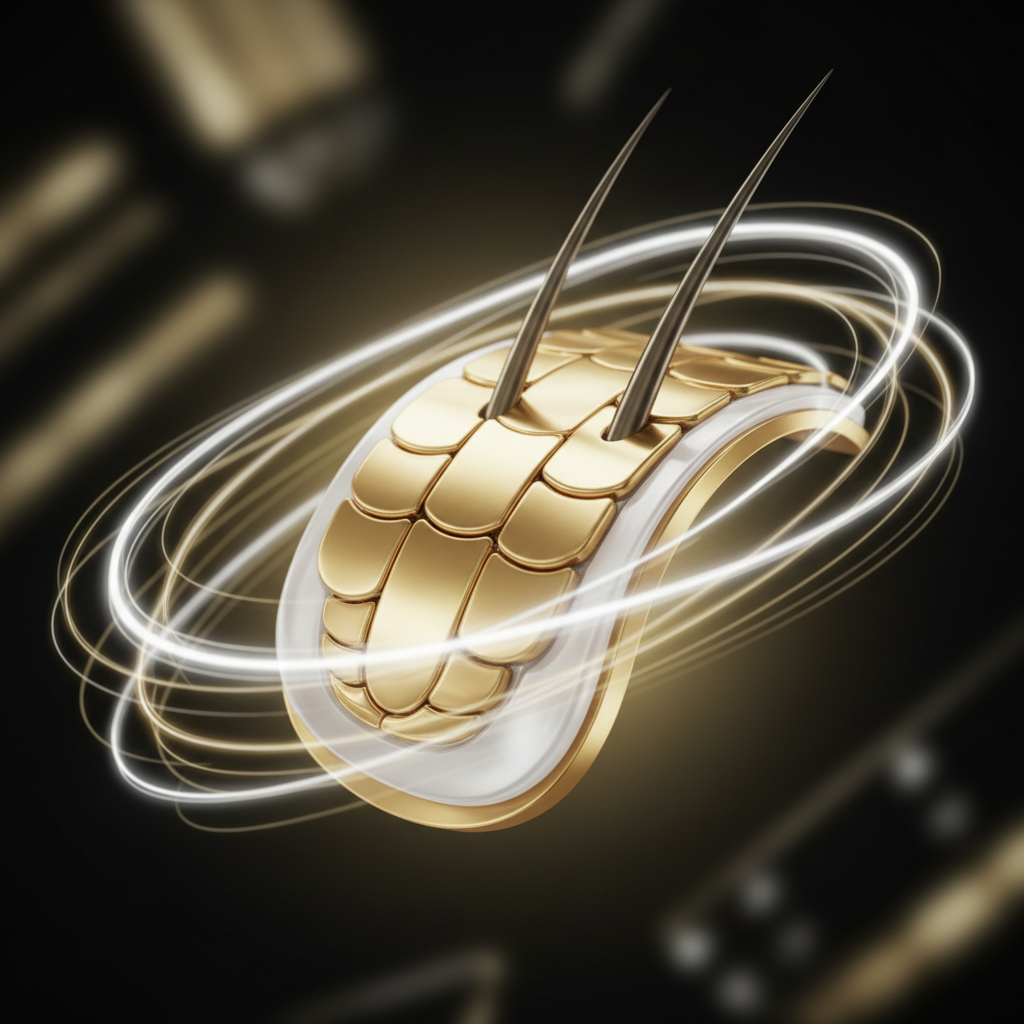
To understand cuticles, picture the outer surface of a single hair strand as a pinecone or a tiled roof. Between 5 and 10 layers of dead, flattened keratinocytes overlap each other, pointing down toward the hair tip. Each scale contains three distinct sub-layers: the epicuticle, the exocuticle, and the endocuticle.
The endocuticle contains a lower concentration of sulphur-rich cystine and absorbs water readily. When an aqueous solution touches the hair, the pH of that water dictates how much the endocuticle swells:
- Alkaline swelling: At an alkaline pH (above 7.0), hydrogen bonds weaken and acidic side chains within the keratin proteins ionise. This creates negative electrical charges that push against each other. The endocuticle swells quickly, pushing the tougher exocuticle outward and opening the scale edges.
- Acidic compaction: At an acidic pH (between 3.5 and 5.5), these negative charges are neutralised. The ionic bonds (salt bridges) between keratin molecules pull tightly together. The cuticle cells shrink back to their original resting position, creating a flat, tightly sealed barrier.
When scales lie completely flat, light reflects evenly off the surface, resulting in noticeable shine. When scales flare, light scatters randomly, giving the hair a matte, dull appearance.
What the evidence does not show
It is vital to distinguish cosmetic surface care from structural follicle repair.
First, balancing surface pH will not stop hormonal hair loss, such as androgenetic alopecia, nor will it stop autoimmune conditions like alopecia areata. Hair loss originates inside the follicle beneath the scalp, governed by genetics, hormones, and cellular signalling. Cuticle condition strictly dictates hair fibre integrity and hair breakage along the shaft. Snapped strands in your brush are frequently mistaken for shedding, but they represent physical breakage, not root loss.
Second, restoring an acidic pH does not "heal" split ends. Cuticle scales that have fractured off or split down the cortex cannot be biologically re-fused. Low-pH sealers and acidic conditioners temporarily smooth down remaining edges and prevent the split from travelling upward, but only a mechanical trim eliminates a split end.
Signs of cuticle disruption caused by pH imbalance
When hair fibres are regularly subjected to an alkaline environment, you will notice distinct tactile and visual symptoms:
- Instant tangling when wet: Hair that knots rapidly under running water often suffers from lifted cuticles that snag on neighbouring strands like Velcro.
- Lack of surface shine: Even after applying oils, hair looks dull because the raised edges scatter reflected light.
- Rapid colour fade: Artificial pigment molecules easily escape through lifted cuticle gaps during washing.
- Excessive porosity: The hair absorbs water almost instantly in the shower but dries out just as rapidly, feeling parched and brittle.
- Frizz in humid environments: Raised cuticles allow airborne water vapor to penetrate the cortex freely, breaking temporary hydrogen bonds and warping the hair style.
What you can do to protect your cuticles
You can control the chemical environment your hair encounters through daily washing and styling routines:
- Choose pH-balanced shampoos: Look for liquid cleansers formulated specifically between pH 4.5 and 5.5. Avoid traditional bar soaps, which are inherently alkaline (often pH 9.0 to 10.0) due to the saponification process.
- Always follow with an acidic conditioner: Conditioners are naturally formulated at a lower pH (usually 3.5 to 4.5) to neutralise the mild alkalinity of tap water and contract the cuticle layer before you step out of the shower.
- Mind your wash water: Hard tap water frequently carries an alkaline pH alongside dissolved calcium and magnesium. A chelating wash or an acidic rinse helps remove mineral buildup that prevents cuticles from lying flat.
- Support your routine with Watermans: Using high-grade, balanced formulas like Watermans Grow Me Shampoo and Condition Me Conditioner helps maintain an optimal scalp environment and smooths the cuticle layer. These formulas are designed to clean effectively while respecting the delicate acidic boundary of the scalp and hair fibre, keeping surface friction low to minimise everyday breakage.
When cuticle damage indicates another cause
If your hair remains brittle, dull, and prone to tangling despite using strictly pH-balanced products, the underlying issue might not be chemical pH:
- Thermal degradation: High heat from straighteners and curling irons (above 185 degrees Celsius) melts the protective lipid layer (18-methyl eicosanoic acid) on the outside of the cuticle. Once this natural fatty layer is vaporised, cuticles become permanently rough regardless of pH.
- Physical abrasion: Aggressive backcombing, vigorous towel-drying with coarse cotton, or rough brushing while wet strips cuticle scales off the shaft entirely.
- Severe chemical processing: Bleaching agents use extreme alkalinity (pH 9.5 to 11.0) paired with hydrogen peroxide to swell the cuticles and break down melanin. If left on too long, the scales break apart completely, exposing the raw cortex underneath.
Frequently asked questions about pH balance and hair cuticles
What is the natural pH of human hair and scalp?
The scalp maintains an acidic barrier known as the acid mantle, which rests between pH 4.5 and 5.5. The solid hair shaft itself has an even lower isoelectric point of approximately pH 3.67. Maintaining this natural acidity prevents microbial overgrowth on the scalp and prevents cuticles from swelling.
Can water alone disrupt the pH balance and hair cuticles?
Yes. Pure municipal tap water generally measures between pH 6.5 and 8.5 depending on your local water supply. Because hair fibres prefer a slightly acidic environment around pH 4.5 to 5.5, wetting your hair with basic tap water causes the cuticles to swell slightly, increasing friction until an acidic product restores balance.
Does an apple cider vinegar rinse really help hair cuticles?
Raw apple cider vinegar has an approximate pH of 2.0 to 3.0. When diluted properly with water (typically one part vinegar to eight parts water), it creates a solution close to pH 4.0. This mild acidity contracts cuticles and dissolves alkaline mineral deposits, but undiluted vinegar is overly acidic and can irritate the scalp.
Will balancing my hair's pH stop my hair shedding?
No. Regulating pH affects the exterior hair shaft and prevents mechanical breakage, but it does not stop physiological hair shedding from the follicle. Shedding is driven by internal cycles, hormones, and systemic health. However, reducing breakage gives the appearance of thicker, fuller hair over time.
Maintaining cuticle integrity
Managing pH balance and hair cuticles is one of the most reliable, scientifically proven methods for preserving the cosmetic life and physical resilience of your hair. When you keep your washing and conditioning steps inside the naturally acidic window of pH 3.5 to 5.5, the cuticle scales remain tightly closed, locking in moisture and defending the cortex against physical wear. While proper pH management cannot reverse severe structural breakage or cure internal follicle conditions, it remains the foundation of healthy, smooth, and manageable hair.
Sources and references
- Gavazzoni Dias, M. F. Et al. (2014). The Shampoo pH can Affect the Hair: Myth or Reality? International Journal of Trichology, 6(3), 95-99.
- Robbins, C. R. (2012). Chemical and Physical Behavior of Human Hair. 5th Edition, Springer-Verlag New York.
- Cruz, C. F. Et al. (2016). Human Hair Characteristics and Methods to Model Hair Properties. Cosmetics, 3(3), 21.
- Dawber, R. (1996). Hair: Its structure and response to cosmetic preparations. Clinics in Dermatology, 14(1), 105-112.