Hydrophobic vs Hydrophilic Hair: The Science of Fibre Porosity
10 min read ·
Explore the science of Hydrophobic vs Hydrophilic Hair, how surface lipids protect your strands, and how to repair the vulnerable, water-absorbing cortex.
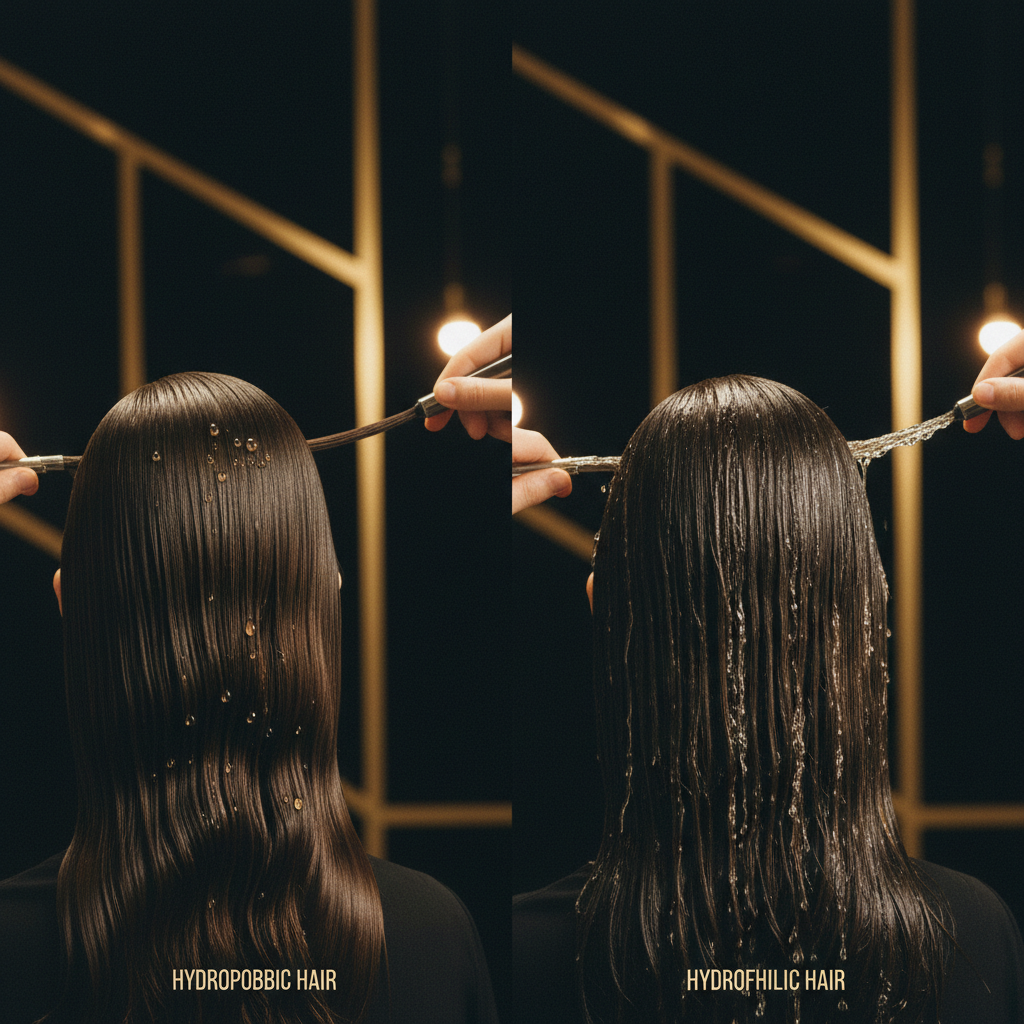
Quick answer: Comparing Hydrophobic vs Hydrophilic Hair comes down to surface chemistry and cuticle integrity. Healthy, virgin hair is naturally hydrophobic (water-repelling) because of an outer lipid layer dominated by 18-methyleicosanoic acid (18-MEA). When chemical processing, heat styling, or UV radiation strips this protective fatty layer, the exposed protein cortex becomes hydrophilic (water-loving). While hydrophilic strands absorb water rapidly, they struggle to retain structural moisture, leading to swelling, frizz, and severe breakage over time.
Key takeaways
- Natural, undamaged hair fibres are hydrophobic, meaning they naturally repel water droplets due to a surface barrier of bound lipids.
- Damaged hair shifts to a hydrophilic state, absorbing large quantities of water into the cortex while losing internal tensile strength.
- The primary driver of this shift is the loss of 18-methyleicosanoic acid (18-MEA), an essential fatty acid covalently bound to the epicuticle.
- Hydrophilic hair is vulnerable to hygral fatigue, a repetitive cycle of swelling and contracting that weakens internal keratin bonds.
- Targeted conditioning agents, biomimetic lipids, and acid-balanced formulations can temporarily restore hydrophobic characteristics to vulnerable hair.
Hydrophobic vs Hydrophilic Hair: what the evidence shows
Understanding the dynamic of Hydrophobic vs Hydrophilic Hair requires looking closely at the outermost layer of the hair fibre, the cuticle. In its virgin state, hair is hydrophobic. Water beads up on the surface rather than soaking in immediately. Cosmetic scientists measure this using contact angle analysis: placing a droplet of water on a single hair fibre and measuring the angle at the droplet edge. Healthy hair typically shows a contact angle between 95 and 105 degrees, indicating high water repellency.
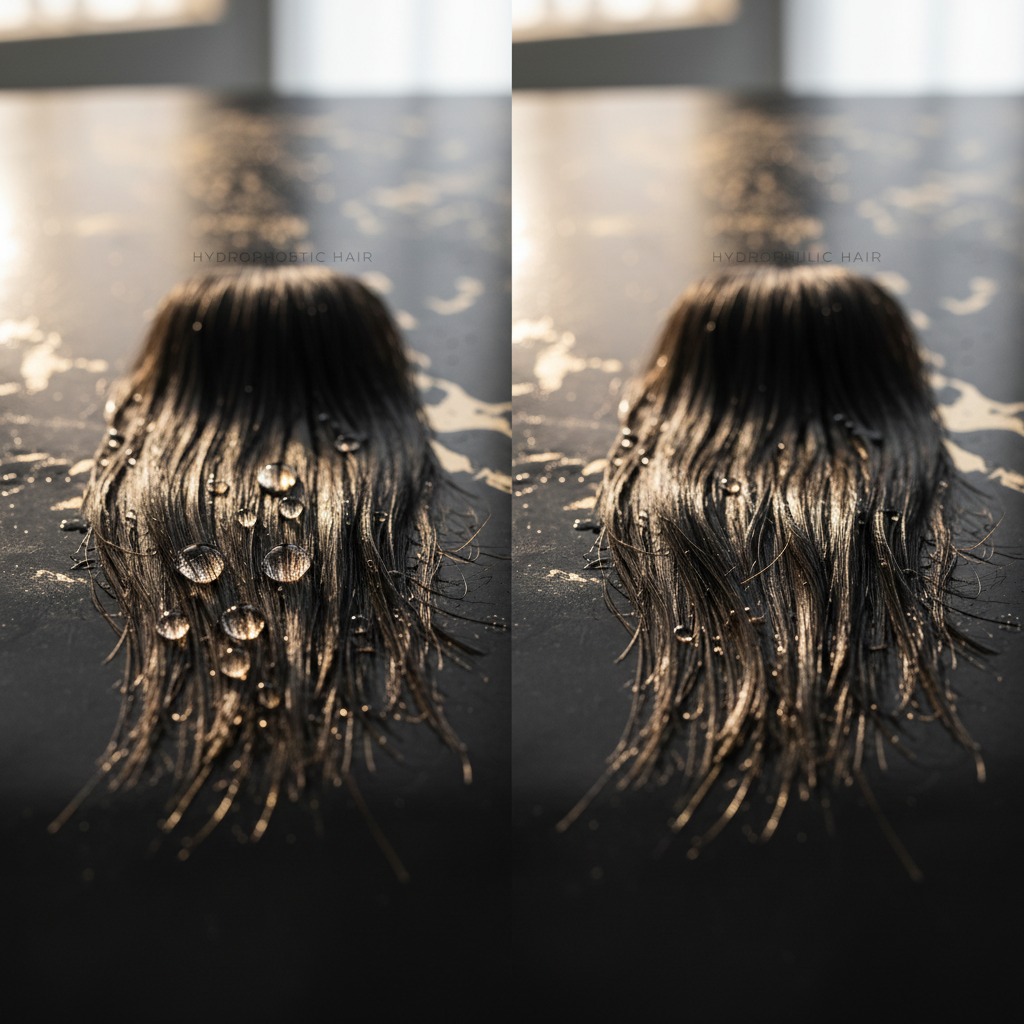
When hair undergoes repeated bleaching, alkaline colouring, perming, or high-heat styling, the lipid layer erodes. Without this shield, water sheets across the fibre, and the contact angle drops below 60 degrees (often near zero in severely damaged strands). This marks a transition to hydrophilic hair. Research published in the Journal of Cosmetic Science confirms that alkaline oxidation strips the covalently bound 18-MEA layer in a single high-lift bleaching session. Once this lipid barrier is lost, the underlying keratin matrix, which is naturally polar and water-attracting, is directly exposed to atmospheric humidity and wash water.
| Characteristic | Hydrophobic Hair | Hydrophilic Hair |
|---|---|---|
| Cuticle Condition | Flat, intact, sealed with 18-MEA lipids | Lifted, chipped, or missing lipid shield |
| Water Behaviour | Beads up on contact; resists absorption | Soaks in quickly; fibre swells rapidly |
| Contact Angle | High (typically 90 to 105 degrees) | Low (often below 50 degrees) |
| Drying Time | Dries relatively quickly and evenly | Holds excess water; takes a long time to dry |
| Porosity Classification | Low to medium porosity | High porosity |
| Elasticity & Strength | Strong, resilient wet or dry | Weak, prone to snapping when stretched wet |
| Primary Risk | Product build-up if heavy waxes are used | Hygral fatigue, cortex erosion, breakage |
The biological mechanism: why hair changes from water-repelling to water-attracting
The outer envelope of a hair shaft is coated by the epicuticle, a thin membrane covered by a monolayer of lipids. Around 40 to 50 percent of these surface lipids consist of 18-methyleicosanoic acid (18-MEA). This branched-chain fatty acid is chemically bonded to the hair proteins via thioester linkages to cysteine residues.
The hydrocarbon tails of 18-MEA point outward into the environment. Because hydrocarbons are non-polar, they create an oily, hydrophobic boundary. This boundary serves three critical functions:
- It limits the rate at which atmospheric moisture enters the inner cortex.
- It reduces inter-fibre friction, preventing mechanical abrasion when strands rub together.
- It prevents water-soluble environmental pollutants and minerals from penetrating the fibre.
When you apply alkaline chemical treatments (such as bleach at pH 9.0 to 11.0, or permanent hair dyes), the chemical reaction breaks the delicate thioester bonds holding 18-MEA in place. Once severed, the 18-MEA washes away and cannot be biologically regenerated by the body, as hair fibre is non-living tissue. The newly exposed cortex contains polar amino acids, including glutamic acid and aspartic acid. These polar groups form instant hydrogen bonds with water molecules, transforming the hair from hydrophobic to hydrophilic.
What the evidence does not show
The science behind fibre chemistry is clear, but several persistent myths surround this topic in salons and online communities:
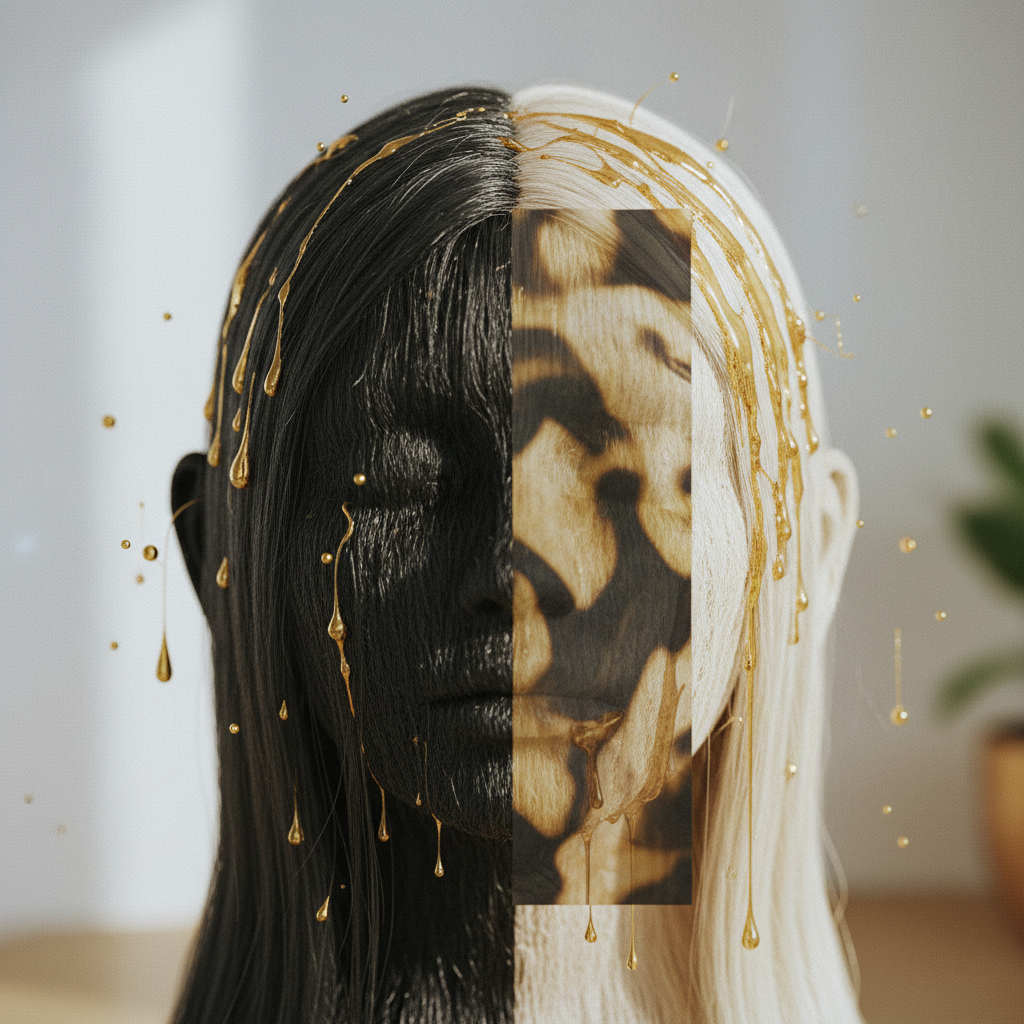
- Hydrophilic hair is not "hydrated" hair: Many consumers assume that because hydrophilic hair absorbs water rapidly, it is well-hydrated. The opposite is true. Water absorbed into a damaged cortex disrupts internal keratin bonds, creating temporary swelling and structural fragility. True cosmetic moisture refers to fibre flexibility and balanced internal water content, not water saturation.
- You cannot permanently re-grow the 18-MEA lipid layer: Once chemical processing cleaves the covalent thioester bonds of 18-MEA, the living follicle cannot send new lipids down the dead hair shaft to replace them. Products claiming to "permanently restore" virgin hair lipids only deposit topical, sacrificial layers that wash away over several cleanses.
- Hydrophobic hair does not repel all moisture: Virgin, hydrophobic hair still contains between 8 and 14 percent water by weight at room temperature and moderate humidity. The hydrophobic exterior regulates and balances internal hydration; it does not turn the fibre into solid plastic.
The signs of Hydrophobic vs Hydrophilic Hair
Identifying whether your strands lean towards a hydrophobic or hydrophilic state helps you choose the correct grooming protocol.
Signs of hydrophobic hair
- Water beads up on dry strands when misted with a spray bottle.
- Hair dries relatively quickly after washing because the cortex has not taken on excess water.
- Strands feel smooth and slick when wet, with minimal tangling.
- High resistance to humidity; styles hold their shape without sudden puffing or frizzing.
Signs of hydrophilic hair
- Water is sucked into the hair instantly upon contact during washing.
- Hair feels spongy, mushy, or overly stretchy when saturated with water.
- Strands take many hours to air-dry because the swollen cortex holds excessive free water.
- Pronounced frizz in humid weather as atmospheric water penetrates the unshielded cortex.
- Dry strands feel rough, brittle, and snag easily when combed.
The consequences of a hydrophilic state: hygral fatigue and breakage
When hair loses its hydrophobic nature, it becomes vulnerable to hygral fatigue. Every time hydrophilic hair gets wet, the inner cortex swells significantly (increasing hair diameter by up to 15 to 20 percent). As the hair dries, the cortex shrinks back to its original dimensions.
This repeated swelling and deswelling puts continuous mechanical stress on the delicate cuticle scales above it. Over time, the cuticles lift, buckle, and chip away, exposing the macrofibrils within the cortex. The result is split ends and fibre breakage along the shaft. This breakage is entirely mechanical and cosmetic; it is not follicular hair shedding or medical alopecia.
What you can do to restore hydrophobic properties
Because the body cannot regenerate surface lipids on the hair shaft, restoring hydrophobicity relies on smart cosmetic formulation.
1. Re-establish an artificial lipid barrier
Look for conditioners, serums, and leave-in treatments containing biomimetic lipids, such as synthetic 18-MEA (often listed on ingredient labels as quaternium-33), ceramides, and fatty alcohols (cetyl and stearyl alcohol). These ingredients possess polar heads that anchor to the damaged, negatively charged sites of hydrophilic hair, leaving their non-polar tails pointing outward to mimic a virgin, hydrophobic surface.
2. Acidify your wash routine
Damaged hair has an elevated isoelectric point due to oxidized proteins. Using acidic shampoos and conditioning treatments formulated at a pH of 3.5 to 5.0 helps neutralise negative surface charges. This encourages the remaining cuticle scales to contract and lie flat, reducing water intake into the cortex.
3. Incorporate pre-wash plant oils
Applying penetrating oils, such as coconut oil, prior to washing can significantly protect hydrophilic hair. Coconut oil has a high affinity for hair proteins and a low molecular weight, allowing it to penetrate partially into the outer cortex. By occupying space within the fibre, it limits the amount of water the hair can absorb, shielding the shaft from the destructive swelling of hygral fatigue.
4. Minimise alkaline and thermal insults
Reduce the frequency of high-lift bleaching, permanent waving, and alkaline relaxers. When using heated styling tools, always apply a protective serum containing silicones or heat-stable conditioning polymers. These compounds create a temporary hydrophobic coating that buffers heat transfer and repels ambient moisture.
When the cause may be something else
If your hair appears dull, limp, or persistently dry, do not automatically assume it is purely a cuticle chemistry problem:
- Hard water build-up: Minerals like calcium and magnesium can deposit on the hair shaft, mimicking the rough, tangled feel of hydrophilic hair even if the cuticle is relatively undamaged. A chelating wash will resolve this.
- Product build-up: Heavy waxes and polyquaternium residues can create an irregular, gummy coating that resists clean rinsing and makes the hair feel stiff.
- Nutritional or systemic factors: True structural defects from birth (such as monilethrix) or metabolic changes can alter hair texture as it grows out of the follicle. If new hair growth emerges from the scalp rough, fragile, or malformed without any chemical processing, consult a trichologist or dermatologist.
Supporting hair health from the outside: Watermans
When addressing damaged, hydrophilic hair, maintaining a balanced scalp environment and shielding delicate lengths from excess mechanical breakage is paramount.
Watermans focuses on non-invasive, high-performance daily hair wellness. Products like Watermans GrowMe Shampoo and Conditioner are formulated with targeted natural extracts, biotin, rosemary, and conditioning agents designed to enhance fibre resilience, improve manageability, and support a visibly thicker, fuller look. Using pH-balanced, nutrient-rich formulations helps smooth down stressed cuticles, protecting compromised lengths against the friction and snapping often seen when hair has lost its natural hydrophobic shield.
Frequently asked questions about Hydrophobic vs Hydrophilic Hair
Can hydrophilic hair ever become fully hydrophobic again naturally?
No. Because hair fibres are dead biological structures, the body cannot re-secrete the 18-MEA lipid layer once chemical or physical trauma strips it away. The only way to have completely virgin hydrophobic hair again is to allow new, unprocessed hair to grow from the scalp. In the meantime, you can mimic a hydrophobic surface by regularly applying biomimetic lipid treatments, fatty alcohols, and silicones.
Does the water float test accurately determine Hydrophobic vs Hydrophilic Hair?
The popular online "glass of water test" is unreliable. Factors such as surface tension, the weight of product residues, hair density, and how gently the strand is placed on the water affect whether it floats or sinks. A clean laboratory contact-angle test or simple misting observation (seeing whether fine droplets bead up or immediately absorb) is far more accurate for assessing surface hydrophobicity.
Why does hydrophilic hair take much longer to dry than hydrophobic hair?
Hydrophobic hair repels moisture, allowing wash water to sheet off the surface and leaving only a minimal film on the outside of the fibre. In contrast, hydrophilic hair has an exposed, porous cortex that acts like an open sponge. It absorbs substantial volumes of water deep into its internal protein network, which takes significantly more thermal energy and time to evaporate.
Can using too much protein make hydrophobic hair brittle?
Yes. Hydrophobic, undamaged hair already possesses an intact protein structure and a functional moisture barrier. Applying frequent, heavy protein treatments to healthy hydrophobic hair can lead to protein build-up on the cuticle surface. This stiffens the shaft, leading to reduced elasticity and unexpected snapping under mechanical tension.
Summary
The distinction between Hydrophobic vs Hydrophilic Hair fundamentally explains how hair interacts with its environment. Virgin, healthy hair relies on its natural 18-MEA lipid coating to repel excess moisture, maintain structural integrity, and retain smooth elasticity. Once chemical or thermal damage removes this protective layer, hair shifts into a hydrophilic state that absorbs water rapidly, leaving it vulnerable to hygral fatigue, cuticle erosion, and severe breakage. While this lipid loss cannot be biologically undone, using acid-balanced cleansers, biomimetic lipids, and protective oils allows you to simulate a hydrophobic barrier, shielding fragile strands from everyday wear and tear.
Sources and references
- Journal of Cosmetic Science: "The effect of chemical treatments on the surface properties of hair fibres and 18-MEA lipid removal"
- International Journal of Trichology: "Hair Cosmetics: An Overview of Structure, Chemistry, and Formulation"
- Society of Cosmetic Chemists: "Chemical and Physical Behavior of Human Hair", Clarence R. Robbins (5th Edition)
- Skin Academy / British Journal of Dermatology: "Biophysical characterization of the human hair cuticle and lipid distribution"