Heat Damage and Hair Porosity: The Structural Science and Recovery Guide
9 min read ·
Explore the science of Heat Damage and Hair Porosity: how thermal styling degrades the hair cuticle, alters moisture retention, and how to protect fragile strands.
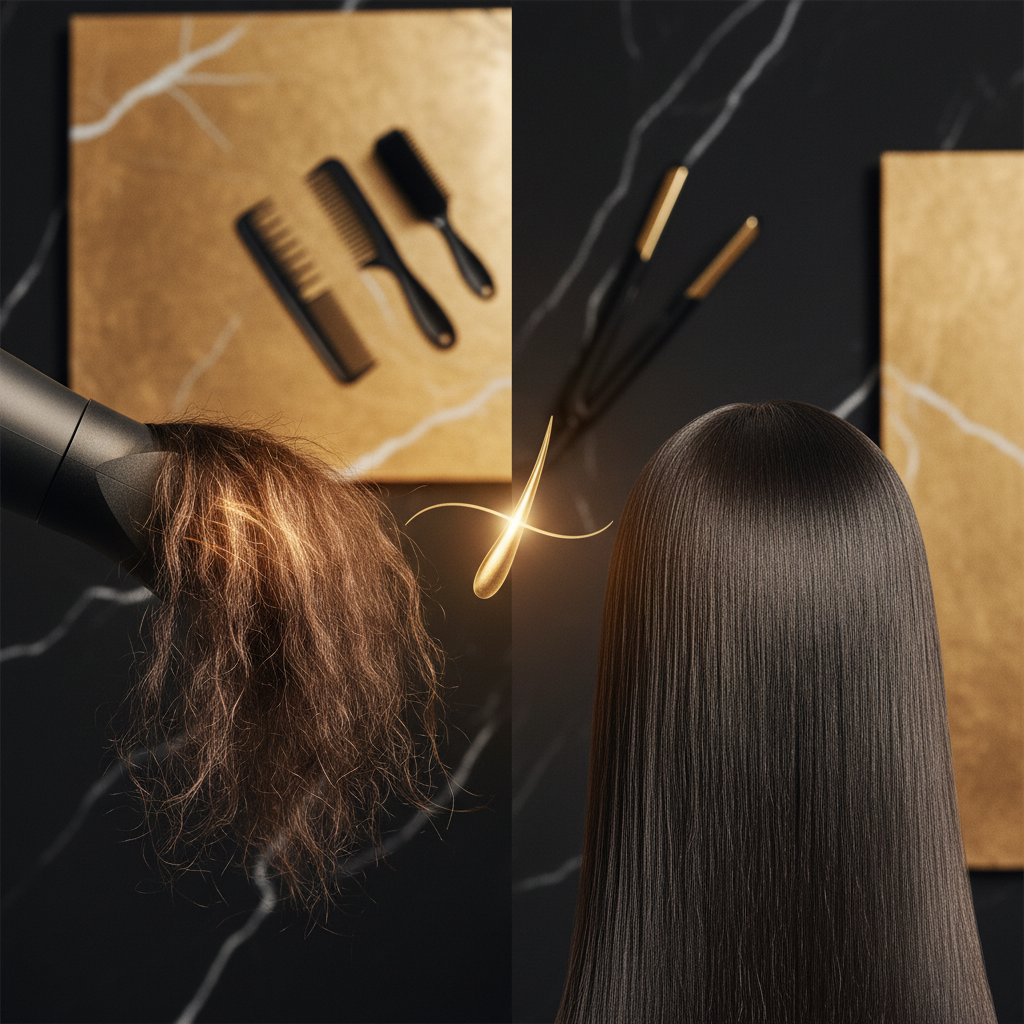
Quick answer: The relationship between Heat Damage and Hair Porosity centres on structural cuticle loss. High thermal styling (above 150°C) strips the hair's protective lipid layer (18-MEA) and degrades keratin proteins, lifting and chipping the cuticle scales. This alters your hair from low or medium porosity to high porosity. High-porosity hair absorbs water rapidly but cannot retain moisture, leaving it dry, fragile, and prone to snapping. While cosmetic treatments can patch the damage, thermal structural breakdown is irreversible.
Key takeaways
- Thermal tools above 150°C strip the protective F-layer (18-methyleicosanoic acid) and crack the cuticle, permanently raising hair porosity.
- Heat-induced high porosity causes hair to absorb water rapidly, swell excessively, and lose hydration just as quickly, leading to chronic dryness.
- High porosity caused by heat creates structural weakness along the shaft, causing hair breakage rather than follicular hair loss or shedding.
- Once the cuticle scales break off and cortical keratin denatures, the physical structure cannot be repaired; it must be managed cosmetically until trimmed.
- Heat protectants featuring ingredients like silicones, polymers, and hydrolysed proteins reduce thermal transfer and friction, significantly limiting cuticle erosion.
Heat Damage and Hair Porosity: what the evidence shows
Research published in the Journal of Cosmetic Science and cosmetic dermatology literature demonstrates that thermal styling fundamentally alters the physical architecture of the hair shaft. Hair porosity refers to your hair's ability to absorb and retain moisture, which is governed almost entirely by the condition of the outermost layer: the cuticle.
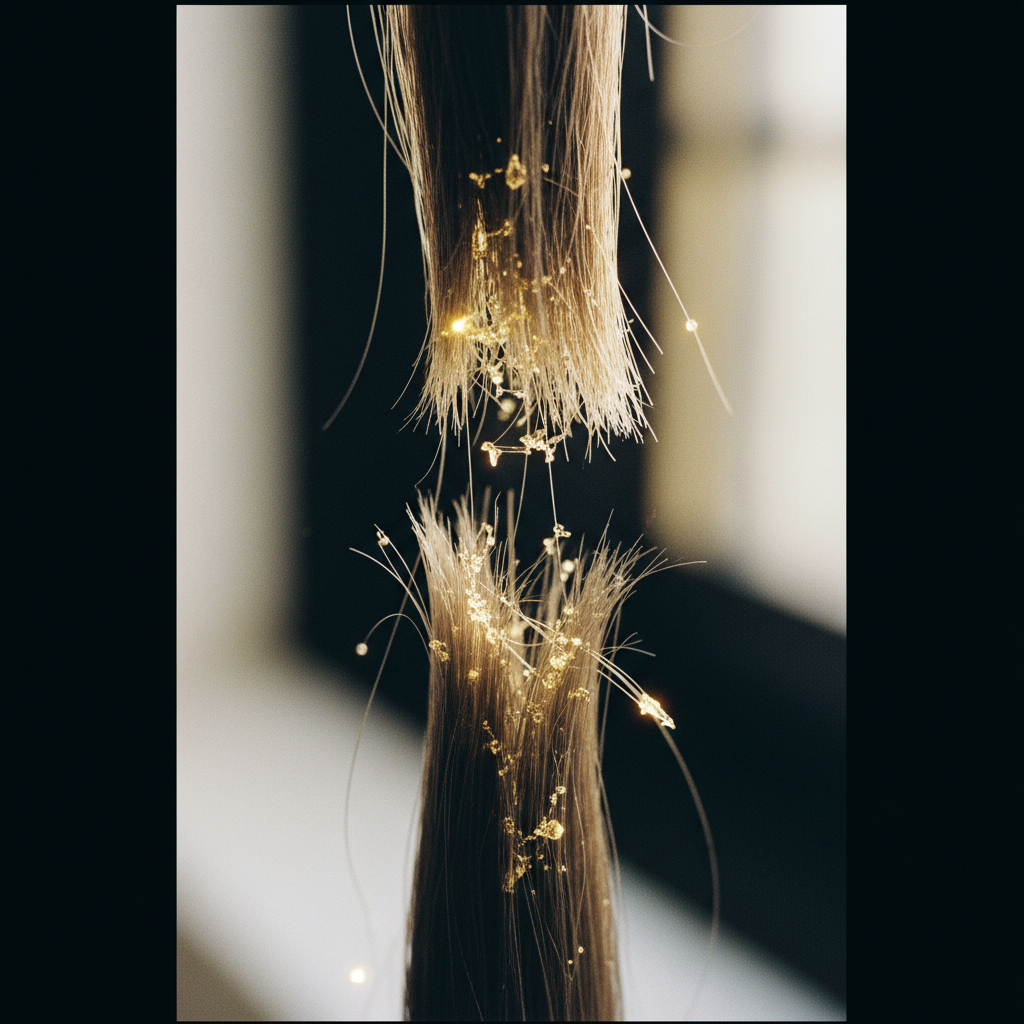
Under normal conditions, a healthy cuticle consists of 6 to 10 overlapping cellular scales coated in a thin fatty acid layer known as 18-methyleicosanoic acid (18-MEA). This creates low-to-medium porosity, keeping the hair fibre hydrophobic (water-repelling) and smooth.
When you apply heat tools such as curling wands, flat irons, or high-heat blow dryers, temperatures frequently exceed 180°C to 230°C. Controlled studies show that at these temperatures, several distinct structural changes occur:
- Lipid degradation: The 18-MEA layer is stripped away, converting the hair surface from hydrophobic to hydrophilic (water-attracting).
- Cuticle lifting and cracking: The edges of the cuticle scales curl, blister, and crack under rapid thermal expansion.
- Pore formation: Cuticle fragments break off entirely, exposing the underlying cortex and leaving large physical gaps or "pores" along the shaft.
The result of this process is acquired high porosity. Hair with thermal damage soaks up environmental humidity and water rapidly because the protective barrier is compromised. However, because the cuticle scales cannot lie flat or create a seal, moisture evaporates just as swiftly. This leaves the hair perpetually parched, rough to the touch, and susceptible to severe mechanical breakage.
| Feature | Low Porosity (Virgin / Healthy) | High Porosity (Heat Damaged) |
|---|---|---|
| Cuticle Condition | Flat, tightly shingled, intact 18-MEA lipid layer | Lifted, cracked, chipped, or missing scales |
| Moisture Absorption | Slow; repels water initially | Extremely rapid; absorbs water instantly |
| Moisture Retention | High; locks hydration in the cortex | Low; loses water quickly through evaporation |
| Fibre Feel | Smooth, elastic, glossy | Rough, brittle, velcro-like, prone to tangling |
| Tensile Strength | High resistance to mechanical snapping | Low; breaks easily when brushed or styled |
| Typical Temperature Exposure | Below 140°C or minimal heat styling | Regular use of tools at 180°C to 230°C |
Biological mechanisms: what happens inside the fibre
Understanding how thermal styling alters porosity requires looking at the internal chemistry of the hair strand. Hair is composed of roughly 85% to 90% keratin protein, arranged in fibrous bundles within the cortex, bound together by disulphide bonds and hydrogen bonds.
The moisture flashpoint and "bubble hair"
Hair naturally holds between 8% and 14% water under ambient conditions. When you apply hot tools to damp or insufficiently dried hair, that trapped water rapidly vaporises. The steam expands violently inside the cortex, creating tiny physical voids or cavities. In trichology, this phenomenon is documented as "bubble hair." These micro-cavities severely distort the cuticle from the inside out, blowing open the surface and creating extreme, irreversible porosity.
Protein denaturation
Keratin undergoes a structural phase transition when exposed to elevated temperatures. Around 155°C to 160°C, the alpha-helical keratin structures begin to unfold and transform into disordered beta-sheet proteins. Beyond 200°C, the disulphide bonds that give hair its elasticity and tensile strength break down, leading to irreversible loss of structural integrity. This protein degradation leaves the hair shaft hollowed, porous, and incapable of holding onto conditioning agents or internal moisture.
How to recognise heat-induced high porosity
It is easy to confuse dry hair with structural porosity shifts. Here are the clear clinical and physical signs that thermal tools have altered your hair's porosity:
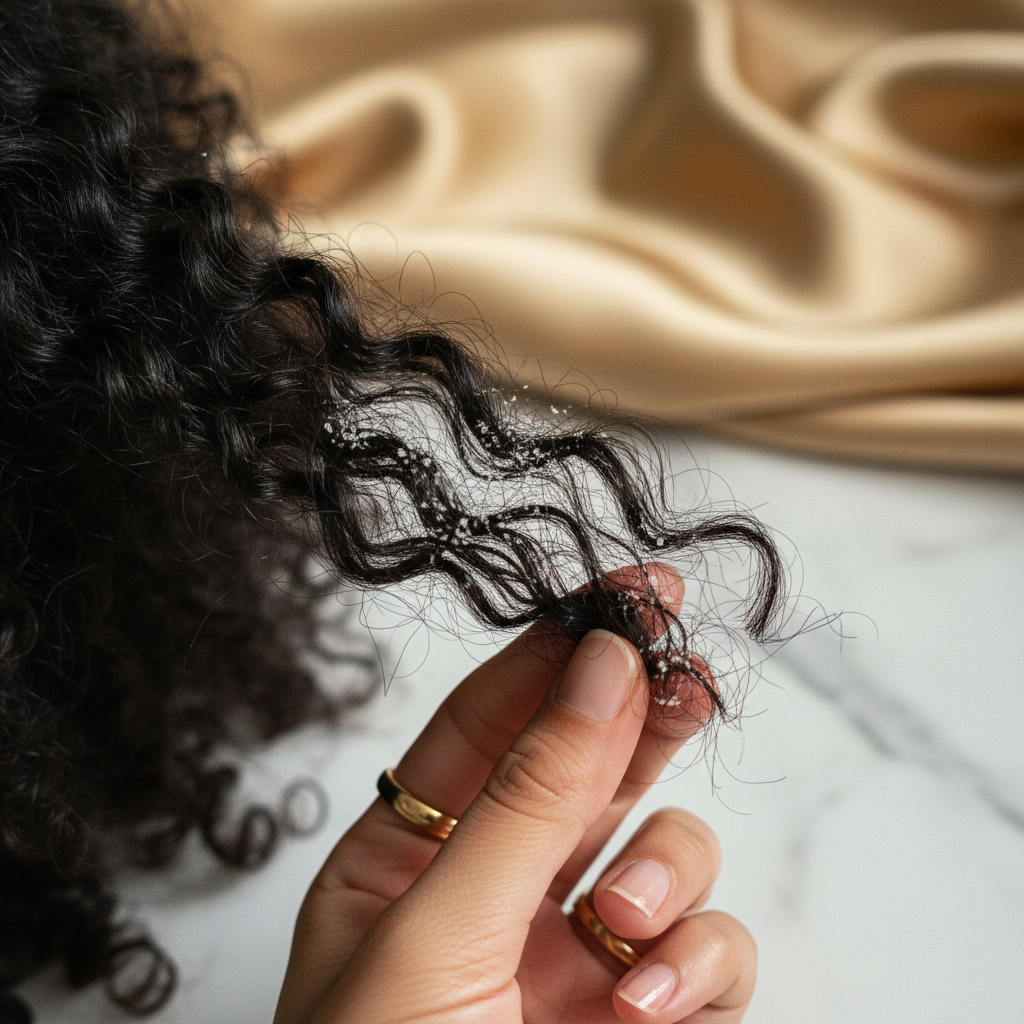
- The sponge effect: When you wash your hair, it becomes instantly drenched and heavy. However, within minutes of stepping out of the shower, it feels straw-like and dry before you even begin styling.
- Tangled, velcro ends: As damaged cuticles become jagged and raised, neighbouring strands snag on each other. The ends of your hair feel rough and adhere to one another like velcro.
- Dullness and lack of shine: A smooth, low-porosity cuticle acts as a flat mirror, reflecting light evenly. Heat-damaged, high-porosity cuticles scatter light in all directions, making the hair look matte and lifeless.
- Loss of elasticity: Healthy hair stretches up to 30% of its original length when wet and returns to its resting state. High-porosity hair from heat damage has lost its internal protein scaffold; it either stretches and fails to snap back, or snaps immediately under tension.
- Breakage near the ends: You will notice short, white-tipped, broken pieces of hair on your clothes or bathroom counter. This is fibre breakage, not shedding from the root.
What the evidence does not show
There are several persistent myths regarding hair porosity and heat damage that scientific testing does not support:
- Pores do not open and close like human skin: Hair has no living cells, muscles, or nerves. Heat does not "open" hair pores in a physiological sense, and cold water rinses do not "close" them. Heat physically blisters or burns the cuticle; cold water merely cools the fibre down without flattening mechanically destroyed scales.
- Products cannot permanently repair raised cuticles: No serum, masque, or bond-builder can permanently reattach a shattered cuticle or restore the lost 18-MEA layer. Cosmetic formulas use cationic polymers, silicones, and hydrolysed proteins to temporarily patch gaps and lubricate the shaft until the next wash.
- Heat damage does not cause follicular hair loss: Heat styling damages the non-living hair shaft. It causes breakage along the length of the fibre. Unless a styling tool causes a thermal burn directly to the scalp tissue, hot irons do not alter follicular cycling or trigger conditions like androgenetic alopecia or telogen effluvium.
Mitigating heat damage and managing high porosity
Once high porosity is established through thermal trauma, your strategy must shift toward protection, lubrication, and mechanical management.
Lower your styling temperatures
Never allow styling tools to exceed 180°C. For fine, colour-treated, or chemically processed hair, tools should remain below 150°C. High heat does not produce better results; it simply degrades the fibre faster.
Use verified thermal protectants
Thermal protectant sprays work by forming a protective, heat-dissipating film over the cuticle. Look for ingredients such as dimethicone, amodimethicone, polyquaternium-55, and hydrolysed wheat or vegetable proteins. These ingredients reduce the rate of heat transfer, distribute the thermal load evenly, and decrease friction from the iron plates.
Incorporate film-forming conditioning agents
Because high-porosity hair lacks its natural lipid seal, you need external barriers to slow moisture loss. Fatty alcohols (cetyl and stearyl alcohol), plant oils rich in triglycerides (such as argan or jojoba oil), and cationic surfactants smooth the ragged cuticle edges and coat the exposed cortex.
Reconstruct temporarily with hydrolysed proteins
Formulas containing small-molecule hydrolysed keratin, silk, or collagen can temporarily deposit into the gaps of a porous cuticle. They help reinforce the fibre's tensile strength and reduce breakage until the next wash.
Complementary haircare: Watermans
When managing hair that has suffered cuticle erosion from heat, maintaining a clean, balanced environment for new hair growth is vital. Watermans focuses on scalp and fibre support from the follicle outward. While cosmetic shampoos cannot weld broken cuticles back together, formulas like Watermans Grow Me Shampoo deliver gentle, sulphate-free cleansing that avoids stripping what remains of the hair's delicate lipid layer. Paired with nutrient-dense botanical conditioning, it supports the appearance of thickness and resilience in fragile hair prone to mechanical snapping.
When the issue is not just heat
If your hair appears dull, brittle, or porous despite minimal heat styling, other factors may be at play:
- Chemical processing: Bleaching, permanent colouring, and chemical relaxing break disulphide bonds and strip the 18-MEA layer far more aggressively than thermal tools alone.
- Hard water minerals: High concentrations of calcium and magnesium in domestic tap water bind to exposed proteins in porous hair, creating a stiff, coated feeling that mimics severe heat damage.
- Environmental UV radiation: Sunlight breaks down the amino acids cystine and methionine in the hair shaft, degrading the cuticle in a process known as photo-oxidation.
- Underlying shedding disorders: If you are noticing hair thinning at the scalp or shedding hairs that have white bulbs attached at the root, you are experiencing shedding (such as telogen effluvium) or alopecia, not heat-induced fibre breakage. A consultation with a qualified trichologist or dermatologist is recommended for any sudden loss of density.
Frequently asked questions about Heat Damage and Hair Porosity
Can you reverse heat damage and hair porosity back to normal?
No, the relationship between Heat Damage and Hair Porosity involves permanent structural degradation. Once heat strips the cuticle scales and degrades cortical keratin, the hair fibre cannot self-repair because it is non-living tissue. You can temporarily patch the gaps using film-forming conditioners, proteins, and silicones, but the only permanent solution for heat-induced high porosity is trimming away the damaged lengths as new hair grows.
Does high heat damage cause hair shedding from the root?
No. Heat styling tools damage the hair shaft, leading to cuticle chipping, brittleness, and breakage. Breakage occurs when the weakened fibre snaps somewhere along its length. Shedding, on the other hand, involves the hair bulb releasing from the follicle inside the scalp. Thermal styling does not cause shedding or alopecia unless a severe burn physically injures the scalp tissue.
What is the maximum safe temperature to prevent high porosity?
To prevent thermal cuticle cracking, keep hot tools below 185°C. For fine, bleached, or already fragile hair, keep temperatures between 130°C and 150°C. Keratin begins to denature and lose its alpha-helical structure around 155°C to 160°C, meaning temperatures above this threshold steadily increase your hair's porosity over time.
How does the float test work for measuring porosity?
The glass-of-water float test is notoriously unreliable. Surface tension, residual styling oils, and product buildup often keep high-porosity strands floating, while clean low-porosity strands may sink. A more reliable test is running your fingers upward along a single dry strand from end to root. If it feels bumpy, dry, or catches your skin, the cuticle is raised or chipped.
Conclusion
The link between Heat Damage and Hair Porosity comes down to irreversible mechanical and chemical degradation of the hair cuticle. Exposing strands to high temperatures melts the essential lipid barrier, breaks cortical protein bonds, and chips away the overlapping scales that regulate moisture absorption. While cosmetic sealants, hydrolysed proteins, and lower temperature settings can prevent further erosion and disguise surface damage, compromised hair fibres cannot regenerate. Managing your styling temperatures and using proven thermal protectants remains the only reliable defence against heat-induced high porosity.
Sources and references
- Journal of Cosmetic Science: "Thermal degradation of hair keratin," 2004.
- International Journal of Cosmetic Science: "The impact of heat treatments on the biophysical properties of human hair," 2011.
- Robbins, C. R.: Chemical and Physical Behavior of Human Hair, 5th edition, Springer, 2012.
- British Association of Dermatologists: "Hair Structure and Disorders Reference Guide," 2020.
- Society of Cosmetic Scientists: "Principles of Hair Care and Thermal Protection," 2018.