Hard Water and Hair: Understanding Its Effects
4 min read ·
Hard water, characterized by high mineral content, can significantly impact hair health, leading to dryness, dullness, and breakage.
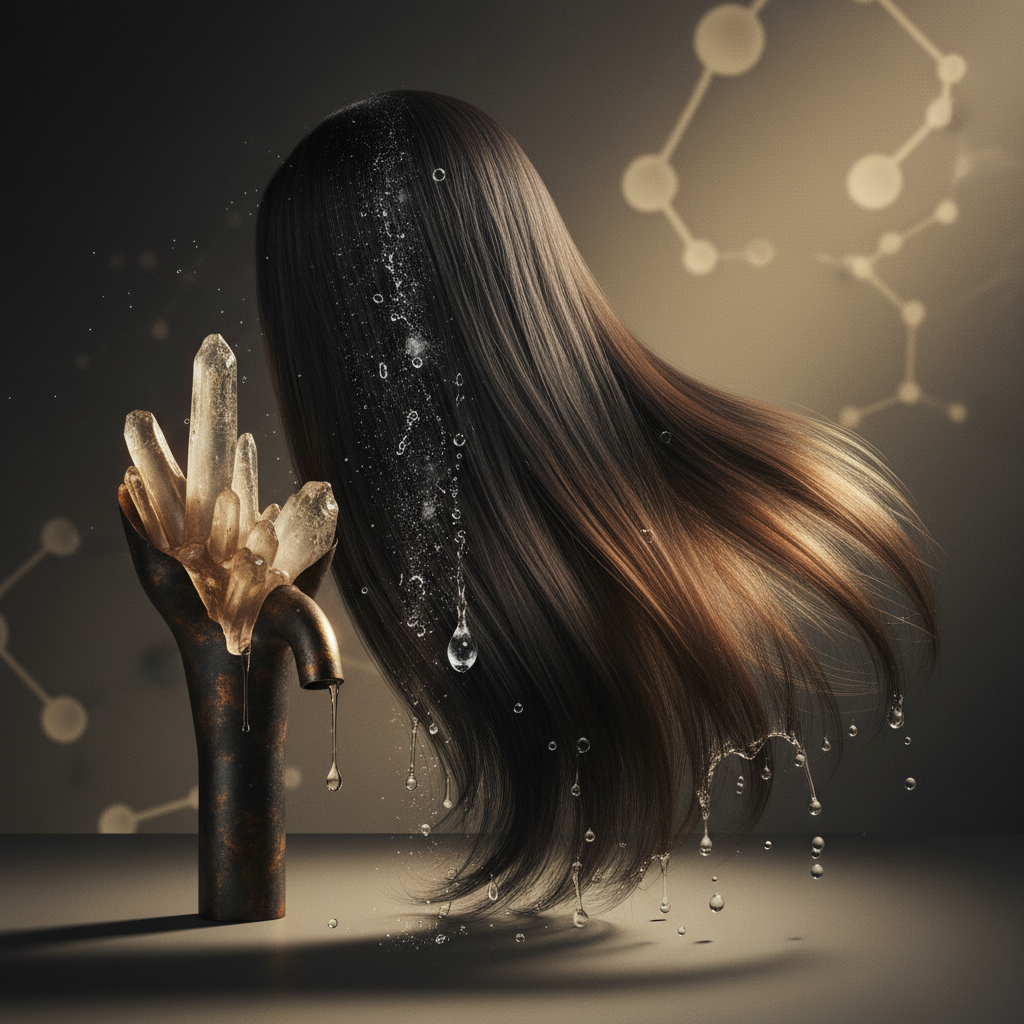
What is Hard Water?
Hard water is tap water that contains a high concentration of dissolved minerals, primarily calcium and magnesium. These minerals are picked up as water percolates through rocks and soil. The "hardness" of water is measured in milligrams per liter (mg/L) or grains per gallon (gpg) of calcium carbonate. Water is typically categorized as:
- Soft: Less than 60 mg/L
- Moderately Hard: 60-120 mg/L
- Hard: 120-180 mg/L
- Very Hard: More than 180 mg/L
While safe for drinking, the mineral composition of hard water can interact unfavorably with hair and skin.
How Hard Water Affects Hair
The dissolved minerals in hard water, particularly calcium and magnesium ions, present several challenges for hair health.
Mineral Buildup
When hard water interacts with shampoo, the mineral ions can react with surfactants, forming a precipitate known as "soap scum." This insoluble residue doesn't rinse away easily and can accumulate on the hair shaft and scalp. This buildup can make hair feel rough, sticky, or greasy, even after washing.
Hair Dryness and Brittleness
Mineral deposits can prevent moisture from penetrating the hair cuticle, the outermost layer of the hair shaft. This leads to reduced hydration, making hair feel dry, stiff, and brittle. Over time, brittle hair is more prone to breakage and split ends.
Dullness and Lack of Luster
The accumulation of minerals on the hair surface can create a rough, uneven texture, scattering light rather than reflecting it smoothly. This results in hair appearing dull, lackluster, and lacking natural shine.
Colour Fading
For colour-treated hair, mineral buildup can accelerate colour fading. The minerals can react with the colour molecules, causing them to degrade or preventing them from adhering properly to the hair shaft. Additionally, the rough cuticle caused by hard water exposure makes it easier for colour pigments to escape.
Scalp Irritation
Mineral residue can also accumulate on the scalp, potentially clogging hair follicles and contributing to irritation, itchiness, and flakiness. This can exacerbate conditions like dandruff or seborrheic dermatitis.
Tangles and Reduced Manageability
Hard water makes the hair cuticle (the outer layer of hair) stand up, instead of lying flat. When the cuticle is raised, hair strands can easily snag on each other, leading to increased tangling, knots, and difficulty in combing or styling.
Identifying Hard Water in Your Home
Several signs indicate you might have hard water:
- Soap scum: Residue on shower doors, tubs, and sinks.
- Limescale: White, chalky deposits around faucets and showerheads.
- Reduced lather: Shampoo and soap don't lather well.
- Dry skin: Skin feels dry or itchy after showering.
- Dull laundry: Clothes feel stiff or look dingy after washing.
Local water utility reports often provide information on water hardness in specific areas.
Mitigating the Effects of Hard Water
Numerous strategies can help counteract the adverse effects of hard water on hair.
Chelating (Clarifying) Shampoos
Chelating shampoos, often referred to as clarifying shampoos, contain ingredients that bind to and remove mineral deposits from the hair shaft. These ingredients, called chelating agents (e.g., EDTA, phytic acid, citric acid), form complexes with mineral ions, allowing them to be rinsed away. These shampoos should be used judiciously, typically once a week or every few washes, as overuse can sometimes lead to dryness. Following with a moisturising conditioner is recommended.
Vinegar Rinses
An apple cider vinegar (ACV) rinse can help. The acetic acid in ACV helps to dissolve mineral buildup and smooth the hair cuticle, promoting shine and reducing tangles. A common dilution is 1-2 tablespoons of ACV in a cup of water. Apply after shampooing, leave for a few minutes, then rinse thoroughly. This remedy should be used sparingly, perhaps once a week or bi-weekly, to avoid over-drying.
Shower Filters
Shower filters are devices that attach to your showerhead and aim to reduce the concentration of certain minerals and chemicals in the water. While less effective than whole-house water softeners, they can offer a noticeable improvement for some individuals by filtering out chlorine and some heavy metals, which can be beneficial for hair and skin.
Water Softeners
A whole-house water softener is the most comprehensive solution for hard water. These systems typically use an ion-exchange process to remove calcium and magnesium ions from the entire water supply. This results in soft water throughout the home, benefiting not only hair but also plumbing and appliances. While a significant investment, water softeners provide a permanent solution to hard water issues.
Moisturizing and Conditioning
Regardless of the water hardness, a consistent regimen of moisturising shampoos and conditioners is crucial. Hard water can strip hair of its natural oils, so incorporating deep conditioning treatments and leave-in conditioners can help replenish moisture and fortify the hair shaft against damage.
| Method | Mechanism | Benefits | Considerations |
|---|---|---|---|
| Chelating Shampoos | Binds to and removes mineral buildup | Deep cleans, restores shine, improves manageability | Can be drying if overused; follow with conditioner |
| Vinegar Rinses | Dissolves mineral buildup, smooths cuticle | Adds shine, reduces tangles, inexpensive | Use sparingly; proper dilution is key to avoid irritation |
| Shower Filters | Reduces minerals and chlorine at showerhead | Modest improvement in hair feel; easy to install | Less effective than whole-house softener; filters need periodic replacement |
| Water Softeners | Ion-exchange removes hardness minerals | Comprehensive solution; soft water throughout home; protects plumbing | Significant upfront cost; maintenance required; may not filter all contaminants |
Understanding the impact of hard water and implementing appropriate strategies can significantly improve hair health, restoring its softness, shine, and manageability.