Hair Types of Hair: An Evidence-Based Guide to Classification and Care
11 min read ·
Understanding the different Hair Types of Hair involves looking at curl pattern, strand thickness, density, and porosity, providing a framework for tailored haircare.
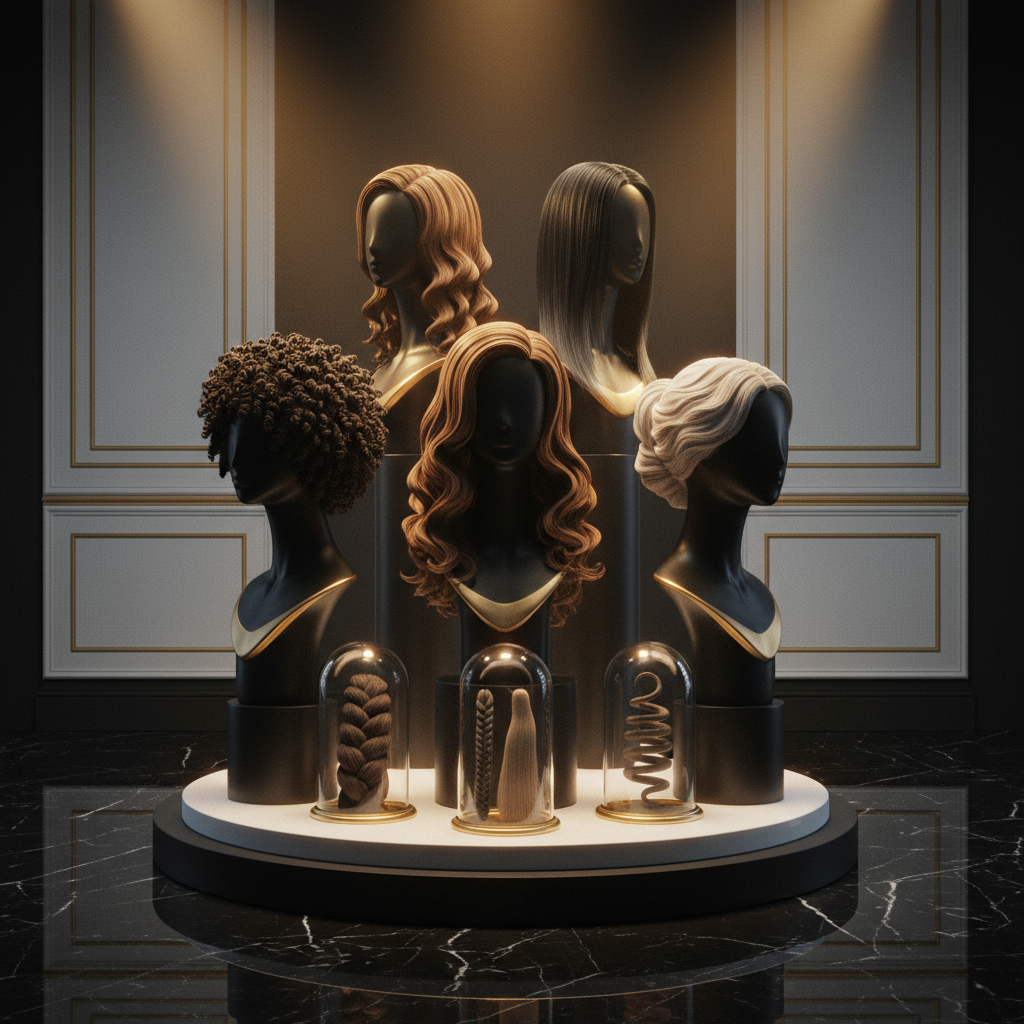
Quick answer: Hair Types of Hair refers to the various classifications used to describe hair based on inherent characteristics like curl pattern, strand thickness (texture), density, and porosity. While classification systems exist to help guide haircare, it's important to remember that hair is complex and individual characteristics can vary greatly, often blending across categories, and these systems are generalisations rather than strict definitions. Understanding your hair type can help you choose the most effective care routine and products for its specific needs.
Key takeaways
- Hair classification systems, such as those based on curl pattern, help individuals understand and categorise their hair's natural shape and behaviour.
- Beyond curl pattern, hair characteristics like porosity (how well hair absorbs and retains moisture), strand thickness (fine, medium, coarse), and density (number of hairs per square inch) are crucial for personalised care.
- No single system perfectly captures all Hair Types of Hair, and individual hair can often exhibit a combination of characteristics.
- Understanding your hair's specific type and characteristics allows for a more effective haircare routine, product selection, and styling approach.
- Misunderstanding your hair type can lead to using unsuitable products or techniques, potentially causing damage or ineffective results.
- When addressing concerns like breakage or lack of volume, consider all aspects of your hair type rather than just its curl pattern.
Hair Types of Hair: what the evidence shows
Hair Types of Hair are typically described using classification systems that consider several intrinsic properties of the hair fibre. While the most widely known system focuses on curl pattern, a comprehensive understanding requires looking at porosity, strand thickness, and density. These characteristics influence how hair responds to moisture, styling, and environmental factors, guiding effective care.
The Andre Walker Hair Typing System, though widely popularised, primarily categorises hair based on its wave and curl pattern. This system divides hair into four main types (1 to 4), with sub-classifications (A, B, C) denoting the variation within each type. It's a useful starting point but doesn't encompass all aspects of hair unique needs.
Curl Pattern: Type 1 Straight Hair
Type 1 hair is characterised by a lack of natural curl or wave, meaning the individual strands lie straight without any discernible bend or coil. The hair follicles producing straight hair are generally round. This hair type tends to be smooth and reflects light well, often appearing shiny. It can be prone to oiliness as scalp oils (sebum) can easily travel down the smooth, straight shaft. Common sub-types include:
- Type 1A: Very fine, soft, and completely straight. It often lacks volume and can become greasy quickly.
- Type 1B: Straight with a medium texture and a slight body or bend. It tends to hold styles better than 1A.
- Type 1C: Generally thicker and coarser. While still straight, it may have a subtle wave or be resistant to curling.
Curl Pattern: Type 2 Wavy Hair
Type 2 hair forms an "S" shaped pattern, falling between straight and curly hair. The follicles are typically oval. Wavy hair can range from fine and easily straightened to coarse and frizz-prone. It often lacks root volume but offers more styling versatility than straight hair. Hydration is key to managing frizz and enhancing wave definition. Sub-types include:
- Type 2A: Loose, stretched-out "S" waves that are fine and relatively easy to straighten. It often lacks volume at the root.
- Type 2B: More defined waves, ranging from medium to thick. Frizz can be a concern, and it may be more resistant to heat styling than 2A.
- Type 2C: Well-defined "S" waves starting closer to the root. It's usually coarser, prone to frizz, and can have some tighter sections bordering on curls.
Curl Pattern: Type 3 Curly Hair
Type 3 hair forms distinct loops and spirals, ranging from loose curls to tight, springy coils. The follicles are typically oval to nearly flat. Curly hair often experiences significant shrinkage, where its dry length appears much shorter than its stretched length. It generally requires higher levels of moisture to maintain definition, prevent frizz, and reduce breakage. Sub-types include:
- Type 3A: Large, loose curls with a circumference similar to a thick piece of chalk. These curls are often shiny and can be easily defined.
- Type 3B: Springy, well-defined curls that are tighter than 3A, with a circumference similar to a marker pen. This type can experience more shrinkage and is prone to frizz.
- Type 3C: Very tight, corkscrew-like curls with a circumference similar to a pencil. This hair type often has significant volume and density but is highly prone to dryness and tangles due to its cuticle structure.
Curl Pattern: Type 4 Coily Hair
Type 4 hair, often referred to as kinky or coily, has very tight, small, and highly textured patterns, ranging from tightly packed S-shapes to Z-shapes. The follicles are typically flat and grow in an elliptical shape, causing the hair to coil tightly from the scalp. Despite its appearance of robustness, coily hair can be very fine and delicate, making it highly susceptible to breakage if not handled with care. It exhibits the most shrinkage among all hair types. Intense moisture and gentle handling are paramount. Sub-types are:
- Type 4A: Characterised by tight, S-pattern coils that are clearly visible when stretched. It has high density and significant shrinkage, often appearing much shorter than its actual length.
- Type 4B: Features a more "Z" shaped zig-zag pattern rather than distinct S-curves. The coils are tighter and less defined than 4A, making individual strands harder to distinguish. This type is very prone to shrinkage and dryness.
- Type 4C: The tightest and most densely packed coil pattern, often with no defined pattern without manipulation. It experiences the most shrinkage and is the most delicate Hair Type of Hair, requiring diligent moisturising and gentle care to prevent breakage.
Beyond Curl Pattern: Porosity, Texture, and Density
While curl pattern is a visible characteristic, other factors are equally critical in determining how your hair behaves and what it needs. These include hair porosity, strand thickness (often called texture), and hair density.
Hair Porosity
Hair porosity refers to the hair's ability to absorb and retain moisture. It is determined by the condition of the hair's outermost layer, the cuticle. A healthy cuticle lies flat, while a damaged or raised cuticle allows moisture to enter and escape easily. For a deeper understanding, refer to Understanding Hair Porosity: How Your Hair Absorbs and Retains Moisture.
- Low Porosity: Cuticles are tightly closed, making it difficult for water and products to penetrate. Hair takes longer to get wet and dry, and products may sit on the surface. Benefits from lightweight products, humectants, and gentle heat to help open the cuticle.
- Medium Porosity: Cuticles are less tightly bound, allowing for good moisture absorption and retention. This type is often considered the easiest to manage, retaining moisture well without becoming overly saturated.
- High Porosity: Cuticles are raised or damaged, leading to rapid moisture absorption but also rapid moisture loss. Hair dries quickly, is prone to frizz, and can absorb too much product. Requires rich, emollient products and regular deep conditioning to seal the cuticle and retain hydration.
Hair Texture (Strand Thickness)
This refers to the diameter or thickness of individual hair strands, not the overall volume of your hair. It significantly impacts how hair feels, styles, and reacts to products.
- Fine: Individual strands are very thin and barely visible. Fine hair is delicate, prone to breakage, can lack volume, and often becomes oily quickly. Refer to Fine Hair: A Complete Guide to Understanding and Care for more information.
- Medium: Strands are neither fine nor coarse. This is the most common thickness, offering a balance of strength and flexibility.
- Coarse: Individual strands are thick with a wide circumference. Coarse hair tends to be strong, can be resistant to chemical treatments, and often feels dry or frizzy due to its robust structure.
Hair Density
Hair density refers to the number of individual hair strands per square inch on your scalp. It is distinct from strand thickness and influences overall hair volume and how much product is needed.
- Low Density: Fewer hair strands, resulting in a scalp that is easily visible. Hair may appear thin or sparse.
- Medium Density: An average number of hair strands, providing moderate fullness.
- High Density: Many hair strands, creating a thick, full appearance where the scalp is difficult to see.
When the Cause May Be Something Else
While understanding your Hair Types of Hair is essential for cosmetic care, remember that significant changes in hair texture, unexpected hair shedding, or hair loss may indicate underlying health issues. Hormonal fluctuations, nutritional deficiencies, certain medications, or medical conditions can all impact hair health and appearance. If you notice sudden or severe changes, or if your hair concerns extend beyond cosmetic management, it's important to consult with a healthcare professional or a dermatologist.
What You Can Do: Tailoring Your Haircare
Once you understand your specific Hair Types of Hair and its characteristics, you can tailor your routine to meet its needs. For example, fine, low-porosity hair will benefit from lightweight products that don't build up, while coarse, high-porosity coily hair will thrive with rich, moisturising treatments. For care specific to different hair types, explore resources like Caring for Curly Hair: An Evidence-Based Guide to Hydration and Definition, How to Care for Afro Hair: An Evidence-Based Guide, or Moisturizing Afro Hair: An Evidence-Based Guide to Hydration and Care.
By selecting shampoos and conditioners formulated for your hair type, using appropriate styling techniques, and protecting your hair from environmental stressors like heat styling, you can significantly improve its health and appearance. Regular deep conditioning and gentle handling are beneficial for almost all Hair Types of Hair, especially those prone to dryness or breakage.
| Characteristic | Description | Key Consideration for Care |
|---|---|---|
| Curl Pattern | The natural shape of the hair strand (straight, wavy, curly, coily) | Influences styling, frizz management, and product weight |
| Porosity | Hair's ability to absorb and retain moisture (low, medium, high) | Determines product penetration and need for moisture sealing |
| Strand Thickness | The diameter of individual hair strands (fine, medium, coarse) | Affects product weight, potential for breakage, and volume |
| Density | The number of hair strands per square inch on the scalp (low, medium, high) | Guides product amount and styling choices for volume or manageability |
Frequently asked questions about Hair Types of Hair
Why is understanding my hair type important?
Understanding your Hair Types of Hair allows you to choose appropriate products and care routines that address its specific needs. For example, fine, oily hair benefits from lightweight formulas, while coarse, dry hair needs richer, more moisturising products. This personalisation helps prevent damage, reduces frizz, enhances natural texture, and promotes overall hair health.
Can my hair type change over time?
Yes, your hair type can change due to various factors like hormonal shifts (e.g., puberty, pregnancy, menopause), ageing, chemical treatments, or environmental damage. While the underlying genetic curl pattern typically remains, characteristics like porosity, strand thickness, and density can evolve, requiring adjustments to your haircare routine.
Is the Andre Walker Hair Typing System the only one?
No, the Andre Walker system, while popular for classifying curl patterns, is not the only classification method. It primarily focuses on curl, wave, or coil patterns. A complete understanding of Hair Types of Hair also considers porosity, strand thickness, and density, which are equally crucial for effective haircare and product selection.
How does hair porosity relate to hair types?
Hair porosity is a critical characteristic that describes how easily your hair absorbs and retains moisture. It directly influences how products interact with your hair, regardless of its curl pattern. For instance, both straight and coily hair can have low or high porosity, meaning they will respond differently to the same moisturising treatments.
What are common mistakes when identifying hair type?
A common mistake is focusing solely on curl pattern while neglecting porosity, strand thickness, and density. Another is trying to force hair into a type that doesn't quite fit, leading to frustration and ineffective product choices. It's important to assess all characteristics of your hair and understand that your hair may have a mix of types.
Does hard water affect different hair types differently?
Yes, hard water can affect all hair types, but its impact can be more pronounced on certain Hair Types of Hair. For example, hair with higher porosity may absorb more mineral deposits, leading to increased dryness and dullness. Fine hair might feel limper, while curly or coily hair might experience more frizz and reduced curl definition. Refer to Hard Water and Hair Damage: Understanding the Impact on Your Hair for more details.
Understanding your unique Hair Types of Hair
Exploring the different Hair Types of Hair reveals a complex interplay of characteristics, far beyond a simple curl pattern. By understanding your hair's unique combination of curl pattern, porosity, strand thickness, and density, you gain the knowledge needed to select the most effective care strategies and products. This evidence-based approach to haircare helps you nurture your hair's natural beauty, leading to healthier-looking, more resilient hair. Watermans offers a range of products designed to support the health and vitality of all hair types, helping you maintain optimal scalp and hair condition.
Sources and references
- American Academy of Dermatology Association, "Hair loss: Diagnosis and treatment", aada.org
- The Cosmetic, Toiletry and Perfumery Association (CTPA), "Hair care", ctpa.org.uk
- National Institutes of Health (NIH), National Institute of Arthritis and Musculoskeletal and Skin Diseases (NIAMS), "Hair Loss", niams.nih.gov
- Wiley Online Library, International Journal of Cosmetic Science, "The effect of hair characteristics on the efficacy of hair care products", 2017
- PubMed Central, "The science of black hair: a comprehensive guide to textured hair care", 2013
Where Watermans fits
If you want a routine built around the science above, these are the products from the range that apply here: