Hair Type and Texture: Understanding Your Hair's Unique Characteristics
11 min read ·
Understanding your Hair Type and Texture is fundamental to effective hair care, influencing product choices, styling methods, and overall hair health.
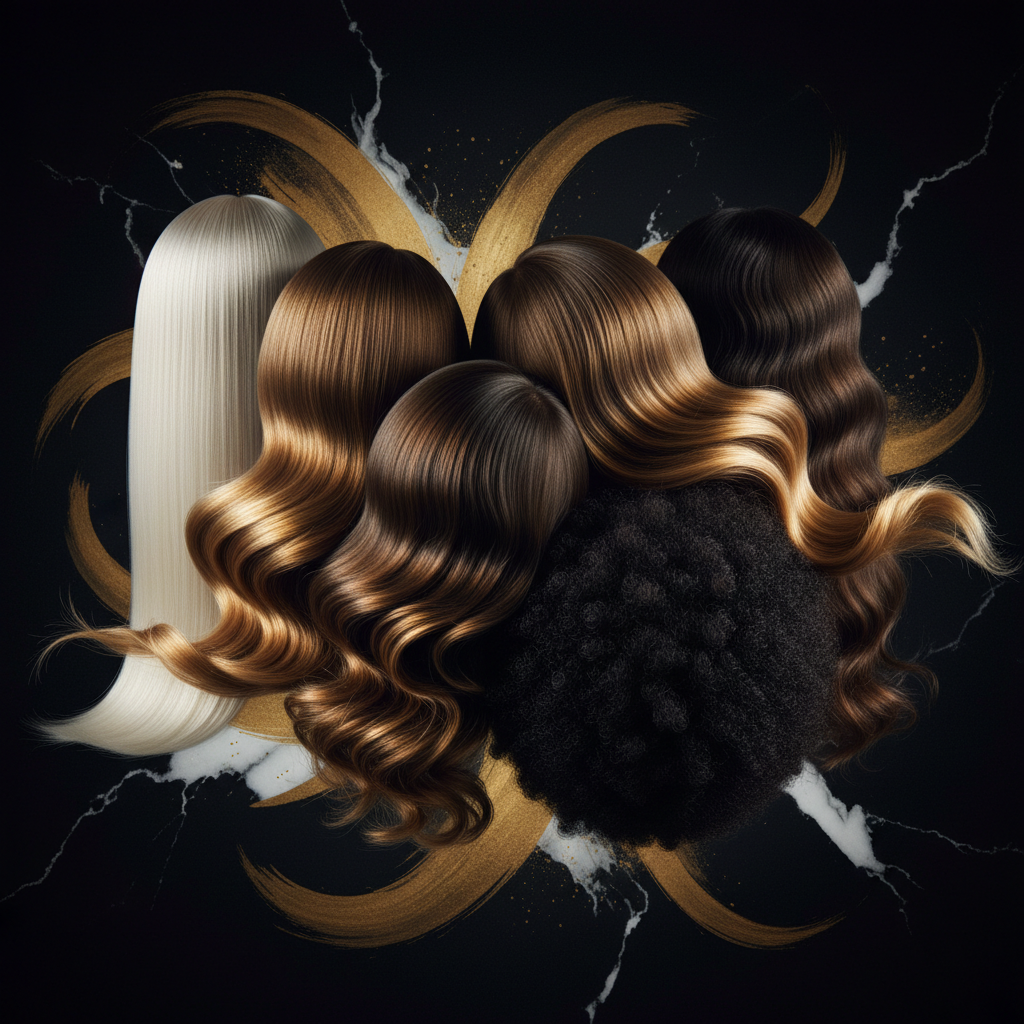
Quick answer: Hair Type and Texture refers to the inherent characteristics of your hair strands and their natural pattern, from straight to coily. Identifying your specific Hair Type and Texture helps you choose suitable products and care routines, influencing how your hair responds to styling and treatments. The main limitation is that hair characteristics can overlap and vary across an individual's scalp, making a single classification a simplification. However, it provides a useful framework for tailored hair care.
Key takeaways
- Hair Type describes your natural curl pattern, ranging from straight (Type 1) to wavy (Type 2), curly (Type 3), and coily (Type 4).
- Hair Texture refers to the circumference of individual hair strands, classified as fine, medium, or coarse.
- Understanding both your Hair Type and Texture is crucial for selecting appropriate hair products and styling techniques that support hair health and manageability.
- Hair characteristics are determined by follicle shape, genetics, and structural differences in the hair fibre.
- Identifying your Hair Type and Texture helps prevent damage, reduce frizz, improve moisture retention, and enhance styling outcomes.
- It's common for individuals to have a combination of hair types and textures, even on the same head, necessitating a flexible approach to care.
Hair Type and Texture: what the evidence shows
Understanding your Hair Type and Texture is the first step towards a personalised and effective hair care routine. These terms describe the inherent qualities of your hair that dictate its behaviour, needs, and how it responds to products and styling. Hair type generally refers to the natural shape of the hair strand, often categorised by its curl pattern, while hair texture describes the thickness of individual strands.
Hair Type: The Curl Pattern Explained
Hair type is primarily determined by the shape of the hair follicle from which the hair grows. A perfectly round follicle tends to produce straight hair, while increasingly oval or elliptical follicles lead to wavy, curly, and coily hair, respectively. The angle at which the follicle emerges from the scalp also plays a role. This structural difference influences how natural oils (sebum) travel down the hair shaft and how the hair interacts with humidity and styling.
Type 1: Straight Hair
Straight hair has no natural curl, falling without bends from root to tip. Its smooth surface reflects light easily, giving it a characteristic shine. Sebum can travel down straight hair shafts unimpeded, which can lead to it feeling oily more quickly than other types. While often perceived as strong, even straight hair can be fine and prone to breakage if not cared for properly. Subtypes (1A, 1B, 1C) are generally differentiated by thickness and body:
- 1A: Very fine, soft, and shiny, often struggles to hold a curl.
- 1B: Medium body, with more volume than 1A, and can sometimes hold a gentle curl.
- 1C: Coarse, thick, and very straight, often resistant to curling attempts.
Type 2: Wavy Hair
Wavy hair forms an "S" shape or a gentle bend. The hair follicle is typically oval. This type sits between straight and curly hair, offering versatility but also potentially experiencing frizz. Waves can vary from loose, barely-there patterns to more defined formations, often appearing straighter near the roots and wavier towards the ends. Wavy hair can be prone to dryness towards the ends if natural oils don't distribute evenly.
- 2A: Fine, loose waves, easy to straighten or enhance with styling products.
- 2B: Medium waves with a more defined "S" shape, often prone to some frizz.
- 2C: Thick, coarse waves with a pronounced "S" pattern, sometimes incorporating a few tighter curls, and often susceptible to frizz, especially in humid conditions.
Type 3: Curly Hair
Curly hair displays a distinct curl pattern, forming spirals or ringlets. The follicle is more elliptical, causing the hair to grow in a markedly curved fashion. This hair type is typically more prone to dryness than straight or wavy hair because the tight bends make it challenging for natural scalp oils to travel down the entire strand. Managing frizz and maintaining moisture are common concerns for curly hair. See also, Caring for Curly Hair.
- 3A: Large, loose curls, often around the width of a piece of sidewalk chalk.
- 3B: Medium, springy curls, ranging from the size of a marker to a pen.
- 3C: Tight, corkscrew curls, often densely packed and the width of a pencil.
Type 4: Coily Hair
Coily hair is characterised by very tight, small, and often zig-zag shaped coils that are densely packed. The hair follicle is highly elliptical, and the hair strands themselves have a flattened cross-section. This hair type is generally the most fragile and prone to dryness due to the numerous twists and turns in the strand, which impede the smooth distribution of natural oils. Coily hair also experiences significant shrinkage when wet. See also, How to Care for Afro Hair.
- 4A: Densely packed, S-patterned coils that are visible and well-defined.
- 4B: Z-patterned coils, with sharp angles and less visible curl definition than 4A.
- 4C: Very tight, zig-zag pattern, prone to extreme shrinkage, and often has very little visible curl definition without manipulation.
Hair Texture: The Strand's Circumference
Hair texture refers to the thickness or circumference of individual hair strands, independent of the curl pattern. This characteristic influences how hair feels, its strength, and its ability to hold styles. Hair texture is typically categorised into fine, medium, and coarse.
Fine Hair
Fine hair has the smallest circumference of individual strands. It feels delicate and can be easily damaged, often lacking volume. While it can appear soft and shiny, fine hair may get oily quickly as sebum has less surface area to cover. It can also be more prone to tangling and breakage if not handled gently. See also, Fine Hair: A Complete Guide to Understanding and Care.
Medium Hair
Medium hair is the most common hair texture. It is stronger and more elastic than fine hair, making it relatively easy to style and hold volume. It is less prone to breakage than fine hair but still requires proper care to maintain its health.
Coarse Hair
Coarse hair has the largest circumference of individual strands, feeling strong and thick. This texture is generally the most durable and can tolerate more heat and chemical treatments than fine or medium hair. However, coarse hair can also be more resistant to styling and prone to frizz, often requiring significant moisture to remain pliable and smooth.
Why understanding your Hair Type and Texture matters
Knowing your Hair Type and Texture is fundamental to effective hair care because these characteristics dictate how your hair behaves and what it needs. Tailoring your routine to your specific hair profile can significantly improve its health, appearance, and manageability. For example, a product suitable for coarse, coily hair might be too heavy for fine, straight hair, leading to limpness and oiliness.
The mechanism: How hair characteristics influence care needs
The shape of your hair follicle and the diameter of your hair strands directly affect several key aspects of hair health and appearance:
- Sebum Distribution: Straight hair allows sebum to travel down the shaft easily, potentially leading to oiliness. Curly and coily hair, with their bends and twists, hinder this distribution, making these types naturally drier at the ends.
- Fragility and Breakage: Hair with tighter curl patterns and finer textures tends to be more fragile. The numerous twists in curly and coily hair create points of weakness, while fine hair has less structural integrity overall. Understanding this helps you use gentler handling and protective styling. See also, Hair Damage: Causes, Signs, and Solutions.
- Moisture Retention: Hair porosity, which is often influenced by hair type, plays a crucial role in how well hair absorbs and retains moisture. Tighter curls and coily hair often have a lifted cuticle, making them more prone to moisture loss. See also, Hair Hydration: The Science Behind Keeping Hair Moist and Understanding Hair Porosity: How Your Hair Absorbs and Retains Moisture.
- Product Penetration: The structure of the hair, including its texture and curl pattern, affects how well products can penetrate the hair shaft and coat the surface. This influences the efficacy of conditioners, moisturisers, and styling products.
- Styling Challenges: Hair type affects how well styles hold, how prone hair is to frizz (see also, Dealing with Frizzy Hair), and how it reacts to heat styling (see also, Heat Styling: Understanding Its Effects and How to Protect Your Hair).
How to identify your Hair Type and Texture
Identifying your hair characteristics involves a simple observation process. This can help you make more informed choices for your hair care routine.
Identifying your Hair Type
Wash your hair and let it air dry without any products. Observe its natural pattern once fully dry. Does it fall straight? Does it have a gentle "S" wave? Does it form distinct spirals or tight coils? Compare what you see to the descriptions of Type 1 to Type 4 hair above.
Identifying your Hair Texture
To determine your hair texture, take a single strand of hair and roll it between your fingers. Alternatively, hold a single strand up to the light.
- Fine hair: You can barely feel or see the strand.
- Medium hair: You can feel the strand, and it is easily visible.
- Coarse hair: You can distinctly feel a strong strand, and it is clearly visible.
Summary of Hair Texture Characteristics
| Characteristic | Fine Hair | Medium Hair | Coarse Hair |
|---|---|---|---|
| Feel | Silky, delicate | Smooth, resilient | Rough, strong |
| Strength | More prone to breakage | Moderate strength, elastic | Very durable, strong |
| Volume | Tends to be low | Moderate volume | Often has high volume |
| Oiliness | Prone to oiliness | Moderate oiliness | Less prone to oiliness |
| Drying Time | Short | Medium | Long |
| Styling | Hard to hold styles, easily weighed down | Easy to style, holds well | Can be resistant to styling, requires effort |
Remember that it's entirely possible to have different hair types or textures on various parts of your scalp. For example, the hair around your temples might be finer or wavier than the hair at your crown. This means your hair care approach might need to be adaptable.
When to get professional advice
While understanding your Hair Type and Texture is a great starting point for personalising your hair care, if you're experiencing persistent issues such as excessive hair shedding, significant breakage, or scalp conditions, it's advisable to consult a trichologist or dermatologist. These professionals can provide a diagnosis and recommend targeted treatments that go beyond general hair type considerations.
Frequently asked questions about Hair Type and Texture
How does hair porosity relate to Hair Type and Texture?
Hair porosity, or its ability to absorb and retain moisture, is closely linked to Hair Type and Texture. Generally, coily and curly hair types tend to have higher porosity due to their lifted cuticles, making them prone to moisture loss. Fine hair can also be more porous due to its delicate structure. Understanding your porosity alongside your Hair Type and Texture provides a more complete picture for tailored hydration and conditioning strategies. See also, Understanding Hair Porosity: How Your Hair Absorbs and Retains Moisture.
Can my Hair Type and Texture change over time?
Yes, your Hair Type and Texture can change throughout your life. Hormonal fluctuations (e.g., during puberty, pregnancy, or menopause), certain medications, environmental factors, and even ageing can influence your hair's characteristics. For instance, naturally straight hair might develop a slight wave, or curly hair might become looser or tighter. Regularly reassessing your hair's needs is important for adapting your care routine.
Is it possible to have multiple Hair Types and Textures on one head?
Absolutely, it's very common to have different Hair Types and Textures on various parts of your scalp. For example, you might have wavier hair around your face and curlier hair at the back of your head, or a mix of fine and medium strands. This simply means you might need to adjust products or styling techniques for different sections of your hair to achieve the best overall results.
Does hard water affect different Hair Types and Textures differently?
Hard water can affect all Hair Types and Textures, but its impact may be more noticeable on certain ones. For instance, fine hair might feel more weighed down and limp, while coarse or curly hair might become rougher, drier, and more tangled due to mineral build-up. The minerals in hard water can prevent moisture from penetrating the hair shaft effectively. See also, Hard Water and Hair Damage: Understanding the Impact on Your Hair.
What are common mistakes people make when not considering their Hair Type and Texture?
A common mistake is using products designed for a different Hair Type and Texture. For example, using heavy, oil-rich products on fine hair can lead to greasiness and lack of volume. Conversely, using lightweight, clarifying shampoos without sufficient conditioning on coily or coarse hair can lead to dryness and breakage. Another error is aggressive styling or improper heat application, which can be particularly damaging to fragile hair types.
Conclusion
Navigating the world of hair care becomes much clearer once you understand your unique Hair Type and Texture. This fundamental knowledge empowers you to select the right products, adopt appropriate styling methods, and implement a routine that truly supports your hair's health and appearance. By recognising whether your hair is straight, wavy, curly, or coily, and whether its strands are fine, medium, or coarse, you unlock the ability to provide your hair with the specific care it needs to thrive. Embrace your hair's individuality to foster its best condition.
Watermans solutions for different Hair Type and Texture
Watermans offers a range of products designed to support healthy hair growth and scalp health, which can benefit various Hair Types and Textures. For those with curly or coily hair, the Frojus range is specifically formulated to provide intense moisture and definition, addressing the unique needs of these hair types. Frojus products are enriched with ingredients to help manage dryness and enhance natural curl patterns. For all hair types seeking to support growth and reduce breakage, Watermans Grow Me Shampoo and Conditioner provide a foundation for stronger, healthier-looking hair. When selecting products, consider both your hair's curl pattern and its strand thickness for optimal results.
Sources and references
- American Academy of Dermatology Association, "Hair care: Tips for healthy hair", ongoing
- PubMed Central, "Hair Cosmetics: An Overview", 2015, DOI: 10.4103/0974-7753.153499
- PubMed Central, "The Structure of Hair with Implications for Modern Hair Care", 2017, DOI: 10.3390/cosmetics4020027
- The Journal of Clinical and Aesthetic Dermatology, "Hair Breakage: The Role of the Cuticle", 2014
- British Association of Dermatologists, "Hair Loss", ongoing
- NHS, "Hair loss", ongoing