Hair Type Assessment: Understanding Your Hair's Unique Characteristics
12 min read ·
A Hair Type Assessment helps you understand your hair's unique characteristics to choose effective care routines, though individual responses to products can vary.
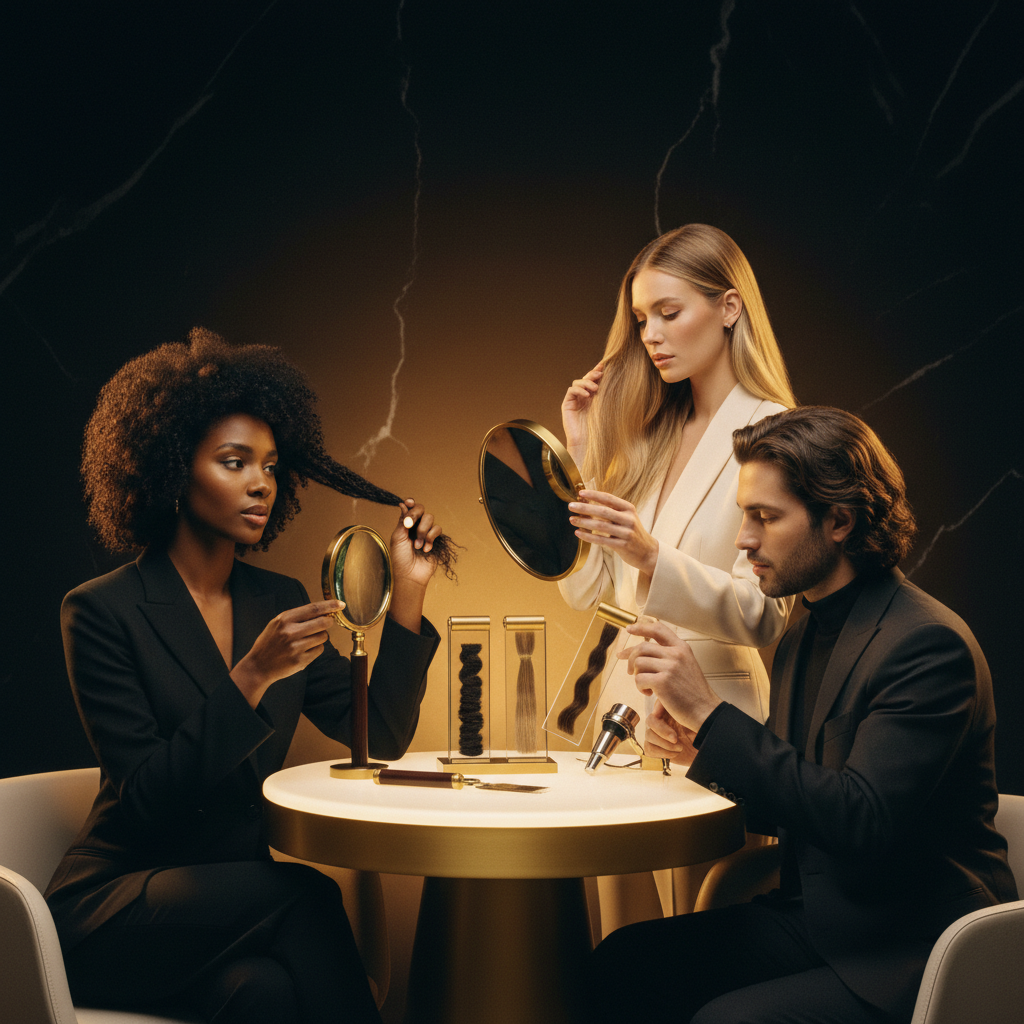
Quick answer: A Hair Type Assessment is the process of evaluating your hair's intrinsic qualities, such as strand thickness, density, porosity, and curl pattern, to select appropriate care products and techniques. While widely used, these assessments are general guides, and individual responses to products and environmental factors mean personal experimentation is always key for optimal results. Identifying your hair type can significantly improve your hair care routine, leading to healthier-looking and feeling hair.
Key takeaways
- Hair Type Assessment involves analysing several factors: strand thickness, hair density, porosity, elasticity, and curl pattern.
- Understanding your hair's specific characteristics helps you choose effective shampoos, conditioners, and styling products.
- Different hair types have unique needs; for example, fine hair can be easily weighed down, while high porosity hair needs more moisture retention.
- Scalp condition is a crucial part of a comprehensive assessment, influencing overall hair health and growth.
- While classification systems offer general guidance, a personalised approach based on your hair's response is most effective.
- Regularly assessing your hair can help adapt your routine as hair changes due to age, environmental factors, or chemical treatments.
Hair Type Assessment: what the evidence shows
A Hair Type Assessment is a practical method for understanding your hair's physical properties. These properties, including strand thickness, density, porosity, elasticity, and curl pattern, are primarily genetically determined, but can also be influenced by lifestyle, environment, and chemical treatments. Identifying these characteristics helps in selecting haircare products and styling techniques that complement your hair's natural structure and needs, promoting its health and appearance. While various systems exist for classifying hair, the most effective assessment considers a combination of these individual factors rather than relying on a single categorisation.
Strand Thickness: Fine, Medium, or Coarse
Hair strand thickness refers to the diameter of an individual hair fibre. This characteristic is largely genetic and influences how hair behaves and how it should be cared for. It is typically categorised as fine, medium, or coarse.
- Fine Hair: Has a small diameter, typically less than 50 micrometres (µm). It can feel delicate, is prone to breakage under stress, and may struggle to hold styles, often appearing limp. Products designed for volume without heavy conditioning are often beneficial.
- Medium Hair: The most common thickness, with a diameter generally between 50 to 70 µm. It is neither overly delicate nor excessively coarse, usually holds styles well, and has good resilience. Most standard haircare products are suitable.
- Coarse Hair: Has a large diameter, often exceeding 70 µm. It is strong and durable but can be resistant to styling and may feel rough to the touch. Coarse hair often benefits from richer, more moisturising products to enhance manageability and smoothness.
To determine your strand thickness, take a single, clean strand of hair and roll it between your fingers. If you can barely feel it, it's likely fine. If you can feel it distinctly but it's not rough, it's medium. If you feel a strong, noticeable strand, it's coarse.
Hair Density: Low, Medium, or High
Hair density describes the number of individual hair strands growing per square centimetre of the scalp. It is distinct from strand thickness and can be assessed as low, medium, or high. An average scalp has approximately 80,000 to 120,000 hair follicles, though this varies significantly by natural hair colour and ethnicity. For instance, natural blondes tend to have the highest density, while redheads often have the lowest.
- Low Density: The scalp is easily visible, and hair may appear sparse. Volumising products and lighter formulations can help create the appearance of fullness.
- Medium Density: The scalp is partially visible, indicating an average amount of hair. This density typically adapts well to a variety of styling and product types.
- High Density: The scalp is difficult to see, suggesting a large number of hair strands. Denser hair often requires more product to ensure even distribution and can take longer to dry. It may also benefit from products that help with manageability and prevent tangling.
To assess density, part your hair and observe how much of your scalp is visible. Another method is to pull a section of hair to the side and see how much scalp is exposed. If a significant amount of scalp is visible, density is likely low. If only a little is seen, it's high.
Hair Porosity: How Your Hair Absorbs Moisture
Hair porosity refers to your hair's ability to absorb and retain moisture. This characteristic is determined by the condition of the cuticle, the outermost layer of the hair shaft, which is made up of overlapping scales. Porosity can be genetic or affected by external factors like heat styling, chemical treatments, and environmental damage (see Understanding Hair Porosity: How Your Hair Absorbs and Retains Moisture).
- Low Porosity: The cuticle scales are tightly closed, making it difficult for moisture to penetrate the hair shaft. Products may sit on top of the hair rather than being absorbed. Hair with low porosity often takes a long time to get wet and dry, and can be prone to product build-up. Lightweight, penetrating moisturisers and heat during conditioning can be beneficial.
- Normal Porosity: The cuticle scales are slightly raised, allowing for a balanced absorption and retention of moisture. Hair generally looks healthy, has good elasticity, and is easy to manage. Maintaining this balance with regular conditioning is key.
- High Porosity: The cuticle scales are raised or damaged, allowing moisture to enter and exit easily. This can be due to genetic factors or damage from chemical treatments (like colouring or perming), excessive heat styling, or harsh environmental exposure. High porosity hair can lead to frizz, dryness, and breakage, and gets wet and dries quickly. It benefits from products that seal the cuticle, such as heavier butters, oils, and leave-in conditioners, to help retain moisture (see Hair Hydration: The Science Behind Keeping Hair Moist).
Water Test for Porosity: Drop a few clean, product-free strands of hair into a glass of water. If they float at the top, you likely have low porosity. If they sink slowly or float in the middle, you have normal porosity. If they sink quickly to the bottom, you have high porosity.
Hair Elasticity: The Hair's Resilience
Hair elasticity is the hair's ability to stretch without breaking and then return to its original length. This property is a strong indicator of the hair's internal structural health, particularly the integrity of the cortex (see Hair Anatomy: Understanding the Structure and Science of Your Hair). Healthy hair has good elasticity, while damaged hair often has poor elasticity.
- Good Elasticity: Hair can stretch significantly (up to 50% when wet) and bounce back without breaking, indicating strong, healthy hair with intact protein bonds. This hair type can tolerate styling better.
- Poor Elasticity: Hair stretches minimally and breaks easily, suggesting damage and a need for strengthening treatments, often those containing protein. Hair with poor elasticity is more susceptible to breakage during styling or brushing.
To test elasticity, take a wet strand of hair and gently stretch it. Observe how much it stretches before breaking and how well it recoils to its original length. If it snaps easily with little stretch, its elasticity is poor.
Curl Pattern: Straight, Wavy, Curly, or Coily
One of the most visible aspects of hair is its curl pattern, which is genetically determined by the shape of the hair follicle and the angle at which hair grows from the scalp. The shape of the follicle influences whether the hair grows straight, wavy, curly, or coily. This characteristic is particularly important for styling and product selection, especially for afro, curly or wavy hair (see Caring for Curly Hair and How to Care for Afro Hair: An Evidence-Based Guide).
The Andre Walker Hair Typing System, while popular, simplifies hair into broad categories. A more nuanced view acknowledges a spectrum of textures.
| Type | Description | Key Characteristics & Care Considerations | Example of Sub-type | Notes |
|---|---|---|---|---|
| Type 1 | Straight hair. | No natural curl pattern. Tends to be oily as sebum easily travels down the shaft. Can lack volume. | Type 1a (fine and straight) | Benefits from lightweight products that don't weigh it down. |
| Type 2 | Wavy hair. | Forms a loose "S" shape. Can range from barely wavy to more defined waves. Prone to frizz. | Type 2b (medium, more defined waves) | Often benefits from curl-enhancing products and frizz control (see Dealing with Frizzy Hair). |
| Type 3 | Curly hair. | Forms a definite "S" or "Z" shape, ranging from loose curls to tight, springy ringlets. Prone to dryness and frizz. | Type 3c (tight, corkscrew curls) | Requires moisture-rich products and gentle handling to maintain curl definition and prevent breakage. |
| Type 4 | Coily/Kinky hair. | Forms very tight, small coils, often in a "Z" pattern. Highest shrinkage and often the driest hair type due to coiling hindering sebum distribution. Most fragile. | Type 4c (tightest, Z-pattern, less defined overall) | Demands intensive moisture, gentle detangling, and protective styling to prevent breakage (see Moisturizing Afro Hair: An Evidence-Based Guide to Hydration and Care). |
Scalp Condition: The Foundation of Hair Health
The condition of your scalp is just as important as the hair itself, as it provides the foundation for healthy hair growth. A healthy scalp is free from excessive oiliness, dryness, flaking, or irritation. Scalp conditions can significantly impact hair health and comfort, making scalp assessment a vital part of any comprehensive Hair Type Assessment.
- Oily Scalp: Characterised by excessive sebum production, often leading to greasy hair. This can be caused by hormonal fluctuations, genetics, or improper washing. An oily scalp may benefit from clarifying shampoos and products that help with sebum regulation (see Sebum Regulation: Understanding and Managing Scalp Oiliness).
- Dry Scalp: Lacks sufficient moisture and natural oils, often resulting in flakiness, itchiness, and a tight sensation. This can be exacerbated by harsh shampoos, hot water, or environmental factors. Hydrating and soothing scalp treatments are often recommended (see Scalp Exfoliation: Uncovering the Evidence for a Healthier Scalp).
- Normal Scalp: Exhibits balanced sebum production, with no excessive oiliness or dryness. This is the ideal state, requiring gentle, balancing care to maintain health.
- Sensitive Scalp: Prone to irritation, redness, itching, or discomfort from certain products, dyes, or environmental stressors. Gentle, fragrance-free products with anti-inflammatory ingredients can help soothe a sensitive scalp (see Anti-inflammatory Ingredients: Soothing Your Scalp for Healthier Hair).
Observing your scalp regularly for oiliness, dryness, flaking, redness, or irritation can help determine its condition and guide product choices.
What the evidence does not show
While various hair classification systems are widely used, there is a lack of universally standardised, peer-reviewed scientific methods for a definitive Hair Type Assessment that predicts product efficacy for every individual. Most systems, including the popular Andre Walker system, are observational classifications rather than scientifically validated diagnostic tools. This means that while they offer useful general guidance, individual hair often exhibits characteristics from multiple categories, and personal experimentation remains crucial for finding the best care routine.
When to get professional advice
While a personal Hair Type Assessment is a great starting point, certain hair and scalp concerns warrant professional advice. If you experience persistent scalp irritation, excessive hair shedding (more than 100 to 150 hairs per day), sudden changes in hair texture, or suspect a specific scalp condition like severe dandruff or psoriasis, consulting a dermatologist or trichologist is advisable. These professionals can provide a clinical diagnosis and tailored treatment plans, addressing underlying medical causes rather than just cosmetic symptoms.
Frequently asked questions about Hair Type Assessment
Can my hair type change over time?
Yes, your hair type can change due to various factors. Hormonal shifts (like pregnancy or menopause), ageing, dietary changes, stress, and chemical treatments (such as colouring or perming) can alter hair's thickness, texture, and porosity. It's a good idea to periodically re-evaluate your hair and adjust your care routine accordingly to ensure it continues to meet your hair's current needs.
How often should I do a Hair Type Assessment?
It's not necessary to perform a formal Hair Type Assessment frequently. A thorough assessment initially can set a good foundation for your routine. However, it's beneficial to reassess your hair whenever you notice significant changes in its behaviour, texture, or condition. This might be after a major life event, a change in haircare products, or if you experience new hair concerns. Every 6 to 12 months, or as needed, is a reasonable timeframe.
What's the difference between hair type and hair condition?
Hair type refers to the inherent, usually genetically determined characteristics of your hair, such as its curl pattern, thickness, and natural porosity. Hair condition, on the other hand, describes the current state of your hair's health, which can be influenced by external factors like damage from heat, chemicals, or environment. A person with naturally fine hair (type) can still have healthy, well-conditioned hair, or damaged, poor-conditioned hair.
Can I have multiple hair types on my head?
It's common to have variations in hair characteristics across your scalp. For example, some areas might have finer hair, or a different curl pattern. Your porosity might also vary, especially if certain sections have been chemically treated more than others. When assessing your hair, consider the predominant characteristics, but also acknowledge these localised differences and tailor your product application if necessary.
Does hard water affect my hair type assessment?
Hard water can significantly impact how your hair behaves and feels, potentially influencing the perceived results of a hair type assessment (see Hard Water and Hair Damage: Understanding the Impact on Your Hair). Mineral buildup from hard water can make hair feel coarse, look dull, and reduce its ability to absorb moisture, mimicking some characteristics of high porosity or damaged hair. While it doesn't change your intrinsic hair type, it can mask or exacerbate its true nature. Using a clarifying wash can help remove buildup.
Your Hair Type Assessment and Watermans
Understanding your hair's unique characteristics through a Hair Type Assessment is the first step towards choosing an effective haircare routine. Watermans products are formulated with ingredients designed to address various hair needs, complementing the insights gained from your assessment. For example, if your assessment reveals fine or thinning hair, products like Watermans GrowMe® Shampoo and Conditioner are designed with ingredients such as Hydrolysed Lupin Protein and Biotin, known to support the appearance of thicker, fuller-looking hair. For those with curly or coily hair (Type 3 or 4), Frojus offers specialised formulations that cater to the unique moisture and strength requirements of these hair types. Regardless of your specific hair characteristics, matching your identified needs with suitable products can help improve hair condition and appearance.
Sources and references
- American Academy of Dermatology Association. "Hair loss: Diagnosis and treatment."
- National Center for Biotechnology Information (NCBI). "Hair Cosmetics: An Overview." (2015).
- British Association of Dermatologists. "Hair and Scalp Conditions."
- Journal of Cosmetic Science. "The physical and mechanical properties of hair." (Various years).
- PubMed Central. "Hair breakage in women." (Various years).
- Karger Publishers. "Trichology: Diseases of the Pilosebaceous Follicles and Hair Fibers." (2011).
- Journal of the American Academy of Dermatology. "Trichoscopy." (Various years).
- European Academy of Dermatology and Venereology. "Hair and Scalp Disorders."
- Anvekar, R. K., & Savkar, M. S. (2019). "Hair care formulations and their effect on hair properties." International Journal of Pharmaceutical Sciences Review and Research, 57(2), 1-8.
- Robbins, C. R. (2012). "Chemical and physical behaviour of human hair." Springer Science & Business Media.
- Gavazzoni Dias, M. F. R. (2015). "Hair cosmetics: An overview." International Journal of Trichology, 7(1), 2 to 15.
- "Textbook of Cosmetic Dermatology" by Baran and Maibach (Numerous editions).
- "Hair Growth and Disorders" by Camacho and Randall (2007).
- "Practical Guide to Hair and Scalp Disease" by Tosti and de Faria (2016). ", seo_title=
Find these ingredients in Watermans products
- Biotin: you will find this ingredient in our Hair Growth Shampoo.