Understanding the Structure of Hair
4 min read ·
Hair is a complex biological fibre primarily composed of keratin, with distinct layers that determine its strength, elasticity, and appearance.
Introduction to Hair Structure
To understand how hair behaves, why it responds to certain treatments, and what contributes to its health, it's essential to look at its fundamental structure. Hair is more than just strands; it's a intricate biological fibre with distinct layers, each playing a crucial role in its overall integrity and appearance.
Each strand of hair originates from a hair follicle, a tiny organ located in the dermis (the second layer of skin). While the visible part of the hair, the hair shaft, is biologically "dead" once it emerges from the scalp, the follicle remains a living entity, continuously producing new hair cells.
The Hair Follicle: The Root of It All
The hair follicle is a crucial component of hair structure, extending from the epidermis into the dermis. It's a complex structure that anchors each hair into the skin. At the base of the follicle is the hair bulb, where living cells divide and grow to build the hair shaft. Surrounding the hair bulb is the dermal papilla, a cone-shaped projection containing capillaries (tiny blood vessels) that supply nutrients essential for hair growth and development. The follicle also houses sebaceous glands, which produce an oily substance called sebum that naturally lubricates and conditions the hair and scalp.
Layers of the Hair Shaft
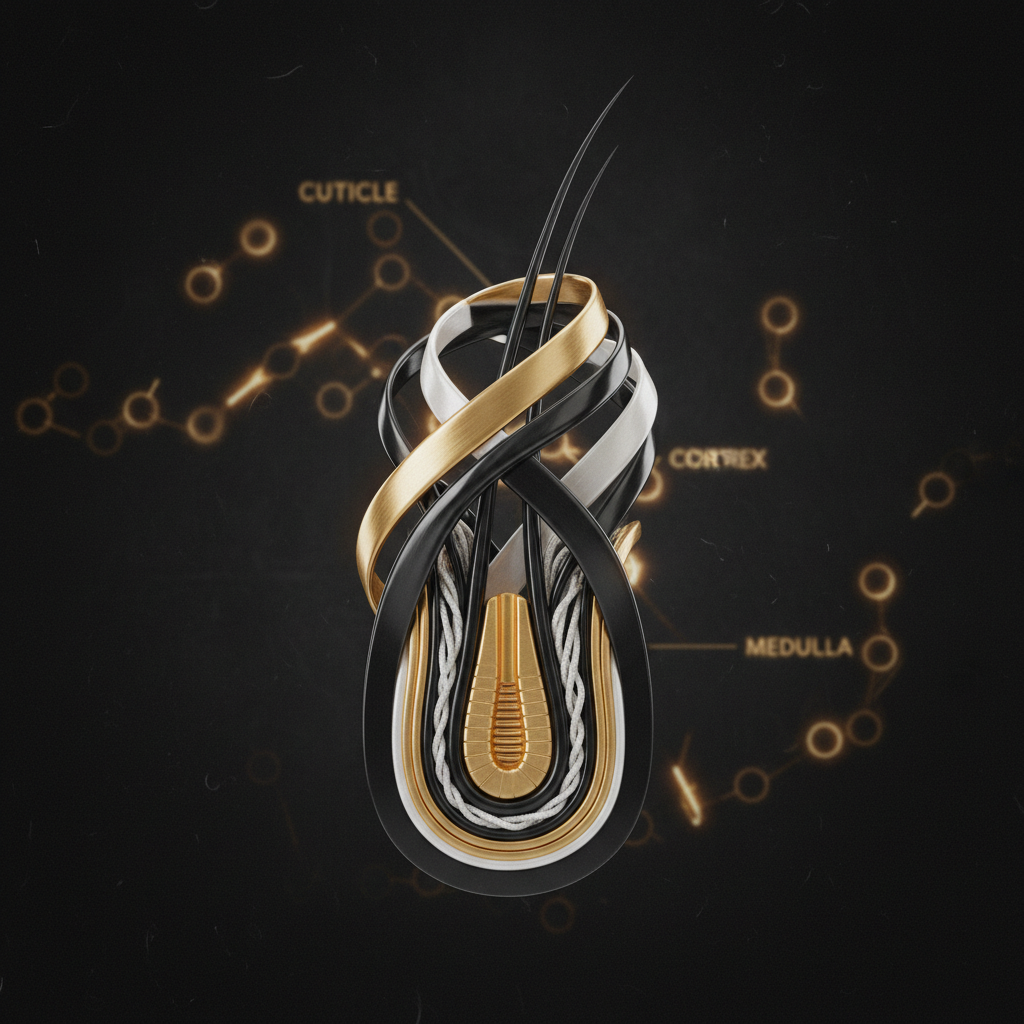
The hair shaft, the visible part of the hair, consists of three main layers:
-
Cuticle: The outermost layer, the cuticle, acts as a protective shield. It comprises several overlapping layers of dead, flattened cells, much like scales on a fish or shingles on a roof. These cells overlap from the root to the tip, typically 6 to 10 layers thick. When healthy, the cuticle lies flat, reflecting light and making the hair appear shiny and smooth. When the cuticle is raised or damaged, hair can look dull, feel rough, and be more prone to tangling and breakage. The cuticle's integrity is crucial for retaining moisture and protecting the inner layers from chemical and environmental damage.
-
Cortex: The cortex is the thickest layer of the hair shaft, making up approximately 75-90% of the hair's total weight. It lies beneath the cuticle and is responsible for the hair's strength, elasticity, and colour. The cortex consists of elongated, spindle-shaped cells that contain keratin proteins, which are coiled and twisted together like ropes. These keratin fibres are held together by various bonds, including disulfide bonds, hydrogen bonds, and salt bonds, which contribute to the hair's structural integrity. Melanin, the pigment that determines hair colour, is also found within the cortex.
-
Medulla: The innermost layer of the hair shaft is the medulla. Not all hair types or individual hairs possess a medulla; it can be absent, fragmented, or continuous. When present, it appears as a central core. The exact function of the medulla is not fully understood, but it is thought to play a role in hair's thermal insulation and mechanical properties. It often contains air spaces, which can make hair appear lighter in colour or more opaque.
Chemical Composition of Hair
Hair is primarily composed of protein, specifically a hard protein called keratin. This fibrous protein accounts for about 88% of the hair's composition. The remaining percentage consists of moisture, lipids, pigments, and trace elements. The strength and resilience of hair are largely attributed to the complex arrangement of keratin proteins and the bonds that hold them together. Disulfide bonds, which are strong chemical bonds, are particularly important for hair's structural integrity and are targeted in chemical processes like perms and relaxers.
Hair Types and Structure
The structure of hair can vary significantly among individuals and ethnic groups, influencing its texture, curl pattern, and overall appearance. For instance, tightly curled hair often has an elliptical or flattened cross-section, while straight hair tends to have a round cross-section. The distribution of keratin and the thickness of the cuticle and cortex can also differ, contributing to variations in hair type and its response to products and styling.
Understanding these structural differences is key to proper hair care. Products designed for specific hair types often take into account the unique challenges posed by their internal and external structures.
Maintaining Hair Health through Structural Understanding
Maintaining the health of your hair involves understanding and respecting its structural components. For example, excessive heat styling or harsh chemical treatments can lift and damage the cuticle, leading to moisture loss and increased susceptibility to breakage. Using appropriate hair care products, such as a gentle shampoo that cleanses without stripping natural oils, can help maintain the integrity of the cuticle and preserve the natural lipid barrier. Conditioning treatments can help smooth the cuticle, enhance shine, and improve manageability.
For instance, products containing hydrolyzed proteins can temporarily fill gaps in the damaged cuticle and cortex, offering temporary strength and improved appearance. Understanding that the cortex provides elasticity and strength means recognizing that proper hydration and protein balance are essential for preventing hair from becoming brittle or overly stretchy. By caring for the cuticle, nourishing the follicle, and respecting the delicate balance of the cortex, you can significantly contribute to the overall health, strength, and vibrancy of your hair.