Understanding Hair Shedding and What to Do
6 min read ·
Hair Shedding and What to Do: understand its causes, normal patterns, and effective strategies for managing excess hair fall.

Quick answer: Hair Shedding and What to Do involves understanding that losing 50 to 100 hairs daily is normal, part of the hair’s natural growth cycle. When shedding significantly exceeds this, often due to temporary disruptions like stress, illness, or hormonal changes, it's known as telogen effluvium. Effective strategies focus on identifying and addressing the underlying cause, alongside supportive hair care practices, to promote healthy regrowth. This article focuses on shedding, not hair loss (alopecia) or breakage.
Key takeaways
- Normal hair shedding is part of the hair growth cycle, typically 50 to 100 hairs daily.
- Increased shedding, often called telogen effluvium, is usually a temporary condition triggered by physical or emotional stressors.
- Unlike hair loss (alopecia), telogen effluvium does not damage the hair follicle and hair typically regrows within several months.
- Identifying and addressing the underlying cause is the most effective approach to managing excess hair shedding.
- Gentle hair care and a balanced diet support a healthy scalp environment conducive to regrowth.
- Consult a doctor or trichologist if shedding is sudden, excessive, prolonged, or accompanied by other symptoms.
Hair Shedding and What to Do: what the evidence shows
Normal hair shedding is a natural and necessary part of the hair growth cycle. Our hair follicles don't all grow at the same time; instead, they cycle through phases. When a hair reaches the end of its resting (telogen) phase, it detaches and sheds, making way for a new hair to begin its growth (anagen) phase. On average, a healthy adult can shed between 50 and 100 hairs per day. This amount is generally considered normal and doesn't indicate a problem. You might notice more hair in your brush, on your pillow, or in the shower, but this is usually a continuation of the natural cycle.

When the amount of hair shed daily significantly exceeds this normal range, it's often referred to as excessive hair shedding. The most common cause of this is a condition called telogen effluvium. This occurs when a higher than usual number of hairs prematurely enter the telogen (resting) phase, leading to widespread shedding across the scalp. Telogen effluvium is typically triggered by a specific event or stressor and is temporary. The shedding usually becomes noticeable about two to three months after the triggering event and can last for several months.
Evidence from dermatological and trichological research consistently identifies various triggers for telogen effluvium. These can range from significant physiological stress, such as major surgery, childbirth, or severe illness (including fever or infection), to psychological stress, rapid weight loss, nutritional deficiencies, and certain medications. Hormonal shifts, particularly those experienced postpartum or during thyroid imbalances, are also well-documented causes. Understanding these triggers is crucial for anyone wondering about Hair Shedding and What to Do, as identifying the cause is the first step towards resolution.
The mechanism of hair shedding
Each hair follicle goes through three main phases: anagen (growth), catagen (transition), and telogen (resting). Approximately 85 to 90 percent of hairs are in the anagen phase, which lasts between two to seven years. During this phase, the hair actively grows from the follicle. The catagen phase is short, lasting only about two to three weeks, during which hair growth stops and the outer root sheath shrinks.
The telogen phase follows, lasting about two to four months. During this time, the hair remains in the follicle but is inactive. At the end of the telogen phase, the hair detaches, and a new anagen hair begins to grow, pushing the old hair out. This is the natural shedding process. In telogen effluvium, a higher proportion of hairs than normal prematurely enter the telogen phase simultaneously. This synchronisation of cycles leads to a delayed but noticeable increase in shedding about two to four months later, as these resting hairs are all pushed out around the same time. The follicles themselves are not damaged, and once the trigger is resolved, the hair cycle typically normalises, leading to regrowth.
Signs to look for
Distinguishing between normal shedding and excessive shedding can be a concern. Look for these signs:
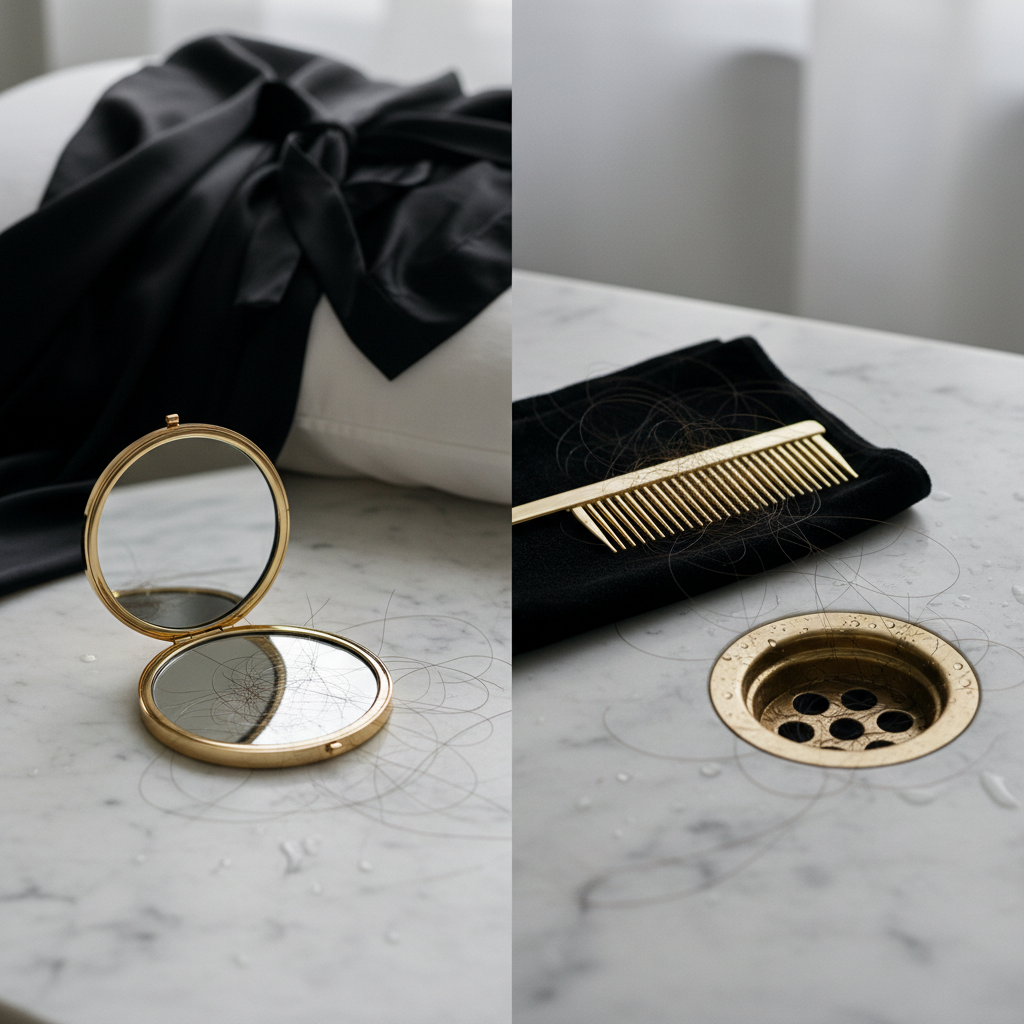
- Increased volume of shed hair: You notice significantly more hair than usual in your hairbrush, shower drain, or on your clothes. If you can easily collect large clumps of hair, it might be excessive.
- Widespread thinning: Unlike patterned hair loss (alopecia), which often presents with distinct thinning areas, excessive shedding usually results in a general reduction of hair density all over the scalp.
- Visible scalp: While the hair might feel thinner, you typically won't see bald patches with telogen effluvium. Instead, the scalp might become more visible through the hair, especially when wet.
- Hair pulling test: Gently grasp a small section of hair (around 60 strands) and pull firmly from the base to the tips. If more than 5 to 8 hairs come out consistently across different areas of the scalp, it could indicate excessive shedding.
- Recent trigger: Think back over the last two to four months for any significant stressful events, illnesses, dietary changes, or medications that might have initiated the shedding.
What you can do about excessive hair shedding
Addressing excessive hair shedding often involves a multi-pronged approach, focusing on identifying and mitigating the underlying cause, alongside supportive hair care.
1. Identify and address the trigger: This is the most crucial step. Review recent life events, medical conditions, and dietary habits. If you suspect a medication, consult your doctor. If stress is a factor, consider stress-reduction techniques like mindfulness, yoga, or therapy. For nutritional deficiencies, a doctor can advise on appropriate supplements.
2. Optimise your diet: A balanced diet rich in essential vitamins and minerals supports healthy hair growth. Key nutrients include:
- Protein: Hair is primarily made of protein, so ensure adequate intake from lean meats, fish, eggs, dairy, legumes, and nuts.
- Iron: Deficiency can contribute to shedding. Good sources include red meat, spinach, lentils, and fortified cereals. Vitamin C helps with iron absorption.
- Zinc: Found in meat, shellfish, legumes, nuts, and seeds, zinc plays a role in hair tissue growth and repair.
- B vitamins (especially Biotin): While biotin deficiency is rare, some research suggests it may support hair health. Found in eggs, nuts, and whole grains.
- Vitamin D: Linked to hair follicle cycling. Exposure to sunlight and foods like fatty fish and fortified dairy are sources.
3. Gentle hair care practices: Reduce mechanical stress on your hair.
- Washing: Use a mild, sulphate-free shampoo and conditioner. Avoid excessively hot water.
- Drying: Blot hair gently with a towel instead of rubbing vigorously. Air dry whenever possible, or use a low heat setting on your hairdryer.
- Brushing: Use a wide-tooth comb or a soft-bristle brush. Detangle gently from the ends upwards to prevent breakage.
- Styling: Limit tight hairstyles (ponytails, braids), excessive heat styling (straighteners, curling irons), and chemical treatments (perming, colouring) until shedding subsides.
4. Manage stress: Chronic stress can disrupt the hair growth cycle. Incorporate stress-reducing activities into your routine.
5. Watermans Haircare: For individuals experiencing excessive hair shedding, Watermans Grow Me Shampoo and Conditioner are formulated with a blend of biotin, caffeine, argan oil, and rosemary extract. These ingredients are chosen to create an optimal scalp environment, nourish hair from root to tip, and help reduce the appearance of shedding. Regular use is designed to promote healthier, fuller-looking hair and a revitalised scalp.
When the cause may be something else
It