Hair Shaft Weathering: Causes, Cuticle Erosion, and Fibre Protection
10 min read ·
Hair shaft weathering is the progressive wear and tear of the hair fibre from root to tip. Learn what causes it, how cuticles erode, and practical ways to protect your hair.
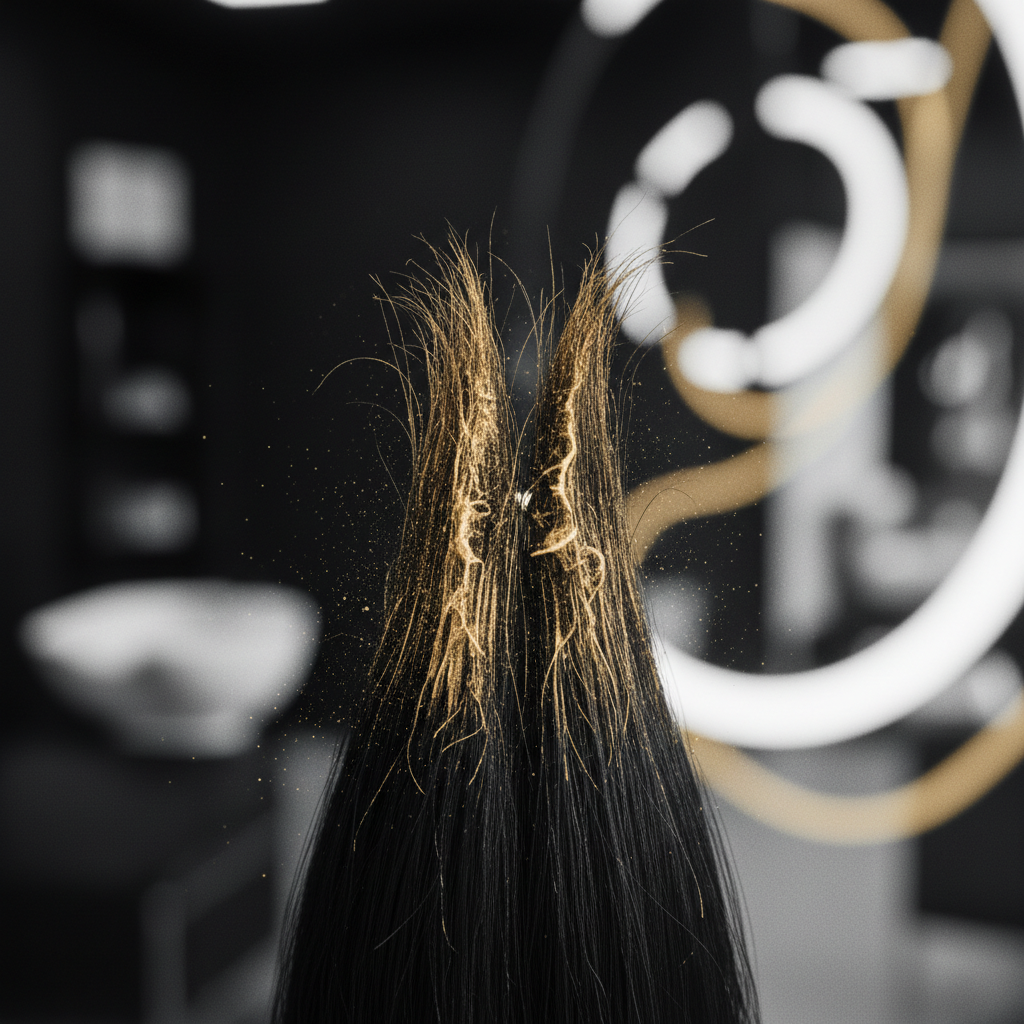
Quick answer: Hair shaft weathering describes the progressive, cumulative wear and tear of the hair fibre from root to tip caused by everyday environmental, mechanical, and chemical stressors. It manifests as cuticle erosion, dullness, friction, split ends, and mid-shaft breakage. Because hair fibre is non-living tissue, it cannot self-repair once structural lipids and proteins are lost. Managing hair shaft weathering relies on defensive care: limiting thermal and chemical trauma, restoring slip with conditioning agents, and trimming away irreparable split ends.
Key takeaways
- Hair shaft weathering is an inevitable, non-pathological degradation of hair protein and surface lipids over time.
- The primary physical driver is cuticle desquamation, where overlapping protective scales lift, chip, and peel away.
- Environmental triggers include ultraviolet radiation (photo-oxidation) and ambient humidity, alongside routine brushing, friction, and heat styling.
- Weathering causes hair breakage, not hair shedding or follicular hair loss. The hair follicle itself remains completely unharmed.
- Preventative conditioning, mild acidic cleansers, and regular micro-trims remain the only realistic strategies to manage weathered strands.
Hair Shaft Weathering: what the evidence shows
Hair shaft weathering represents the natural ageing process of the hair fibre. From the moment a hair emerges through the scalp surface, it is exposed to mechanical friction, sunlight, water cycles, and grooming practices. A single strand of shoulder-length hair has spent roughly two to three years exposed to the environment, while waist-length hair may carry five or more years of cumulative exposure.
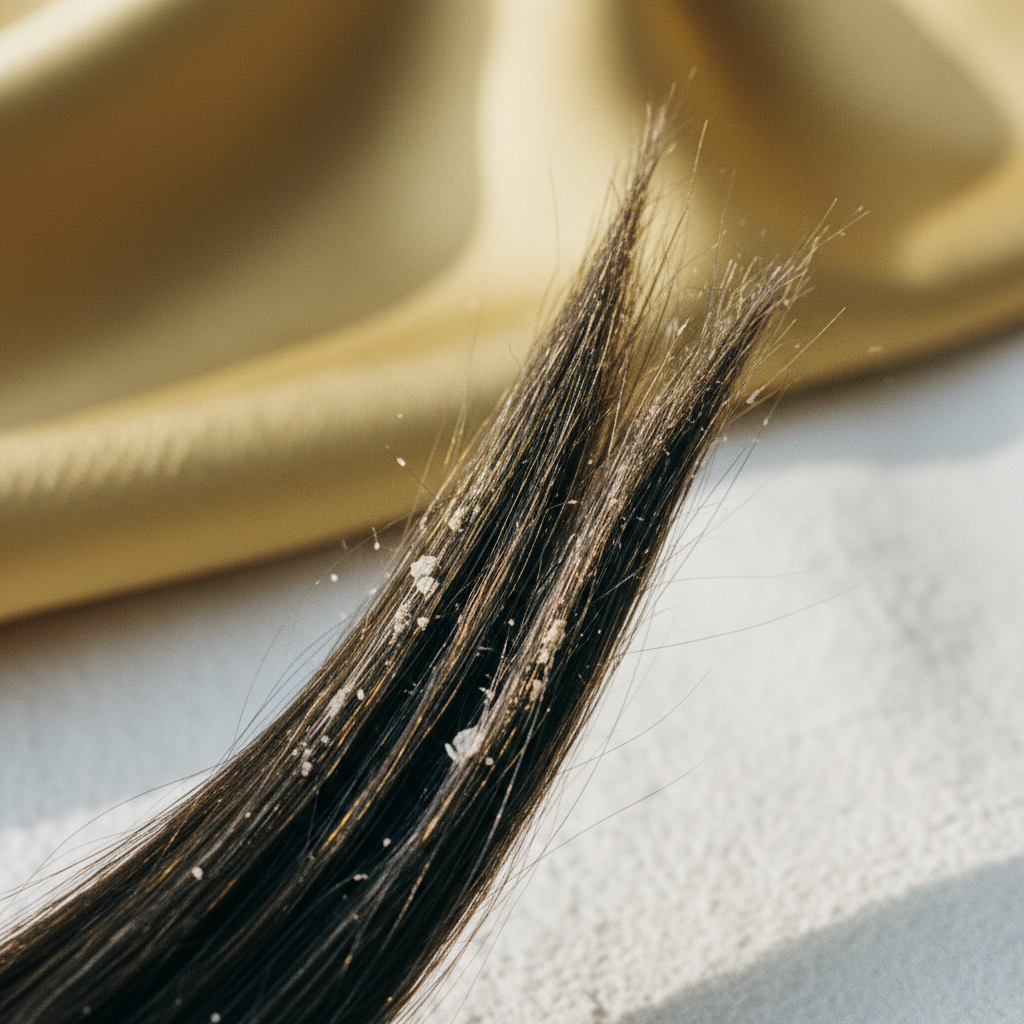
Peer-reviewed trichological literature classifies weathering as a structural deterioration spanning from the protective outer cuticle to the inner structural cortex:
- Loss of the 18-MEA lipid layer: The outermost hydrophobic barrier of the cuticle consists of 18-methyleicosanoic acid (18-MEA), covalently bound to protein layers via thioester bonds. This lipid envelope gives healthy hair its water-repellent nature and smooth slip. Weathering, particularly from chemical treatments and ultraviolet radiation, strips this layer first.
- Cuticle chipping and erosion: Healthy hair fibres feature five to ten layers of overlapping cuticle scales. As mechanical friction from washing, towelling, and brushing acts on hair stripped of surface lipids, the scale margins curl, chip, and eventually break off.
- Cortical exposure and protein breakdown: Once the cuticle wears away, the inner cortex is exposed. The keratin intermediate filaments in the cortex lose structural integrity as disulfide bonds split.
- Fibre breakage: Without the protective sheath of the cuticle, exposed cortex fibres unravel into microfibrils. This leads to trichoptilosis (longitudinal splitting, commonly known as split ends) and trichorrhexis nodosa (node-like swelling followed by transverse fracture).
Controlled scanning electron microscopy (SEM) studies confirm that weathering follows a distinct gradient along the fibre. The proximal hair shaft near the scalp exhibits tightly packed, flat cuticle scales. Moving distally toward the tip, the cuticle margins show progressive lifting, ragged borders, partial loss, and eventual total absence.
What the evidence does not show
Research does not show that hair shaft weathering affects follicle activity or slows biological hair growth rates. Because the living bulb sits approximately 4 millimetres below the surface of the scalp, external weathering occurs exclusively on non-living keratinised tissue.
Weathering does not cause alopecia, telogen effluvium, or hormonal miniaturisation. When individuals with severe weathering report thinning ends or a failure to "gain length," the issue is mechanical breakage occurring at a rate faster than or equal to linear scalp growth, rather than a failure of the follicle to produce hair.
Furthermore, cosmetic formulations cannot permanently "heal" or rebuild weathered hair fibres back to virgin condition. While conditioning agents, hydrolysed proteins, and cosmetic silicones temporarily patch fissured cuticles and reduce friction, they rinse out over subsequent wash cycles.
The biological mechanisms behind fibre wear
To understand how weathering compromises the strand, examine the physical and chemical forces acting on its distinct layers:
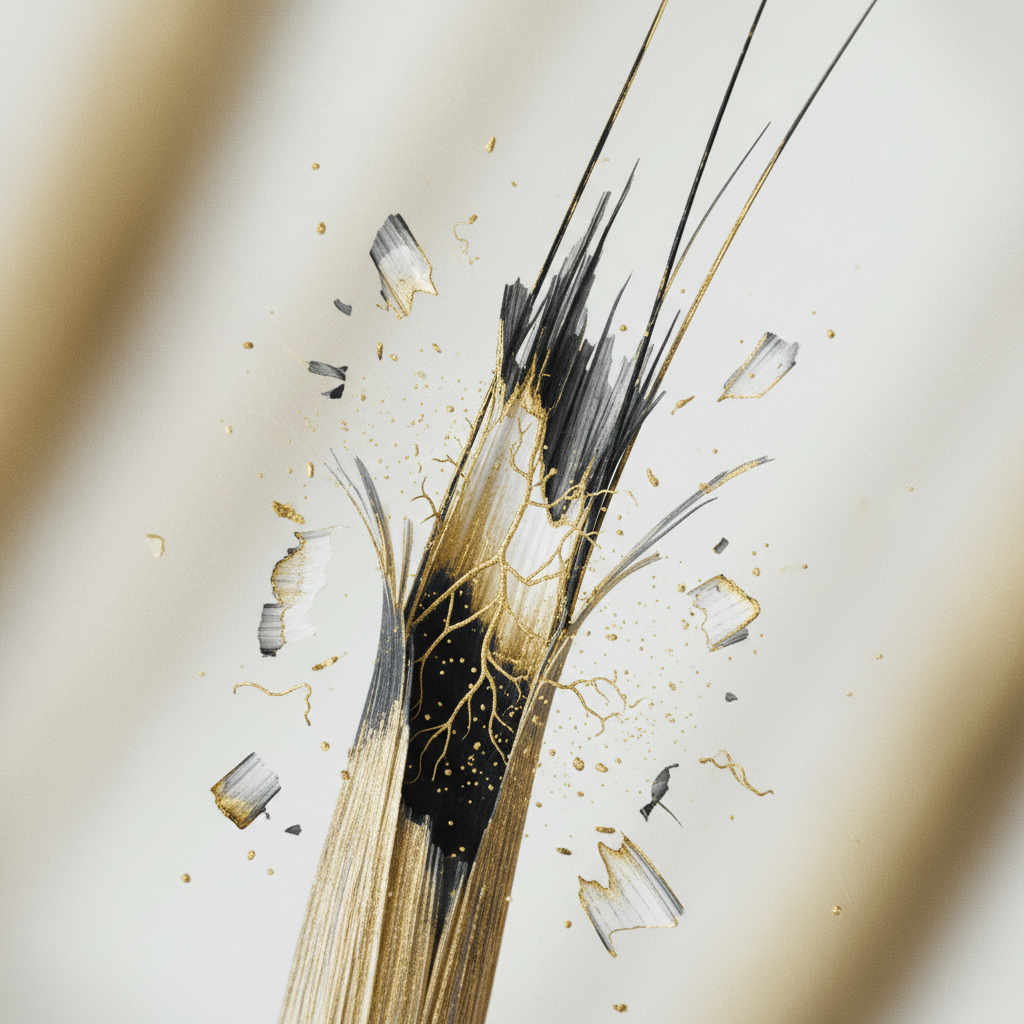
Photo-oxidation and UV radiation
Solar radiation acts as a chronic chemical insult. Ultraviolet B (UVB) radiation primarily targets the protein matrix, degrading amino acids such as cystine, tryptophan, and tyrosine. Ultraviolet A (UVA) radiation generates free radicals within the shaft that oxidise hair pigments (melanin), leading to photo-bleaching and the breakdown of structural cell membrane complex (CMC) lipids.
Wet-dry cycling (hygral stress)
Hair is hygroscopic, absorbing up to 30% of its dry weight in water in humid conditions. When submerged, the shaft swells in diameter by up to 15 to 20%. As it dries, it contracts back to its original dimensions. This repetitive radial swelling and contraction weakens the cell membrane complex cementing the cuticle scales to one another, making them susceptible to premature lifting.
Mechanical friction and Grooming
Dry hair displays an average friction coefficient of roughly 0.1 to 0.2, but this increases significantly once the 18-MEA layer is lost or when hair is wet. Brushing weathered hair produces shear stresses that readily snap weakened cuticle edges, escalating internal tensile strain on the fragile cortex.
| Layer / Feature | Virgin Proximal Hair (Near Scalp) | Moderately Weathered Mid-Shafts | Severely Weathered Distal Ends |
|---|---|---|---|
| Cuticle layers | 6 to 10 smooth, flat layers | 2 to 4 chipped, lifted layers | Completely eroded; exposed cortex |
| Surface lipid (18-MEA) | Intact and continuous | Patchy, heavily depleted | Absent |
| Hydrophobic quality | High (water droplets bead) | Moderate (slow absorption) | Highly hydrophilic (rapid water uptake) |
| Friction coefficient | Low; smooth tactile glide | Noticeable drag / roughness | High; strands easily tangle and knot |
| Tensile strength | Normal (breaks at 100 to 150 g) | Reduced elasticity | Prone to low-load snapping |
| Primary risk | Minimal | Surface dullness, frizz | Split ends, transverse fracture |
Signs to look for
Weathering produces visible and tactile shifts across the length of the hair. Common signs include:
- Rough texture towards the ends: Running fingers down a hair shaft feels smooth, but moving back up toward the root feels abrasive. In weathered hair, even downward movement feels scratchy.
- Tangled clusters and fairy knots: Known clinically as trichonodosis, single-strand knots form readily when frayed cuticle scales snag on adjacent fibres.
- Dullness and light scatter: Smooth cuticles reflect light evenly, yielding shine. Disorganised, chipped cuticles scatter light diffusely, making the hair appear matte and lacklustre.
- Dryness resistant to light washing: Weathered hair absorbs water instantly because it lacks protective surface lipids, but it loses that moisture just as quickly, remaining porous and brittle.
- Split ends (Trichoptilosis): Longitudinal fissures develop at the tip or several centimetres up the shaft.
What you can do to manage weathered hair
While you cannot reverse structural wear, you can substantially slow down progressive degradation and protect vulnerable exposed areas:
1. Re-establish surface lubrication
Because the naturally occurring 18-MEA lipid layer cannot regenerate, external conditioning agents must replace its lubricating role. Cationic surfactants (such as behentrimonium chloride or cetrimonium chloride), fatty alcohols, and cosmetic silicones (like amodimethicone or dimethicone) adhere electrostatically to negatively charged, damaged sites. This reduces combing friction by up to 80%, shielding the exposed cortex from mechanical abrasion.
2. Optimise washing pH
Hair fibres have an isoelectric point around pH 3.67, while typical scalp skin sits around pH 5.5. Washing with high-pH alkaline soaps swells the cuticle, making scales stick out and fracture. Using pH-balanced cleansers formulated between pH 4.5 and 5.5 keeps the cuticle tightly compressed and minimizes swelling during contact with water.
3. Mitigate thermal tools
Exposing wet or damp hair to flat irons and curling wands above 150°C rapidly boils internal free water, generating internal steam pockets known as "bubble hair." Reserve heat tools for completely dry hair, use moderate temperatures, and apply film-forming thermal protectants that reduce heat transfer rates.
4. Remove terminal damage
A split end will continue to unravel up the shaft if left alone. The only definitive solution for split ends is physical excision. Scheduling regular micro-trims of 0.5 to 1 centimetre every 8 to 12 weeks removes severely weathered distal sections before mechanical splits propagate upward into healthier fibre.
When the cause may be something else
If hair fragility appears suddenly or occurs close to the scalp, weathering may not be the primary driver:
- Bubble hair deformity: Distinct bubble-like cavities along the shaft caused by aggressive blow-drying or thermal irons on wet hair, resulting in sudden, localized breakage.
- Monilethrix or Pili Torti: Genetic structural hair disorders where fibres emerge beaded, flattened, or twisted, snapping under minimal mechanical friction without years of environmental exposure.
- Chemical over-processing: Severe chemical peeling of the hair shaft following incorrectly buffered relaxers, perms, or high-volume bleaches. Unlike weathering, which builds slowly over months, chemical breakage can occur overnight across large swathes of the head.
- Telogen effluvium: Marked by excessive hair fall with the white root bulb attached. This is true hair shedding, not weathering breakage along the shaft.
When to seek professional advice
Consult a trichologist or dermatologist if you notice sudden patchy hair loss, widening part lines, persistent scalp tenderness, or if your hair is breaking within 2 to 3 centimetres of the scalp surface. A professional can examine your fibres using close-up dermoscopy or polarised light microscopy to differentiate simple cumulative weathering from underlying hair shaft dysplasias, systemic nutritional deficits, or primary alopecias.
Supportive care with Watermans
When managing hair vulnerable to structural weathering, establishing a gentle, friction-minimising routine is critical. The Watermans collection is designed to support the scalp environment while maintaining the appearance of resilient, fuller-looking strands.
Watermans GrowMe Shampoo delivers a gentle, sulphate-free wash that cleanses without aggressively stripping the hair of natural surface sebum, helping to protect delicate mid-lengths from wash-related friction. Pairing this with Watermans ConditionMe Conditioner infuses the hair with strengthening proteins, cholesterol, and lipid-replenishing agents. This replenishes surface slip, visibly smooths frayed cuticle scales, and shields damaged fibres against ongoing mechanical tension during detangling.
Hair Shaft Weathering: keeping strands resilient
Hair shaft weathering is an unpreventable physical reality for anyone growing their hair past their chin. As fibres navigate years of grooming, ultraviolet exposure, washing cycles, and environmental abrasion, their protective surface lipids and delicate cuticle layers naturally decline.
Recognising that weathered hair cannot physically regenerate shifts the focus to active preservation. By adopting friction-reducing conditioning treatments, keeping wash products at a slightly acidic pH, limiting high-heat thermal styling, and regularly cutting away exhausted ends, you can preserve the inner cortex and maintain hair that looks dense, supple, and vibrant throughout its natural lifespan.
Frequently asked questions about Hair Shaft Weathering
What is the primary cause of hair shaft weathering?
Hair shaft weathering is caused by cumulative external trauma over time. This includes physical friction from washing, drying, and brushing, chemical degradation from colouring or bleaching, thermal breakdown from heated styling tools, and environmental wear from ultraviolet radiation and ambient humidity fluctuations.
Can products repair hair shaft weathering permanently?
No. Because hair consists of non-living, keratinised cells with no biological repair system, weathered cuticles and split cortices cannot permanently mend. Shampoos, conditioners, and protein masks temporarily smooth the cuticle, coat fissures, and reduce combing friction, but these cosmetic coatings wash away and must be reapplied.
Does hair shaft weathering cause permanent hair loss?
No, hair shaft weathering does not cause hair loss at the follicle level. Weathering is strictly an external structural problem affecting the non-living fibre. It causes fibre snapping and split ends, which may thin your overall perimeter, but the hair follicle continues to cycle and produce new hair normally.
How does sunlight contribute to hair shaft weathering?
Ultraviolet rays (both UVA and UVB) act as oxidising agents on the hair fibre. They break down the cystine amino acid bonds that give keratin its physical strength and strip away natural 18-MEA surface lipids. Sunlight also oxidises melanin, causing premature colour fading and leaving the cortex vulnerable to splitting.
How often should you trim hair to manage weathering?
For hair kept at shoulder length or longer, scheduling a micro-trim of roughly 0.5 to 1 centimetre every 8 to 12 weeks is ideal. This removes the oldest, most degraded tips where the cuticle has completely eroded, stopping splits from migrating further up the healthy hair shaft.
Sources and references
- Robbins, C. R. (2012). Chemical and Physical Behavior of Human Hair. 5th ed. Springer-Verlag New York.
- Dawber, R. (1996). Hair: Its structure and response to cosmetic preparations. Clinics in Dermatology, 14(1), 105-112.
- Sinclair, R. D. (2007). Healthy hair: what is it? Journal of Investigative Dermatology Symposium Proceedings, 12(2), 2-5.
- Trueb, R. M. (2005). Hair cosmetics: an overview. International Journal of Trichology, 1(2), 79-80.
- Gavazzoni Dias, M. F. (2015). Hair cosmetics: an overview. International Journal of Trichology, 7(1), 2-15.
- British Association of Dermatologists. (2021). Hair breakage and hair shaft disorders. BAD Clinical Guidelines.