Hair Shaft Structural Damage: The Science, Signs, and Management
9 min read ·
Understand the causes, signs, and scientific realities of hair shaft structural damage, including how to protect your hair fibres from heat, chemical, and mechanical breakage.
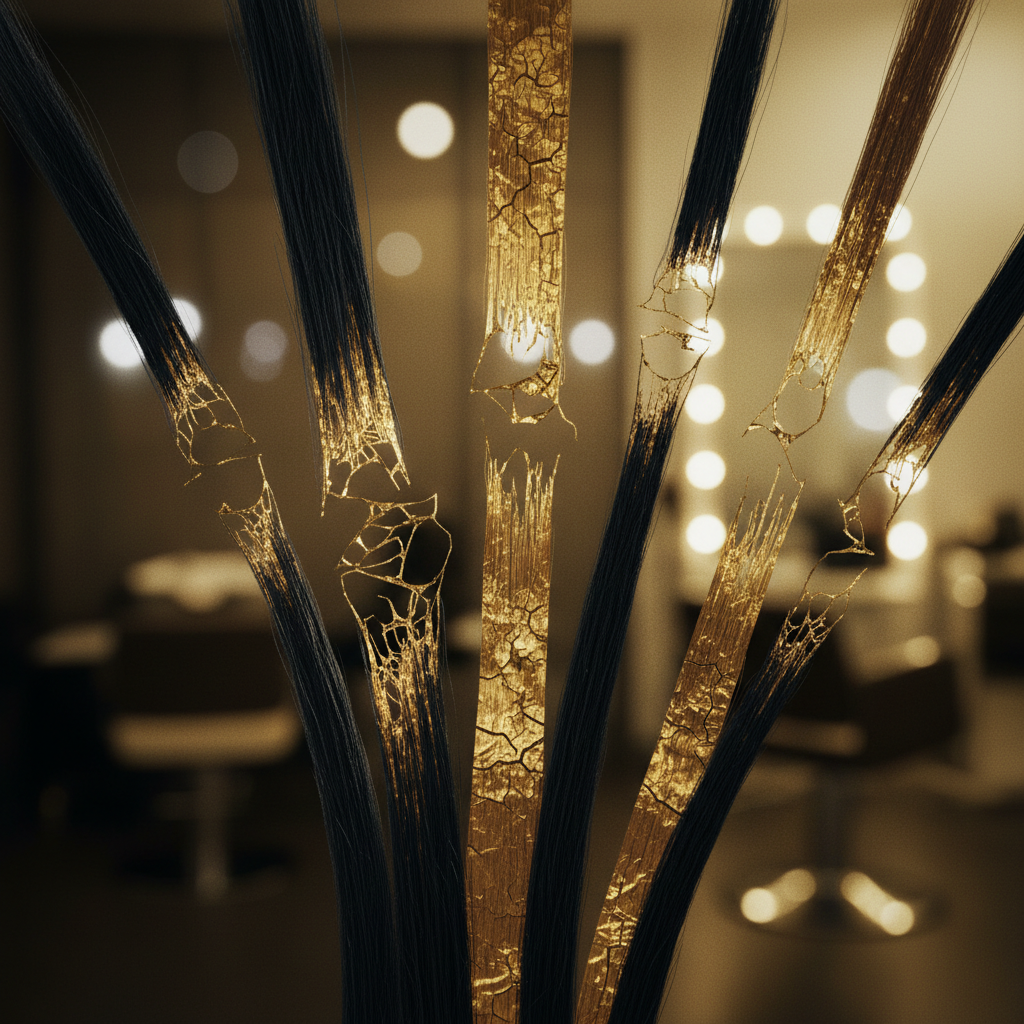
Quick answer: Hair shaft structural damage occurs when physical, thermal, chemical, or environmental stresses degrade the protective outer cuticle and break the internal keratin bonds of the hair fibre. Unlike living tissue, the hair shaft is biologically dead non-living protein, meaning hair shaft structural damage cannot self-repair or biologically regenerate. Once structural integrity is compromised, strands become brittle, split, and prone to mechanical snapping. Management relies on preventing further trauma, using cosmetic conditioning agents to patch surface gaps, and trimming irreparably split ends.
Key takeaways
- Hair shaft structural damage involves physical erosion of the cuticle layer and loss of internal cortical keratin bonds, leading to breakage rather than follicle-based hair shedding.
- Non-living hair fibres cannot heal or regenerate; cosmetic treatments can temporarily patch or reinforce the fibre, but they cannot truly reverse structural degradation.
- Heat tools above 150°C, chemical services (bleaching, relaxing, permanent waving), and aggressive dry-brushing are the primary drivers of structural fibre compromise.
- Damaged hair exhibits altered mechanical properties, including reduced tensile strength, elevated porosity, and increased friction between individual strands.
- Protective handling, mild surfactant cleansing, protein conditioning, and regular micro-trims remain the most effective clinical and salon strategies to manage damaged lengths.
Hair Shaft Structural Damage: what the evidence shows
Research published in the International Journal of Trichology and the Journal of Cosmetic Science demonstrates that hair shaft structural damage is an accumulative, multi-layered physical breakdown of the hair fibre. The human hair fibre consists of three anatomical sections: an exterior protective cuticle (consisting of 5 to 10 overlapping cellular scales), an internal cortex composed of dense keratin protein chains cross-linked by disulphide bonds, and an intermittent central medulla.
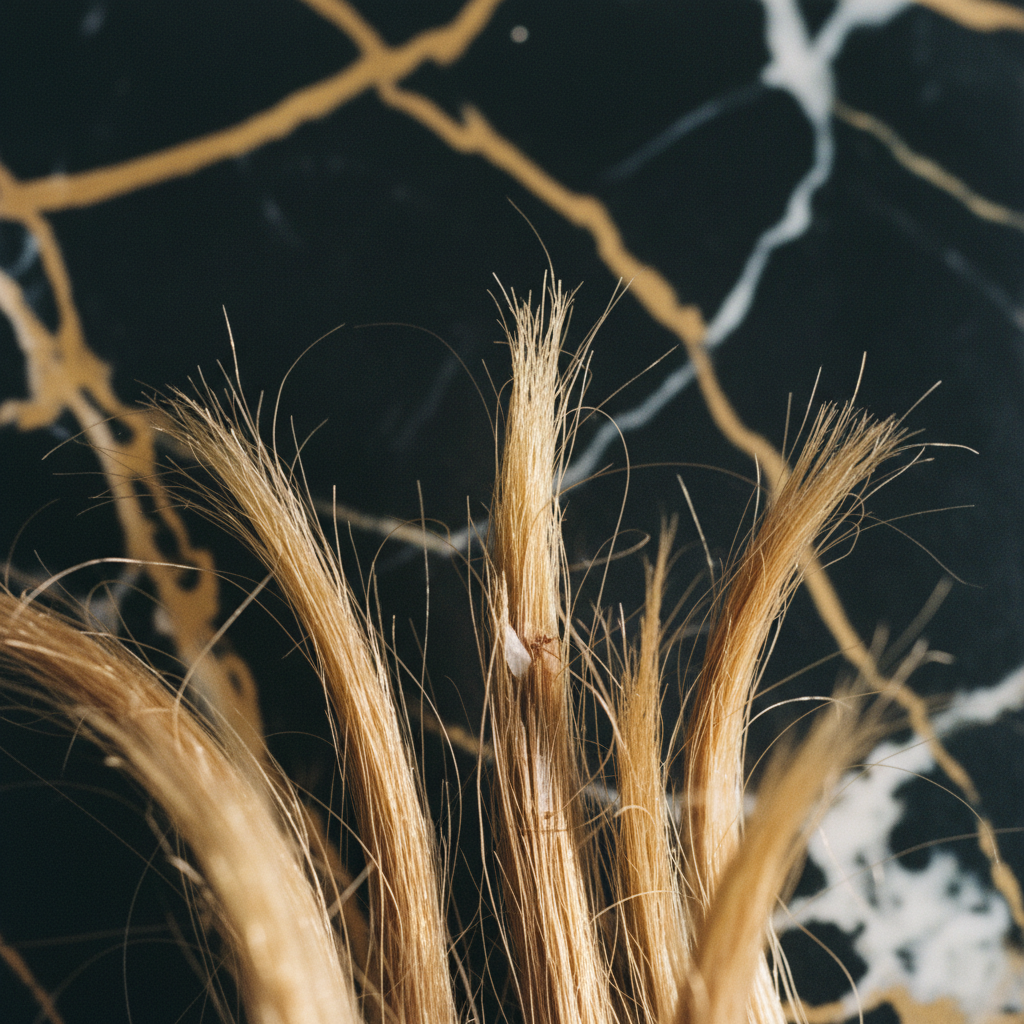
When your hair experiences structural trauma, the outer cuticle scales lift, crack, and eventually chip away. This protective shield degradation exposes the delicate cortex underneath. Electron microscopy reveals that structural damage generally progresses across distinct stages:
- Loss of the 18-MEA lipid layer: The outermost hydrophobic lipid barrier (18-methyleicosanoic acid) is stripped away, usually by alkaline chemical services or harsh washing, turning the hair fibre hydrophilic (water-absorbing).
- Cuticle chipping and fraying: Friction, heat, and ultraviolet radiation cause the scale edges to flare and break off, creating a rough surface texture and higher friction between strands.
- Cortical exposure and fissure formation: Once the cuticle is absent, the cortical microfibrils separate. Vertical fissures form along the length of the fibre, resulting in trichoptilosis (split ends) and trichorrhexis nodosa (node-like weak points where the fibre snaps easily).
Crucially, hair shaft structural damage must be distinguished from hair loss conditions such as androgenetic alopecia or telogen effluvium. Structural degradation leads to fibre breakage along the length of the strand, while follicular conditions affect the hair bulb beneath the scalp, causing shedding from the root.
What the evidence does not show
Controlled research does not support the common marketing claim that topical cosmetic products can permanently "rebuild", "heal", or "cure" hair shaft structural damage.
Topical bond builders, keratin complexes, and conditioning agents can temporarily improve tensile strength, lower surface friction, and form protective films across cuticle gaps. However, because the hair shaft is an acellular, non-living structure containing no blood vessels or cellular machinery, it lacks the biological capacity for cellular repair or physiological healing.
Furthermore, evidence does not show that structural damage is directly linked to internal dietary deficiencies in healthy individuals. While severe malnutrition can alter the quality of newly synthesized hair emerging from the follicle, physical damage to already-grown hair fibres is almost entirely driven by external physical, thermal, chemical, and environmental stressors.
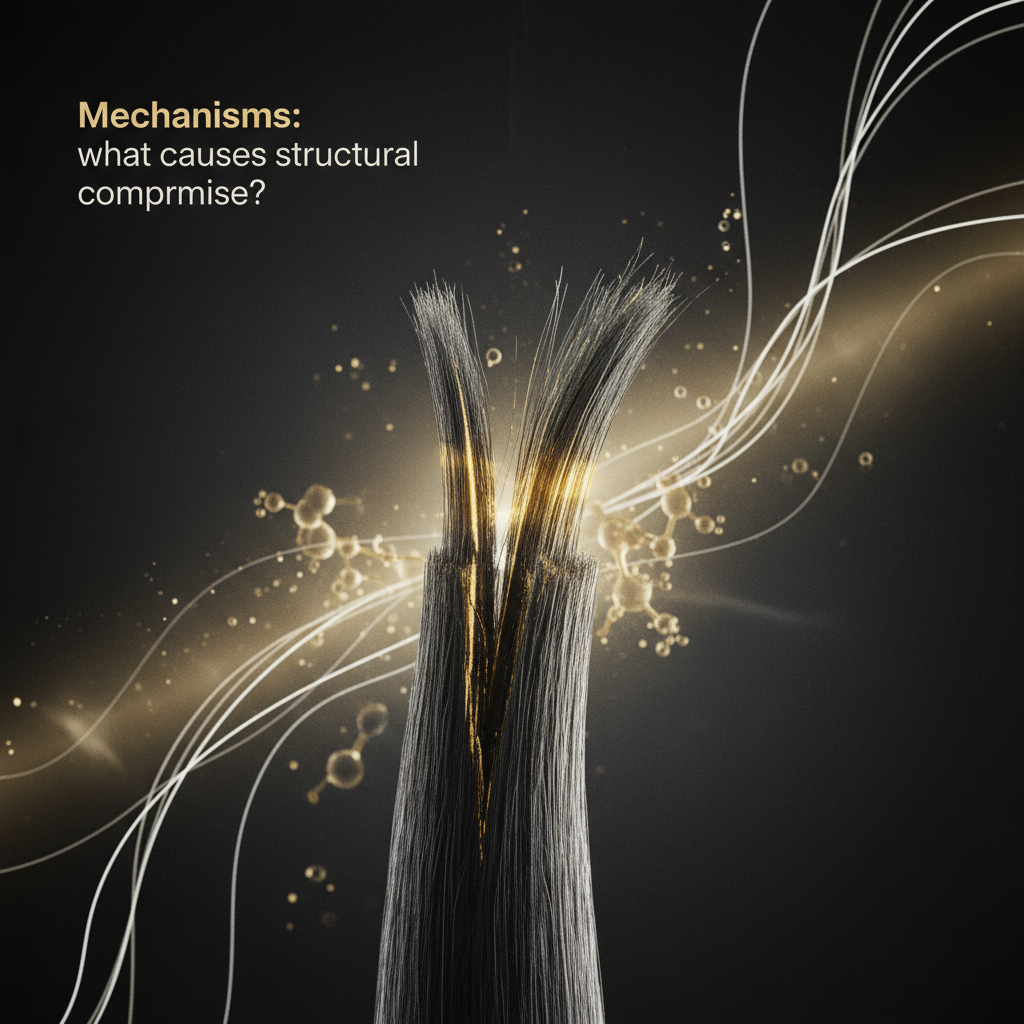
Mechanisms: what causes structural compromise?
The hair fibre withstands substantial everyday stress, but specific mechanical, thermal, and chemical thresholds break its fundamental architecture:
1. Thermal degradation
Applying dry heat over 150°C begins to degrade alpha-keratin into amorphous structures. Temperatures exceeding 200°C decompose keratin proteins and evaporate structural moisture rapidly. If wet hair is heated quickly, trapped moisture can boil inside the cortex, causing steam to expand and form microscopic structural cavities known as "bubble hair".
2. Chemical oxidation and cleavage
Chemical processes such as bleaching, colouring, permanent waving, and alkaline chemical relaxing rely on high pH formulations (often pH 9.0 to 11.0) to swell the cuticle. Alkaline solutions break cystine disulphide bonds to alter colour or curl patterns. While essential for these chemical results, the oxidation of cystine into cysteic acid permanently decreases the fibre's tensile strength and dramatically increases porosity.
3. Mechanical abrasion
Vigorous combing, teasing, rough towel drying, and tight elastic bands inflict sheer physical friction. Wet hair swells and can stretch up to 30% of its original length before permanent deformation occurs; however, aggressive wet combing stretches the wet fibre past its elastic limit, causing cuticle fracture and snapped fibres.
4. Environmental and UV weathering
Ultraviolet radiation (both UVA and UVB) induces photochemical degradation of hair proteins. Sunlight oxidises amino acids such as tryptophan, tyrosine, and cystine, while degrading the natural melanin that provides photoprotection. This environmental weathering leaves hair rough, dry, and brittle.
Comparing types of hair shaft damage
| Type of Damage | Primary Mechanism | Microscopic Signs | Functional Symptoms |
|---|---|---|---|
| Mechanical | Friction, aggressive brushing, tight styling | Split cuticle edges, longitudinal peeling | Tangling, dullness, mid-shaft snaps |
| Thermal | High-heat styling (>150°C), blow-drying | Blistered cuticles, cortex cavitation ("bubble hair") | Extreme brittleness, sudden snapping, straw texture |
| Chemical | Bleaching, perm, relaxers, high-pH products | Absent cuticle layers, dissolved disulphide bonds | High porosity, gummy/stretchy when wet, frizz |
| Environmental | Solar UV exposure, free radical oxidation | Degraded protein matrix, melanin oxidation | Colour fading, surface dryness, reduced elasticity |
The visible signs to look for
Identifying structural compromise early prevents irreversible breakage. Common diagnostic signs include:
- Rough tactile sensation: Running fingers up the hair shaft (against the direction of cuticle growth) feels unusually coarse or uneven.
- Persistent tangling and matting: Missing cuticle scales leave microscopic jagged edges that catch on neighbouring strands.
- Increased wet elasticity without snapback: When wet, compromised hair stretches out unnaturally like an elastic band without springing back, indicating collapsed cortical architecture.
- White dots along the fibre (trichorrhexis nodosa): Small visible white specks along the shaft are structural fracture points where the cortical fibres have frayed apart.
- Split ends (trichoptilosis): Visible vertical bifurcation of the hair tip, which can continue migrating up the shaft if left untrimmed.
What you can do to manage structural damage
Because biological healing is impossible, the goal of hair care is structural preservation, surface lubrication, and prevention of further trauma:
- Cleanse with low-pH, sulphate-free formulations: Shampoos formulated around pH 4.5 to 5.5 keep the cuticle layer flat and minimise fibre swelling during washing.
- Reinforce with topical conditioning agents: Use conditioners and leave-ins packed with fatty alcohols, cationic surfactants, and hydrolysed proteins. Hydrolysed wheat, soy, or keratin peptides can penetrate slightly beneath lifted cuticles to temporarily reinforce weakened structural matrices, while silicones and natural oils smooth the outer surface.
- Limit thermal stress: Air-dry when practical, maintain heat styling below 150°C, and always apply a heat protectant containing polymers that slow thermal transfer.
- Detangle gently: Always detangle with a wide-toothed comb or flexible wet-brush, working methodically from ends to roots on hair coated with conditioner.
- Trim regularly: The only permanent resolution for split ends is cutting off the damaged portion before the vertical split travels higher up the hair shaft.
Support through targeted haircare
When caring for hair prone to mechanical stress and breakage, choosing gentle formulations makes a measurable difference. Watermans offers products formulated to protect delicate strands and maintain an optimal environment for hair to flourish.
Watermans Grow Me Shampoo and Condition Me Conditioner are designed with gentle, nourishing ingredients that cleanse without harsh stripping. Incorporating hydrolysed proteins, cholesterol, and natural botanical extracts, these formulas help smooth the cuticle surface, improve manageability, and reduce the friction that accelerates hair shaft structural damage. By reducing mechanical breakage along the lengths, your hair retains its natural density and appearance as it grows.
When the cause may be something else
If you observe sudden loss of hair volume or high shedding rates, your primary issue may not be hair shaft structural damage. Consider these alternative causes:
- Telogen effluvium: Diffuse shedding where entire hairs fall from the scalp, identifiable by a tiny white bulb on the end. This is a follicular cycling disruption linked to physiological stress, illness, or hormonal shifts.
- Genetic thinning (androgenetic alopecia): Progressive miniaturisation of the hair follicle leading to finer, sparser coverage along the crown or parting, rather than mid-shaft breakage.
- Underlying medical deficiencies: Iron deficiency anaemia, thyroid dysfunction, and extreme metabolic shifts can interfere with hair synthesis at the bulb, producing fundamentally weaker fibre architecture from the start.
When to seek professional advice
Consult a registered trichologist or a dermatologist if you experience unexplained, rapid hair loss, scalp pain, redness, or burning. A professional can use dermoscopy (trichoscopy) to closely examine your hair fibres and scalp, differentiating between genuine follicular hair loss and mechanical shaft structural fractures.
Frequently asked questions about Hair Shaft Structural Damage
Can hair shaft structural damage ever be permanently repaired?
No, hair shaft structural damage cannot be permanently cured or biologically repaired. Hair fibres are biologically non-living tissue without active cells to produce new keratin once damaged. Topical products, bond builders, and deep conditioners can temporarily patch surface cracks, smooth cuticles, and improve tensile strength, but the underlying physical degradation remains until the damaged section is cut off.
What is the difference between hair breakage and follicular hair loss?
Hair breakage occurs when hair shaft structural damage causes the fibre to snap along its length due to physical or chemical weakness. Follicular hair loss, such as telogen effluvium or pattern baldness, occurs at the scalp level, where whole hairs are shed from the root, usually showing a small, pale keratin bulb at the tip.
Does colouring hair always cause structural damage to the fibre?
Any oxidative colouring process creates some degree of structural compromise because the chemical formulation must raise the cuticle using an alkaline agent to deposit colour into the cortex. Demi-permanent or semi-permanent glosses create significantly less damage than high-lift bleaches, which aggressively dissolve internal disulphide bonds and strip the protective 18-MEA surface lipid layer.
How often should I trim hair that has structural damage?
If you have split ends or noticeable structural fragility, micro-trimming every 6 to 8 weeks is ideal. Trimming removes split tips before they can migrate further up the shaft, preventing widespread breakage across your lengths.
Can using hot water in the shower cause hair shaft structural damage?
Hot water does not reach the temperatures required to melt keratin, but it does cause the hair fibre to swell excessively, lifting the cuticle scales. Washing with lukewarm water helps minimise cuticle friction and reduces colour leaching, keeping the outer cuticle intact.
Protecting your hair fibre for long-term health
Addressing hair shaft structural damage requires an evidence-based balance between preventive handling and targeted cosmetic maintenance. By understanding that hair is an acellular fibre that cannot regenerate, you can focus on protective styling, minimal thermal exposure, and gentle, protein-rich conditioning products that reduce daily mechanical friction. Protect the outer cuticle from avoidable trauma, and your hair will retain its strength, softness, and resilience over time.
Sources and references
- International Journal of Trichology: "Hair Shaft Damage from Heat and Chemical Treatments: An Overview", 2011.
- Journal of Cosmetic Science: "The Effects of Thermal Treatments on Hair Protein and Structure", 2004.
- British Association of Dermatologists: "Hair Breakage and Acquired Trichorrhexis Nodosa Clinical Guidance", 2019.
- Clinical and Experimental Dermatology: "The Structure and Mechanics of Human Hair", 2002.
- Society of Cosmetic Chemists: "Chemical and Physical Behavior of Human Hair (Clarence R. Robbins)", 5th Edition, 2012.