Understanding Hair Shaft Anomalies: Causes, Types, and Fibre Care
9 min read ·
Explore the science behind Hair Shaft Anomalies. Learn to identify structural fragility, prevent severe fibre breakage, and distinguish congenital defects from shedding.
Quick answer: Hair Shaft Anomalies are structural, physical, or morphological defects occurring along the length of the hair fibre, causing altered appearance, extreme tangling, or premature breakage. They divide into two broad categories: anomalies with increased hair fragility and those without fragility. While some stem from genetic syndromes, many arise from cumulative chemical, mechanical, or thermal weathering. Topical cosmetic products cannot alter the internal biological architecture of a deformed fibre, but gentle care routines and bond-supporting formulations can dramatically reduce daily breakage.
Key takeaways
- Hair shaft defects are categorised by whether they cause increased hair fragility or alter texture without structural weakness.
- True shaft anomalies cause fibre breakage along the strand, which must not be confused with follicle-level hair shedding or alopecia.
- Congenital forms arise from altered keratinisation or metabolic conditions, whereas acquired forms typically stem from cumulative physical or chemical trauma.
- Trichoscopy and polarised light microscopy are the primary clinical tools used to accurately differentiate specific shaft disorders.
- While cosmetics cannot repair congenital structural deformities, targeted conditioning lowers friction and prevents premature fibre snapping.
Hair Shaft Anomalies: what the evidence shows
Clinically, Hair Shaft Anomalies represent a diverse spectrum of fibre irregularities. Dermatologists classify them fundamentally into two groups: disorders with increased hair fragility, and disorders without increased fragility.
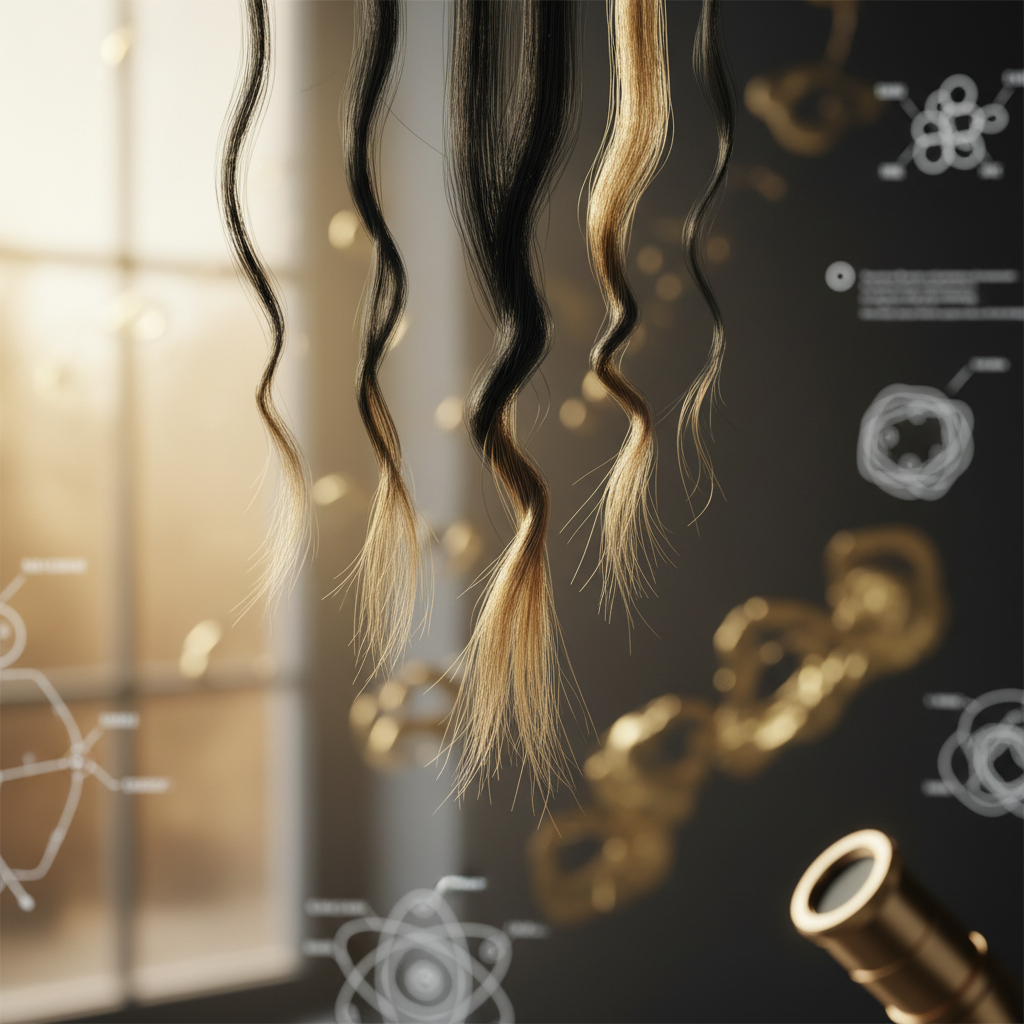
When hair fragility is present, the structural integrity of the cortex or cuticle is compromised. The most common fragility defect is trichorrhexis nodosa, characterised by microscopic node-like swellings where the cortical fibres splay outward like two interlocking paintbrushes, leading to transverse fractures. Another classic fragile defect is monilethrix, a genetic condition where the hair shaft presents regular bead-like nodes interspersed with thin, fragile internodes that readily snap under normal handling. Trichorrhexis invaginata, often termed bamboo hair, occurs when the soft proximal shaft invaginates into the harder distal shaft, frequently seen in Netherton syndrome.
Conversely, Hair Shaft Anomalies without increased fragility alter the optical appearance, shape, or combability of the fibre without necessarily causing sudden breakage. Pili annulati presents as alternating light and dark bands along the fibre due to internal air-filled cavities within the cortex. Uncombable hair syndrome (pili trianguli et canaliculi) features fibres with a triangular cross-section and longitudinal grooving, making the hair stand out from the scalp in an unruly fashion, resistant to flat brushing.
Microscopic evaluation shows that normal hair possesses a tightly shingled cuticle of 5 to 10 layers protecting an organised, keratin-packed cortex. In both inherited and acquired anomalies, this architecture fails, altering light reflection and mechanical resistance.
What the evidence does not show
Controlled dermatological research does not show that topical treatments, supplements, or dietary overhauls can permanently remodel or rewrite a genetically determined hair shaft defect. If an individual carries the gene variants responsible for monilethrix (mutations in KRT81, KRT83, or KRT86) or uncombable hair syndrome (mutations in PADI3, TGM3, or TCHH), no cosmetic shampoo or serum can force the emerging hair bulb to produce a standard cylindrical shaft.
Furthermore, evidence does not show that hair shaft anomalies represent root-level hair loss. Breakage near the scalp can mimic non-scarring alopecia to the untrained eye, but the hair follicle remains functional in its normal growth cycle. Topical cosmetic products cannot "cure" congenital defects, nor can they reverse deep cortical fissures once weathering has cleaved the protein matrix.
The biological mechanisms behind shaft defects
The formation of the hair shaft is an intricate biological process taking place inside the hair follicle bulb. Follicular matrix cells proliferate, migrate upward, and undergo terminal differentiation. During this transition, structural proteins such as trichohyalin and hard keratins cross-link via extensive disulphide bonds to form the rigid cortex, enveloped by the protective cuticle.
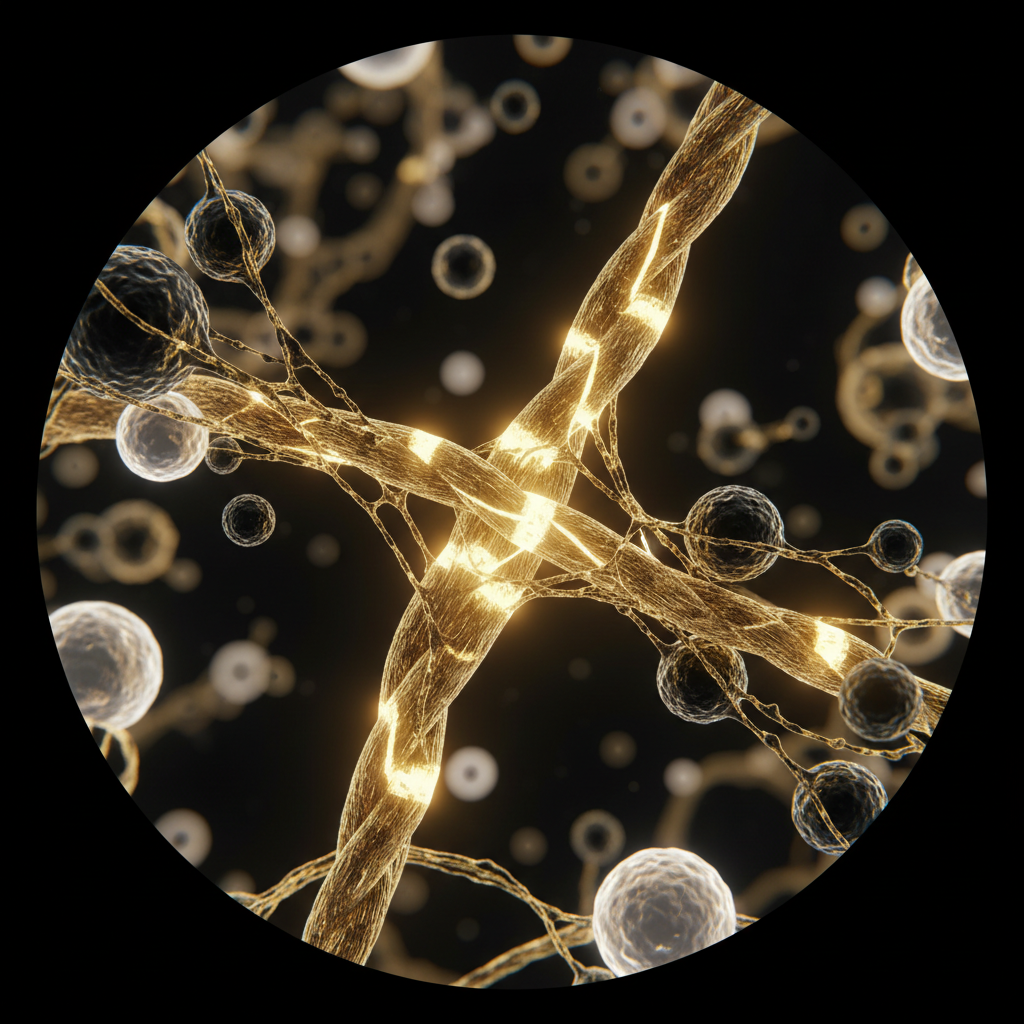
In congenital shaft anomalies, this keratinisation process breaks down. For example, in trichothiodystrophy, a genetic defect impairs the synthesis of sulphur-rich proteins, producing fibres deficient in cysteine with an irregular, wavy contour that breaks under minimal shear stress.
In acquired defects, the mechanism is extrinsic. External stressors, including high-heat styling tools exceeding 185 degrees Celsius, chemical relaxers (pH 12 to 14), oxidative bleaching, and vigorous dry combing, physically erode the cuticle scales. Once the cuticle is stripped away, the inner cortex is exposed to environmental UV radiation and mechanical friction. The longitudinal cortical fibres delaminate, forming fractures such as acquired trichorrhexis nodosa or trichoptilosis (distal split ends).
Comparing common hair shaft anomalies
The following table contrasts the most frequently diagnosed congenital and acquired hair shaft disorders:
| Anomaly Name | Fragility Level | Key Microscopic Features | Primary Causes |
|---|---|---|---|
| Trichorrhexis nodosa | High | Frayed, brush-like swellings along the fibre | Mechanical trauma, heat, bleach, or rare metabolic issues |
| Monilethrix | High | Periodic beading with fragile internodes | Autosomal dominant or recessive keratin mutations |
| Trichorrhexis invaginata | High | Ball-and-socket or "bamboo" telescoping | Netherton syndrome (SPINK5 gene mutation) |
| Trichothiodystrophy | High | Tiger-tail banding under polarised light | DNA repair and sulphur protein synthesis mutations |
| Pili annulati | Low / None | Alternating light and dark bands from internal air cavities | Autosomal dominant genetic trait |
| Pili trianguli et canaliculi | Low / None | Triangular cross-section with longitudinal groove | Mutations in PADI3, TGM3, or TCHH genes |
| Pili torti | Moderate | Fibres twisted 180 degrees along their long axis | Inherited syndromes or acquired scarring conditions |
Clinical signs to look for
Identifying a structural anomaly requires observing both visual presentation and tactile response:
- Unexplained frizzy patches: Hair that remains unruly, matte, and resistant to styling despite deep conditioning.
- Microscopic nodules: Tiny, whitish specks along the shaft that resemble dandruff or lice nits but do not slide along the fibre.
- Inability to gain visible length: The hair grows normally at the root, but chronic breakage at a uniform distance from the scalp leaves the impression that it has stopped growing.
- Altered texture: Fine, spun-glass appearance, or wiry, crinkled sections interspersed within smooth hair.
- Fibre snapping: Clean breaks occurring during gentle detangling or towel drying, leaving short, brush-like stubble without a bulb attached.
Practical management: what you can do
While you cannot alter your genetic blueprint, you can shield vulnerable hair shafts from external fracture and manage acquired structural damage through evidence-based cosmetic care.
- Minimise mechanical friction: Avoid dry brushing. Detangle only when hair is damp and saturated with a high-slip conditioner, using a wide-toothed comb or flexible detangling brush. Work upward from the ends to the roots.
- Eliminate harsh heat: Keep styling tool temperatures well below 185 degrees Celsius, or eliminate them entirely. High heat denatures keratin proteins and vaporises internal moisture, inducing bubble hair deformity.
- Optimise formulation pH: Use shampoos and treatments formulated within an acidic pH range of 4.5 to 5.5. An acidic environment keeps the outer cuticle scales lying flat, reducing friction and preserving internal cortex moisture.
- Use protein and lipid conditioners: Conditioners containing hydrolysed vegetable proteins, amino acids, and biomimetic lipids coat the exposed cortex, smoothing rough transitions and temporarily reducing frictional drag.
- Protect hair at night: Sleep on silk or satin pillowcases to reduce mechanical shear while moving during sleep.
Supporting fibre strength with Watermans
When managing fragile hair fibres prone to weathering or acquired shaft irregularities, supporting scalp health and reinforcing existing fibre resilience is essential. Watermans GrowMe Shampoo delivers natural caffeine, biotin, argan oil, and hydrolysed lupin protein within a balanced cleansing matrix.
Pairing it with Watermans ConditionMe Conditioner provides deep hydration and protective surface conditioning without weighing down structurally delicate hair. While topical cosmetics cannot cure underlying congenital defects, these formulations help smooth the external cuticle, improve manageability, and reduce the mechanical friction that triggers shaft breakage.
When the cause may be something else
Before diagnosing a structural defect, consider alternative explanations. Excessive hair found on pillows or in the shower drain is often telogen effluvium, an acute follicular shedding event triggered by illness, nutritional deficits, or physiological stress. Check the ends of shed fibres: if a small, white, keratinised bulb is present, the hair has shed from the follicle, not broken along the shaft.
Diffuse thinning on the crown or hairline typically points to androgenetic alopecia, driven by dihydrotestosterone (DHT) sensitivity, rather than a primary shaft defect. Autoimmune conditions like alopecia areata produce smooth, circular patches of bare skin, distinct from the brittle, broken stubble seen in severe shaft anomalies.
When to get professional advice
If you or a client experience sudden, severe breakage without a history of chemical treatments or heat abuse, consult a dermatologist or qualified trichologist. A clinician will perform trichoscopy (dermoscopy of the hair and scalp) or take light microscopy clippings to identify the precise structural defect.
Professional evaluation is particularly crucial in children presenting with uncombable hair, severe fragility, or sparse growth, as certain congenital Hair Shaft Anomalies serve as early markers for systemic conditions, including Netherton syndrome, Menkes disease, or ectodermal dysplasias.
Frequently asked questions about Hair Shaft Anomalies
Can cosmetic treatments cure congenital Hair Shaft Anomalies?
No, cosmetic products cannot cure congenital Hair Shaft Anomalies. Inherited anomalies stem from genetic mutations governing protein assembly inside the follicle. Cosmetic products can, however, coat the exterior fibre, lower mechanical friction, and minimise breakage.
What is the difference between hair breakage and hair shedding?
Hair shedding occurs at the follicle level when a hair completes its growth cycle and drops out with the root intact. Breakage occurs when a structurally compromised shaft snaps along its length, leaving a fractured end without a bulb.
How do dermatologists diagnose Hair Shaft Anomalies?
Dermatologists diagnose Hair Shaft Anomalies using trichoscopy, light microscopy, and polarised microscopy. They clip a few fibres to examine the cross-section, cuticle condition, and internal cortex architecture under magnification.
Can chemical bleaching cause acquired Hair Shaft Anomalies?
Yes, chemical bleaching dissolves the protective 18-methyleicosanoic acid (18-MEA) lipid layer and oxidises disulphide bonds in the cortex. This weakens the internal protein structure, frequently leading to acquired trichorrhexis nodosa and split ends.
Does uncombable hair syndrome last forever?
Uncombable hair syndrome usually improves spontaneously as a child approaches puberty. As the diameter of the hair fibre naturally increases and hormonal changes alter sebum composition, the hair gradually becomes more manageable and lays flatter.
Summary
Understanding Hair Shaft Anomalies requires distinguishing between congenital genetic mutations and acquired structural damage from routine weathering. While cosmetic science cannot rewrite the biological blueprints that dictate fibre geometry, identifying specific defects empowers you to adjust handling practices. By avoiding aggressive heat, managing mechanical friction, using pH-balanced care, and seeking trichological analysis when necessary, you can protect structurally fragile hair from unnecessary breakage.
Sources and references
- British Association of Dermatologists. Guidelines for the management of hair shaft anomalies and alopecias.
- National Center for Biotechnology Information (NCBI) Bookshelf. Hair Shaft Disorders. StatPearls Publishing.
- American Academy of Dermatology. Evaluating hair breakage versus hair shedding.
- Journal of the American Academy of Dermatology. Trichoscopy of hair shaft abnormalities: an updated diagnostic guide.
- Orphanet. Rare diseases involving hair shaft abnormalities: Netherton syndrome and Monilethrix.