Hair Serums: Understanding How They Work and What They Do for Your Hair
8 min read ·
Hair serums are leave-in cosmetic treatments that coat the hair fibre surface to enhance shine, reduce frizz, and provide temporary conditioning benefits.
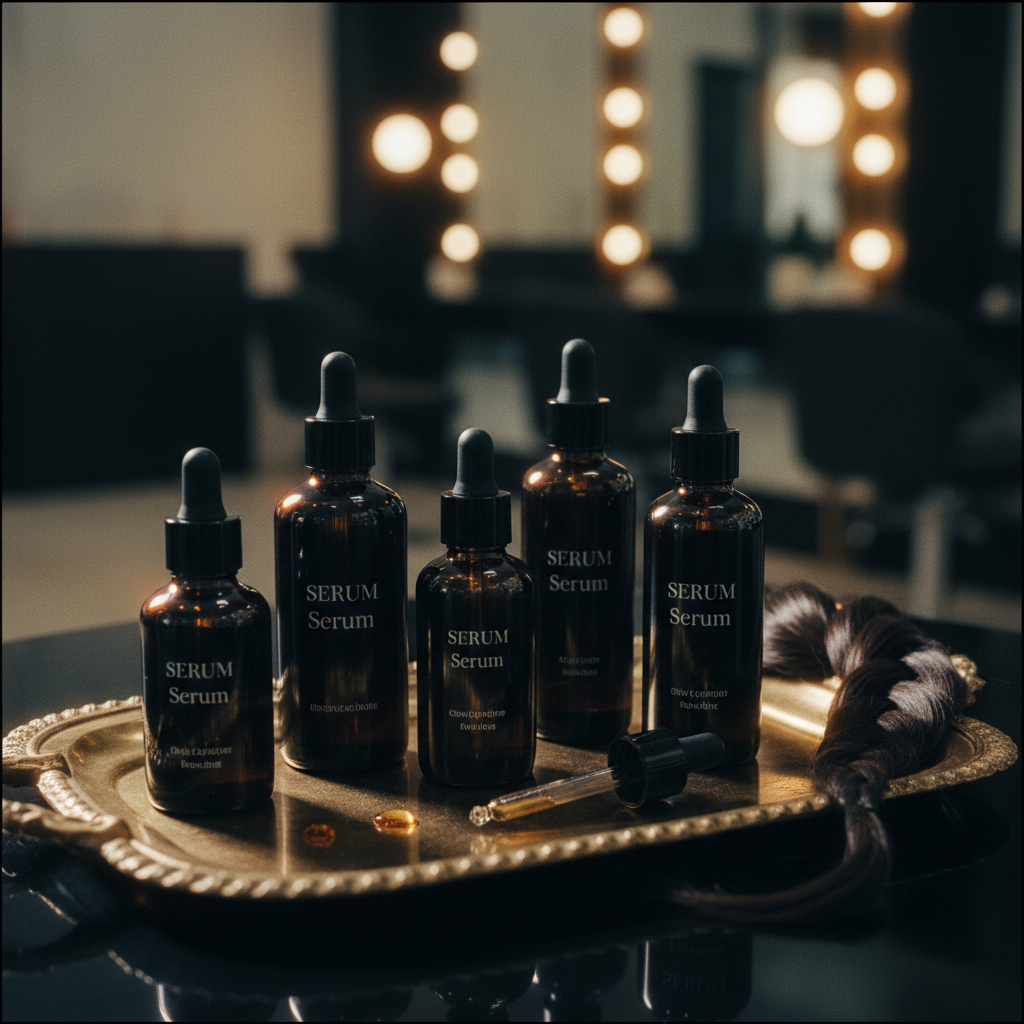
Quick answer: Hair serums are cosmetic, leave-in products designed to coat the hair fibre, offering benefits such as enhanced shine, frizz reduction, and protection against environmental stressors. While they can significantly improve the appearance and feel of hair, it's important to remember that Hair Serums primarily provide temporary surface-level effects and do not alter hair structure or address underlying scalp conditions.
Key takeaways
- Hair serums are cosmetic treatments that coat the outside of the hair fibre, rather than penetrating it like some conditioners.
- Their main benefits include reducing frizz, enhancing shine, providing a smoother feel, and offering a degree of protection against heat and environmental damage.
- Most hair serums rely on ingredients like silicones to create a smooth, reflective layer on the hair shaft.
- Choosing the right hair serum depends on your specific hair type and concerns, such as dryness, frizz, or dullness.
- Hair serums do not treat hair loss (alopecia), nor do they change the fundamental structure of the hair fibre.
Hair Serums: what the evidence shows
Hair serums are liquid-based cosmetic products formulated to be applied to the hair fibre, typically after washing and before styling. Unlike conditioners, which are often designed to penetrate the cuticle and are rinsed out, hair serums are leave-in products that primarily act on the surface of the hair shaft. Their effectiveness stems from forming a thin, protective layer around each strand. This layer smooths the hair's surface, leading to a more uniform light reflection, which translates to increased shine.
Evidence suggests that the primary mechanism of action for most hair serums involves the deposition of film-forming ingredients, such as silicones, on the hair cuticle. This outer layer of the hair fibre, when rough or raised, can lead to a dull appearance and frizz. By coating and smoothing these cuticles, hair serums reduce friction between hair strands and between hair and the environment, thereby decreasing frizz and improving manageability. The cosmetic benefits of hair serums are widely reported by users, and their efficacy in enhancing hair appearance and feel is well-established in cosmetic science.
What Hair Serums do not show
While effective for cosmetic enhancement, hair serums do not fundamentally change the internal structure of the hair fibre or provide deep repair. They are not designed to treat underlying scalp conditions, nor do they promote hair growth or treat hair loss conditions like alopecia. Claims of "repairing" split ends typically refer to temporarily sealing them together, which improves their appearance but doesn't truly mend the fibre. Once the product is washed out, the temporary effects diminish. There is currently insufficient evidence to conclude that cosmetic hair serums can permanently reverse hair damage or alter hair growth cycles.
The mechanism of Hair Serums
Hair serums work by coating the hair fibre with film-forming agents, which primarily interact with the hair's outer cuticle layer. This coating creates a smoother surface, resulting in several cosmetic effects:
- Frizz reduction: By smoothing the cuticle, serums create a barrier against humidity, which is a major contributor to frizz. When the cuticle is sealed, hair is less likely to absorb moisture from the air and swell unevenly.
- Enhanced shine: A smooth, uniform hair surface reflects light more effectively than a rough one. This leads to a noticeable increase in hair luminosity.
- Improved manageability and feel: The coating reduces friction between individual hair strands, making detangling easier and giving hair a softer, silkier feel. This can also help reduce mechanical damage from brushing and styling.
- Protection: Some serums contain ingredients that offer a degree of protection against environmental stressors like UV radiation and heat from styling tools. The protective film can reduce the direct impact of these factors on the hair fibre.
Key ingredients in many hair serums include silicones (like dimethicone or cyclomethicone), which are highly effective at creating a smooth, glossy finish. Other ingredients might include natural oils for emollience and shine, or hydrolysed proteins and amino acids that temporarily sit on the hair surface to reduce the appearance of damage. Humectants like glycerin or hyaluronic acid can also draw moisture to the hair surface, offering temporary hydration.
Signs your hair could benefit from a hair serum
Your hair might benefit from a hair serum if you notice any of the following characteristics:
- Frizziness: If your hair tends to become unruly, flyaway, or develop a halo of short, lifted hairs, especially in humid conditions.
- Dullness: If your hair lacks natural shine and appears lifeless, a serum can help create a reflective surface.
- Rough texture: If your hair feels coarse or straw-like to the touch, a serum can smooth the cuticle and improve its tactile feel.
- Tangling: If your hair frequently tangles, especially after washing, the slip provided by a serum can aid in detangling and reduce breakage during brushing.
- Damage from heat styling or environmental exposure: While not a cure, a serum can offer a protective layer to minimise further damage.
Choosing the right Hair Serum for your hair type and concerns
Selecting an appropriate hair serum involves understanding your hair's specific needs and its unique characteristics. Different formulations are designed to address various concerns without overwhelming the hair.
| Hair Type / Primary Concern | Recommended Hair Serum Type | Key Ingredients to Look For |
|---|---|---|
| Frizzy Hair | Anti-frizz, Smoothing | Silicones (dimethicone, cyclomethicone), light oils (argan, grapeseed) |
| Dull, Lacking Shine | Shine-enhancing | Light silicones (cyclomethicone), camellia oil, vitamin E |
| Dry, Coarse Hair | Hydrating, Moisturising | Natural oils (argan, jojoba), humectants (glycerin, hyaluronic acid), ceramides |
| Fine Hair | Lightweight, Volumising (avoid heavy formulations) | Lighter silicones (cyclopentasiloxane), botanical extracts, water-based formulas |
| Curly or Wavy Hair | Curl-defining, Hydrating | Humectants, shea butter, coconut oil (in small amounts), light oils |
| Heat Styled Hair | Heat protectant | Silicones, hydrolysed wheat protein, certain polymers |
| Colour-Treated Hair | Colour-protecting, Shine-enhancing | UV filters, antioxidants, silicones, argan oil |
For fine hair, it is crucial to choose lightweight formulas to avoid weighing the hair down, which can make it appear greasy or limp. Conversely, thicker, coarser hair types may benefit from richer, more emollient serums. Those with an oily scalp should avoid applying serums directly to the roots, focusing instead on the mid-lengths and ends to prevent excess greasiness. Always start with a small amount of product and build up if needed.
When to get professional advice
While hair serums can improve the cosmetic appearance of your hair, they are not medical treatments. If you are experiencing significant hair shedding, noticeable hair thinning, bald patches, or persistent scalp irritation, it is advisable to consult a healthcare professional. These symptoms may indicate an underlying medical condition, such as alopecia, a nutritional deficiency, or a dermatological issue, that requires diagnosis and specific medical treatment rather than cosmetic solutions.
Frequently asked questions about Hair Serums
How do I apply a hair serum effectively?
For best results, dispense 1 to 3 drops (a pea-sized amount) of hair serum into your palms. Rub your hands together to distribute it evenly. Apply the serum to damp, towel-dried hair, focusing on the mid-lengths and ends. Avoid applying directly to the scalp unless the product is specifically designed as a scalp treatment. Then, gently comb through your hair to ensure even distribution before styling as usual.
Can I use hair serum every day?
Yes, most hair serums are formulated for daily use. However, the frequency should be adapted to your hair type and needs. If you have fine or easily weighed-down hair, using it every other day or only when styling might be sufficient. Observe how your hair responds and adjust accordingly. Overuse can lead to product buildup or make hair appear greasy.
Are hair serums good for hair growth?
Cosmetic hair serums primarily act on the surface of the hair fibre to improve its appearance and feel. They are not formulated to stimulate hair growth or treat hair loss conditions. While some products labelled as "serums" might target the scalp with ingredients like caffeine or rosemary extract, these are distinct from typical cosmetic hair serums and require different application methods to the scalp, not the hair fibre.
What's the difference between a hair serum and a hair oil?
Hair serums are typically formulated with silicones and other film-forming agents to coat the hair and provide a smooth, glossy finish, focusing on surface-level cosmetic benefits. Hair oils, conversely, are often natural oils (like argan or coconut oil) that can sometimes penetrate the hair shaft to provide nourishment and conditioning, in addition to surface benefits. While some serums contain oils, their primary mechanism often differs.
Do hair serums cause product buildup?
Yes, certain hair serums, particularly those containing heavier silicones, can contribute to product buildup over time. This can make hair feel greasy, heavy, or dull. To prevent buildup, use a clarifying shampoo periodically (see: How to Do a Clarifying Wash: A Guide to Deep Hair Cleansing) and ensure you are not over-applying the serum. Lighter silicone formulations are less prone to buildup.
Summary of Hair Serums
Hair serums are valuable cosmetic tools for enhancing the appearance and feel of your hair. By coating the hair fibre, they offer immediate benefits such as increased shine, reduced frizz, improved manageability, and a softer texture. They are an excellent addition to a hair care routine for anyone looking to cosmetically improve their hair's surface condition and protect it from daily stressors. Remember that Hair Serums offer temporary, surface-level benefits and are not a substitute for addressing underlying health concerns or significant hair damage.
Sources and references
- Cosmetic Ingredient Review. (2014). Safety Assessment of Cyclomethicone. CIR Compendium of Cosmetic Ingredient Reviews.
- Dias, M. F. R. G. (2015). Hair Cosmetics: An Overview. International Journal of Trichology, 7(1), 2-15. PubMed. DOI: 10.4103/0974-7753.153950
- Gavazzoni Dias, M. F. R. G. (2020). Hair Cosmetics and the Science of Hair Care. Journal of Clinical and Aesthetic Dermatology, 13(10), 39-44. PubMed.
- Robbins, C. R. (2012). Chemical and Physical Behavior of Human Hair (5th ed.). Springer. University reference text.
- Schueller, R., & Romanowski, P. (2017). Conditioning Agents for Hair and Skin. CRC Press. Industry reference text.`, seo_title=
Find these ingredients in Watermans products
- Vitamin E, you will find this ingredient in our Hair Vitamins.
- Camellia Oil, you will find this ingredient in our Camellia & Black Castor Hair & Body Oil.
- Shea Butter, you will find this ingredient in our Curly Hair Conditioner.