Hair Porosity Testing: The Scientific Guide to Cuticle Health
11 min read ·
Learn the science of Hair Porosity Testing, why the common float test fails, and how to accurately assess your cuticle health for stronger hair.
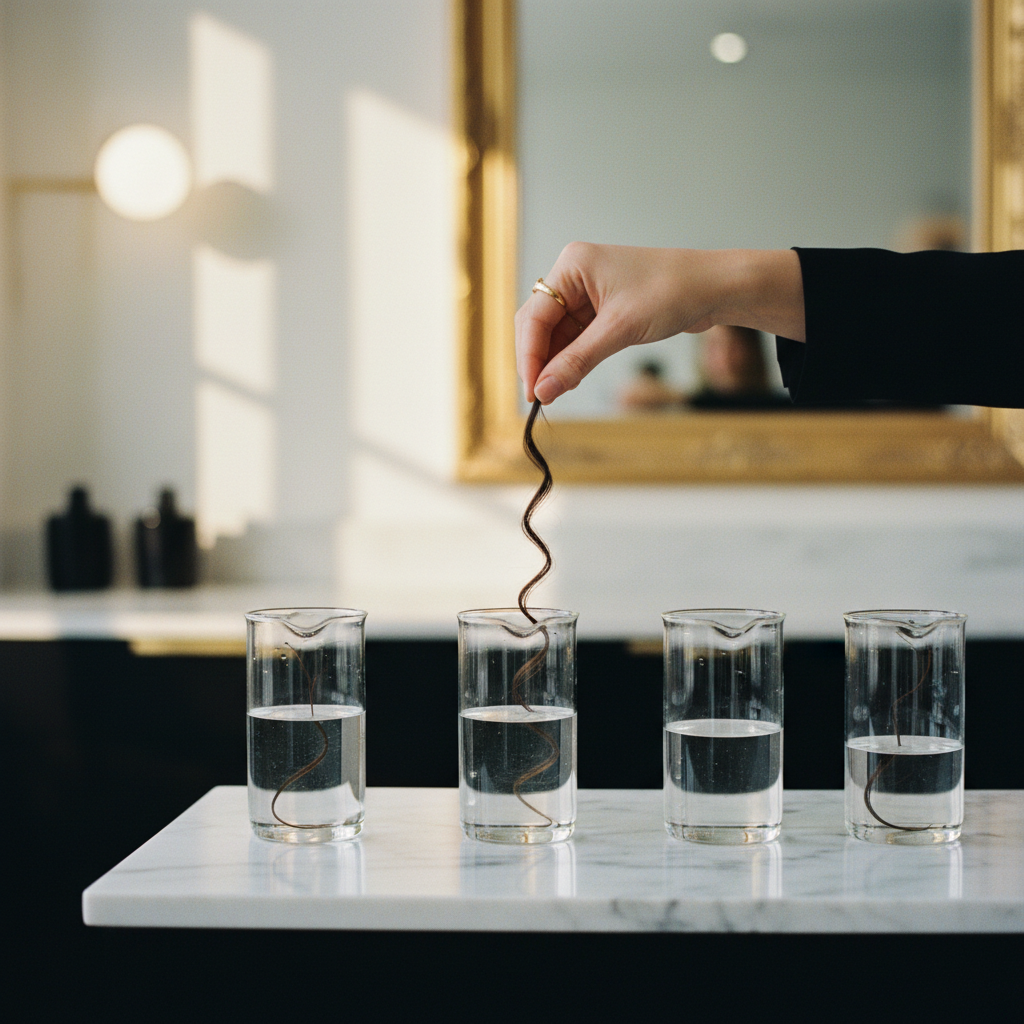
Quick answer: Hair Porosity Testing evaluates how easily your hair strand absorbs and retains moisture, oils, and chemical treatments based on the structural condition of its outer cuticle layer. Accurate Hair Porosity Testing helps you select the correct balance of hydrators, oils, and proteins to prevent breakage and dullness. However, common at-home methods like the popular glass-of-water float test are notoriously unreliable due to water surface tension, natural sebum coatings, and styling product residue skewing the physical results.
Key takeaways
- Hair porosity reflects the integrity, arrangement, and spacing of the microscopic cuticle scales shielding your hair shaft.
- Low-porosity cuticles lie tightly overlapping and flat, medium-porosity cuticles are moderately raised, and high-porosity cuticles are chipped, open, or missing.
- The popular "float test" in a cup of water is scientifically flawed because natural oils, surface tension, and residual conditioners cause even porous hair to float.
- Tactile strand assessments, wet-to-dry timing observations, and droplet absorption tests offer far more reliable assessments at home.
- Porosity is not permanently fixed; while genetics set your baseline, heat styling, ultraviolet radiation, bleaching, and chemical straightening alter porosity dramatically.
Hair Porosity Testing: what the evidence shows
Hair Porosity Testing measures the physical permeability of the hair fibre. Under a scanning electron microscope, human hair reveals three distinct layers: the inner medulla, the thick structural cortex composed of keratin bundles, and the external protective cuticle. The cuticle consists of 5 to 10 overlapping scales that resemble tiles on a roof. Porosity is determined entirely by how tightly these cuticle scales lie against the cortex.
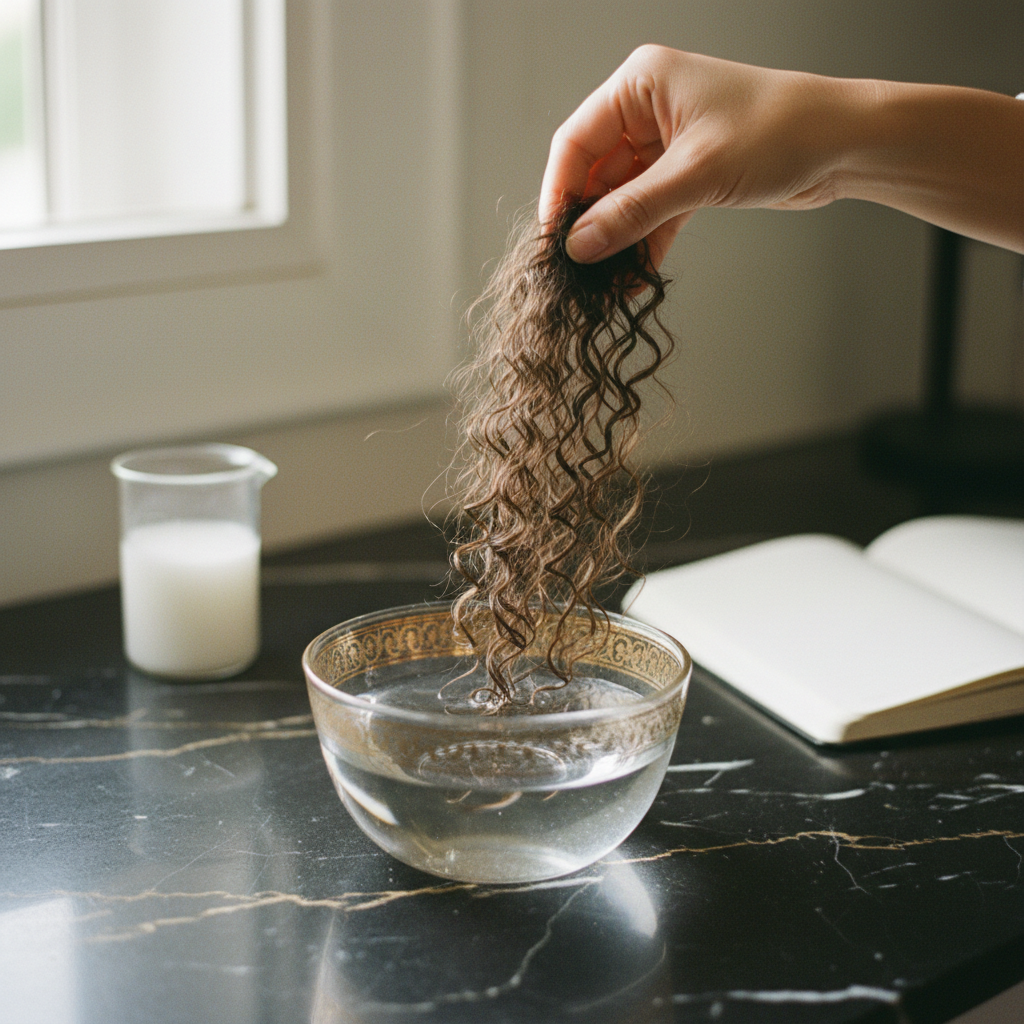
In healthy, virgin hair with low porosity, the cuticle scales lie flush, glued down by the cell membrane complex (a lipid-rich mortar consisting primarily of 18-methyleicosanoic acid, or 18-MEA). When 18-MEA is intact, hair is naturally hydrophobic, meaning it actively repels external water.
Cosmetic science evaluates hair porosity by assessing gas sorption, liquid absorption rates, and gravimetric moisture uptake. These laboratory assessments show that damaged, high-porosity hair absorbs water vapor up to 200 percent faster than virgin hair, but loses that moisture just as rapidly when environmental humidity drops. This rapid uptake and release cycle leads to hygral fatigue, a repetitive swelling and deswelling of the cortex that fractures internal keratin bonds over time.
What the evidence does not show: the flaw of the float test
The most widely shared method of at-home Hair Porosity Testing is the water float test. In this test, individuals drop a shed strand of hair into a glass of room-temperature water. According to popular beauty lore, hair that floats within two to four minutes is low porosity, hair that stays in the middle is medium, and hair that sinks immediately is high porosity.
Cosmetic chemists and trichologists consistently advise against relying on this method. Surface tension of pure tap water prevents light, fine objects from breaking through the meniscus regardless of porosity. Furthermore, residual silicones, natural scalp oils, or leave-in conditioning agents create an artificial hydrophobic coating on the strand. Even severely bleached, chemically degraded high-porosity hair will float indefinitely if coated in a thin layer of sebum or dimethicone. Conversely, thoroughly cleansed low-porosity hair may sink if pushed beneath the surface tension film.
The physical mechanisms of low, medium, and high porosity
Understanding the mechanical differences between the three distinct porosity levels clarifies how your hair responds to water, cleansers, and conditioning agents.
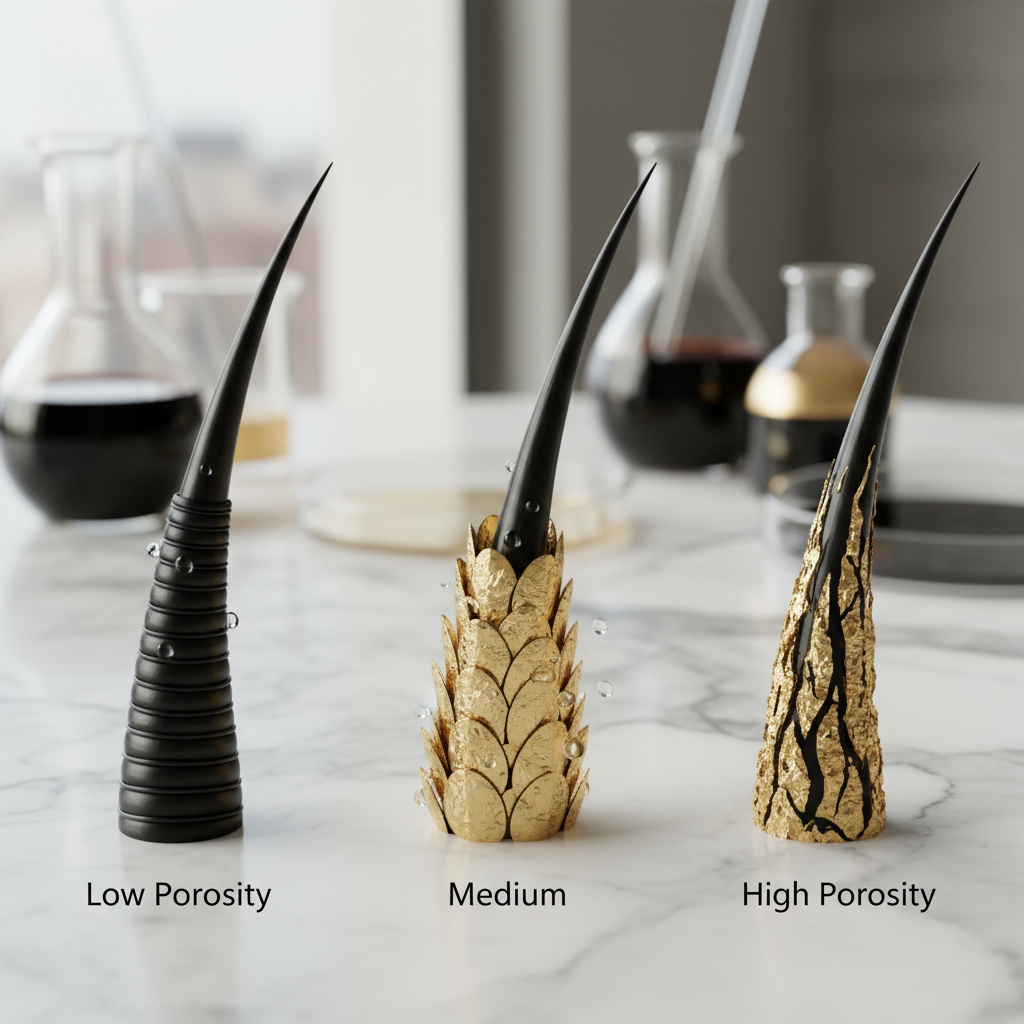
| Porosity Level | Cuticle Architecture | Water Behaviour | Product Response | Common Causes |
|---|---|---|---|---|
| Low Porosity | Tightly overlapping, flat, bound by intact 18-MEA lipids. | Resists water penetration; water beads on dry hair; takes hours to dry. | Prone to heavy product build-up; heavy butters sit on the surface. | Genetics, absence of chemical processing, gentle grooming habits. |
| Medium Porosity | Uniform, slightly raised scales allowing controlled hydration flow. | Absorbs water steadily; dries in a predictable, moderate timeframe. | Responds predictably to balanced conditioning; holds styles well. | Genetic baseline, minimal heat styling, regular maintenance. |
| High Porosity | Chipped, peeled back, highly raised, or missing cuticle layers. | Absorbs liquid instantly; swells rapidly; loses moisture just as fast. | Soaks up rich creams quickly; tangles easily; prone to frizzy swelling. | Bleaching, permanent hair dye, excessive heat tool use, UV damage. |
Low porosity: structural resistance
When your cuticles lie completely flat, moisture struggles to enter the cortex. If you spray a mist of water onto clean, dry low-porosity hair, visible water beads sit on the surface for minutes before absorbing. Applying heavy vegetable butters or dense oils to low-porosity hair causes rapid build-up, making the strands look limp, greasy, and stiff. Low-porosity strands also require longer exposure to running water before becoming thoroughly saturated in the shower.
High porosity: structural damage
High-porosity hair contains physical voids, cracks, and missing scale sections. The loss of protective lipid barriers exposes hydrophilic (water-attracting) sites within the cortex. When wet, high-porosity strands absorb massive amounts of water, causing the shaft diameter to swell significantly and putting extreme tension on internal hydrogen and disulphide bonds. When dry, the absence of an intact cuticle roof allows moisture to evaporate instantly, leaving the hair brittle, straw-like, and vulnerable to mechanical snapping.
Accurate methods for testing your hair porosity
If you want reliable results without a scanning electron microscope, combine these practical, evidence-based assessment techniques on clean, bare hair. Ensure your hair has been washed with a simple clarifying shampoo to remove oils and styling silicones, and skip all conditioners before testing.
The tactile slide test
Take a single, clean strand of dry hair between your thumb and index finger. Start near the hair tip and slide your fingers firmly upward toward the root.
- If the slide feels completely smooth, slick, and frictionless, your cuticles are lying flat (low porosity).
- If you feel minor resistance or slight texture, you have normal or medium porosity.
- If your fingers catch, feel roughness, or the strand squeaks and snags noticeably, the cuticle edges are raised and damaged (high porosity).
The spray bottle absorption test
Section off a patch of clean, completely dry hair. Using a fine misting spray bottle filled with room-temperature water, spray the section once or twice from 15 centimetres away.
- Low porosity: The mist forms distinct, rounded beads that sit on top of the hair fibres for two minutes or more without sinking in.
- Medium porosity: The droplets sit briefly for 30 to 60 seconds before absorbing cleanly into the strand.
- High porosity: The droplets vanish almost instantly into the strand upon contact.
The dry-time metric
Assess how long your hair takes to dry naturally at room temperature after being thoroughly saturated in the shower:
- Hair that takes four to eight hours to air-dry (or even longer for thick densities) typically exhibits low porosity because once moisture penetrates the tight cuticles, it cannot easily escape.
- Hair that dries in an exceptionally short period (under one to two hours for medium to thick hair) often exhibits high porosity, as moisture escapes rapidly through the broken cuticle structure.
What you can do based on your porosity results
Adjusting your haircare formulation choices based on porosity helps preserve fibre integrity, prevents unnecessary breakage, and ensures the scalp stays balanced.
Managing low-porosity hair
Low-porosity hair needs warmth and lightweight formulations to bypass tightly sealed cuticles:
- Use mild heat during deep-conditioning routines (such as a warm towel or thermal processing cap) to temporarily relax and lift the cuticle scales, allowing conditioning agents to enter the cortex.
- Avoid heavy, occlusive oils like castor oil or unrefined shea butter, which form greasy coatings on top of the hair.
- Choose humectants like glycerin, hyaluronic acid, and aloe vera, combined with lighter carrier oils such as jojoba or argan oil.
- Use a clarifying shampoo once every two to three weeks to strip away stubborn product accumulation that blocks hydration.
Managing high-porosity hair
High-porosity hair needs barrier restoration, structural reinforcement, and protective sealing:
- Incorporate hydrolysed proteins (such as hydrolysed wheat, silk, or oat protein) into your routine. These small-chain peptides temporarily fill gaps and fissures in the damaged cuticle layer, improving tensile strength.
- Follow a layering routine: apply a water-based leave-in conditioner first, followed by a richer plant oil or lipid cream to manually seal the open cuticles and lock moisture inside the cortex.
- Keep the pH of your finishing rinses and leave-in products slightly acidic (around pH 4.0 to 5.5). Acidic environments cause the cuticle scales to contract and flatten against the hair shaft, reducing friction and moisture loss.
- Minimise further mechanical stress by detangling only when hair is coated in a high-slip conditioner, using wide-tooth combs, and limiting heated styling tools above 180 degrees Celsius.
Supporting overall hair health: the role of Watermans
While adjusting your regimen for hair porosity protects the existing hair fibre from external snapping and environmental drying, robust hair starts at the follicle. The condition of the emerging strand reflects the health of the scalp environment.
Watermans focuses on formulas designed to invigorate the scalp and strengthen hair fibres from the root upward. The Watermans Grow Me Shampoo and Condition Me Conditioner blend natural ingredients, biotin, caffeine, rosemary extract, and hydrolysed lupin protein. For those dealing with high porosity and weakened fibres, these hydrolysed proteins help reinforce the strand, improving resilience against everyday breakage and supporting an optimal scalp ecosystem for fuller, thicker-looking hair.
When the issue is not hair porosity
Do not confuse structural porosity with other hair and scalp concerns:
- Hair shedding: If you are finding whole hair strands with small white bulbs at the end falling out in large quantities (more than 100 to 150 strands per day), this is hair shedding (such as telogen effluvium), not a cuticle porosity issue.
- Hair thinning: A widening part or receding hairline indicates follicular miniaturisation (androgenetic alopecia), which requires scalp-directed interventions rather than cuticle-conditioning routines.
- Mineral build-up: If your hair feels dry, brittle, and stiff regardless of product use, hard water mineral deposits (calcium and magnesium carbonate) or heavy metal accumulation may be choking the cuticle, mimicking high porosity. A chelating wash resolves this.
When to seek professional guidance
If your hair snaps under minimal tension, feels gummy and stretchy when wet (a hallmark sign of severe chemical over-processing and internal protein cortex loss), or if you experience unexplained, patchy scalp hair loss, consult a qualified trichologist or dermatologist. A professional trichological consultation uses polarised light microscopy to evaluate exact cuticle architecture, internal cortex integrity, and scalp health accurately.
Frequently asked questions about Hair Porosity Testing
Can I change my hair porosity permanently?
No, you cannot permanently alter your natural baseline porosity. Chemical processes like bleaching, perming, and thermal straightening permanently raise hair porosity by stripping the lipid membrane and lifting cuticles. Once damaged, cuticles cannot biologically heal because hair is non-living tissue. You can, however, temporarily manage high porosity using acidic sealants, bond builders, and hydrolysed proteins until new hair grows.
Why did my strand float during the water Hair Porosity Testing?
A strand will float during Hair Porosity Testing primarily due to the surface tension of water, which supports light fibres. Additionally, natural sebum produced by your scalp, silicones from conditioners, or leave-in oils create a hydrophobic barrier. This barrier repels water and prevents the strand from sinking, regardless of whether the cuticles beneath are healthy or damaged.
Does low-porosity hair need protein treatments?
Low-porosity hair needs very little external protein because its internal keratin structure is usually undamaged and protected by an intact cuticle. Applying concentrated protein treatments to low-porosity hair often results in protein overload, leaving the hair feeling stiff, brittle, and prone to snapping. Focus primarily on moisture and lightweight humectants instead.
Does high-porosity hair dry faster than low-porosity hair?
Yes, high-porosity hair typically air-dries much faster than low-porosity hair. Because the cuticle scales are lifted, chipped, or missing, there is no physical barrier to prevent absorbed water from evaporating. While high-porosity hair soaks up water instantly in the shower, that moisture leaves just as quickly once you step out into dry air.
Can different sections of my hair have different porosities?
Yes, mixed porosity across a single head of hair is common. Hair at the crown and top layers is exposed to intense ultraviolet radiation, friction, and heat styling, often developing higher porosity than hair protected at the nape of the neck. Furthermore, the ends of long hair are older and have experienced months or years of washing and weathering, making them naturally more porous than the roots.
A balanced approach to porosity testing
Understanding your hair through proper Hair Porosity Testing cuts through marketing myths and guides practical, effective hair management. By ignoring misleading methods like the float test and focusing on how your clean hair physically behaves with water, you can choose products that truly suit your hair fibre. Prioritise gentle cleansing, balance proteins with lightweight moisture, and protect the outer cuticle to maintain strong, radiant hair from root to tip.
Sources and references
- Robbins, C. R. (2012). Chemical and Physical Behavior of Human Hair. 5th ed. Springer-Verlag New York.
- Dawber, R. (1996). Hair: Its structure and response to cosmetic preparations. Clinics in Dermatology, 14(1), 105-112.
- Cruz, C. F., Costa, C., Gomes, A. C., Matamá, T., & Cavaco-Paulo, A. (2016). Human hair condition assessment: an overview. Journal of Cosmetic Dermatology, 15(4), 431-449.
- Evans, A. O., & Wickett, R. R. (2012). Practical modern hair science. Allured Publishing Corporation.
- Swift, J. A. (1999). Human hair cuticle: biologically conspired to the owner's benefit by its shape, mechanics and surface chemistry. International Journal of Cosmetic Science, 21(6), 387-404.
Find these ingredients in Watermans products
- Castor Oil: you will find this ingredient in our Camellia & Black Castor Hair & Body Oil.
- Aloe Vera: you will find this ingredient in our Curly Hair Conditioner.